The 1971 Camaro Z/28 arrived at a moment when Detroit muscle was obsessed with quarter-mile bragging rights, yet it quietly reminded drivers that the real magic happened in the corners. Rather than chasing ever more brutal straight-line numbers, the second-generation Z/28 doubled down on chassis balance, braking and road-course poise, proving that handling still separated a great performance car from a merely fast one. I see that lesson echoed today every time enthusiasts rediscover how composed and confidence-inspiring a well-sorted early 1970s Z/28 feels on a winding road.
The second-gen reset: from drag strip to road course
When Chevrolet moved from the first to the second generation Camaro, the Z/28’s mission subtly shifted from pure homologation special to a more rounded performance coupe. The 1971 Z/28 inherited that philosophy, trading the boxier first-gen silhouette for a lower, wider body that naturally favored stability and grip. Instead of being engineered only to survive a standing-start blast, the car was shaped and tuned to feel planted at speed, with proportions that made quick transitions and high-speed sweepers feel like home rather than an afterthought.
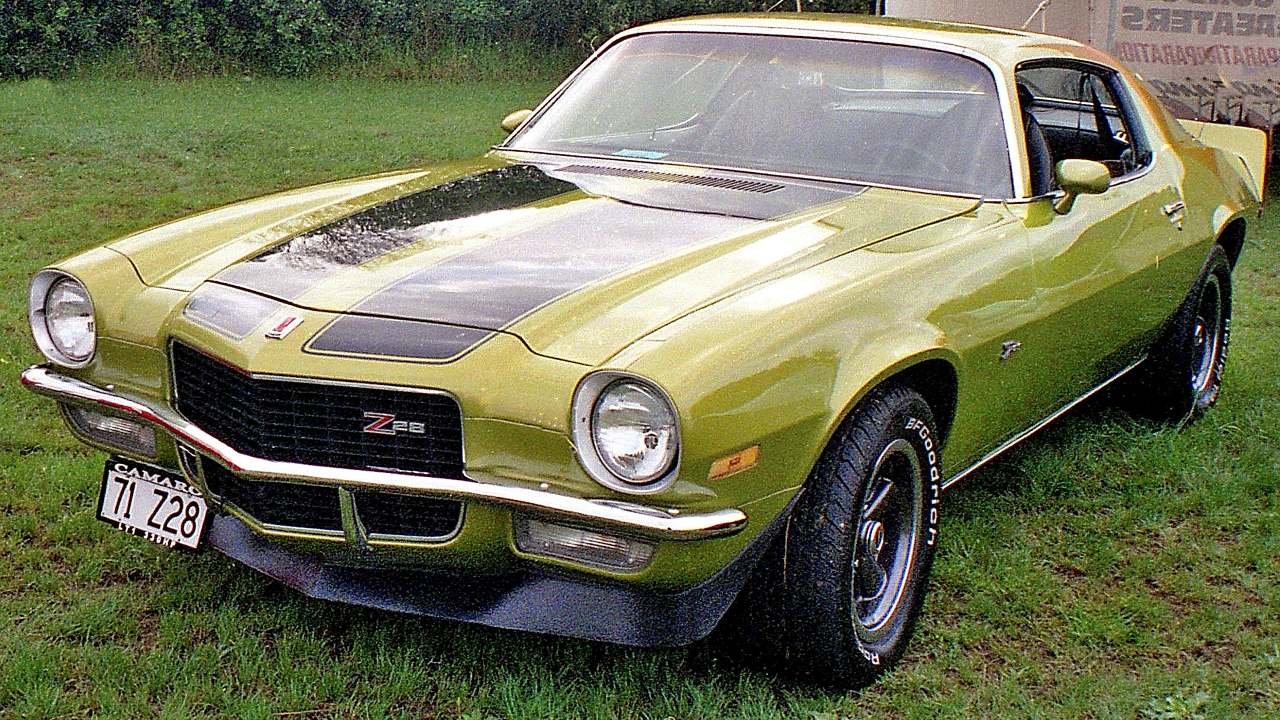
That change in attitude is obvious when I look at surviving examples of the 1971 Camaro Z/28 that have been preserved rather than heavily modified. One well-documented car shows how the factory chassis layout, suspension geometry and tire footprint work together to deliver a surprisingly modern sense of control, even by current standards, without needing radical aftermarket hardware, as seen in a detailed walkaround of a stock-style 1971 Camaro Z/28. The car’s stance, steering response and braking capability underscore that Chevrolet was already thinking beyond the drag strip, building a package that rewarded drivers who cared about the next corner as much as the last straight.
What changed after 70: the hardware that made grip matter
The 1970 model year is often treated as the high-water mark for the early second-gen Z/28, but the real story is how that car’s hardware laid the groundwork for the 1971 version’s handling-first character. In 70, Chevrolet introduced a series of upgrades that signaled a more sophisticated approach to performance, including the availability of an automatic transmission in a Z28 for the first time and standard Front power disc brakes. Those brakes, paired with contemporary Goodyear Polyglas GT tires, showed that the factory understood stopping and turning were just as critical to real-world speed as raw horsepower.
By the time the 1971 Camaro Z/28 arrived, that foundation allowed Chevrolet to refine the package rather than reinvent it, keeping the focus on balance instead of chasing headline-grabbing output. The continuation of serious braking hardware and performance-oriented rubber meant the car could repeatedly scrub speed and change direction with confidence, something that becomes clear when watching period-correct cars being driven hard in modern features on the Camaro. I read those evolutions as proof that the Z/28’s engineers were already prioritizing lap times and driver feel, not just brochure numbers, and the 1971 model benefitted directly from that mindset.
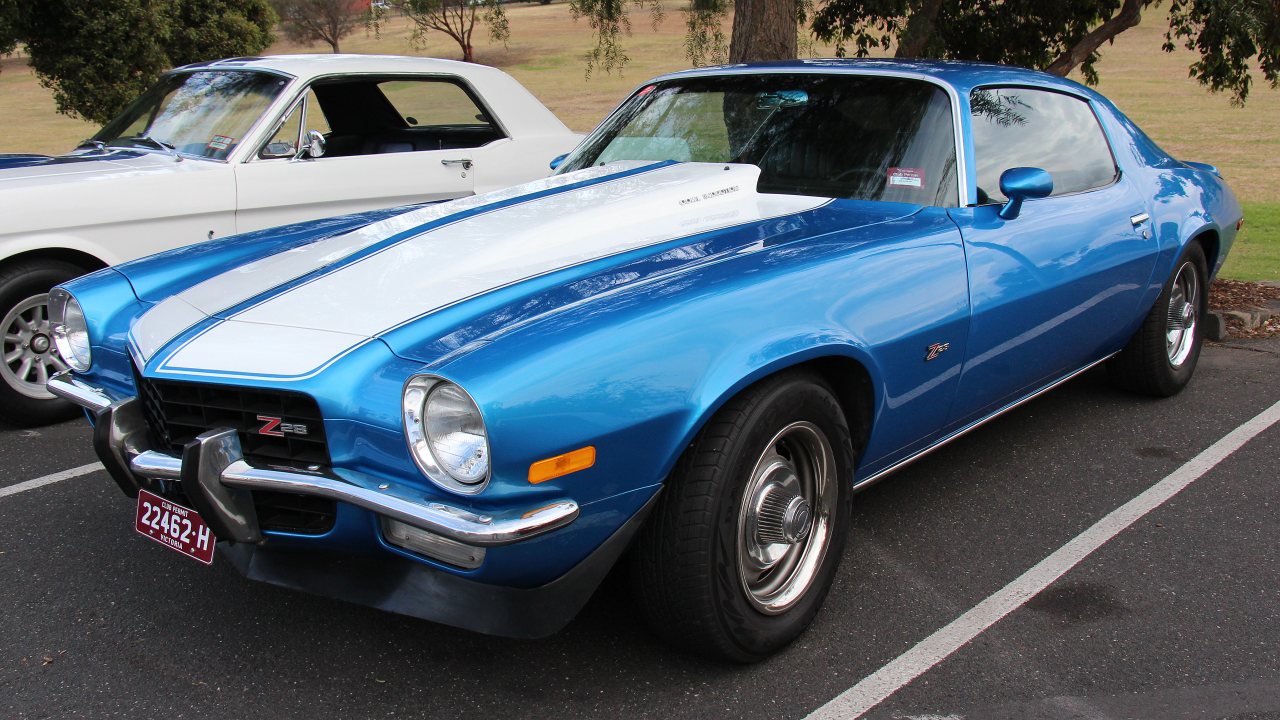
Inside an “endangered” 1971 Z/28
Seeing a 1971 Camaro Z/28 up close today, especially one that has survived with its character intact, drives home how rare this handling-focused approach has become in a world of ever-heavier, ever-more-powerful performance cars. In a detailed feature on a privately owned 1971 Z/28, the host walks through the car’s cockpit, engine bay and underbody, treating it as an “endangered” muscle car precisely because it blends old-school V8 charisma with a chassis that still feels eager and agile, as shown in a video tour of a 1971 Camaro Z28. I notice how the seating position, thin-rim steering wheel and clear sightlines all encourage the driver to place the car accurately on the road, something that matters far more in a fast corner than in a straight-line sprint.
Underneath, that same car reveals the priorities that made the 1971 Z/28 stand apart from some of its more one-dimensional rivals. The suspension layout, brake hardware and tire choices are not exotic by modern standards, yet they are clearly configured to keep the car composed when driven with intent, rather than simply to survive a single hard launch. When I watch the owner describe how the car feels on a back road, the emphasis falls on predictability, feedback and the way the chassis communicates grip levels, all qualities that stem from the factory’s decision to treat the Z/28 as a driver’s car rather than a numbers-only trophy, a point reinforced throughout the 1971 Chevrolet Camaro Z28 listing.
Why enthusiasts still debate the “greatest” Z/28
Among Camaro fans, arguments about which Z/28 generation deserves the crown tend to circle back to the early second-gen cars, and for good reason. Some see the 1970 model as the purest expression of the formula, while others point to the 1971 version as the moment when the balance between power, weight and chassis tuning really clicked. In a deep dive on the 1970 Z/28, one presenter frames the car as a candidate for the greatest Camaro Z28 ever built, then spends much of the runtime talking about how its steering, braking and cornering behavior make it feel alive on a twisty road, as seen in a long-form feature on the Camaro.
Listening to that debate, I find that the 1971 Z/28’s case rests less on raw specification sheets and more on how it translates those specs into real-world confidence. It inherits the core mechanical strengths of the 70 car, including serious brakes and performance tires, but arrives just as the muscle era’s horsepower race begins to slow, which only sharpens the focus on how the car actually drives. When enthusiasts compare lap times, road-course impressions or simply the joy of hustling these cars through a series of bends, the 1971 model consistently earns praise for feeling cohesive and controllable, a trait that is echoed in owner testimonials and detailed walkarounds of surviving 1971 Z/28 examples.
The legacy of a car that valued corners as much as straights
Looking back from today’s performance landscape, where even family crossovers can post startling acceleration figures, the 1971 Camaro Z/28 stands out as a reminder that speed without control quickly becomes empty. Its designers leaned on the advances introduced in 70, such as the automatic option and standard Front power disc brakes, then doubled down on the idea that a true driver’s car must stop, turn and communicate as well as it accelerates. That philosophy is written into the car’s stance, its steering feel and the way its chassis settles into a corner, traits that still impress anyone who climbs behind the wheel of a well-preserved 1971 Chevrolet Camaro Z28.
When I see modern enthusiasts gravitate toward track days, autocross events and canyon drives, I recognize the same priorities that shaped the 1971 Z/28. It may not dominate drag-strip folklore the way some of its contemporaries do, but it quietly proved that handling was not a luxury or an afterthought, it was the core of what made a performance car worth driving hard. In that sense, the 1971 Camaro Z/28 did more than survive a changing era of regulations and shifting tastes, it set a template for the kind of balanced, engaging machines that enthusiasts still chase, long after the original muscle-car wars faded into history.