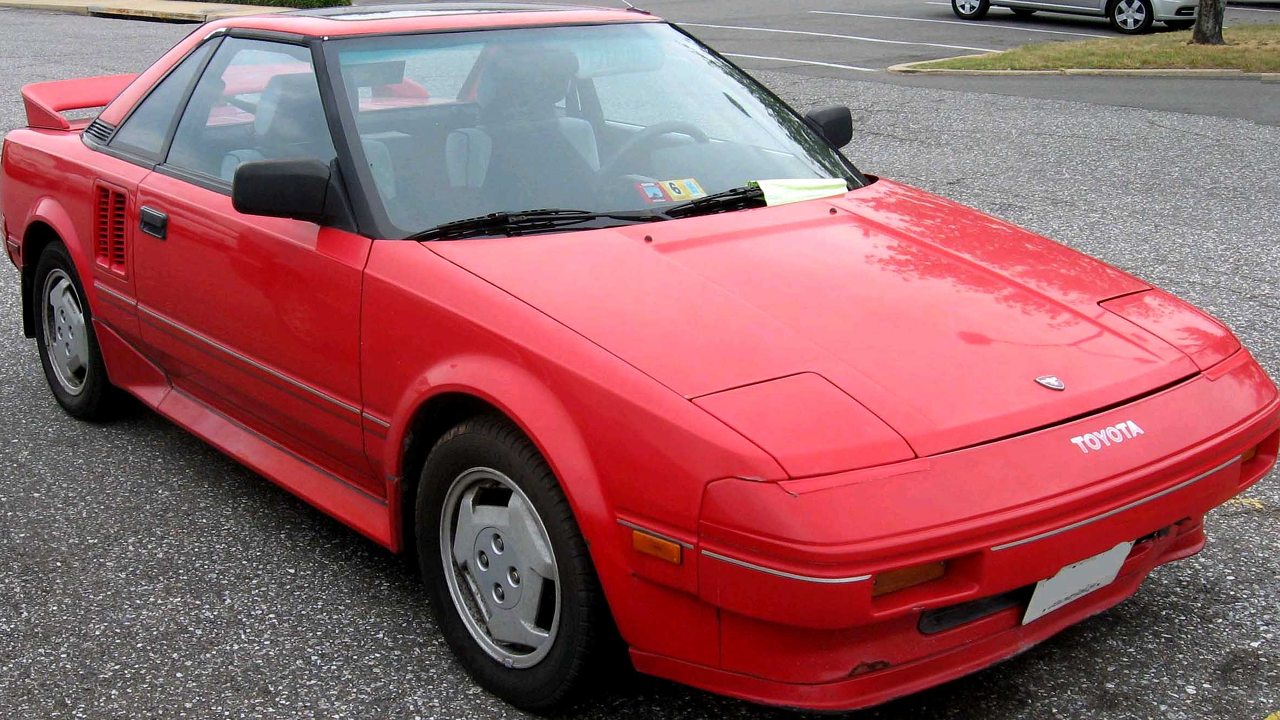
The first-generation Toyota MR2 arrived in the mid 1980s as a sharp-edged rebuttal to the idea that sports cars had to be big, loud, and overpowered to be fun. With its tiny footprint, mid-mounted engine, and carefully tuned chassis, it proved that balance, not brute force, was what really mattered in everyday driving.
By the 1985 model year, the car had crystallized that philosophy into a production reality, pairing modest power with a layout usually reserved for expensive exotics. The result was a machine that felt exotic yet approachable, and it reshaped expectations for what a small, affordable Toyota could be.
The mid‑engine idea, scaled down to street level
The core of the 1985 Toyota MR2 story is its layout. Placing the engine behind the seats but ahead of the rear axle gave the car a weight distribution that favored quick responses and stability, something drivers usually associated with far pricier European machinery. Instead of chasing headline horsepower, Toyota used the mid‑engine configuration to make every input count, so the steering, brakes, and throttle all worked together in a way that felt precise rather than intimidating.
That approach was reinforced by the car’s compact size. With an overall length listed as “Approximately 155.5 inches” for early versions, the MR2 occupied less space than many economy hatchbacks, yet it carried the stance and proportions of a serious sports car. Contemporary descriptions of the first generation emphasize how Performance And Handling were central to the design, with One of the main benefits of ownership framed around its agility rather than raw speed. In practice, that meant a car that could be driven hard on a back road without feeling like it was constantly trying to overwhelm its driver.
Power that matched the chassis, not the spec sheet wars
Under the engine cover, the 1985 MR2 relied on a 1.6-litre four-cylinder that prioritized responsiveness over sheer output. At launch, the MR2 was powered by the same 1.6-litre four-cylinder 4A-GE engine used in the AE86, a unit that was already respected for its willingness to rev and its clean power delivery. In period, the engine was rated at about 112 horsepower in North America, while markets like the United Kingdom saw figures closer to 128 horsepower, a spread that reflected tuning and emissions differences rather than any change in the underlying character.
Those numbers sound modest next to modern turbocharged compacts, but they were carefully matched to the car’s low weight and mid‑engine balance. Contemporary coverage of affordable 1980s sports cars notes that the boxy little MR2 arrived for the 1985 model year with a 1.6-litre four that developed about 112 horsepower, placing it squarely in the “accessible but entertaining” bracket rather than chasing high‑end performance figures. Later listings for surviving examples, including an automatic‑equipped 1986 car rated at 112 horsepower and 97 lb‑ft of torque, underline how Toyota kept the powertrain honest and usable rather than inflating the numbers for marketing effect.
Design that served the driver first
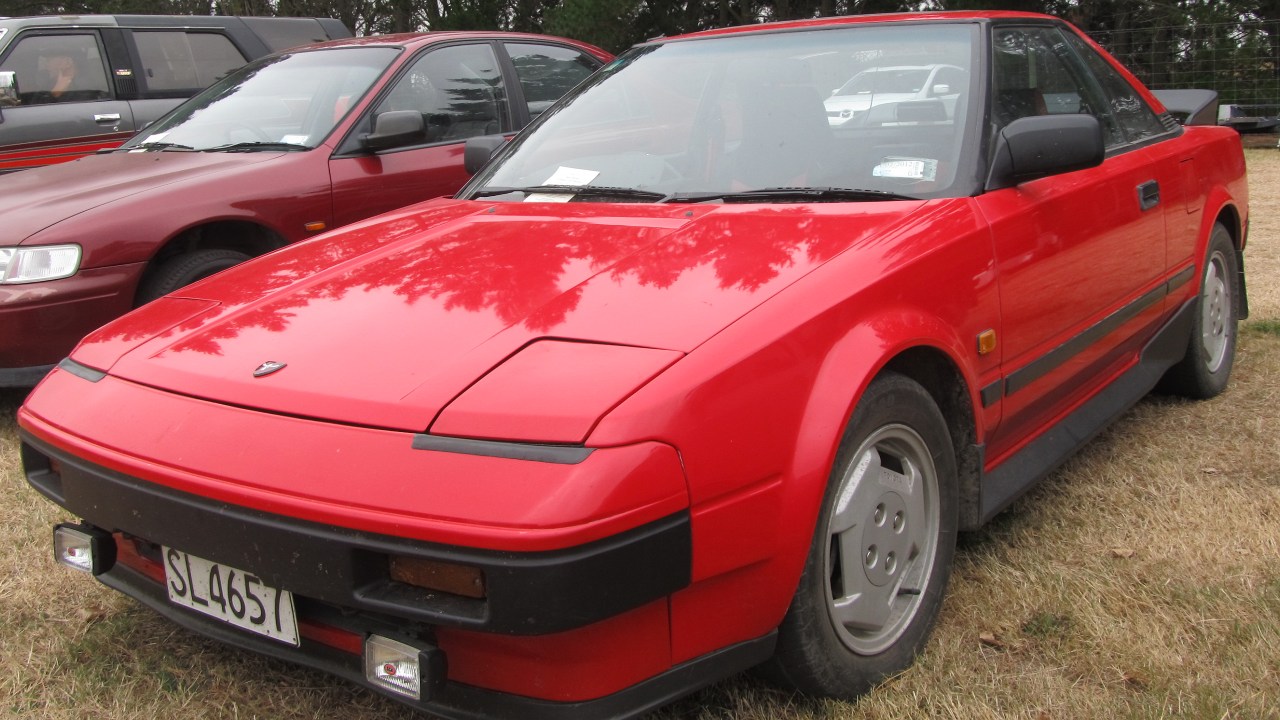
The MR2’s styling has often been described as wedge‑shaped and almost cartoonishly sharp, but the lines were not just for show. The low nose, crisp beltline, and angular rear pillars were all tuned to help the driver place the car accurately on the road. Factory literature highlighted how the lowered front end and unique angled quarter pillars delivered a remarkable 309°f field of vision, a figure that stands out in an era when many sports cars sacrificed visibility for drama. In practice, that meant a driver could see apexes, traffic, and pedestrians more easily, which made the car feel smaller and more confidence inspiring from behind the wheel.
That same focus on the driver carried through to the cabin and overall packaging. Period descriptions of 1985 cars for sale emphasize the way the MR2 “blazes onto the scene” with its wedge profile while still offering a cockpit that fits driver and passenger without forcing them to bump into each other. Owner feedback collected later reinforces that impression, with one driver noting that the MR2 is “so well balanced, the engine never overstepping what the cornering capabilities” can handle. In other words, the design did not just look balanced from the outside, it translated into a driving position and sightlines that encouraged drivers to explore the chassis without feeling exposed.
On‑road behavior that earned its “poor man’s exotic” reputation
Out on the road, the MR2’s combination of mid‑engine layout, compact size, and modest power created a dynamic personality that enthusiasts still talk about. Drivers who sampled early cars described taking laps around empty roundabouts and discovering how neutral and predictable the chassis felt, with the car remaining composed at all times and at all speeds rather than snapping into sudden oversteer. That behavior is exactly what engineers aim for when they talk about balance: a car that rotates willingly but gives the driver time and feedback to correct, instead of punishing small mistakes.
Later commentary on the MR2 family, particularly the MR2 Spyder, has leaned into the idea of a “budget-friendly exotic” with Toyota reliability and Lotus-like handling. That description fits the original 1985 formula as well. The first generation arrived in America as an alternative to the Bertone X1/9, another Small mid‑engine car, but the Toyota added a layer of everyday dependability that Italian rivals struggled to match. Auction notes and enthusiast write‑ups repeatedly highlight how Toyota reliability was the cherry on top of a chassis that already felt special, which is why the car picked up nicknames that compared it to far more expensive European exotics.
Legacy: how a small Toyota reset expectations
Four decades on, the 1985 MR2’s influence is visible in how enthusiasts talk about balance and usability in sports cars. Modern retrospectives on small Toyota models still single out the MR2 as the smallest mid‑engine sports car the company has built, pointing to its compact footprint and comic book‑like proportions as part of its enduring charm. Those same pieces stress that the car’s appeal was never about straight‑line numbers, but about how its chassis, steering, and powertrain worked together to create a cohesive whole.
That legacy shows up in the market as well. Listings for clean first‑generation cars, sometimes priced around $15,900 for well‑kept examples, frame them as opportunities to experience a type of driving feel that has largely disappeared from modern showrooms. Enthusiasts who seek out MR2s today often echo the original owner sentiment that the car is “so well balanced,” with the engine tuned to support, not overwhelm, the cornering capabilities. In an era dominated by ever larger, heavier performance cars, the 1985 Toyota MR2 stands as proof that a carefully judged mix of modest power, smart packaging, and driver‑centric design can still feel exotic, even when it wears a Toyota badge.
More from Fast Lane Only: