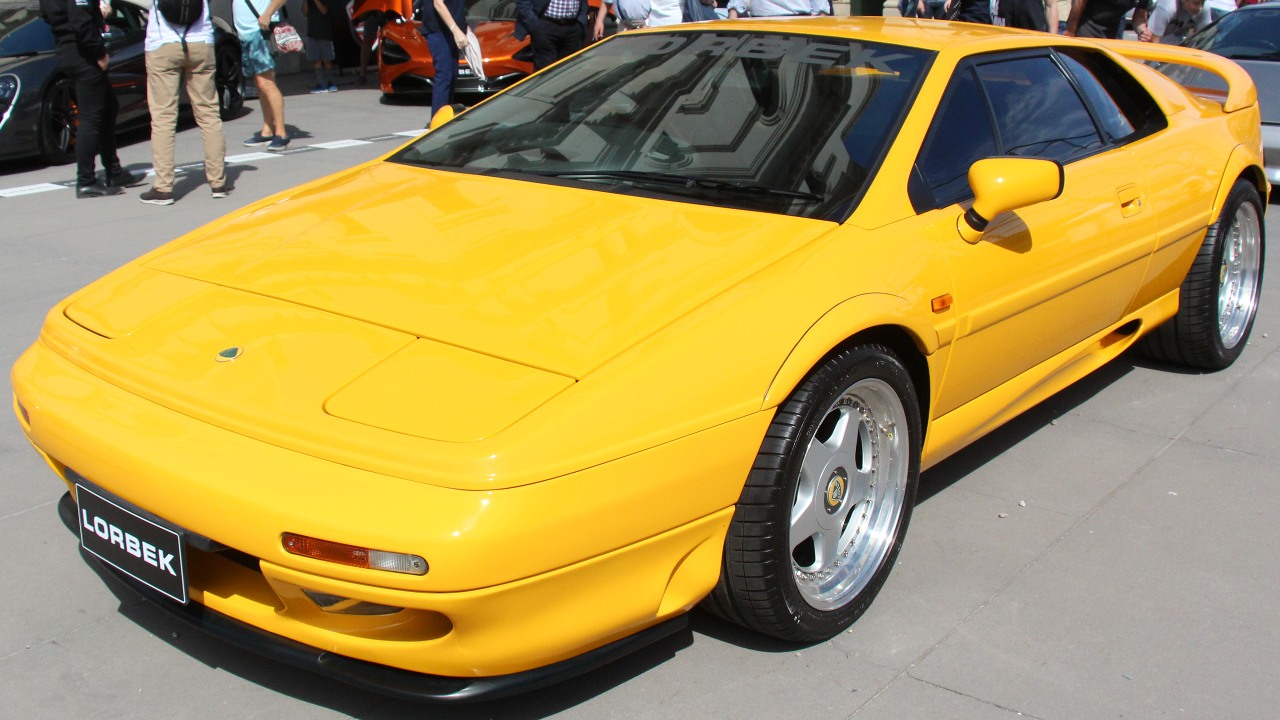
The 1989 Lotus Esprit Turbo arrived at a moment when the sharp wedge that had defined the model since the Seventies risked looking like a relic. Instead of abandoning that silhouette, Lotus used the year to refine it, pairing a cleaner body with meaningful mechanical upgrades that made the car feel more modern without losing its edge. I see that model year as the point where the Esprit stopped chasing fashion and started sharpening its own identity.
From Giugiaro wedge to X180 rethink
By the late Eighties, the aggressively sharp-edged shape that Giugiaro had drawn in the Seventies was no longer in step with softer, more organic sports car design. Lotus responded with the X180 generation, which kept the same wheelbase and track but wrapped them in smoother surfacing that still read as a low, uncompromising wedge. Period histories describe how the earlier look had become outdated by design trends, and the X180 treatment was a deliberate attempt to modernize the Esprit without sacrificing its essential stance or proportions, a balance that set the stage for the 1989 Turbo variants.
Underneath that updated body, the Esprit remained a study in incremental evolution rather than wholesale reinvention. The car still relied on a steel backbone chassis, but Lotus had already been running the Esprit frame on the rack to develop a stiffer structure more appropriate to the Turbo’s performance, and then improving corrosion resistance as they refined the design. That methodical approach meant the 1989 cars benefited from years of quiet chassis work, including the adoption of an upper link at the rear to relieve strain on the half-shafts, so the sharpened styling was matched by a more robust and predictable platform.
How the 1989 Turbo sharpened the driving experience
The 1989 Esprit Turbo did not just look more focused, it drove that way. Reports on that model year note that performance increased significantly thanks to improvements to the exhaust and turbocharger, changes that helped the familiar four-cylinder feel more urgent without resorting to a larger engine. In The US trim, those gains were particularly important, since emissions equipment had traditionally dulled the edge of European-tuned exotics, and the updated Turbo showed Lotus was willing to rework hardware so the car felt alive even in stricter markets.
Midway through the year, Lotus doubled down by introducing the Turbo SE as an additional model, using a charge-cooled Lotus and Delco developed engine to push output higher still. Later descriptions of The Esprit SE cite power of 280 bhp, with corresponding improvements in acceleration and a top speed around 165 mph, figures that put the car squarely in contemporary supercar territory. By pairing that extra power with the stiffer backbone frame Lotus had already developed for the Turbo, the 1989 range felt more cohesive, with the chassis and engine finally aligned to deliver the kind of sharp, immediate responses the styling had promised for years.

The Turbo SE and the “eagle” chassis moment
I see the launch of the Turbo SE in mid-1989 as the inflection point where the Esprit’s wedge persona became truly modern rather than nostalgic. The charge-cooled engine developed with Lotus and Delco did more than add power, it broadened the usable band of performance so the car was less about waiting for boost and more about seamless thrust. Contemporary accounts of the Turbo SE describe how that engine, combined with the aerodynamic X180 body, gave the Esprit a new authority on the road, turning the once-fragile wedge into a serious long-distance and high-speed machine.
At the same time, Lotus introduced what was referred to as the “eagle” chassis across all Esprits, a further evolution of the backbone concept that tightened the structure and refined suspension geometry. The adoption of an upper rear link to reduce half-shaft stress, along with ongoing work to stiffen and protect the steel frame, meant the 1989 cars sat on the most resolved version of the platform yet. When I look at that combination of charge-cooled power, improved chassis, and still-dramatic wedge profile, it is clear why later enthusiasts single out the Turbo SE as a high point in the model’s development rather than just another incremental update.
Design details that kept the wedge relevant
What makes the 1989 Esprit Turbo so compelling to me is how its design details walk a line between period charm and lasting appeal. The car still presents as a sharp wedge, with a low nose, flat hood, and pop-up headlights that define its face, but the X180 surfacing softens the harshest edges so it reads as intentional rather than dated. Later visual commentary on The Esprit Turbo SE highlights its aerodynamic lines and striking profile, and those observations apply equally to the standard Turbo, which shares the same basic shape and stance.
Inside, Lotus used the opportunity to update the cabin so the driving environment matched the exterior’s newfound sophistication. Period descriptions of the Esprit mention a more integrated dashboard and higher quality materials, along with features like an upgraded stereo that contributed to a more dramatic environment without tipping into excess. Combined with the structural improvements to the chassis and suspension, those interior tweaks helped the 1989 Turbo feel less like a kit of parts and more like a cohesive product, one where the wedge shape was part of a complete experience rather than a styling gimmick left over from another decade.
Anniversary Turbo values and legacy
The 1989 Lotus Esprit Anniversary Turbo underscores how far the concept had come by the end of that decade. Built to mark a milestone for the model, it combined the year’s mechanical improvements with specific cosmetic touches, and valuation data today treats it as a distinct entry. According to specialist pricing tools, the value of a 1989 Lotus Esprit Anniversary Turbo can vary greatly depending on condition, mileage, options, and history, with a typical example in good condition with average spec sitting in a clear band that reflects both its rarity and its usability.
Those same valuation guides list the Anniversary Turbo alongside other 1989 Esprit variants, which helps show how the market reads the year as a turning point rather than a footnote. When I compare those figures with the broader Esprit history, including the earlier Giugiaro cars and later, more heavily revised models, the 1989 wedge stands out as a sweet spot where classic proportions meet meaningful engineering progress. It sharpened the original idea instead of discarding it, and the way collectors and drivers continue to seek out these cars suggests that approach gave the Esprit a second life rather than a last hurrah.
More from Fast Lane Only: