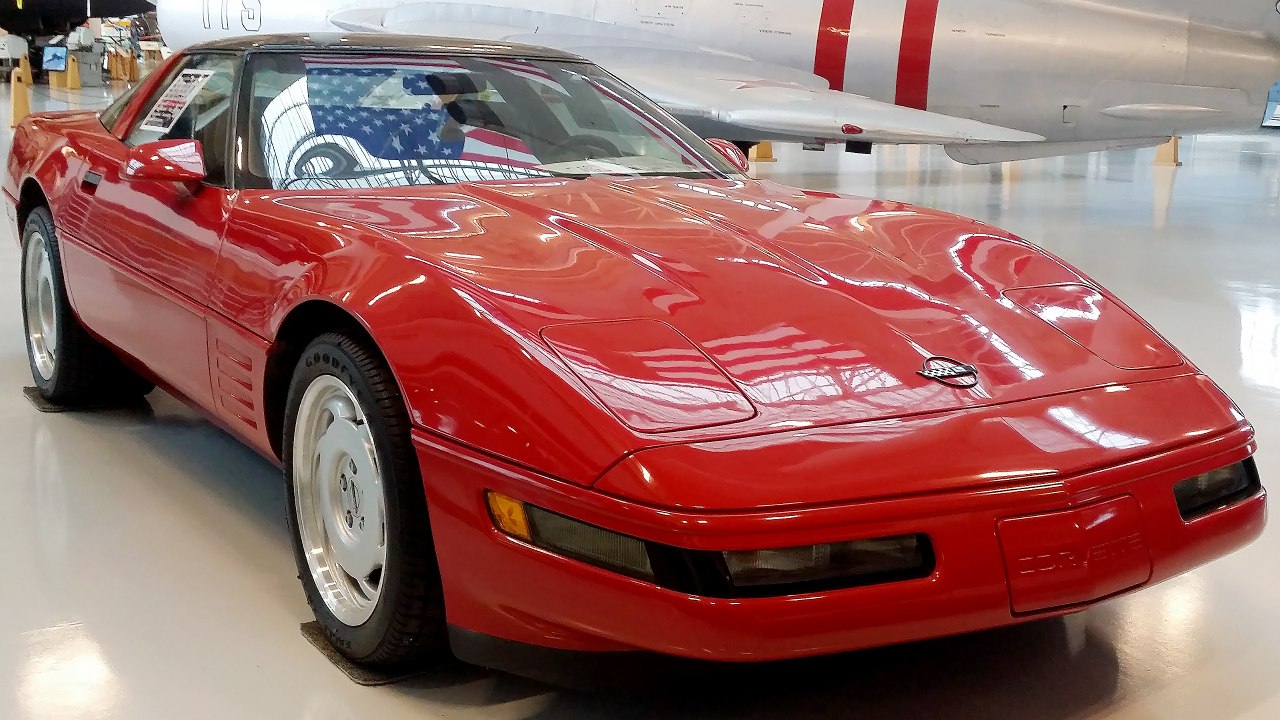
The 1989 Chevrolet Corvette ZR-1 did not just add another trim level to an aging American sports car. It arrived in Europe as a calculated shock, a technological statement aimed directly at the continent’s most respected supercar makers. By the time the covers came off in Geneva, the car that enthusiasts would call “King of the Hill” had been engineered specifically to challenge European assumptions about what a Corvette could be.
What made that moment so jarring for European audiences was not only the ZR-1’s speed, but the way it fused American muscle with British engineering and track-proven durability. The car’s debut signaled that Chevrolet was no longer content to be dismissed as a brash outsider in a world dominated by Porsche and Italian exotics, and it used the European stage to prove the point.
Setting the stage: a Corvette built for Europe
By the late 1980s, the fourth generation Corvette had already modernized the American sports car image, but it still carried a reputation in Europe as fast yet unsophisticated. The ZR-1 project was conceived to change that perception by creating a version of the C4 that could credibly stand beside the continent’s most serious performance machines. From the moment the “King of the Hill” ZR-1 appeared at the Geneva Motor Show, its widened rear bodywork and purposeful stance signaled that this was not just another styling package but a fundamentally reworked flagship aimed at European roads and circuits.
Chevrolet’s decision to unveil the car at the Geneva Auto Show rather than on home turf underscored how central Europe was to its ambitions. Period accounts of the Corvette ZR in France describe how the car was positioned as a direct rival to established European supercars, with the Geneva Auto Show reveal framed as a global coming out rather than a domestic product launch. That choice of venue, combined with the aggressive “King of the Hill” nickname, made clear that the ZR-1 was intended to be judged by European standards of speed, handling, and engineering sophistication, not just by American straight line performance.
Lotus, LT5 and the birth of an American supercar
The core of the ZR-1’s European challenge sat under its clamshell hood. Instead of simply tuning the existing small block V8, General Motors turned to Lotus and its British engineering expertise to create an all new powerplant. The result was the LT5, a sophisticated multi valve V8 that revved higher than the standard Corvette engine and produced 375 horsepower at launch, later climbing to 405 horsepower as the program evolved. Torque figures in the range of 370 to 385 lb-ft gave the car the kind of mid range shove that European drivers associated with high end German and Italian machinery, not with a fiberglass American coupe.
GM’s purchase of Lotus and its decision to outsource the LT5’s design to that British powerhouse were pivotal in making the ZR-1 credible abroad. The collaboration allowed Chevrolet to claim not only raw output but also the kind of engineering pedigree that resonated with European buyers who were used to hearing about race bred engines and exotic cylinder heads. Contemporary coverage of the Corvette ZR history describes the 1990 Corvette ZR as The Grand Debut World Fastest Immediately, noting how the LT5 helped the car stake a claim as one of the world’s fastest production vehicles with top speeds reported between 175 and 180 mph. That combination of American displacement and British design was central to the ZR-1’s identity as a transatlantic supercar rather than a traditional muscle car.
Chassis, gearbox and the “King of the Hill” driving experience
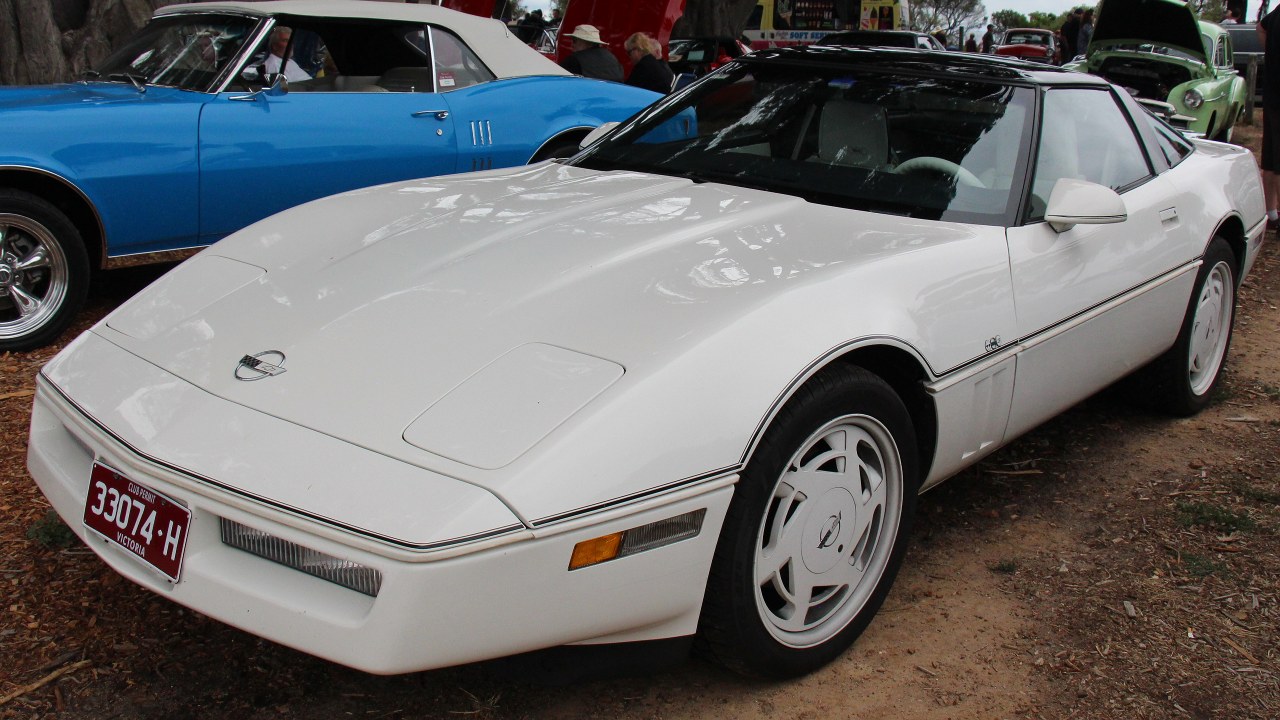
Power alone would not have been enough to impress European critics who were used to finely balanced cars from Stuttgart and Modena. The ZR-1 therefore arrived with a suite of hardware upgrades that transformed the way the C4 Corvette drove. One of the most important changes was the adoption of a ZF six speed manual transmission, which replaced the older 4+3 setup and, as enthusiasts later noted, instantly transformed the driving experience. Power was sent to the rear wheels through this ZF six speed, giving the driver closer ratios, a more precise shift feel, and better control at high speed, all qualities that European buyers expected from serious performance cars.
Underneath, the ZR-1 retained the C4’s basic architecture but layered on refinements that made it more capable on fast European roads and circuits. The widened rear track, unique suspension tuning, and high speed stability work were all aimed at ensuring that the car could sustain the kind of velocities implied by its LT5 engine and “King of the Hill” branding. Later retrospectives on the fourth generation Corvette highlight how the ZR-1’s chassis and driveline upgrades cleared a path for the model’s long distance speed records, including a world record run of 6,793.453 km that showcased not just peak performance but durability. In practice, that meant European journalists could not easily dismiss the car as a straight line special, because its hardware was clearly engineered for sustained, high speed use.
How Europe reacted to an American upstart
When the ZR-1 landed in Europe, it confronted a deeply ingrained hierarchy in which brands like Porsche defined the benchmark for sports car refinement. Some European commentators acknowledged that the Corvette’s interior materials and ergonomics still lagged behind what buyers expected from a Porsche, reinforcing a long standing critique that American cars prioritized performance over cabin polish. Reports on how the Corvette is viewed around the world note that Some European drivers compared the Corvette unfavorably to Porsche in terms of luxury feel, even as they conceded that its performance credentials were increasingly difficult to ignore.
Yet the ZR-1’s numbers and engineering story forced a reassessment. The combination of a Lotus influenced LT5, a ZF six speed gearbox, and world class top speed figures meant that European testers had to treat the car as a genuine rival to local supercars rather than a curiosity. Historical coverage of the C4 Corvette ZR-1 emphasizes that the car Immediately claimed a place among the world’s fastest production models, which resonated strongly in markets where autobahn and autostrada speeds were part of everyday driving culture. Even if some buyers still preferred the perceived sophistication of a Porsche, the ZR-1’s presence in showrooms and on test tracks across France, Germany, and the United Kingdom signaled that the Corvette name could no longer be written off as purely American bravado.
Legacy: from European shock to modern cult classic
Looking back from today, the shock that the 1989 Corvette ZR-1 delivered in Europe has evolved into a kind of cult respect. Enthusiast analyses describe the Ultimate C4 Corvette Was a Sleeper Most of the changes, however, were underneath, a recognition that the car’s most important advances were hidden in its engine bay and driveline rather than in flashy styling. The ZR’s combination of Lotus and British engineering, the LT5’s 375 to 405 horsepower output, and the robust ZF six speed have helped cement its reputation as a landmark model that bridged the gap between old school American muscle and the more globally minded supercars that followed.
The car’s enduring appeal is evident in the way collectors now chase low mileage examples, such as a 36k Mile 1990 Chevrolet Corvette ZR-1 where Power is sent to the rear wheels through a ZF six speed manual transmission, preserving the exact configuration that once stunned European audiences. At the same time, modern commentary on the C4 Corvette ZR-1 as a Cyborg Supercar Destroyer and on the 1990 Corvette ZR-1 that Lotus helped create reinforces how the car’s European debut marked the dawn of an American supercar era. The 1989 Geneva moment did more than shock Europe for a news cycle, it reset expectations for what a Corvette could be, both at home and on the continent that had long defined the supercar ideal.
More from Fast Lane Only: