The 1990 Mazda Miata arrived at a moment when driving risked becoming an appliance task, not an experience. With a tiny footprint, a manual roof, and a modest engine, it reminded buyers that connection, not horsepower, was what made a car memorable. Three and a half decades later, that first Miata still stands as proof that a simple roadster could reset expectations for how a car should feel from behind the wheel.
Rather than chase luxury or brute speed, Mazda built a car that asked drivers to participate. The original Miata did not just revive the classic lightweight sports car formula, it showed a new generation that involvement, feedback, and joy per mile mattered more than spec sheet bragging rights.
Reinventing the simple sports car
When Mazda launched the Miata, the company deliberately reached back to a purer idea of what a sports car should be. The design team leaned on the Japanese principle of jinba ittai, translated as “rider and horse as one,” to describe the bond they wanted between driver and machine. That philosophy put the Miata in sharp contrast with heavier, more insulated performance cars of its era, which often prioritized straight line speed and luxury over feel. By focusing on light weight, balance, and clear communication through the steering and chassis, Mazda created a car that felt like an extension of the driver rather than a device that needed taming, a point underscored in detailed assessments of the 1990 Mazda MX-5 Miata that highlight how thoroughly the company pursued that jinba ittai ideal.
The engineering choices were almost stubbornly focused on purity. Instead of a big engine, Mazda chose a compact inline four and paired it with a manual gearbox and rear wheel drive, then wrapped it all in a small, rigid body. Contemporary analysis of the 1990 Mazda MX-5 Miata notes that the company did not invent the lightweight roadster concept, it simply perfected it for a modern audience by stripping away complexity and letting the fundamentals shine. That decision made the car approachable for new drivers and deeply satisfying for enthusiasts, proving that a carefully tuned chassis and intuitive controls could matter more than raw output.
Driving feel over raw power
From the driver’s seat, the first Miata made its case not with numbers but with sensations. Modern reviewers who revisit early cars consistently emphasize how the steering, shifter, and pedals work together to keep the driver engaged. One detailed drive of a 1990 Mazda Miata describes a 1.6 liter inline 4 up front, a manual transmission, and a light, communicative chassis that rewards smooth inputs rather than brute force. In that review, Zach highlights how the car’s modest power encourages the driver to use the full rev range and to think about momentum, which turns even a short commute into an interactive exercise instead of a passive ride.
That same emphasis on feel over speed shows up when the Miata is pushed on the right roads. A report on Driving the car around the Connecticut twisty roads notes that it brings to life the old saying that it is more fun to drive a slow car fast than a fast car slow. The writer points out that the Miata’s engine note is throaty but not obnoxious, and that the car’s balance lets the driver explore grip without needing a racetrack or risking license shredding speeds. In practice, that means the Miata teaches drivers to read the road, manage weight transfer, and savor each corner, reinforcing the idea that driving skill and engagement matter more than headline acceleration figures.
A legend built on accessibility
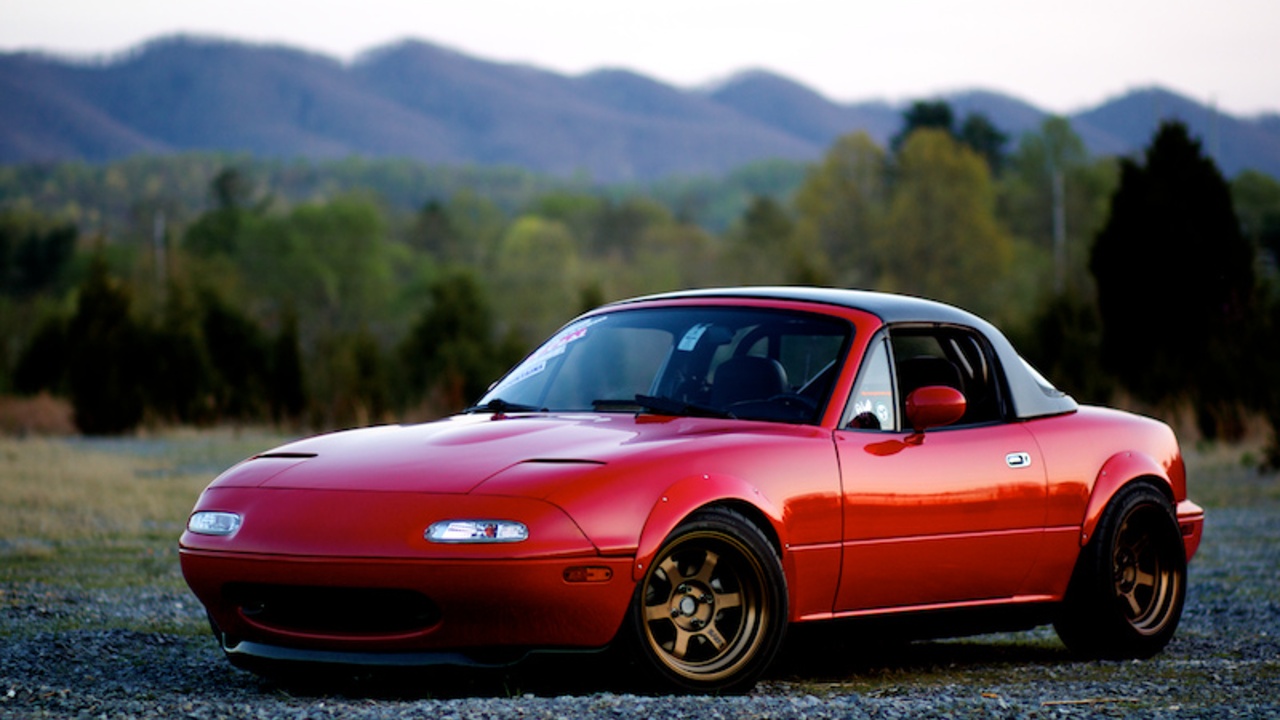
Part of what made the 1990 Miata transformative was how accessible it felt to people who did not see themselves as traditional sports car buyers. The car’s compact size, friendly styling, and predictable handling lowered the intimidation factor that often surrounds performance models. A detailed look at a 1990 Mazda MX5 Miata the NA Miata describes it as an all time sports car icon and notes that its story is already legendary, in part because it invited such a wide range of drivers into the enthusiast world. That analysis emphasizes how the car’s light controls and forgiving balance let newcomers learn the limits gradually, while still offering enough nuance to keep experienced drivers interested.
That accessibility extended beyond the driving experience to ownership and modification. A more recent examination of why the Miata is still considered the answer for so many car needs points out that the Miata is approachable enough to be enjoyed by anyone, affordable to buy and run, and endlessly tunable. Enthusiasts can keep a 1990 car stock and enjoy its original character, or they can modify suspension, wheels, and power to their liking without losing the core friendliness that defines the platform. This combination of low running costs, simple mechanicals, and a huge aftermarket turned the Miata into a gateway car, one that made the idea of caring about driving feel realistic for people who might otherwise have settled for anonymous transportation.
How the Miata reset expectations
The original Miata did more than sell well, it shifted what drivers expected from a small car. Before it arrived, compact convertibles were often seen as fragile or compromised, and many manufacturers had abandoned the segment. By delivering reliability, everyday usability, and genuine sports car dynamics in one package, Mazda proved that a lightweight roadster could be both fun and practical. Detailed retrospectives on the 1990 Mazda MX-5 Miata argue that the car redefined its class by showing that careful engineering and a clear design philosophy could overcome the compromises that had plagued earlier efforts. That success pushed other brands to reconsider how much engagement they were building into their own products, even if they did not directly copy the roadster format.
The Miata also reshaped the used car landscape and the culture around enthusiast ownership. Analyses of the original Mazda Miata’s legacy, including video deep dives that thank ALEX for providing an NA example and reference CHECK OUT CARS BIDS as a marketplace where these cars trade, highlight how the first generation has become a fixture in auctions and enthusiast circles. The car’s durability and parts support mean that early 1990 models are still being driven hard, tracked, and autocrossed, which keeps their influence alive for new drivers who encounter them secondhand. In that sense, the Miata did not just reset expectations in period, it continues to recalibrate what people think an affordable, fun car can be every time someone buys a used example and discovers how much enjoyment is possible at legal speeds.
Why it still matters in a digital, assisted era
In an age of touchscreens, driver assistance systems, and ever heavier vehicles, the 1990 Miata’s priorities feel almost radical. The car offers no digital buffer between driver and road, only a thin steering wheel, a mechanical shifter, and a direct connection to the rear wheels. Modern commentators who revisit early cars often frame them as antidotes to sensory overload, pointing out that the Miata’s simplicity forces the driver to pay attention and rewards that focus with clear feedback. The continuing reverence for the 1990 Mazda MX-5 Miata in lists of important cars underscores how its jinba ittai philosophy anticipated today’s debates about whether technology is enhancing or dulling the driving experience.
The phrase “Miata is always the answer,” which has become shorthand in enthusiast circles, only makes sense because of what that first generation established. A recent analysis that states Miata has long been the answer for every car need explains that the car’s blend of approachability, reliability, and tunability lets it slot into roles ranging from daily driver to weekend track toy. That versatility, rooted in the original 1990 blueprint, is why the car still serves as a benchmark whenever people talk about what makes driving enjoyable. In a market where many vehicles isolate occupants from the road, the Miata’s enduring appeal is a reminder that the most meaningful automotive technology is sometimes the ability to feel every input and every response, and to remember that driving itself is the point.
More from Fast Lane Only: