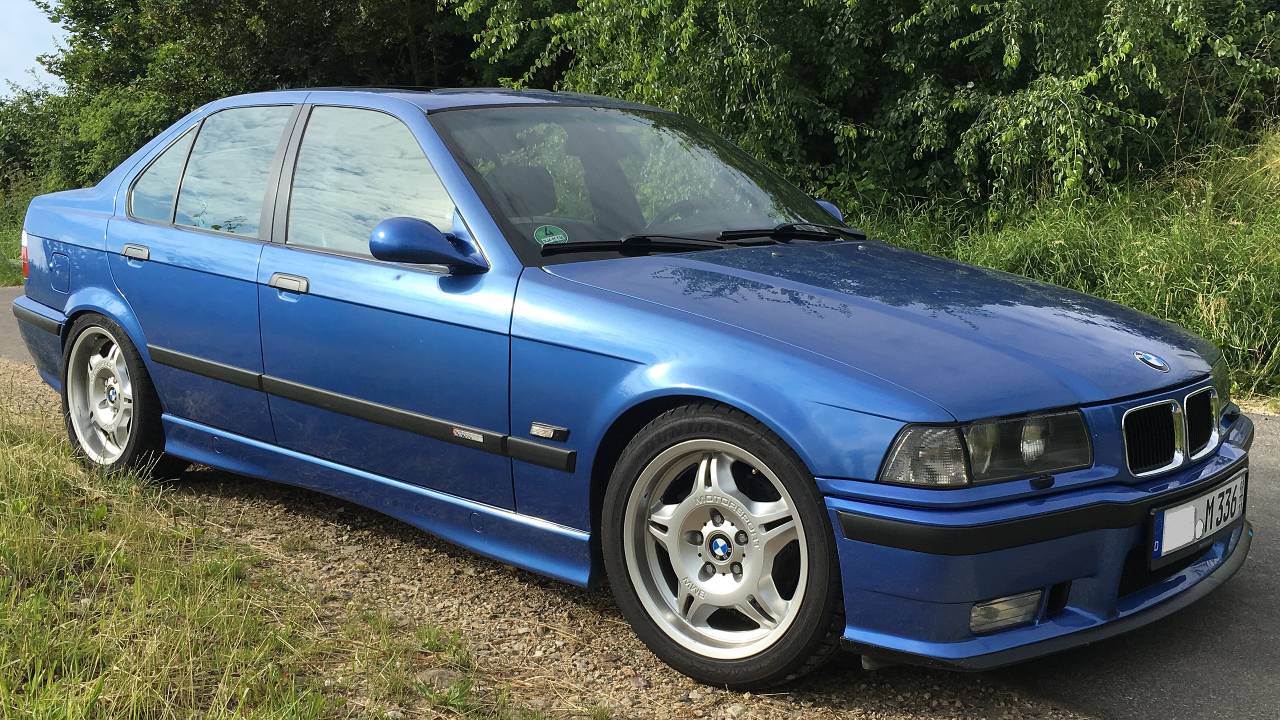
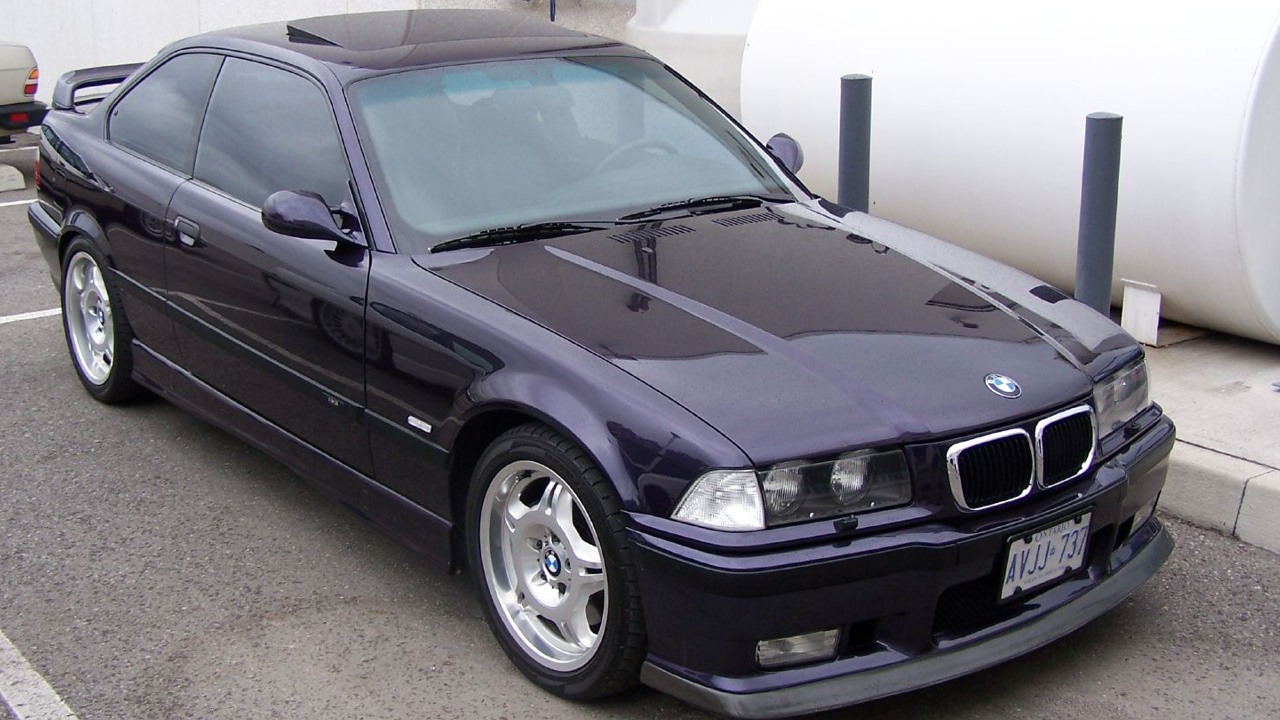
The 1995 BMW M3 arrived at a turning point for performance cars, when raw homologation specials were giving way to more refined, everyday coupes. Instead of diluting the formula, the E36 generation used that shift to redefine what a fast two door could be, combining real pace with daily usability in a way that still shapes modern performance benchmarks. I see that balance, and the engineering choices behind it, as the reason this particular M3 set the template that later coupes still follow.
From touring car roots to “The First Real” modern M3
The original E30 M3 was built as a homologation tool, a sharp edged sedan that existed so BMW could go racing. By the early 1990s, the company needed something broader in appeal, and the E36 M3 that reached the United States in 1995 was designed from the start as a high performance version of the BMW 3 Series rather than a thinly disguised race car. Reporting on the model’s evolution describes this generation as The First Real M3 in the sense that it moved from a motorsport special to a road car that still carried serious pace, a shift that underpins how modern performance coupes are conceived.
The E36 M3 first appeared in Europe in 1992, then arrived in the U.S. market in 1995, and that staggered rollout helped BMW refine the formula for different buyers. In the United States, the car used a modified M50 based straight six that was simpler and less expensive than the European S50, a decision taken, as internal history notes, to keep the price within reach of the American market while still delivering strong performance. That willingness to tailor hardware to a broader audience, without abandoning the M3 badge, is exactly the kind of compromise that defines the modern fast coupe segment.
Powertrain pragmatism that still felt special
Under the hood, the 1995 BMW M3 used a 3.0 liter inline six that balanced output with durability and cost, a point that contemporary reviewers still highlight when they climb into surviving cars. In one detailed drive, host Zach introduces a 1995 BMW M3 by noting the 3.0 L inline 6 up front and a manual gearbox sending power to the rear, a layout that has become the default expectation for an enthusiast coupe. The U.S. specification engine produced less power than some European variants, but it delivered a broad, usable band of torque that made the car feel quick in real world driving rather than just on paper.
Special editions pushed that formula further, and they show how BMW used the same basic architecture to create distinct performance tiers. A deep dive on the E36 M3 Lightweight explains that a three liter engine with 295 horse would be the standard GT output, compared with 240 horse on the standard S50s that these cars left the factory with, figures that underline how much headroom the platform had. That spread between 295 and 240 horsepower, achieved without abandoning the core straight six layout, foreshadows the way modern performance coupes now offer multiple power levels from a shared engine family.
Lightweight and GT variants as proof of concept
If the regular 1995 M3 showed how to blend speed and civility, the limited run Lightweight and GT versions demonstrated how far that recipe could be pushed while staying road legal. A detailed look at the 1995 E36 BMW M3 Lightweight notes that only 126 of these were made, and that the car’s Performance Curb Weight was about 2950 lb, roughly 200 lb lighter than a standard M3. That same report cites 0–60 mph times in the 5.3 to 5.7 second range and strong Quarter Mile performance, numbers that, combined with the weight reduction, illustrate how targeted engineering changes could transform the character of an otherwise familiar coupe.
The E36 M3 GT, built around the same era, took a different approach to the same idea of focus. Coverage of the 1995 BMW M3 GT describes it as a truly special car that many enthusiasts consider the ultimate version of the E36, with BMW’s own retrospective noting that, 25 years after launch, the M3 GT still radiates a fascinating dynamism and appeals to sports drivers to the core. Those official reflections from BMW underline how the GT’s chassis tuning and higher output engine turned the E36 into something that felt close to a track car while retaining the basic comfort and practicality of the underlying 3 Series coupe.
American market compromises that became the new normal
To understand why the 1995 M3 shaped the modern performance coupe, it is important to look at how BMW adapted the car for the United States. Internal history of the E36 program explains that, to keep the car’s price within reach of American wallets, the modified M50 would be far simpler and less expensive than the S50 used in Europe. That decision meant the American M3 came with a lower performing 3.0 liter straight six and a lighter duty differential compared with European models, as one detailed profile of the 1995 BMW M3 notes, but it also meant more buyers could access M3 performance without paying exotic car money.
Those compromises did not stop the car from being quick or engaging, and they set a pattern that later performance coupes have followed. A barn find feature on an E36 M3 points out that the model is the high performance version of the BMW 3 Series and that, in the U.S., the E36 M3 Features 2 Engine Options For The market, both using BMW’s VANOS variable valve system. Offering multiple engine options, each tuned for a different balance of cost and performance, is now standard practice for performance coupes, and the 1995 M3’s American strategy helped normalize that approach.
A usable icon that still defines expectations
What truly made the 1995 BMW M3 a template for modern performance coupes was not just its power or its special editions, but its day to day usability. A historical overview of the M3 line notes that, after the initial generation, BMW combined higher performance with greater comfort and that this blend of speed and usability has remained a constant. The E36 embodied that shift, with a cabin and ride quality that made sense for commuting, yet with steering, brakes, and an engine that rewarded hard driving in a way that earlier, more focused homologation cars could not match.
Later reflections on the E36’s place in the M3 family reinforce this point. A generational comparison notes that BMW thought the E36 was sufficient to cover both bases, meaning luxury and performance, and that this thinking helped shape an equally strong range of larger M cars. Even if the company later decided to diversify its lineup further, the idea that a single coupe could credibly serve as both a comfortable daily driver and a serious performance machine has persisted, and the 1995 M3 is the clearest early expression of that philosophy.
Three decades after its debut, the 1995 BMW M3 still feels like the moment when the performance coupe grew up without losing its edge. Its mix of pragmatic engineering, limited run specials like the Lightweight and GT, and a deliberate push toward everyday usability created a blueprint that rivals and successors continue to follow. When I look at today’s fast two doors, with their multiple power levels, track focused variants, and insistence on being livable as well as quick, I see the E36 M3’s influence in almost every spec sheet and test drive impression.
More from Fast Lane Only: