The original BMW M2 arrived at a moment when performance cars were getting bigger, heavier, and more complicated, yet it proved that a compact coupe could still hit like a heavyweight. With short overhangs, a punchy turbocharged straight-six, and a chassis tuned for feel rather than flash, the 2016 M2 showed that “entry level” in the M division did not have to mean watered down. I have always seen it as the car that reminded BMW what made its best drivers’ cars special in the first place.
On paper, the M2 looked like a throwback, but on the road and track it felt like a carefully modernized interpretation of classic BMW values. It was small but not cramped, powerful but not excessive, and serious enough to satisfy purists without scaring off everyday drivers. That balance is why, years later, I still think of the 2016 M2 as the moment small once again meant serious in Munich.
The moment BMW shrank the M formula again
By the time the M2 arrived, the BMW M3 and M4 had grown into wide, muscular machines, impressive but no longer compact. The M2 took the newer 2 Series shell and turned it into a dedicated BMW Coup, with production starting in late 2015 and every version sending power to the rear wheels only. That rear driven layout, combined with its shorter wheelbase, immediately set it apart from the bigger M cars and signaled that this was meant to be a driver’s tool first and a status symbol second.
Underneath, the car borrowed heavily from its larger siblings, but it did so with a clear purpose. Engineers pulled in major suspension and drivetrain hardware from the M3 and M4, then packaged it into a smaller footprint that sat lower and lighter on the road. The result was a car that felt like a spiritual successor to compact icons such as The BMW 1 Series Coupe, but with the broader bandwidth and refinement expected from a modern performance model.
Power, Agility, Precision in a smaller shell
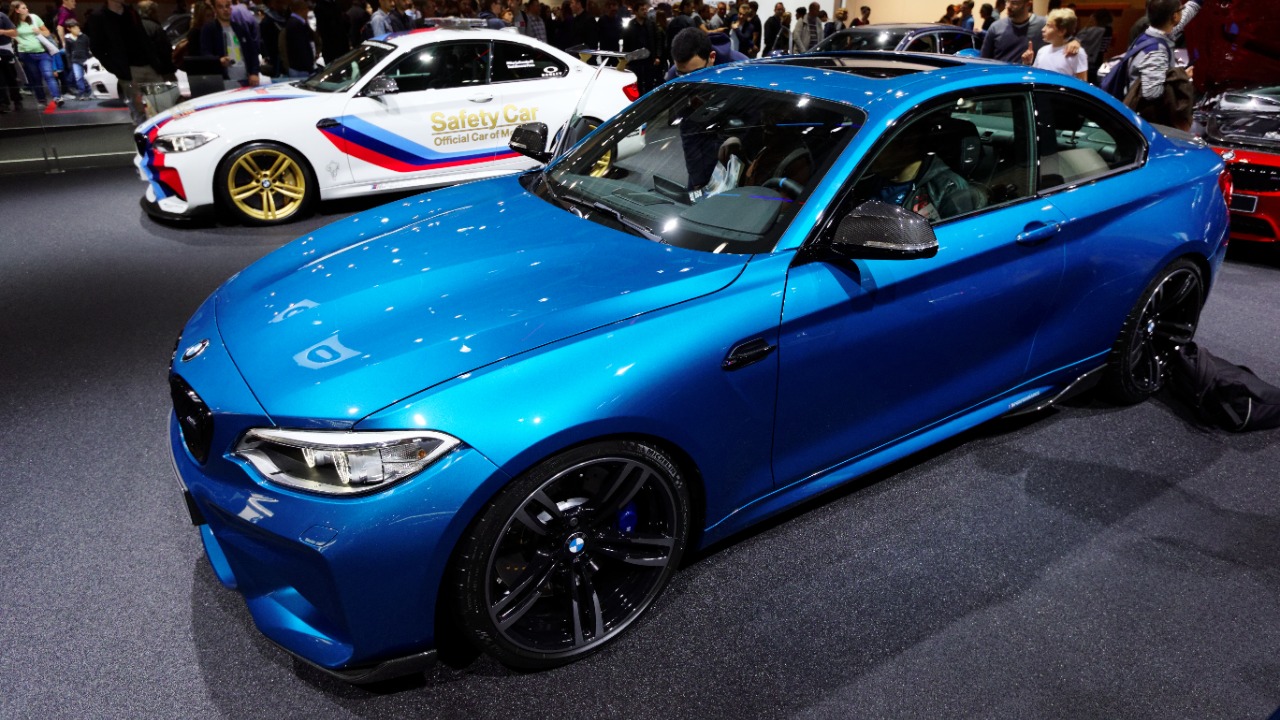
What made the 2016 M2 feel so serious was not just its size, but how completely its powertrain and chassis were tuned around that compact body. The turbocharged straight-six delivered an output of 365 horsepower, a figure that BMW itself highlighted as the core of the car’s blend of Power, Agility, Precision. That engine was not just about peak numbers, it was about a thick, usable torque band that made the car feel eager in everyday traffic and ferocious when you opened it up on a back road.
The chassis followed the same philosophy. With a shorter wheelbase and slightly less weight than the M4, the M2 had the feel of a car that was perfectly sized for tight corners and quick transitions, something that came through clearly in early Feb test drives. The steering was quick without being nervous, the body control was taut but not punishing, and the whole package encouraged you to lean on the car’s balance rather than rely on brute force. In a market obsessed with ever larger power figures, the M2’s focus on usable performance felt refreshingly grown up.
Borrowed hardware, distinct personality
BMW did not build the M2 from scratch, and that was part of its genius. The car snatched several key internal components from the larger M3 sedan and M4 coupe, including the pistons, then paired them with a remapped engine management system that gave the smaller car its own character. That mix of shared hardware and bespoke tuning was central to what one reviewer described as Snatching BMW parts to create one of the most entertaining M road cars of its era.
Inside the cabin and under the skin, the M2 also benefited from the broader M catalogue. The manual gearbox offered a precise shift with an active rev matching function, while the optional 7 speed M DCT dual clutch transmission gave drivers a rapid fire alternative that still suited daily use. Brakes were full on M specification, and the car arrived very well equipped from the factory, details that came through clearly in early BMW DCT road tests. For me, that blend of shared components and unique tuning is what allowed the M2 to feel every bit a real M car without simply mimicking its bigger siblings.
Track pace that backed up the attitude
Plenty of compact performance cars talk a big game, but the M2 had lap times to match its swagger. According to the brand, the car could complete the Nürburgring Nordschleife in 7 minutes 58 seconds, a time that put it ahead of the E92 generation M3 and firmly into serious track territory. That benchmark, highlighted in dealer communications that noted how According to the brand the M2 fit nicely into BMW’s M lineup, showed that the smallest M car was not just a styling exercise or marketing play.
Independent testing backed up that impression. Early instrumented runs framed the car as a genuine high performance machine, with one First Test Review noting that the U.S. version would combine strong acceleration with roughly ten percent less mass to move compared with some larger M models. On the road, that translated into a car that felt alert and responsive at legal speeds, yet capable of sustained punishment on track days without wilting. In my view, that dual personality is what separated the M2 from many hot hatches and compact coupes that could shine in one environment but not both.
Value, reception, and the legacy of a compact bruiser
For all its performance, the 2016 M2 also arrived with a price that, while hardly cheap, undercut the bigger M cars by a meaningful margin. The car started at $51,700, a figure that sat alongside a strong Consumer rating and a top tier Safety rating on early BMW Starts listings. That combination of cost, performance, and everyday usability helped the M2 feel like a rational choice for enthusiasts who might otherwise have been pushed toward more compromised sports cars or larger, more expensive sedans.
The critical response reflected that sweet spot. One early reviewer, Matt Campbell, scored the car 65 in a detailed road test that praised its balance and engagement, while later assessments described it as probably the best sports coupé they had driven, even if running costs were high. That latter verdict came from Jan commentary by The Telegraph’s Andrew English, who highlighted how the M2’s compact size and rear drive layout delivered a level of interaction that many newer performance cars lacked. From my perspective, that kind of praise cemented the M2’s reputation as more than just an entry ticket into the M world.
How the M2 felt from behind the wheel
Numbers and lap times only tell part of the story, and what has always stuck with me about the 2016 M2 is how it felt from the driver’s seat. Video reviews captured that sensation vividly, with one BMW Drive and Review describing how the car’s compact dimensions and strong mid range shove made it feel like better value than an M3 on a tight road. The driver could place the nose exactly where they wanted, lean on the rear axle, and trust the car to communicate what the tires were doing long before grip ran out.
That sense of connection is what made the M2 feel like more than a parts bin special. Even in early coverage that framed it as a sequel to the 1 Series M, commentators noted that the new car had a more polished, less raw edge while still delivering the same essential fun. One video feature on the car’s arrival as a follow up to the earlier compact M coupe, titled around how The BMW 1 Series Coupe had set expectations, concluded that sometimes the sequel really can be great too. When I think back on the 2016 M2 today, that is exactly how it feels: a small car that took its role seriously enough to become a modern benchmark for how compact performance should be done.
More from Fast Lane Only: