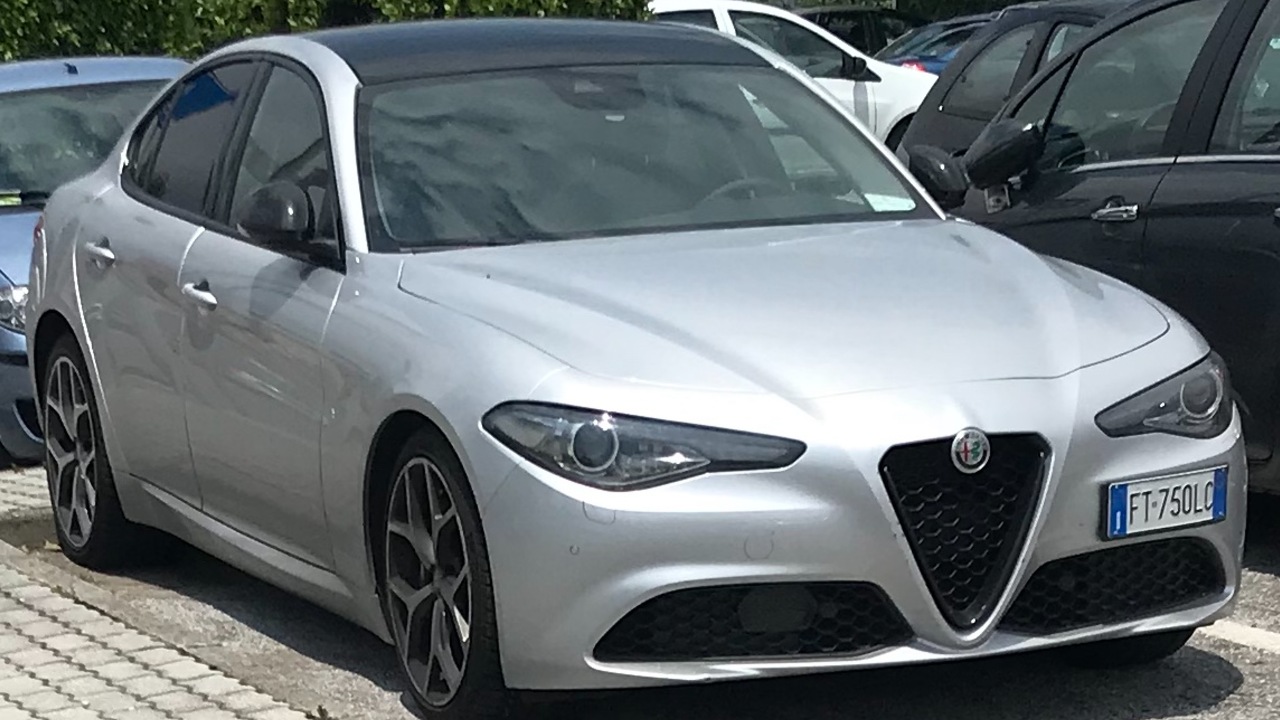
The 2017 Alfa Romeo Giulia Quadrifoglio arrived as a high stakes gamble, a 505 horsepower sports sedan meant to drag a storied badge back into the heart of the luxury market. It was beautiful, fast and technically ambitious, but it also leaned into engineering and business risks that would shadow its reputation. Looking back now, the car reads like a case study in how far a brand can push for glory before reliability, recalls and ownership realities start to bite.
Betting the brand on a clean sheet
Alfa Romeo did not play it safe with the Giulia platform, and that decision shaped everything about the Quadrifoglio. At the time of its launch, the Alfa Romeo Giulia was built on a new rear drive architecture that shared only a few peripheral systems with other models, and it arrived with two new engines at the same time. That kind of clean sheet approach is rare in a segment where rivals often evolve existing platforms, and it meant the Giulia Quadrifoglio was carrying the weight of a fresh chassis, new powertrains and a revived dealer network all at once.
The corporate context made the move even bolder. A mismanaged and ultimately insufficient investment strategy from Fiat had already forced Alfa Romeo’s withdrawal from the United States market in 1995, so the 2017 Giulia Quadrifoglio was framed as the return that Alfa Romeo deserved rather than just another model year refresh. Business analysts described the car as the flagship effort that Alfa Romeo needed to re establish itself in the ultra competitive US luxury market, and the halo sedan was positioned to prove that the brand could stand alongside German benchmarks again.
Ferrari drama in a four door shell
On the road, the Quadrifoglio’s hardware made that ambition feel credible. The car’s most talked about hand me down from the now vast FCA empire was the Giulia QV’s Fer derived engine, a twin turbocharged V6 that gave the sedan supercar like urgency. Reviewers highlighted how the five seat mass production sedan delivered a uniquely Italian take on the daily commute, with the Giulia Quadrifoglio offering performance that let it mix with multimillion dollar rivals while still wearing a relatively attainable price tag.
That performance focus was not just about straight line numbers. Early drives emphasized how the chassis tuning, steering response and brake feel made the car feel alive in a way that many competitors had lost, and enthusiasts responded to a sedan that seemed to prioritize driver engagement over clinical refinement. Business oriented coverage noted that the Alfa Romeo Giulia Quadrifoglio Why it is here in any award conversation comes down to the way The Alfa Romeo Giulia combines that pace with design drama, turning the car into a rolling statement that Alfa Romeo still knew how to build something emotional.
Safety success, reliability questions
Alfa Romeo also took a calculated risk by pushing the Giulia into the top tier of crash performance, and on paper it paid off. The Alfa Romeo Giulia was introduced in the 2017 model year, and beginning with 2017 models built after May 2017, the front end structure was revised to reduce occupant compartment intrusion on the driver side. Those engineering changes helped the 2017 Alfa Romeo Giulia earn The TSP designation of Top Safety Pick Plus from IIHS, contingent on achieving ratings of good in five crashworthiness evaluations and strong scores in crash avoidance tests.
That safety story, however, ran in parallel with emerging reliability concerns that would become part of the Quadrifoglio’s legacy. Official recall records show that Chrysler, operating as FCA US, LLC, has had to address issues involving the fuel system, gasoline delivery and the fuel pump on certain 2017 to 2019 Alfa Romeo Giulia models, with notices explicitly warning that a failure could lead to engine fuel starvation and loss of drive power. Later investigations into stallout complaints described how a Fuel Delivery Module Defect May Lead to Engine Stalls and Loss of Motive Power, and federal probes into the Giulia over stallout complaints, reported by Sebastien Bell, underscored that While modern automakers like to say they are mobility providers, they still have to answer when a car shifts into neutral or loses motive power unexpectedly.
Recalls, probes and the cost of complexity
The Quadrifoglio’s risk profile became even clearer as recall campaigns widened. In Canada, regulators detailed how Older Alfa Romeos were being recalled for loss of power risk, with Alfa Romeo calling back some 3,289 older vehicles, including 2017 Alfa Romeo Stelvio and Giulia models, because the fuel pump could fail and cause the engine to stall. Separate technical bulletins and recall summaries for the 2017 Alfa Romeo Giulia list Fuel system, gasoline, Delivery and Fuel pump as key problem areas, and the language in those documents is blunt, warning that a defect could result in engine stalls and loss of drive power.
Those issues did not exist in a vacuum. Broader reliability snapshots note that for the 2017 Giulia, there is No Detailed Data Available in some categories, but they still flag FUEL, SYSTEM and GASOLINE concerns and reference recall activity led by Chrysler. Other reporting on luxury brands that buyers may regret highlights how Owners have said that the power and electronics systems do not work right, which often means high upfront repair costs, and Alfa’s own electronic system is described as a headache, with Italian cars often having complex wiring layouts that many general repair shops struggle to diagnose without specialized equipment. Put together, the picture is of a car whose advanced electronics and bespoke platform created more potential failure points than some buyers expected.
Enthusiast passion versus everyday reality
Despite those warning signs, the Quadrifoglio built a passionate following, and that tension is where its risk taking feels most vivid. Enthusiast forums are full of owners who describe the car as amazing and worth the compromises, with one Comments Section voice noting that if you can afford it, the Giulia Quadrifoglio is incredible, while also conceding that Reliability seems to be a mixed bag. Another first run 2017 QV owner writes that they love the car and agree with advice to buy used for value, but they add a clear caution, Bear in mind the potential costs and think twice before making this your only car.
Other owners share more granular experiences that echo the official data. One Quadrifoglio driver posting a one year update mentions that they have a 2017 which had the original ride height before it was raised, and another thread on common problems and overall reliability of the Giulia has Steffiluren explaining that Only somewhat common issue they have seen that will leave you stranded is the electronic side, reinforcing the idea that software and sensors can be the weak link. Shoppers comparing early model years ask Any significant differences in reliability between the 2017 and 2018 Giulia, and community responses often steer them toward extended coverage, with some advising that if you want long term ownership, get the extended warranty and budget for potential electronic and fuel system repairs.
A cautionary halo that still turns heads
From a distance, the Giulia Quadrifoglio still looks like everything Alfa Romeo promised at launch. Video reviews describe how the Alfa Romeo Giulia has all the potential in the world and remains stunning even after nearly a decade on the market, and marketing material continues to frame the Giulia Quadrifoglio as an Italian answer to the world’s fastest compact luxury sedans. The car’s mix of design, performance and heritage means that even now, it can feel like buying into a piece of the brand’s identity rather than just a transportation appliance.
Yet the ownership story has turned the 2017 Quadrifoglio into a cautionary tale as much as a comeback icon. Safety advocates remind drivers that Safety First, Folks, and that Even a minor recall can impact your safety, urging people to Always check their vehicle’s status by entering the VIN before buying used. Recall databases for the Giulia, ongoing probes into stallouts and large scale campaigns such as the recall of 53,849 Alfa Romeo models for potential fuel pump failure all reinforce that the risks Alfa took with a clean sheet platform, Fer derived engine and complex electronics came with real world consequences. For enthusiasts who accept those trade offs, the car remains a thrilling outlier, but for buyers who expect German style durability with Italian flair, the 2017 Alfa Romeo Giulia Quadrifoglio stands as a reminder that engineering bravado and long term dependability do not always travel together.
More from Fast Lane Only: