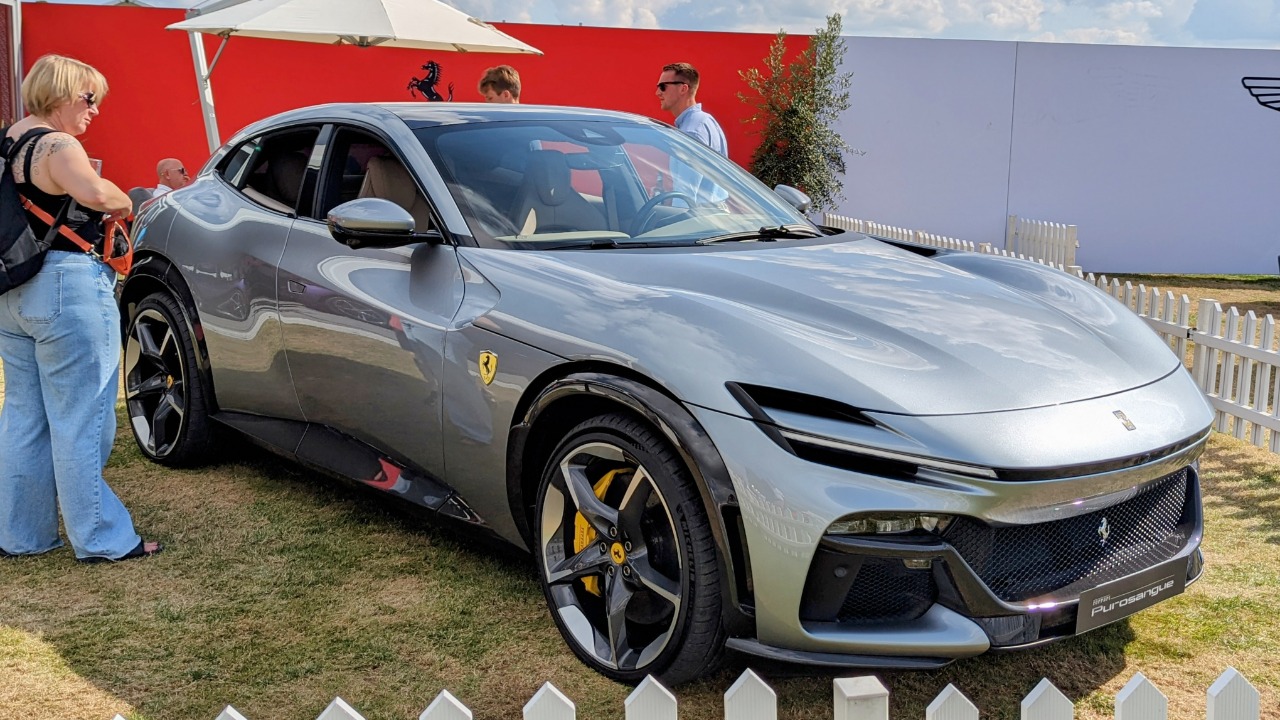
The 2023 Ferrari Purosangue arrived as the car that finally crossed a line Maranello had drawn for decades, putting four doors and real family practicality into a badge built on uncompromising sports cars. Instead of backing quietly into the booming SUV market, Ferrari framed the Purosangue as a new kind of thoroughbred, one that could carry four adults in comfort while still behaving like a front‑engined V12 supercar. I see it as the moment the company admitted the world had changed, then insisted it could change on its own terms.
From “never an SUV” to Ferrari’s first four-door
For years, Ferrari executives dismissed the idea of building a high‑riding family hauler, even as rivals cashed in on performance SUVs. That is why the Purosangue felt less like a routine model launch and more like a philosophical pivot, the first time the Italian brand put four doors and four full‑size seats into a production car. When the covers came off the Ferrari Purosangue SUV, it was immediately clear that the company was not just adding another body style, it was rewriting what a Ferrari daily driver could look like.
Even the name, Purosangue, Italian for “pure blood,” reads like a pre‑emptive defense of that decision. I read it as Ferrari telling loyalists that this taller, more practical machine still belongs in the same family as a mid‑engined berlinetta. The brand went out of its way to stress that this was not a concession to fashion but a new kind of four‑door sports car, a message that set the tone for everything from the powertrain to the way the rear doors open.
A V12 heart in a family body
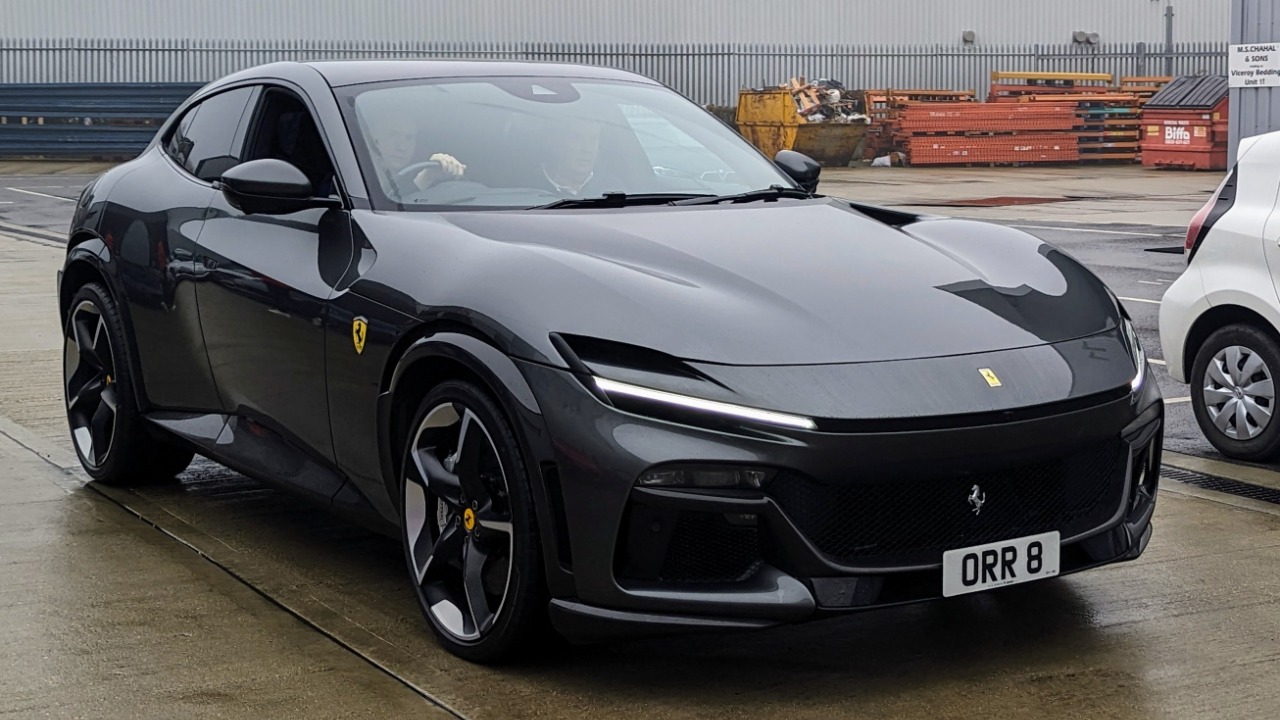
Ferrari could have softened the blow of a taller, heavier car by fitting a smaller engine or leaning on hybrid assistance, but it did the opposite and doubled down on drama. The Purosangue launched with a naturally aspirated V12 that immediately positioned it against other ultra‑fast crossovers, a move that signaled the company’s refusal to treat this as a junior model. In coverage of Ferrari Purosangue Breaks Cover With its twelve‑cylinder engine, the car was immediately framed as a direct answer to Rivals The Lamborghini Urus, which shows how firmly Ferrari wanted it judged on performance rather than practicality.
That intent carries through to the numbers. The Purosangue’s engine output is quoted at 715 horsepower, which puts it ahead of competitors like the Aston Martin DBX 707 and Lamborghini Urus Performante in the power race. I see that as a deliberate statement: if Ferrari was going to build something taller and heavier, it would not be outgunned, and it would still offer the kind of engine that enthusiasts associate with the brand’s greatest hits.
Engineering a “not‑quite SUV”
Ferrari has been almost allergic to the term SUV, preferring to describe the Purosangue as an authentic four‑door sports car, and the engineering backs up that semantic dance. Instead of a conventional crossover layout, the company pushed the engine far back and used a rear‑mounted gearbox to chase a sports‑car‑like weight distribution. Technical breakdowns of the With the transmission located at the rear and a “power transfer unit” ahead of the engine describe a layout that feels closer to a grand tourer than a traditional family wagon.
That hardware is wrapped in a body that still sits higher than a coupe but avoids the blocky silhouette that defines most SUVs. The stance is long‑bonnet, cab‑rearward, with muscular haunches that visually link it to Ferrari’s front‑engined two‑doors rather than to any off‑roader. When I look at the way the roofline tapers and the wheel arches are sculpted, it is obvious the designers were trying to keep the Purosangue in the mental category of sports cars, even if the ride height and hatchback practicality tell a more complicated story.
Cabin comfort without losing the edge
Inside, the Purosangue is where Ferrari’s break with tradition becomes most tangible, because this is a car that expects to carry four adults regularly rather than treat rear passengers as an afterthought. The cabin is laid out with four individual seats, each shaped like a sports bucket but designed to be lived with on real‑world journeys. Early impressions of the interior noted that the seats look thin and well‑bolstered but do not appear to have skimped on padding, which captures the balance Ferrari was chasing between track‑ready support and family‑car comfort.
The rest of the interior follows the same logic, with multiple screens and a driver‑centric layout that still leaves rear passengers with the sense they are in something special rather than just along for the ride. I find it telling that the rear doors are rear‑hinged, a flourish that makes climbing into the back feel like an event and also signals that those seats are not second‑class. It is a subtle way of saying that the Purosangue is meant to be used as a genuine four‑seater, not just a two‑plus‑two with extra marketing spin.
Price, exclusivity, and the business case
Ferrari did not position the Purosangue as an entry point to the brand, and the pricing makes that crystal clear. Analyses of the launch describe it as the company’s second‑most expensive production car behind the SF90 Stradale, which starts at €440,000, a figure that instantly puts the Purosangue in rarefied company. One breakdown of Ferrari’s broader strategy notes that The Purosangue, described as a Recent Example of a major Ferrari Launch, was expected to sit either side of £200,000, and that perspective on pricing shows how carefully the company guards its margins and brand aura even when it moves into a new segment.
That exclusivity extends beyond the sticker price to how many cars Ferrari is willing to build. Commentators looking at The Purosangue as a Recent Example of how the company manages demand have pointed out that production is deliberately capped so the model does not flood the streets. I read that as Ferrari trying to have it both ways: tapping into the lucrative appetite for high‑performance family cars while still making sure the Purosangue feels like a rare sight, not the default choice in a luxury‑car park.
How the Purosangue fits into Ferrari’s image
The Purosangue did not just change what a Ferrari can do, it also nudged how the brand is perceived in the wider culture. Coverage of Ferrari’s groundbreaking four‑door sports car, the 2023 Purosangue, often highlights its dry weight of 2,033 kg, a figure that would have been unthinkable for a classic mid‑engined model. Yet the same reports still describe it as a sports car, which tells me Ferrari has succeeded, at least partly, in convincing people that performance is about more than just lightness and low seating positions.
Social media has amplified that shift in perception. One viral clip framed how Ferrari broke tradition with the Purosangue, calling it the brand’s first‑ever four‑door, four‑seater performance car and celebrating The Purosang as a kind of lifestyle object as much as a machine. When I scroll through those reactions, I see fewer purist complaints than I expected and more enthusiasm from people who always loved the idea of a Ferrari but needed something that could handle school runs and ski trips as easily as a Sunday blast.
Why this break with tradition matters
For Ferrari, the Purosangue is not just a one‑off experiment, it is a test of how far the brand can stretch without snapping the thread that ties it to its racing and sports‑car heritage. Official messaging around the launch stressed that, According to Ferrari, the first Purosangues would reach the United States around the end of 2023 and that the company still sees itself as a maker of sports cars rather than SUVs. That insistence on language might sound pedantic, but I think it reveals how carefully Ferrari is managing the narrative, trying to reassure long‑time clients that the core identity is intact even as the product mix evolves.
From my perspective, the Purosangue’s real significance lies in how confidently it blends contradictions. It is heavy yet ferociously fast, practical yet indulgent, and rooted in tradition while openly breaking it. By putting a V12 and a sky‑high price tag into a four‑door body, Ferrari has made it clear that it will not chase volume for its own sake, even in a segment that rewards it. Instead, the company has created a car that feels like a rolling argument: proof that a brand built on two‑door icons can step into the everyday without leaving its past entirely in the rear‑view mirror.
More from Fast Lane Only: