The 2017 Ford GT was never just a nostalgia play or a vanity project for wealthy collectors. Ford built it as a rolling experiment, a way to trial materials, aerodynamics, electronics, and powertrain ideas that would quietly filter into regular cars and trucks. Instead of hiding that agenda, the company leaned into it, pitching the GT as a technology lab that just happened to look like a Le Mans refugee.
That is what makes this car so interesting to me: it is both a halo supercar and a very expensive engineering tool. Under the dramatic bodywork, the GT became a focused test bed for lightweight construction, active aero, advanced driver interfaces, and a new generation of EcoBoost performance, all with an eye toward what would eventually show up in showrooms.
From heritage icon to rolling lab
Ford could have played the 2017 Ford GT safe, simply recreating the GT40 shape and dropping in a big V8 for the nostalgia crowd, but the company made it clear from the start that this car had a different job. Internal documents described the all-new race-winning Ford GT as a test bed for new technologies that could spread across the Ford line-up, not as a one-off toy. That framing matters, because it explains why the car is packed with experimental hardware that would be wildly overbuilt if the only goal were weekend track days.
Inside the company, the project was explicitly about future tech, not just lap times. When the team began work on the all-new Ford GT in 2013, Ford executive vice president Raj Nair laid out three goals: use the car to push aerodynamics, EcoBoost power, and lightweight materials, and then drive those lessons into future vehicles. That is why the GT ended up with a carbon fiber tub, a tiny frontal area, and a twin-turbo V6 instead of a traditional big-displacement engine, all of it chosen because it could teach engineers something useful.
Lightweight carbon and radical aero
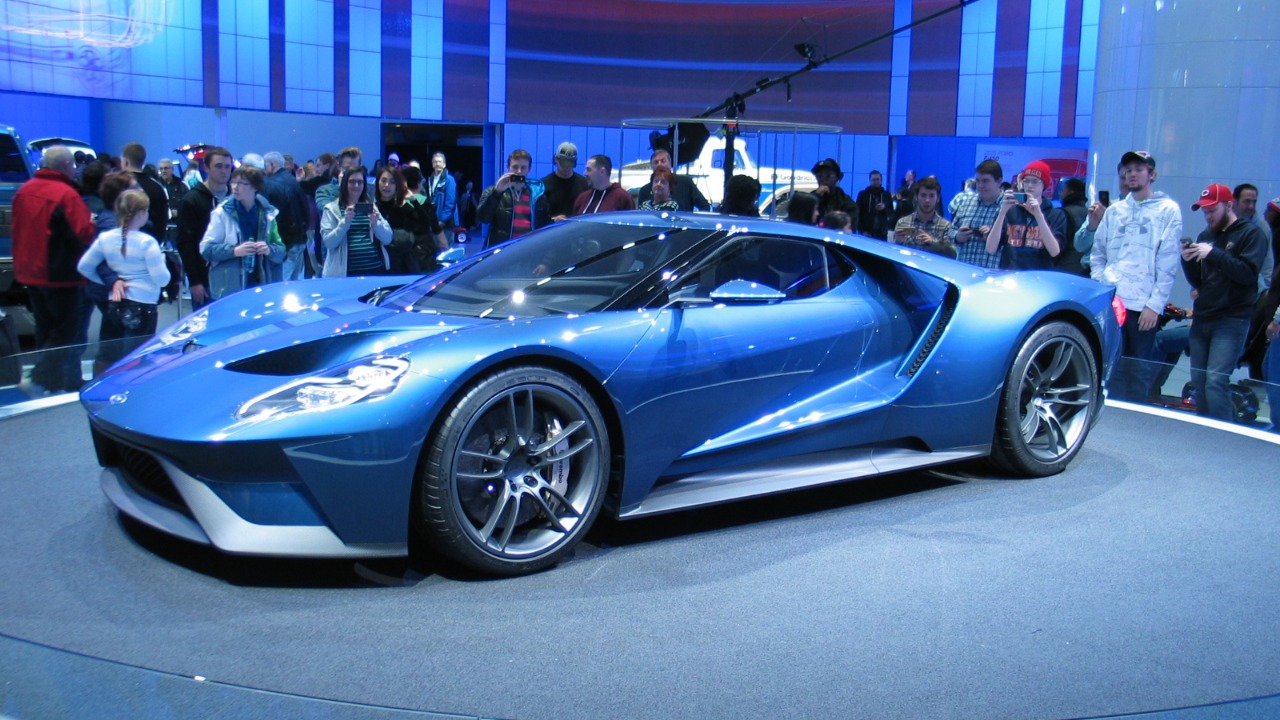
The structure is where the GT’s tech-first mindset really shows. Ford used an all carbon fiber body and passenger cell to slash weight and increase stiffness, a combination that would have been unthinkable for a mainstream brand a decade earlier. Company materials describe how the GT features an all carbon fiber construction that communicates modernity and pure beauty, with the design shaped as much by airflow as by nostalgia for the GT40, a point underscored in a release that declared FORD REDEFINES INNOVATION IN AERODYNAMICS, ECOBOOST and light-weighting with the all-new Ford GT carbon fiber supercar. That kind of language is not about selling a few hundred cars, it is about setting a template for how Ford thinks about materials across its portfolio.
The bodywork itself is a masterclass in functional sculpture. Engineers talked about putting the dynamic in aerodynamics, optimizing every surface so that while GT looks fast standing still, the team had actually tuned every shape to manage air for cooling and downforce. One official description explains how they were putting the dynamic in aerodynamics, with active elements like ducts that open to decrease downforce when needed. Another account notes that the development team had a goal to stretch the performance envelope, using the GT’s aerodynamics to balance stability and speed, and that like the materials used, the aero package was designed to work hand in hand with the powertrain, as described in a piece that summed it up with the phrase Like the materials used, the GT’s aerodynamics were just as important.
Suspension tricks and race-bred grip
Underneath that carbon shell, the suspension is where the GT feels most like a science project on wheels. The car uses a hydraulic system with pushrod-actuated dampers that can rapidly change ride height and stiffness, letting it switch from street-friendly compliance to track-ready stiffness at the touch of a button. Ford’s own technical write-up explains that the team also created innovative suspension geometry and hydraulics that allow near-instant ride height changes and exceptional driver control, a detail highlighted in a section of the official release that begins with The team also created these systems. That kind of active chassis tech is exactly the sort of thing that can be scaled down into adaptive dampers and height-adjustable suspensions on more attainable models.
There is also a clever front-lift mode that lets the GT clear speed bumps and steep driveways without shredding its nose, a feature that sounds like a small convenience but actually reflects a broader push to blend race car hardware with daily usability. One detailed description notes that another feature of the hydraulic suspension, front-lift mode, helps GT clear obstacles, with the driver able to raise the nose quickly using the same hydraulic circuits that control the car’s track stance, as outlined in a technical piece introduced with the word Another. On the aero side, engineers went back to the profile of the original GT40 to shape the roof and tail, then used modern tools to optimize downforce, increasing cornering grip in a way that a later review summed up by noting that at that point, the group turned once again to the classic silhouette to optimize downforce for modern performance.
EcoBoost power and digital brains
Ford’s decision to power the GT with a twin-turbo V6 instead of a V8 was controversial with purists, but it fits perfectly with the car’s role as a tech demonstrator. The engine is a high-output EcoBoost unit tuned to deliver 647 horsepower, a figure that shows up repeatedly in internal and external reporting, including a technical overview that notes engineers developed future vehicle tech on the GT while managing the supercar’s 647 horsepower output. A separate performance summary spells out that the 2017 Ford GT Gets 647 hp, 348 km top speed, and an all-digital cluster, underlining just how far Ford was willing to push a downsized engine. That combination of small displacement, forced induction, and big power is exactly the recipe Ford has been rolling out across its trucks and performance cars.
Inside, the GT’s brain is just as experimental as its engine. The car introduced an all-digital dashboard display that can reconfigure itself based on drive mode, prioritizing different information when the driver is cruising, attacking a track, or pursuing maximum top speed. One fleet-focused report described how the GT previews a dashboard of the future, with a Photo of GT instrument cluster in Sport mode courtesy of Ford, and explained that the layout changes to support everything from daily driving to all-out runs. Another performance overview highlighted that the 2017 Ford GT also uses this all-digital dashboard display as part of its identity, tying the interface directly to the car’s mission as a tech-forward flagship.
From supercar to showroom tech
All of this would be academic if the GT’s innovations stayed locked inside a handful of carbon tubs, but Ford has been explicit that the car’s role as a technology test bed is meant to benefit regular drivers. Company materials talk about Tech for all, describing how GT’s role as a technology test bed is evident throughout the supercar, with some innovations, such as camera-based driver aids and advanced materials, planned to appear in other vehicles for the first time in the following model years, a point spelled out in a section labeled Tech for. A separate consumer-facing review echoed that idea, noting that tech for all was a guiding principle and that lessons from the GT’s aerodynamics, materials, and electronics would inform future vehicles as well, a line captured in a piece that explicitly used the phrase Tech for all to describe the program.
Ford executives have been unusually blunt about this strategy. In DETROIT, Ford CEO Mark Fields said the introduction of the new GT supercar was not a sign the automaker was straying away from its core business, but rather that it was using the car as an innovation showcase, pairing advanced EcoBoost power, lightweight materials, and striking design to feed the rest of the lineup, a point captured in a report that quotes DETROIT Ford CEO Mark Fields directly. Internal engineering briefs go even further, describing the project under headings like Racing to the Future and How Ford Created the GT Supercar to Test Technologies for Tomorrow’s Vehicles, and explaining that the all-new race-winning GT supercar serves as a test bed for new technologies and advanced driver aids that will be applied across the Ford line-up, language that appears in both North American and European releases, including one that literally starts with DOWNLOAD PDF OF ARTICLE and another that frames the story as Racing to the Future and explains how Ford created the GT supercar to test technologies for tomorrow’s vehicles.
Even the way Ford talks about the project in different regions reinforces that message. European communications describe the program under the banner Racing to the Future, explaining how Ford created the GT supercar to test technologies for tomorrow’s vehicles and emphasizing that the car’s active aerodynamics and grip on and off the track are part of a broader push to improve everyday models, a theme repeated in a Portuguese-language release titled Racing Future How Ford Created the GT Supercar Test Technologies for Tomorrow Vehicles All. A companion English-language document, labeled How Ford Created the GT Supercar Test Technologies for Tomorrow Vehicles All Ford GT, drills into the details of how the car manages airflow while accelerating, cornering, and braking, again tying those lessons directly to future products. Taken together, the messaging is consistent: the 2017 GT returned not just to win races or decorate garages, but to quietly rewrite the rulebook for the next generation of Fords.
More from Fast Lane Only: