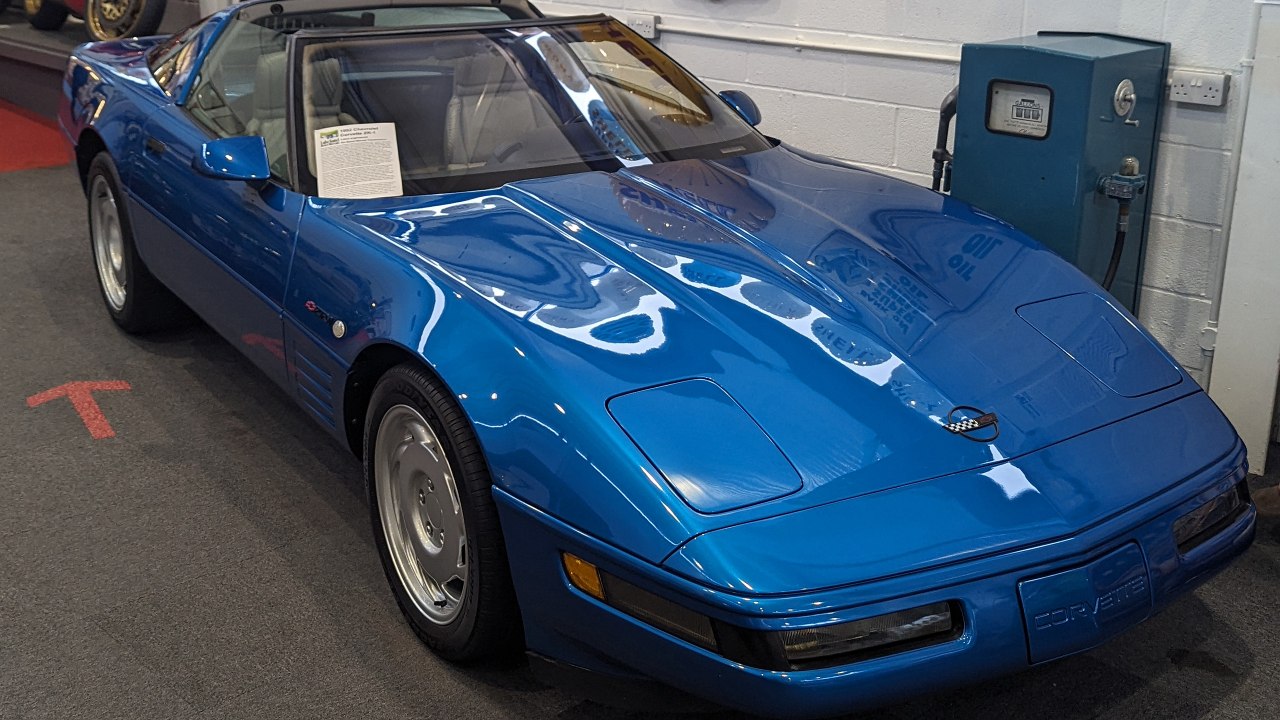
The Corvette ZR-1 arrived at a moment when American performance credibility was fragile, then rewrote expectations with numbers and poise that could no longer be dismissed as bravado. From that first shock to the system in the early 1990s to today’s electrified hypercar era, the badge has become shorthand for the United States matching, and often surpassing, the world’s most exotic machinery. The story of how it reset confidence is really a story of how one nameplate kept forcing the global performance conversation to take American engineering seriously.
Across three and a half decades, each new ZR1 or ZR1X has pushed the Corvette further from its image as a value sports car and closer to the rarefied territory once reserved for European and boutique hypercars. The progression from the original ZR-1 to the current 1,000‑plus horsepower and sub three second 0 to 60 m benchmarks has not only elevated the car itself, it has also shifted how enthusiasts and rivals define American performance.
From underdog to Ferrari fighter
The turning point came when the 1990 ZR-1 proved that a Corvette could run with the European elite rather than merely undercut them on price. That car, remembered as the first Corvette to truly challenge European supercars, was benchmarked against machines like the Ferrari 348 and contemporary Porsc rivals, signaling that Chevrolet was no longer content with domestic bragging rights. For over three decades since, the Chevrolet Corvette ZR1 name has represented the pinnacle of Chevrolet Corvette performance, a consistent attempt to push the platform into what many now describe as hypercar territory.
That original ZR-1 did more than add power, it reframed the Corvette as a technical statement. The ZR1 tag, with and without a hyphen, has been associated with high performance Corvette options for decades, and its reappearance has typically coincided with major engineering leaps rather than cosmetic refreshes. When enthusiasts talk about the Corvette as a genuine alternative to European exotics, they are really tracing a line back to that first ZR-1 and the way it forced comparisons with Ferrari and Porsc instead of the usual domestic rivals.
C4 ZR1 and the birth of modern American confidence
The C4 generation ZR1, which arrived after the initial ZR-1 experiment, cemented this new posture. After that first round, the ZR1 package vanished until 1990 and the C4 Corvette, then returned with a focus on outright speed that made the question “How Fast Was the C4 ZR1 Corvette?” more than a marketing slogan. Now, with hindsight, that car looks like the bridge between the analog muscle era and the data driven performance arms race that defines the current market.
Even in its more ordinary trims, the C4 platform was framed as a boundary pusher. Contemporary descriptions of The Chevrolet Corvette C4 emphasize that it was the fourth generation of the nameplate and that it pushed boundaries in chassis and aerodynamics, while owners still note that a well kept example “Runs great” and remains a good car all the way around. That mix of everyday usability and serious performance became a template for later ZR1 models, which would lean on advanced engineering without abandoning the idea that a Corvette should still be driven and enjoyed rather than stored like a museum piece.
The 2025 Corvette ZR1 and the numbers that changed the argument
The latest combustion powered Corvette ZR1 has taken that legacy and translated it into numbers that are difficult to ignore, even for skeptics of American performance. At its heart is a 5.5L twin turbocharged LT7 V8 with a DOHC flat plane crank layout, an architecture more often associated with European exotics than with traditional American V8s. Official figures list 1,064 horsepower at 7,000 rpm and 82 as part of its headline specifications, placing the car firmly in the four digit power club that only a handful of production models occupy.
Acceleration figures have been even more disruptive to the old hierarchy. Reports that the 2025 Chevy Corvette ZR1 can go from 0 to 60 m in just 2.3 seconds, and that the Chevy Corvette ZR1 Hits 60 M and 60-mph in 2.3 seconds Faster Than Any Lamborghini or McLaren while equaling a Bugatt benchmark, have reframed the Corvette as a straight line and track weapon at a fraction of traditional hypercar prices. When a bone stock Chevy Corvette is described as setting a new standard for American supercars and doing so with such repeatable performance, the old narrative that American cars are quick but crude begins to sound dated.
ZR1X and the leap into electrified hypercar territory
If the 2025 ZR1 proved that internal combustion Corvettes could trade blows with the fastest cars on sale, the 2026 Corvette ZR1X has pushed American performance into the electrified hypercar conversation. The car is positioned as an electrified hypercar that directly targets the rare birds typically spotted in places like Goodwood or Pebble Beach and then rarely seen again outside of curated clips. Yet, unlike the multi million dollar exotics it is measured against, the 2026 Corvette ZR1X starts at $209,700, a figure that, while hardly accessible, undercuts many of its rivals by an order of magnitude.
Performance claims have been equally bold. The ZR1X has been described as having officially claimed the title of the quickest production car in the nation, with American performance commentators noting that American performance just crossed a new threshold when the Corvette ZR1X took that crown. Promotional material has highlighted that the 2026 Corvette ZR1X can sprint to 60 m in record time, with one Record Breaker Alert reel celebrating the Corvette as America’s quickest production car. Together, these details support the idea that the ZR1X is not simply a faster Corvette, it is a statement that American engineering can deliver hypercar grade acceleration and technology at a price that, while steep, is still rooted in series production rather than bespoke one offs.
How the ZR1 legacy reshaped expectations for American performance
The cumulative effect of these cars has been to shift how enthusiasts and competitors define American performance. Where once the benchmark for a domestic sports car was whether it could hang with European rivals on a good day, the modern Corvette ZR1 and ZR1X are judged by whether they can out accelerate or out handle the most exotic machinery on sale. Descriptions of the Corvette ZR One X emphasize that it leans toward precision and flow, offering speed that feels smooth, controlled, and deeply confidence inspiring, a far cry from the old stereotype of straight line only American muscle. High performance vehicles are now seen as optimal additions to serious collections, and the 2026 Chevrolet Corvette ZR1 is cited as no exception, reinforcing that a Chevrolet Corvette can sit comfortably alongside far more expensive badges.
This shift has also influenced the broader Corvette lineup and the market around it. As the ZR1 and ZR1X have pushed performance into hypercar territory, other variants such as the Z06 have faced new expectations, with reports of dealers offering deep discounts on unsold 2024 and 2025 Chevrolet Corvette Z06 inventory as buyers wait for refreshed 2026 models with upgraded interiors and technology. At the same time, American performance has entered a new chapter that is no longer defined solely by straight line speed, with the latest Corvette flagships blending brutal acceleration, advanced DOHC engines, and electrified systems into packages that inspire confidence on road and track. In that context, the ZR-1 did more than reset American performance confidence once; it set in motion a standard that every subsequent Corvette, and every domestic rival, is still trying to meet.
More from Fast Lane Only