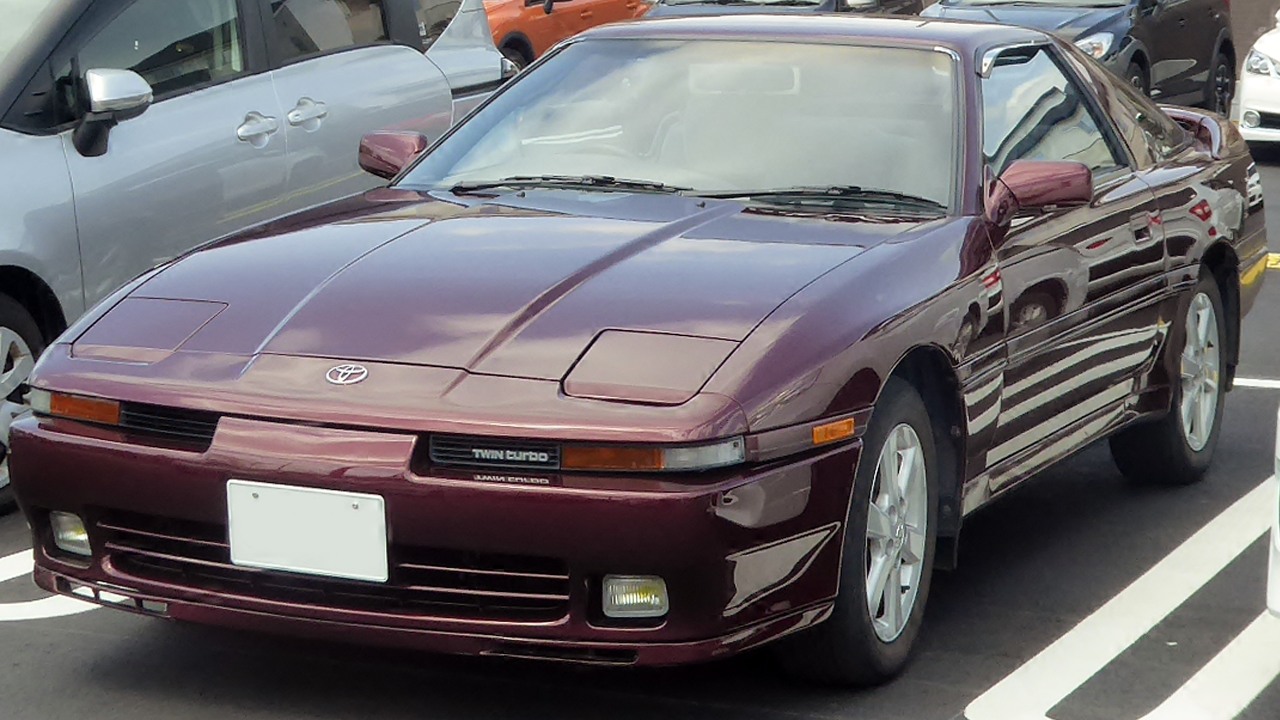
The Toyota Supra Turbo did not simply join the tuner era, it helped define it. With the fourth generation A80, Toyota created a car whose engineering depth, drivetrain strength, and cultural visibility aligned perfectly with the ambitions of a new wave of modifiers chasing four-digit dyno sheets and movie-screen fame. Understanding why it captured that imagination means looking beyond nostalgia to the specific choices that made the Supra Turbo uniquely suited to become a benchmark of the 1990s and early 2000s.
From its overbuilt 2JZ-GTE engine to its stout Getrag gearbox and rear wheel drive balance, the Supra Turbo arrived as a platform that seemed almost pre-approved for abuse. Once motorsport, video games, and films amplified its image, the car moved from respected performance coupe to global symbol of Japanese tuning potential.
The overbuilt heart of the Supra Turbo
At the center of the Supra Turbo legend sits the 2JZ-GTE, a 3.0 liter inline six that quickly became shorthand for indestructible power. The engine’s cast iron block, extensive internal webbing, and forged internals gave it a margin of safety far beyond its stock output, which in Japan was limited to 276 horsepower under the Gentleman’s Agreement and rated at 320 horsepower in export and US market cars. Engine builders who have torn down the 2JZ-GTE describe stock bottom ends living comfortably at 700 or even 800 horsepower, a figure that would destroy the internals of many contemporary performance engines long before the Supra’s block began to complain.
This robustness was not an accident. Toyota’s own engineers had already developed a reputation for “overbuilt” powertrains in earlier Supras, and the A80 continued that philosophy with a block designed to handle turbocharging and immense tuning potential. Detailed breakdowns of the 2JZ architecture highlight the combination of a cast iron block, strong crankshaft, and sequential twin turbochargers that respond well to higher boost and larger single turbo conversions. Tuners and engine swappers have since transplanted the Toyota 2JZ engine into everything from Datsun 240Z builds to drag cars, citing the Toyota 2JZ-GTE longevity and the way it tolerates repeated high power runs without catastrophic failure.
A drivetrain built for serious power
An engine alone cannot carry a tuning legend if the rest of the drivetrain wilts, and the Supra Turbo’s supporting hardware proved just as compelling. The twin turbo 2JZ-GTE in the A80 was paired with a six speed Getrag manual transmission that enthusiasts routinely describe as nearly as tough as the engine itself. Reports on the MKIV Supra note that the six-speed Getrag gearbox, along with the differential and driveshaft, were no slouches, and that this combination helped the car become a benchmark sports and GT machine capable of handling supercar level performance.
Factory specifications for the Toyota Supra Mark IV list the Getrag V160 and V161 six speed manuals as the enthusiast choice, with a four speed A340E automatic also available. The US-spec Supra Turbo came with the full 320 horsepower engine and both transmission options, giving buyers a choice between involvement and convenience without sacrificing the underlying strength of the platform. Owners who pushed power levels upward found that the gearbox, rear differential, and chassis could accept significant increases before requiring reinforcement, which made the Supra Turbo particularly attractive to tuners who wanted to build 600, 800, or even 1,000 horsepower street cars without replacing every factory component.
Tuning potential that bordered on outrageous
The combination of an overbuilt 2JZ-GTE and stout driveline meant that the Supra Turbo arrived from the factory already half prepared for the modifications that would define the tuner era. Accounts from early owners and builders describe how simple upgrades to fueling, turbochargers, and engine management could push power far beyond stock while retaining the original block and often the stock bottom end. Some tuners speak of 90% of surviving 2JZ engines running at two to three times their factory output, a testament to how much headroom Toyota’s engineers left in the design.
Technical analyses of the 2JZ-GTE note that, with the right upgrades, the engine can safely make 1,000 horsepower or more, and that builds in the 700 to 800 horsepower range on stock internals are not uncommon. One detailed overview of the Toyota Supra Mark IV points out that Its 2JZ-GTE engine is capable of handling significant power upgrades, often exceeding 1,000 horsepower with aftermarket modifications, which helped cement its status as an automotive icon. Engine specialists who have disassembled the 2JZ emphasize how the internal webbing and material thickness contribute to this resilience, reinforcing the perception that Toyota unintentionally created a racing short block and then sold it in a road car.
A platform embraced by tuners and pop culture
Engineering alone does not create a cultural icon, and the Supra Turbo’s rise coincided with a moment when tuning culture was moving from backstreet garages into mainstream entertainment. Earlier generations like the Toyota Celica Supra and Supra Mk2 had already developed a following among modifiers, with the latter’s enhanced performance and potential for modifications making it a popular choice in the aftermarket scene. By the time the A80 arrived in the early 1990s, the groundwork was laid for a car that could leap from enthusiast circles into broader awareness.
The fourth generation Toyota Supra quickly became a favorite in Japanese and global tuning communities, with heavily modified examples achieving four digit power outputs and dominating dyno days and drag strips. Stories of cars like Smokey Nagata’s Supra, built for extreme performance and daring high speed runs, reinforced the idea that the model was a canvas for pushing limits. When The Fast and the Furious arrived and placed a bright orange Toyota Supra at the center of its story, driven by Paul Walker’s character and framed as the “10 second car,” demand for Supras skyrocketed and the car’s image as a tuner hero was sealed for a generation of viewers.
From digital circuits to real-world legend
As the tuner era expanded beyond physical meets into digital spaces, the Supra Turbo followed. The car became a fixture in racing video games, where its combination of rear wheel drive balance and huge tuning headroom made it a natural choice for players chasing virtual lap records and quarter mile times. One account of the Gran Turismo series notes that a brutally fast Toyota Supra has been an icon of the franchise since its early iterations, reinforcing the car’s association with high performance and modification in the minds of millions of players.
Motorsport and media coverage also kept the Supra name in circulation even after production of the A80 ended. The Supra evolved in quantum leaps into a benchmark sports and GT car, and later references to the model in manufacturer communications and racing concepts often highlighted its bulletproof engine and tuner friendly nature. When a new generation of Toyota Supra was previewed and eventually returned to showrooms, anticipation was driven not only by nostalgia but by the memory of a car that had once been revered for its ability to handle massive horsepower on stock internals and to thrive in the hands of both professional teams and backyard builders.
More from Fast Lane Only