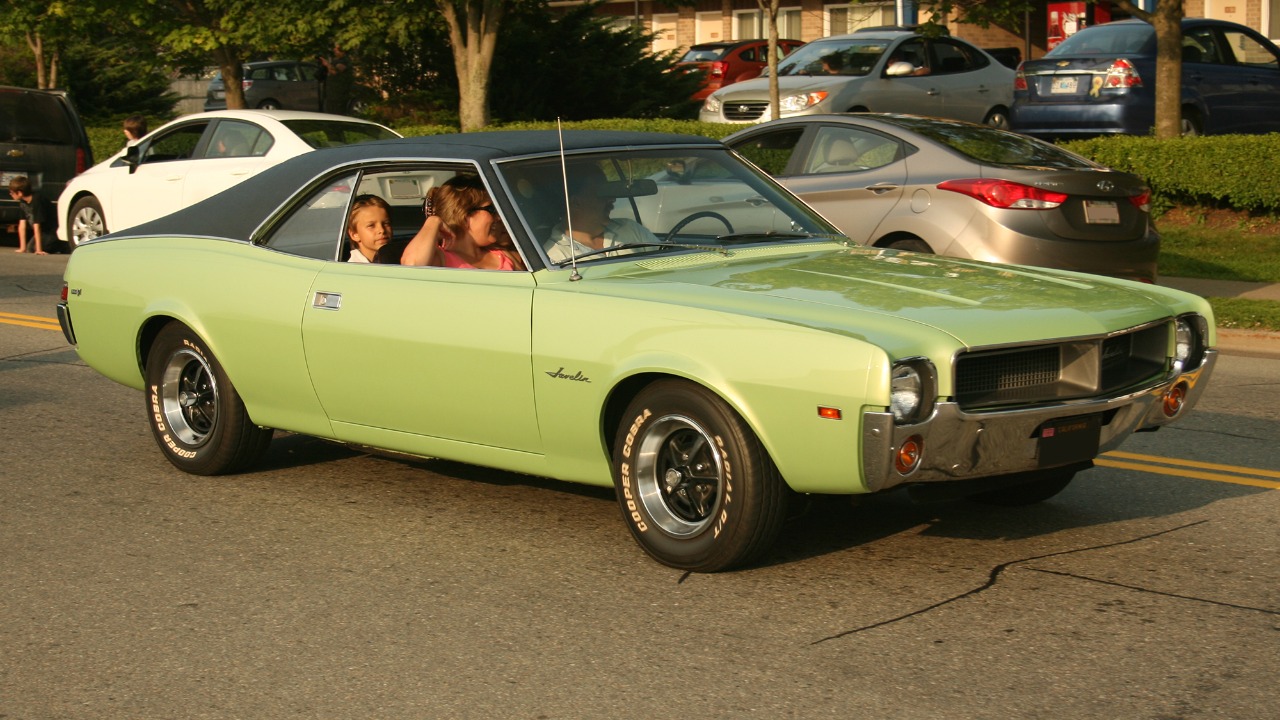
During the late 1960s, the American muscle car market was dominated by manufacturers with far greater resources than American Motors Corporation (AMC). Rather than avoiding the competition, AMC introduced the Javelin to prove it could compete with Detroit’s biggest performance brands. The bold decision gave the company a distinctive identity and produced one of the most underrated muscle cars of its era.
AMC Wanted a Place in the Performance Market
By the mid-1960s, performance cars were attracting younger buyers in record numbers. Ford had the Mustang, Chevrolet offered the Camaro, and Pontiac enjoyed success with the Firebird and GTO. AMC recognized that remaining focused solely on economical transportation would limit its future growth and appeal.
The company decided to develop a sporty coupe that could compete directly with the industry’s most popular pony cars. Introduced for the 1968 model year, the Javelin featured modern styling, a wide stance, and a range of engine options designed to attract both everyday drivers and performance enthusiasts.
Unlike many rivals, the Javelin combined distinctive styling with competitive pricing. AMC hoped this combination would help it stand out in an increasingly crowded marketplace.
The decision represented one of the company’s boldest investments, signaling that AMC intended to compete with much larger manufacturers on performance as well as value.
Performance Earned Respect on the Street and Track
The Javelin offered buyers several engine choices, including powerful V8s that delivered the acceleration expected from a true muscle car. Performance packages improved suspension, braking, and handling, making the car capable of more than just quick straight-line speed.
AMC also recognized the value of motorsports. The company entered the Javelin into the Sports Car Club of America (SCCA) Trans-Am Championship, where competition against Ford, Chevrolet, and Pontiac helped demonstrate the car’s capabilities. Success on the racetrack strengthened the Javelin’s reputation and gave AMC valuable credibility among enthusiasts.
Rather than relying solely on advertising, AMC allowed the Javelin’s performance to speak for itself. Its competitive results proved the company could build a serious performance machine despite its smaller size.
The combination of strong engineering and racing success earned the Javelin lasting respect within the muscle car community.
Bold Styling Helped It Stand Apart
The AMC Javelin featured a design that was noticeably different from many competing pony cars. Its sculpted body, distinctive front-end styling, and muscular proportions gave it a unique personality that appealed to buyers seeking something less common than the mainstream alternatives.
As the model evolved, AMC introduced styling updates and high-performance variants that kept the Javelin competitive throughout the muscle car era. Special editions added aggressive graphics, upgraded interiors, and more powerful engines that enhanced both appearance and performance.
The company’s willingness to take styling risks helped the Javelin establish its own identity. Rather than imitating larger competitors, AMC created a car that reflected its independent approach to automotive design.
That individuality remains one of the reasons collectors continue appreciating the Javelin today.
An Underdog That Left a Lasting Legacy
Although AMC never matched the production numbers of Ford or Chevrolet, the Javelin proved that innovation and determination could overcome limited resources. It successfully challenged Detroit’s biggest names by delivering competitive performance, distinctive styling, and genuine racing credibility.
Today, the Javelin has become a respected collector car, admired for its rarity and historical importance. Enthusiasts recognize it as one of the few muscle cars that dared to compete directly against the industry’s dominant manufacturers while maintaining its own unique identity.
The car also represents AMC’s greatest performance achievement, showcasing what the company could accomplish when it embraced bold engineering and ambitious goals.
The Javelin may have been built by the smallest automaker in Detroit, but its influence and reputation continue to prove that determination can create legends alongside the industry’s biggest names.
More from Fast Lane Only
- Unboxing the WWII Jeep in a Crate
- 15 rare Chevys collectors are quietly buying
- 10 underrated V8s still worth hunting down
- Police notice this before you even roll window down
*Research for this article included AI assistance, with all final content reviewed by human editors