The 24 Hours of Daytona has always been a test of endurance, but this year the cars will roll out on tires that look like they belong on a concept sketch, not a pit lane. The new rubber under the top GTP prototypes is visually strange, technically radical, and built around a sustainability target that would have sounded fanciful a few seasons ago. Fans tuning in for flat-out racing are about to see how far tire technology has leapt, and why those bizarre treads could quietly reshape how endurance racing works.
Instead of the familiar slicks, the leading cars will sit on patterned tires made with a huge share of recycled and renewable material, part of a coordinated push by IMSA and Michelin to make performance and responsibility live on the same sidewall. The result is a set of tires that will shock people at first glance, then start to make sense once you see how they behave over 24 relentless hours.
The strange look: Vision pattern and visible change
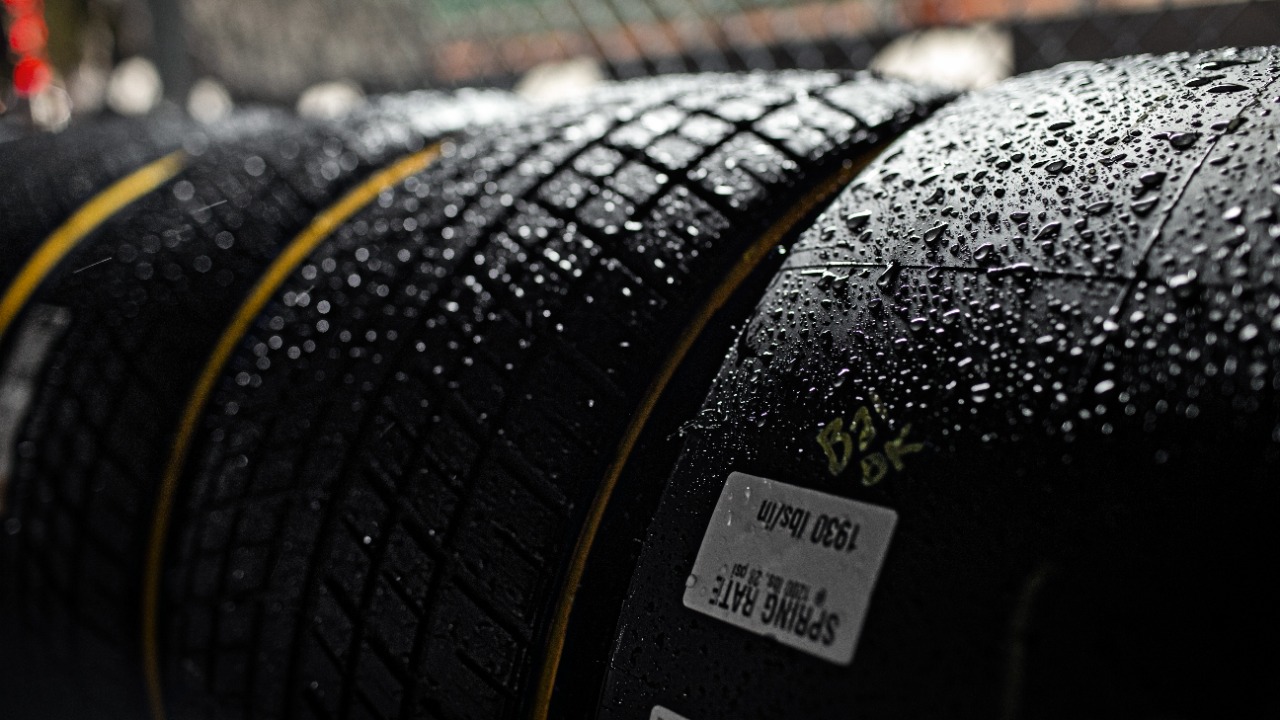
When the GTP field forms up at DAYTONA, the first surprise will be visual. The tires are not smooth black donuts but sculpted pieces of industrial art, with a texture that jumps out even on television. The tread uses what Michelin calls a “Vision” pattern, a distinctive surface that is meant to be noticed as much as it is meant to work. That pattern is the most obvious break from tradition, and it is why the tires will instantly stand out to anyone who has watched this race for years, as the new GTP treads carry a design that looks closer to a road-going concept than a classic racing slick, yet they are built specifically for long events like the 24 at Daytona, according to GTP treads.
I find that visual shock important, because it signals to fans that something fundamental has changed in how the series thinks about tires. The Vision pattern is not a gimmick, it is a functional texture designed to help with heat management and wear over long stints, and it is meant to be read almost like a barometer of how the tire is aging. As the race wears on, the surface will evolve in ways engineers and viewers can track, a deliberate choice in the way the pattern is laid out, as described in the explanation of the Vision pattern. Even the way teams and fans watch video of the cars will change, with onboards and replays giving a clearer look at how the tread blocks are coping, something that becomes obvious when you try to view the official clips and see the note that “Your browser can’t play this video” and “Try watching this video” on a different platform, a reminder of how central visuals have become to understanding these tires, as highlighted in the reference to Your browser.
The 50% breakthrough: what is inside these tires
Under that unusual surface, the real revolution is in the recipe. Michelin set a clear target for these GTP tires: build a racing product with 50% recycled and renewable material without sacrificing the performance that prototypes demand. That figure is not marketing fluff, it is a hard number that engineers like Hans Emm have been willing to put on the record, describing how the goal was to produce a racing tire with 50% recycled and renewable material, a level that sets this rubber apart from any other prototype tire in motorsport, as detailed in the overview of Michelin’s new tyre. For fans used to hearing about softer compounds or wider contact patches, that 50% figure is a new kind of performance metric, one that connects the pit lane to broader environmental expectations.
Getting there required a rethink of what a racing tire is made of, and I am struck by how often the engineers compare their work to a recipe. The next-generation Pilot Sport Endurance tire, which underpins this approach, uses a far more complicated blend of ingredients than previous generations, something Philippe Tramond of Michelin Motorsport has been open about. He has described how the recipe for a next-generation Pilot Sport Endurance tire is far more complicated, and how swapping one ingredient for another is not as simple as it sounds when you are chasing both grip and durability, a point laid out in the discussion of the Pilot Sport Endurance. That complexity is why the 50% benchmark matters so much: it proves that sustainable content can live inside a tire that still lets a GTP car attack the banking at full speed.
How the new GTP tire family was engineered
From a technical standpoint, these Daytona tires are part of a broader family that will define top-level sports car racing for years. Michelin has revealed its next-generation Hypercar and GTP tire package, a common design that will be used by all cars in the Hypercar class and the GTP field. That unified approach means the same core construction and compound philosophy will carry across different series and manufacturers, something that should simplify development while raising the baseline of performance, as outlined in the announcement that Michelin Reveals the Hypercar and GTP Tyre. I see that as a quiet but important shift, because it means lessons learned in a 24 hour race at DAYTONA can feed directly into how Hypercar programs operate elsewhere.
Behind the scenes, the same sustainability logic that shaped the GTP tires is being applied across this family. The Hypercar tire is not a separate, old-school product, it is part of the same push to integrate recycled and renewable content into the highest levels of racing. That is why the description of the Hypercar and GTP Tyre emphasizes how Michelin has revealed its next-generation Hypercar tire, which will be used by all cars in the Hypercar class, and how the technical director at Michelin Motorsport has focused on techniques that allow one ingredient to be swapped for another without losing performance, as detailed in the deeper dive on the Hypercar and GTP. For me, that shared architecture is what turns Daytona into a rolling laboratory, with every lap feeding a global project.
IMSA’s new sustainability scoreboard
The tires are not arriving in a vacuum. IMSA and Michelin have built an entire incentive structure around using them intelligently, and that is where the new IMSA Michelin Sustainability in Racing Award comes in. At DAYTONA BEACH, Fla, the series and its tire partner have confirmed the details of this program, which will track how teams manage their resources over a race weekend. The award is not just a plaque, it is a way to rank competitors on how effectively they use tires and energy while still fighting for results, as described in the announcement that at DAYTONA BEACH, Fla, Michelin and IMSA have confirmed the new award.
What I like about this system is that it bakes sustainability into the competitive fabric instead of treating it as a side project. The award factors in three elements equally, tire use, energy use and running order or finish position, to determine which teams are doing the best job of balancing speed with responsibility. That equal weighting means a team cannot simply cruise slowly to save rubber, it has to be quick and efficient at the same time, a balance spelled out in the description that the award factors in tire use, energy use and running order or finish position, with all three elements factored in, as detailed in the program outline from DAYTONA BEACH, Fla in the award factors. In practice, that will change how strategists think about double-stinting, how drivers treat their out-laps, and how teams talk about success once the checkered flag falls.
More from Fast Lane Only