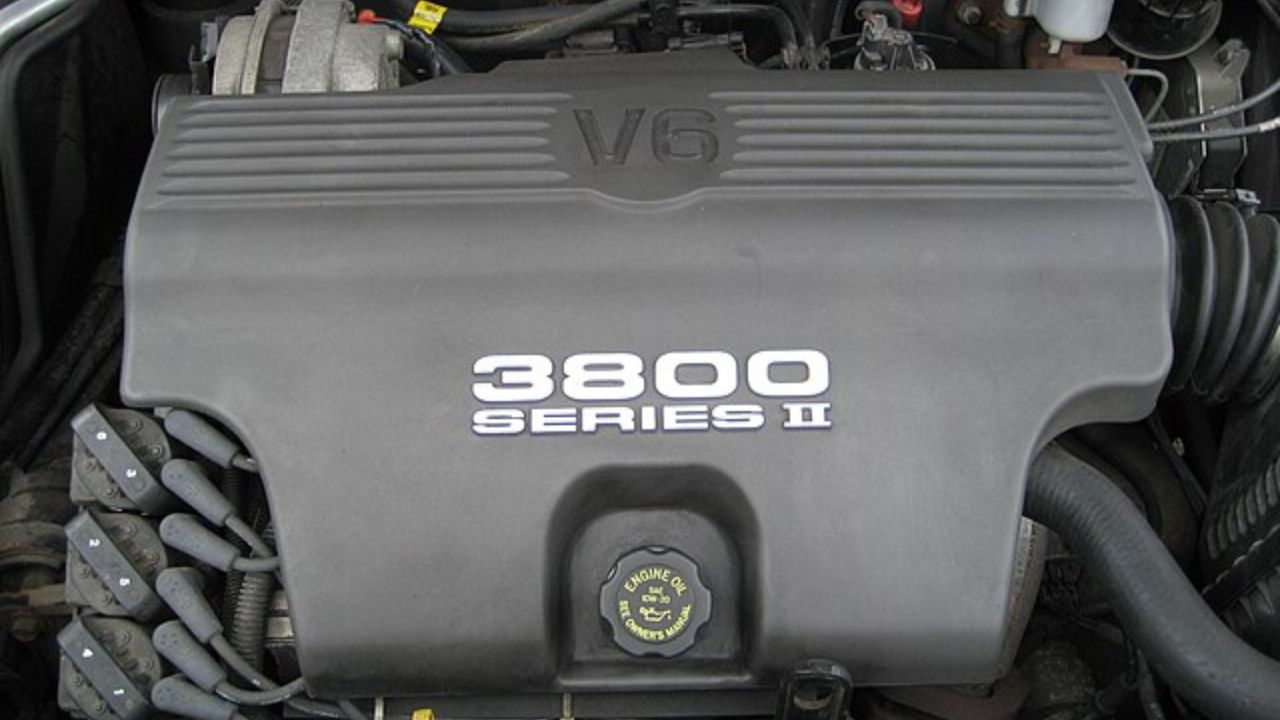
The GM 3800 V6 has earned a long-standing reputation in repair shops as one of the most dependable engines ever built by an American automaker. Even as modern engines become more efficient and technologically advanced, many mechanics still point to the 3800 as a benchmark for durability, simplicity, and real-world longevity under harsh driving conditions.
GM built the 3800 V6 for durability before complexity took over
When General Motors developed the GM 3800 V6 engine, the focus was not on cutting-edge technology but on long-term mechanical strength. This engine powered a wide range of vehicles, especially under brands like Buick, where smooth operation and reliability were more important than extreme performance.
The design philosophy behind the 3800 emphasized simplicity and robustness. With a strong iron block, relatively low-stress internal components, and a conservative tuning approach, it was engineered to withstand high mileage with minimal failure points. Mechanics often highlight that fewer complex systems meant fewer opportunities for catastrophic breakdowns, especially compared to modern turbocharged engines.
The 3800 V6 became known for surviving extreme mileage
The GM 3800 V6 engine became famous for routinely surpassing very high mileage thresholds when properly maintained. In many cases, these engines continued running smoothly well beyond 300,000 kilometers, earning a reputation for outlasting the vehicles they were installed in.
A major reason for this longevity was its tolerance for imperfect maintenance. Unlike many modern engines, the 3800 could often survive missed service intervals, varied fuel quality, and extended daily driving without immediate failure. This forgiving nature is one of the key reasons mechanics still respect it today, especially when comparing it to more sensitive modern designs.
Simplicity made repairs easier and long-term ownership cheaper
Another reason the GM 3800 V6 engine remains respected is its mechanical accessibility. Compared to today’s tightly packed engine bays and electronically controlled systems, the 3800 offered relatively straightforward maintenance and repair procedures.
Technicians working on vehicles from General Motors often note that diagnosing issues on the 3800 was faster and less dependent on expensive diagnostic tools. This simplicity reduced labor costs and made long-term ownership more practical, especially for everyday drivers who prioritized reliability over performance complexity.
Modern engines offer power, but the 3800 offers trust
While modern engines from General Motors and other manufacturers deliver impressive horsepower, fuel efficiency, and emissions control, they often rely on more complex systems such as turbocharging, direct injection, and advanced electronics. These systems improve performance but also introduce more potential failure points.
The GM 3800 V6 engine represents a different philosophy—one built around consistency rather than peak output. Mechanics continue to respect it because it consistently delivers predictable performance, often long after newer engines have required major repairs or replacement.
The 3800 V6 remains a benchmark for real-world durability
Even today, the GM 3800 V6 engine is frequently cited as one of the most durable V6 engines ever produced in mass numbers. Its reputation was not built on marketing but on years of real-world use across millions of vehicles.
For mechanics, it remains a reference point when evaluating modern engine reliability. While technology continues to evolve, the 3800 stands as a reminder that long-term durability often comes from disciplined engineering choices rather than complexity alone.
More from Fast Lane Only