There was a time when cars didn’t just look good—they had personality. And nothing said personality like a pair of flip-up headlights. They didn’t make a car faster or more efficient, but they added something modern designs sorely lack: attitude. Today’s LED lightbars might be sleek, but they don’t wink at you when they come to life.
Pop-up headlights were a design flex—a mechanical detail that made even a modest coupe feel a little more special. These 10 cars prove why it’s time to bring them back.
1. 1984–1996 Chevrolet Corvette (C4)

The C4 Corvette made flip-up headlights feel like standard equipment on American performance. Its clamshell hood revealed a 5.7L V8 that evolved over time, peaking with the LT4 at 330 hp in the Grand Sport. But those headlights? They gave the car a clean profile when closed and just enough drama when they opened.
With a low-slung body, fully independent suspension, and digital dash in early models, the C4 was forward-thinking for its time. The pop-ups were as much a part of its identity as the crossfire injection or those turbine wheels.
2. 1985–1992 Ferrari Testarossa

The Testarossa didn’t do subtle, and that included its flip-up headlights. When retracted, they gave the wide, straked nose a clean sweep. But flipped up, they were unmistakably Ferrari—a little drama before the 12-cylinder show started.
Underneath, the 4.9L flat-12 made 390 hp, routed through a gated 5-speed. Rear suspension was independent, and the cabin was more luxurious than most ’80s exotics, with leather everywhere and a sense of occasion. You didn’t just drive a Testarossa—you arrived. The headlights played their part.
3. 1989–1997 Mazda MX-5 Miata (NA)

Few cars nailed the simplicity of fun like the first-gen Miata, and its pop-up headlights were a huge part of its personality. When off, they gave the Miata a clean, almost cartoonish smile. Flip them up, and you were ready to carve corners.
The 1.6L (later 1.8L) inline-four wasn’t powerful, but the chassis was light and balanced. Double-wishbone suspension all around, a near 50/50 weight split, and a manual gearbox made it all about the drive. It didn’t need big numbers—just those flip-ups and a backroad.
4. 1978–1995 Porsche 928

The 928 went against the 911 in every way—including its wild “frog-eye” pop-up headlights that flipped forward and up from the hood. Even when off, they stuck out just enough to remind you this wasn’t your average Porsche.
The 928 started with a 4.5L V8 and eventually grew to 5.4L in the GTS, with over 345 hp by the end. It had a transaxle layout for perfect balance, and the suspension was tuned for long-haul speed and composure. It was the Porsche built to cross continents—fast, quiet, and a little strange.
5. 1984–1989 Toyota MR2 (AW11)
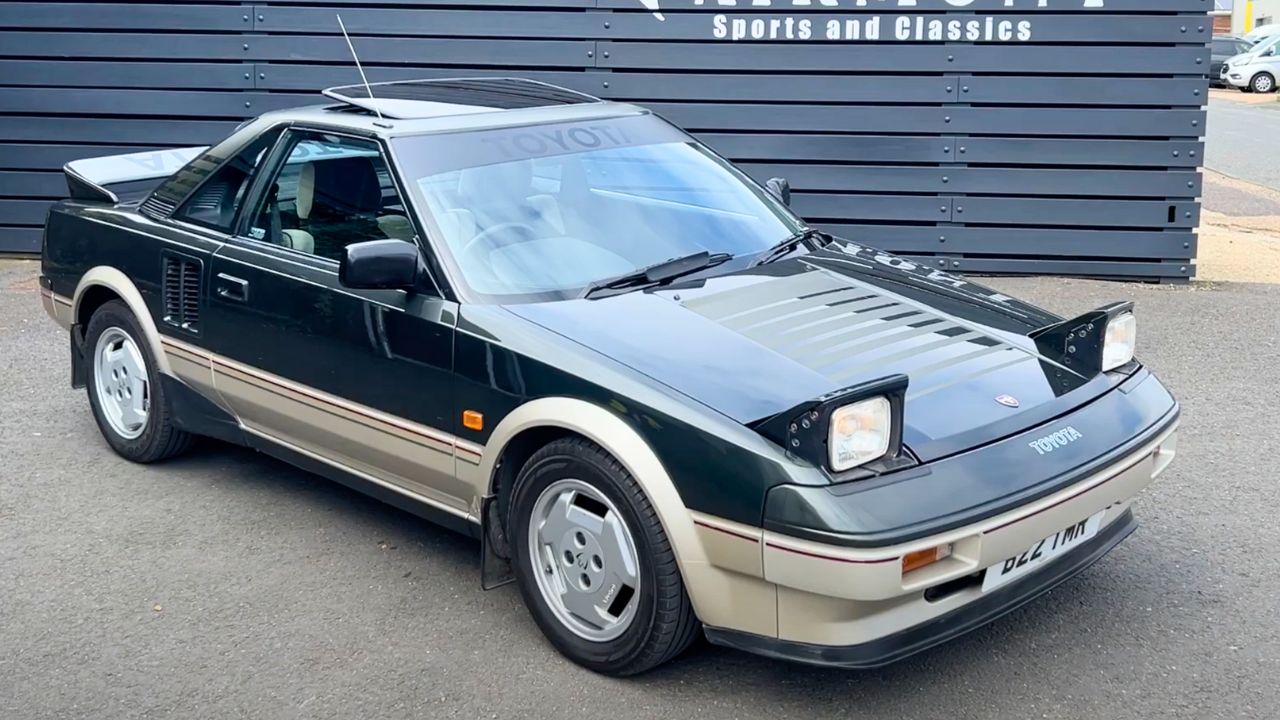
The first-gen MR2 made the mid-engine layout accessible, and it did it with a set of flip-up headlights that gave it an angular, sci-fi look. Light and tossable, it had a 1.6L four-cylinder good for around 112 hp—plenty for its sub-2,400-pound weight.
Suspension tuning came with help from Lotus, and the handling was sharp without being twitchy. Inside, the layout was all business, with a low seating position and short-throw shifter. You got the look and layout of an exotic without the cost—or the garage bills.
6. 1986–1991 BMW M1 (E26)

BMW’s first and only true mid-engine supercar, the M1 wore its pop-up headlights like punctuation marks on an already rare story. Designed by Giugiaro and powered by a 3.5L inline-six with 273 hp, it was more balanced than brutal.
The suspension came from motorsport, with unequal-length control arms and coilovers. Inside, it was more 7 Series than race car—straightforward, purposeful, and analog. The M1 didn’t just use pop-up headlights for styling. They helped maintain its low aerodynamic nose, a functional piece of engineering in a rare breed of BMW.
7. 1984–1991 Honda Prelude (Second Gen)

The second-gen Prelude didn’t chase flash—but its pop-up headlights gave it just enough flair. With clean lines and a low nose, the lights added a bit of edge without pushing too far into sports car territory.
It was front-wheel drive with a 1.8L or 2.0L inline-four, making modest power but backed by great chassis tuning. Honda’s double-wishbone front suspension made it corner confidently, and the interior had that ‘80s clean simplicity that still holds up. The lights? Just the right amount of character in a practical coupe.
8. 1970–1978 Alfa Romeo Montreal

The Montreal featured a unique take on the flip-up concept: retractable slats over fixed headlights. They gave it the same mysterious, concealed look, and when opened, exposed a pair of twin round lamps. It was a bit of Italian drama in a V8-powered grand tourer.
The 2.6L V8 made 200 hp and revved to 7,000 rpm, backed by a 5-speed ZF manual and a limited-slip rear end. Inside, you got a driver-focused layout with deep bucket seats and a wood-rimmed wheel. It looked exotic, sounded even better, and those headlight slats set it apart.
9. 1990–1996 Acura NSX

The original NSX was Honda’s precision tool—and its pop-up headlights weren’t just stylish, they helped create one of the cleanest nose profiles of the era. When down, the car looked almost understated. When up, they reminded you it wasn’t just another wedge.
It had a 3.0L V6 with VTEC, making 270 hp and revving past 8,000 rpm. All-aluminum construction, a double-wishbone suspension, and a mid-engine layout gave it supercar dynamics with Honda reliability. The pop-ups? Just one more reason this car still turns heads.
10. 1993–2002 Pontiac Firebird Trans Am

By the ‘90s, pop-up headlights were a dying breed—but the Trans Am kept them alive with attitude. When down, the nose looked smooth and menacing. Flip them up, and they glared with purpose.
The later models packed a 5.7L LS1 V8 with 305 to 325 hp, backed by a 6-speed manual or 4-speed auto. Suspension was firm but livable, and the interior had enough gauges to make you feel like you were sitting in a cockpit. It was brash, fast, and unapologetically American—even with those flip-ups.
*This article was hand crafted with AI-powered tools and has been car-fully, I mean carefully, reviewed by our editors.