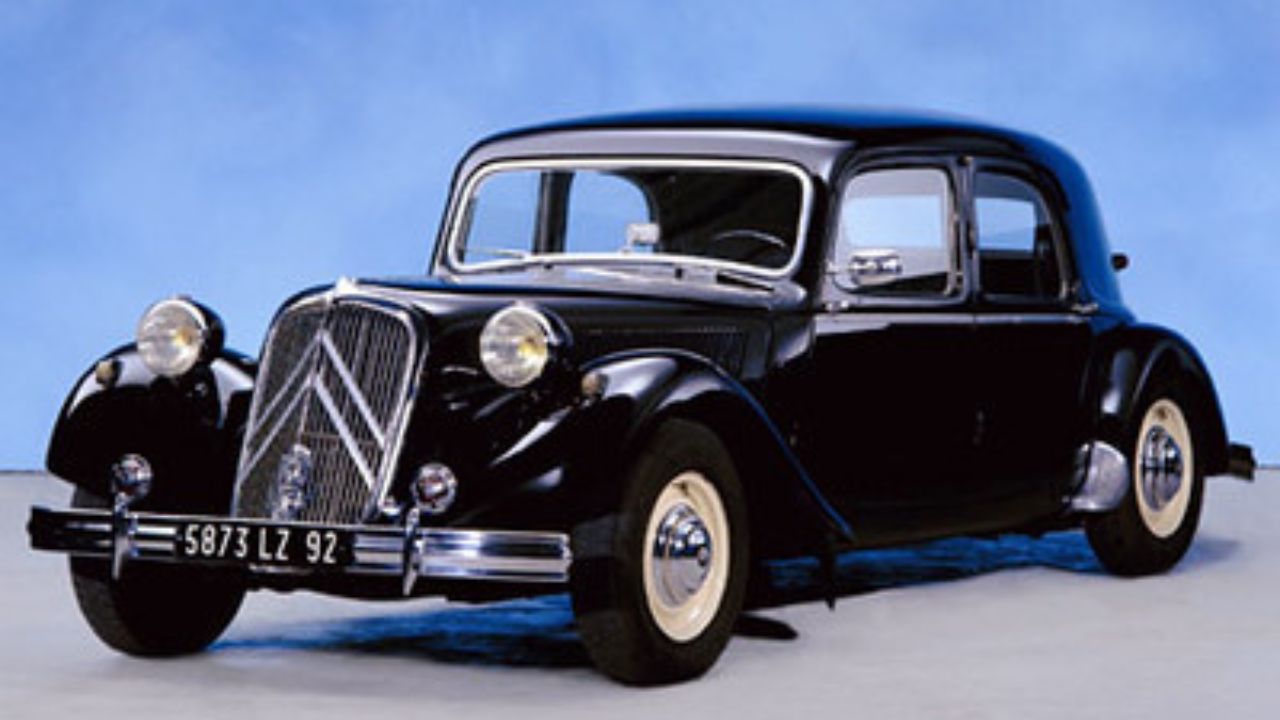
When the Citroën Traction Avant debuted in 1934, it introduced a combination of technologies that seemed decades ahead of its competitors. Featuring front-wheel drive, unitized body construction, and independent front suspension, it challenged nearly every convention of automobile design. Yet despite its remarkable engineering, many of its innovations took decades to become standard throughout the global automotive industry.
It Broke Nearly Every Rule of Its Time
Most automobiles in the early 1930s followed a familiar formula: a body mounted on a separate frame, a front-mounted engine driving the rear wheels, and solid axles suspended by leaf springs. The Traction Avant abandoned much of that traditional thinking.
Its front-wheel-drive layout eliminated the driveshaft running to the rear axle, allowing engineers to lower the vehicle’s floor and improve interior space. At the same time, its unitized steel body—often called unibody construction—combined the frame and body into a single structure, reducing weight while increasing rigidity.
Independent front suspension further improved ride quality and steering precision, making the car feel unusually stable compared with many of its contemporaries.
Together, these features created one of the most advanced production automobiles of the prewar era.
Manufacturing Challenges Slowed Industry Adoption
Although the Traction Avant demonstrated clear engineering advantages, many manufacturers lacked the facilities needed to produce similar vehicles. Building a unibody automobile required expensive stamping presses, precision welding equipment, and entirely new manufacturing techniques that represented enormous investments.
Most automakers had already invested heavily in conventional body-on-frame production lines. Replacing those systems would have required substantial capital during a period marked by economic uncertainty and the lingering effects of the Great Depression.
Front-wheel drive also introduced engineering complexities unfamiliar to many manufacturers. Developing reliable constant-velocity joints, steering components, and driveline systems demanded years of additional research before large-scale production became practical.
As a result, many companies continued refining proven rear-wheel-drive designs rather than embracing a costly technological shift.
Traditional Designs Remained Good Enough for Decades
Another reason the Traction Avant’s innovations spread slowly was that conventional automobiles continued to satisfy most buyers. Rear-wheel-drive cars with separate frames were reliable, relatively inexpensive to build, and familiar to mechanics around the world.
Consumers also tended to value durability and affordability over advanced engineering. Since many drivers had never experienced front-wheel drive or independent suspension, there was little public pressure for manufacturers to adopt these unfamiliar technologies immediately.
In addition, the outbreak of World War II interrupted automotive development across Europe. Manufacturers shifted resources toward military production, delaying the widespread adoption of many civilian engineering advances introduced before the war.
Only during the postwar decades did manufacturers begin investing heavily in more modern vehicle architectures.
Time Ultimately Proved the Concept Right
By the 1960s and 1970s, many of the Traction Avant’s once-radical ideas had become increasingly common. Front-wheel drive gained popularity because it improved packaging efficiency, reduced drivetrain weight, and enhanced traction in poor weather. At the same time, unibody construction became the preferred method for building passenger cars thanks to its strength, lower weight, and manufacturing efficiency.
Independent suspension also spread rapidly as consumers demanded better ride comfort, improved handling, and increased safety. What had once seemed revolutionary in 1934 gradually became standard practice across much of the automotive industry.
Today, the vast majority of passenger cars incorporate some combination of the technologies pioneered by the Traction Avant. Modern compact cars, family sedans, and crossovers all reflect engineering principles that Citroën introduced long before they became mainstream.
Looking back, the 1934 Citroën Traction Avant’s innovations took decades to spread not because they lacked merit, but because the automotive industry needed time to develop the manufacturing techniques, supporting technologies, and economic conditions necessary to fully embrace them. Its legacy stands as a reminder that truly groundbreaking ideas often require patience before changing the world.
More from Fast Lane Only
- Unboxing the WWII Jeep in a Crate
- 15 rare Chevys collectors are quietly buying
- 10 underrated V8s still worth hunting down
- Police notice this before you even roll window down
*Research for this article included AI assistance, with all final content reviewed by human editors