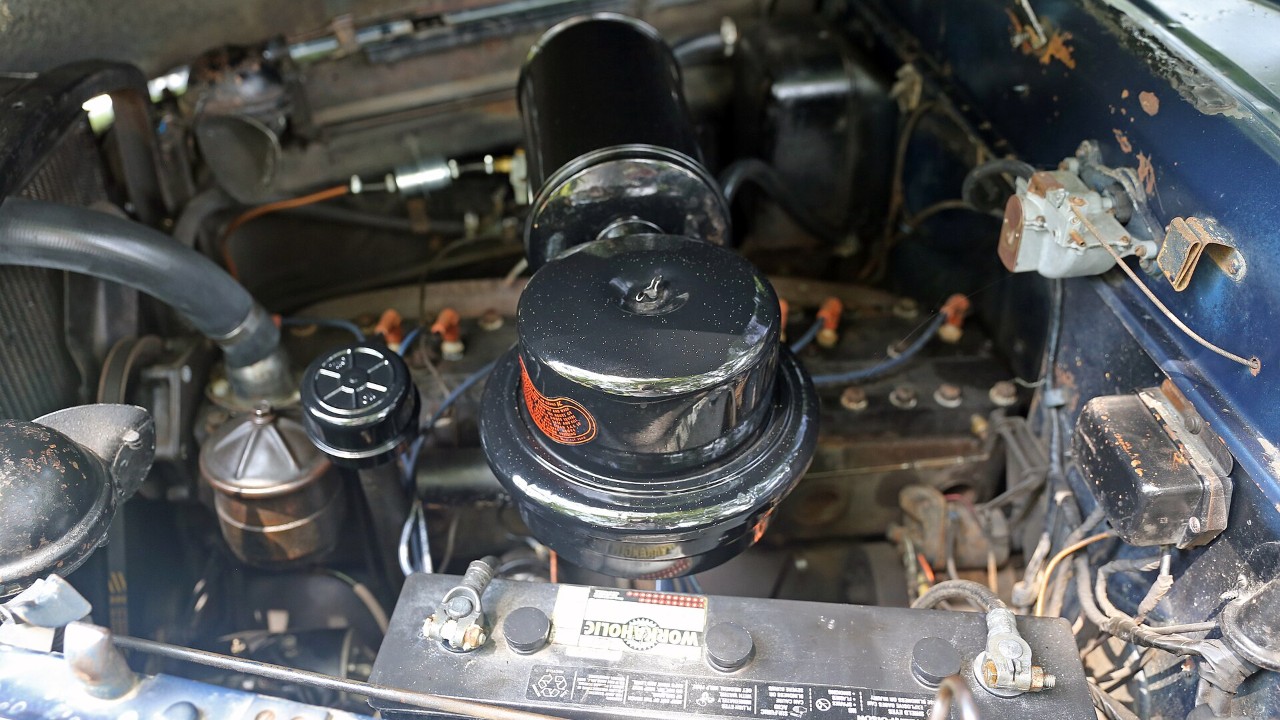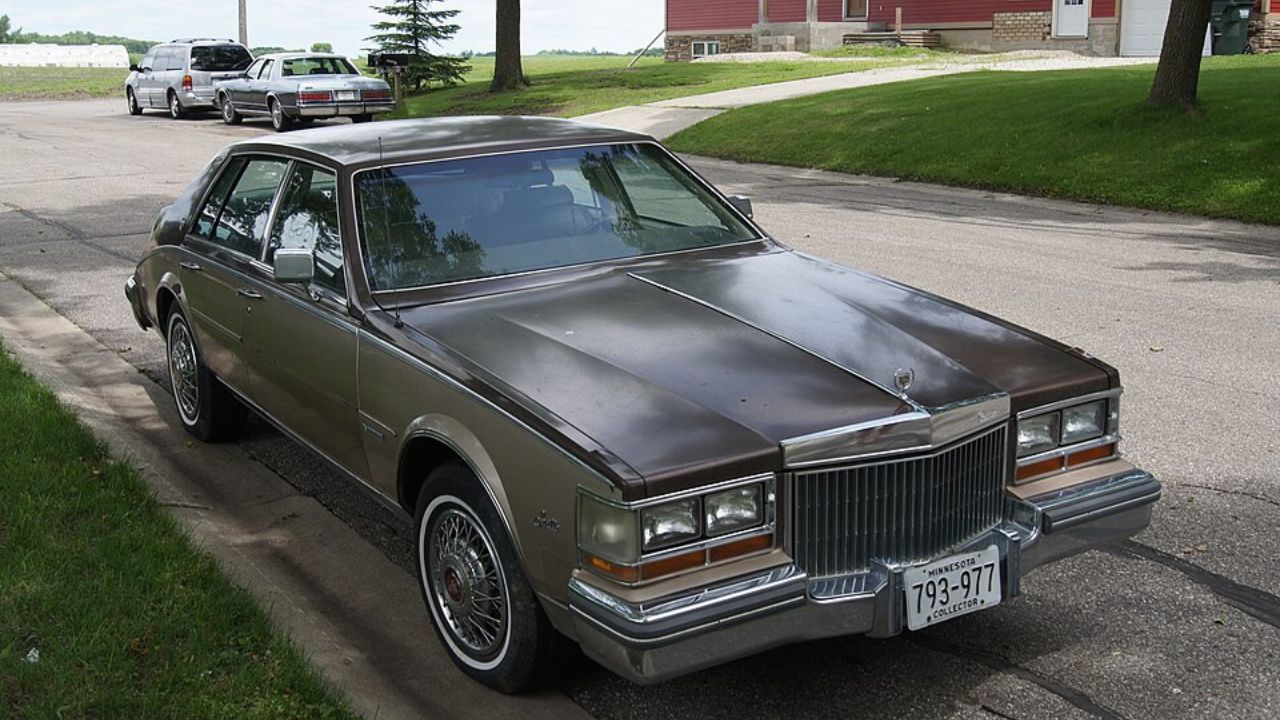
The 1981 Cadillac V8-6-4 was one of the most ambitious engines of its era. Designed to improve fuel economy by automatically switching between eight, six, and four cylinders, it introduced technology that would become common decades later. Unfortunately, the electronics available at the time struggled to keep pace with the concept, turning a groundbreaking innovation into one of Cadillac’s most misunderstood experiments.
Cadillac Searched for Better Fuel Economy Without Sacrificing Power
The late 1970s brought major changes to the American auto industry. Rising fuel prices, tighter emissions standards, and increasing competition forced manufacturers to find new ways to improve efficiency while preserving the performance customers expected from large luxury cars.
Cadillac’s engineers wanted to keep the smoothness and torque of a V8 while reducing fuel consumption during light-load driving. Their solution was revolutionary: an engine capable of automatically deactivating cylinders whenever full power was unnecessary.
Under gentle cruising conditions, the system could shut down two or four cylinders, allowing the engine to operate as a V6 or even a four-cylinder. When the driver demanded more acceleration, all eight cylinders would quickly return to operation.
On paper, the concept promised the best of both worlds—V8 performance combined with improved fuel economy.
Early Electronics Struggled to Manage the System
The biggest obstacle was not the mechanical hardware but the computer controlling it. The V8-6-4 relied on one of the most advanced engine control modules available at the time, yet early 1980s computing power was extremely limited by modern standards.
The system constantly monitored throttle position, engine load, speed, and other operating conditions before deciding when to activate or deactivate cylinders. Unfortunately, the processor sometimes reacted too slowly or made transitions that drivers could easily notice.
Some owners experienced rough operation, hesitation, or inconsistent performance as the computer attempted to manage changing driving conditions. Although the engine itself was fundamentally sound, the electronic controls lacked the speed and sophistication needed to deliver seamless operation.
As a result, many dealerships disabled the cylinder-deactivation feature during service visits, effectively converting the engine into a conventional V8.
The Idea Was Decades Ahead of Its Time
Despite its reputation, the V8-6-4 introduced concepts that later became standard throughout the automotive industry. Advances in microprocessors, engine sensors, and software eventually solved many of the problems that plagued the original system.
By the early 2000s, manufacturers including General Motors, Honda, and Chrysler successfully introduced modern cylinder-deactivation systems capable of switching between operating modes almost imperceptibly. Faster computers processed information thousands of times more quickly than the electronics available in 1981.
Improved fuel injection, electronic ignition, and sophisticated engine management also allowed modern systems to balance efficiency, performance, and emissions far more effectively than engineers could achieve two decades earlier.
In hindsight, Cadillac’s basic engineering vision proved remarkably accurate—it simply arrived before supporting technology had fully matured.
A Reputation That Overshadowed Its Innovation
Because many owners experienced reliability and drivability concerns related to the electronic controls, the V8-6-4 quickly developed a mixed reputation. Critics often viewed it as an example of technology introduced before it was fully refined, while enthusiasts recognized it as one of the industry’s boldest engineering experiments.
Today, automotive historians increasingly appreciate the engine for its forward-thinking design rather than its early shortcomings. The project demonstrated Cadillac’s willingness to pursue advanced solutions during a challenging period for the American auto industry.
Surviving V8-6-4-equipped Cadillacs also serve as reminders of how rapidly automotive electronics have evolved. Features once considered nearly impossible are now commonplace thanks to dramatic improvements in computing power and software development.
Looking back, the 1981 Cadillac V8-6-4 arrived before the technology was truly ready. Its mechanical concept was sound, but the electronic controls of the era could not consistently deliver the smooth operation engineers envisioned. Even so, it helped pave the way for modern cylinder-deactivation systems that millions of drivers use today without giving them a second thought.
More from Fast Lane Only
- Unboxing the WWII Jeep in a Crate
- 15 rare Chevys collectors are quietly buying
- 10 underrated V8s still worth hunting down
- Police notice this before you even roll window down
*Research for this article included AI assistance, with all final content reviewed by human editors