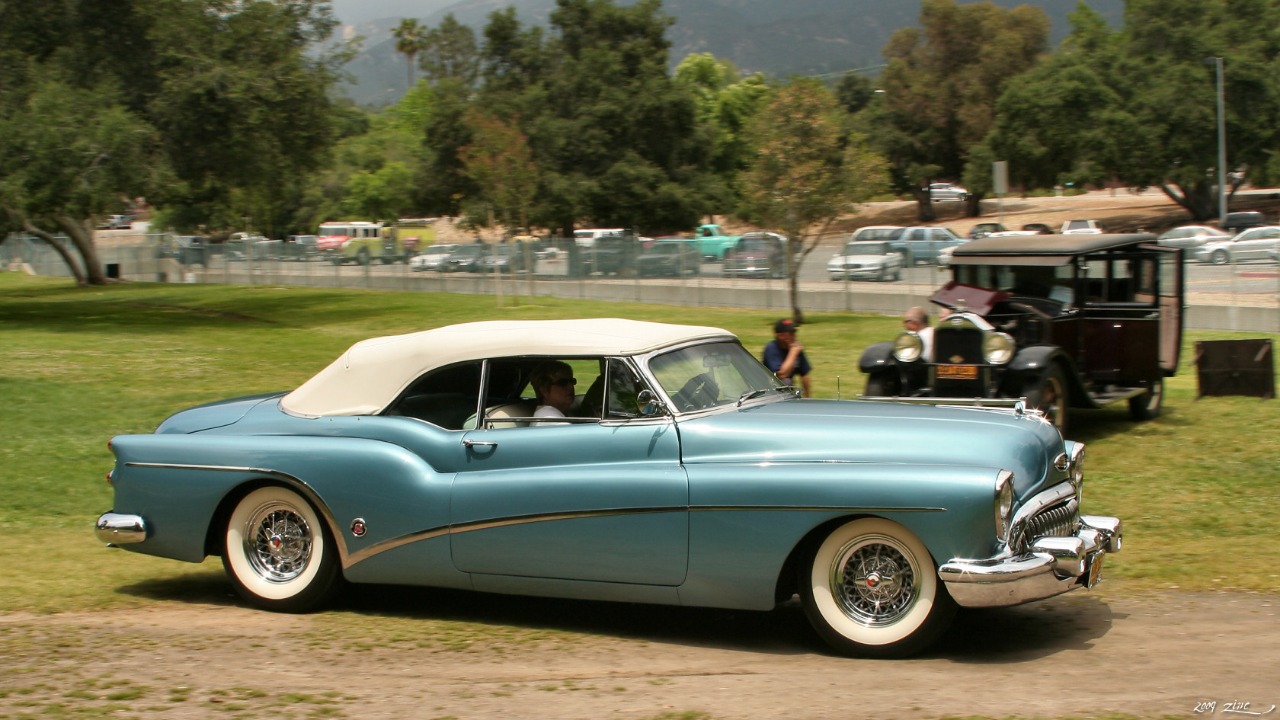
The 1953 Buick Skylark arrived at a moment when American automakers were racing to prove that luxury could coexist with serious performance. Buick used the car to celebrate its 50th anniversary, but the result was more than a commemorative special, it was a rolling statement that power, comfort, and style did not have to live in separate garages. When I look at the Skylark today, I see a car that stitched those qualities together so tightly that it still feels modern in spirit, even if its technology is firmly rooted in the early 1950s.
That blend of muscle and grace did not happen by accident. Buick treated the Skylark as a showcase, loading it with advanced mechanical features and dressing them in hand-finished bodywork and a richly detailed cabin. The car’s legacy rests on that balance: it was a genuine “power cruiser,” but it never stopped trying to look and feel like a piece of high design.
The anniversary statement that had to look special
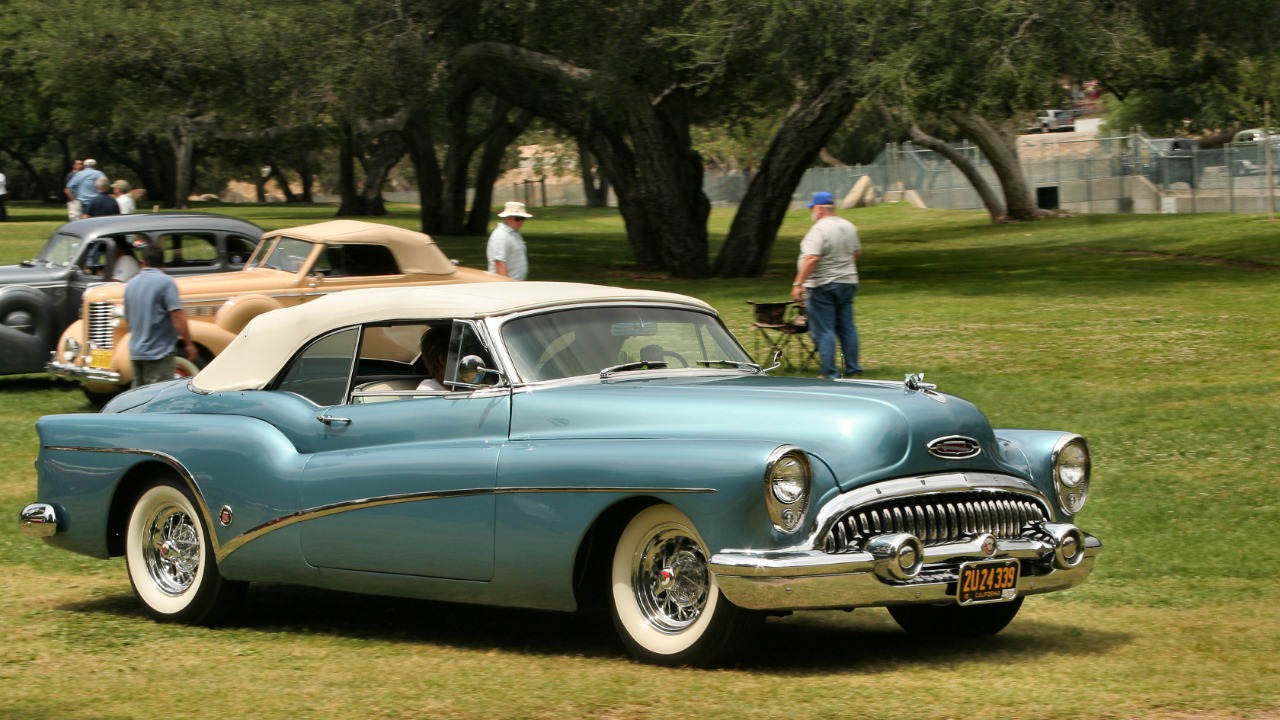
Buick built the 1953 Skylark to mark half a century of the brand, and that anniversary context shaped almost every decision. Instead of simply adding badges to an existing model, the company created a limited-production convertible that sat low, wore dramatic wheel cutouts, and carried a distinctive rear deck that separated it from the rest of the lineup. The car’s proportions, with its long hood and short rear deck, were meant to telegraph performance, yet the details, from the chrome-laden grille to the carefully sculpted rear fenders, signaled that this was a celebration of craftsmanship as much as speed. Even period walkarounds, like one hosted by Jan in a detailed look at a 1953 Buick Skylark, highlight how the commemorative intent shows up in touches such as backup lights, turn signals, and a glare proof mirror that were still far from universal at the time.
That same anniversary mindset extended to the way the Skylark was equipped. Buick leaned on its most sophisticated drivetrain pieces, pairing the car with a DynaFlow automatic transmission that prioritized smoothness but could still handle the output of the brand’s new overhead valve V8. The idea was not to build a stripped-down hot rod, it was to create a convertible that felt effortless to drive, even as it delivered serious power for the era. When I picture the car cruising a coastal highway, I see that philosophy in action: the driver enjoying a relaxed, almost serene experience, while the mechanicals quietly do the heavy lifting under the hood.
Power that matched its presence
Underneath the elegant sheet metal, the 1953 Buick Skylark carried the kind of performance hardware that justified its bold stance. Buick’s new V8 gave the car the authority to back up its looks, and the DynaFlow automatic transmission translated that output into smooth, continuous acceleration rather than abrupt shifts. Contemporary enthusiasts often describe the model as a “power cruiser,” and that label fits, because the car was designed to cover long distances quickly and comfortably rather than chase lap times. Modern retrospectives on the Buick Skylark underline how it stood out in American automotive history as a symbol of both luxury and performance, not one at the expense of the other.
What strikes me is how deliberately Buick fused that power with ease of use. Instead of forcing drivers to wrestle with a heavy clutch or vague steering, the company leaned into automatic technology and refined controls so the car felt approachable even for owners more interested in comfort than outright speed. The result was a convertible that could surge up to highway pace with authority, yet still glide through town in near silence, the engine barely above idle. That dual character is a big part of why the Skylark’s reputation has endured, it proved that a car could be genuinely quick for its time while still behaving like a polished luxury product.
Luxury features that felt ahead of their time
Inside, the 1953 Buick Skylark made its case for elegance as soon as you opened the door. The cabin was trimmed in full leather, with seats that looked more like living room furniture than basic automotive chairs, and the dashboard carried a level of chrome and brightwork that bordered on jewelry. A detailed presentation of a restored example notes how the leather interior “exudes” quality and pairs with power accessories such as power brakes, power steering, and power windows, all of which underscored the car’s advanced engineering for the period. Those comfort and convenience features, highlighted in a modern look at a 1953 Buick Skylark, were not yet standard fare across the industry, which made the car feel genuinely futuristic to buyers stepping out of more basic sedans.
From my perspective, that equipment list is where the Skylark’s elegance becomes tangible rather than just visual. Power steering transformed low speed maneuvering, power brakes reduced effort in traffic, and power windows turned what had been a small chore into a simple press of a switch. Each of those touches signaled that Buick was thinking about the driver’s day-to-day experience, not just the showroom impression. When you combine those features with the soft leather, the carefully finished trim, and the quiet ride delivered by the suspension and drivetrain, you get a car that feels thoughtfully luxurious in a way that still resonates with modern expectations.
Craftsmanship that still turns heads
Beyond the spec sheet, the 1953 Buick Skylark relied on a level of craftsmanship that helps explain its lasting appeal. Much of the bodywork was hand finished, which allowed Buick to pull off complex shapes like the deeply cut rear wheel openings and the flowing rear fenders that would have been difficult to execute in high volume. That attention to detail is one reason collectors still seek out these cars, they are not just old convertibles, they are artifacts of a moment when American manufacturers were willing to invest serious labor into making a limited run model feel special. A listing for a period-correct Buick Convertible describes it as a true testament to the craftsmanship and design excellence of its era, language that could easily apply to the Skylark’s own construction.
When I study photos of surviving cars, I am struck by how cohesive the design still feels. The chrome is not just decoration, it frames the grille and lights in a way that gives the front end a confident expression, while the rear treatment balances the mass of the trunk with delicate tail lamps and carefully placed trim. Even details like the wheel covers and badging feel considered rather than tacked on. That level of visual harmony is part of what makes the Skylark’s elegance feel earned, it is not relying on a single dramatic flourish, but on a series of well resolved decisions that add up to a car that looks expensive from every angle.
Why the Skylark’s formula still resonates
Looking back from today, I see the 1953 Buick Skylark as an early template for the modern grand touring car. It combined a strong engine, relaxed automatic transmission, and long distance comfort with a body and interior that projected status, a formula that many later American and European models would refine. The car’s limited production and anniversary backstory give it a certain mystique, but its real legacy lies in how naturally it married performance and polish. Owners could enjoy brisk acceleration and confident highway cruising without sacrificing the quiet, well appointed environment that made long trips enjoyable.
That balance is why the Skylark continues to attract enthusiasts and collectors who have plenty of other choices. In a market full of specialized machines, some focused purely on speed and others on luxury alone, the 1953 car stands out as a reminder that the most satisfying automobiles often live in the space between. When I think about why it still captures attention at shows and in online videos, it comes down to this: the Skylark did not treat power and elegance as competing priorities. Instead, it treated them as partners, and in doing so, it created a car that feels as thoughtfully composed today as it did when Buick first rolled it out to celebrate fifty years of building cars.
More from Fast Lane Only: