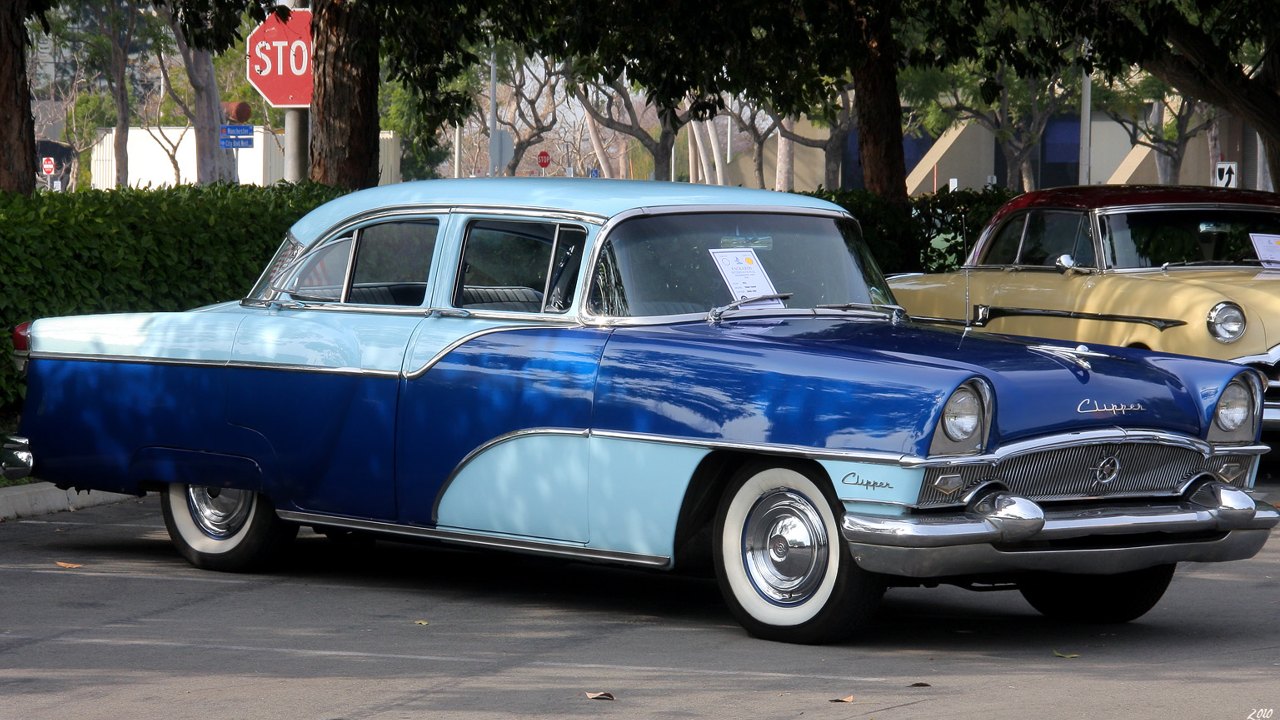
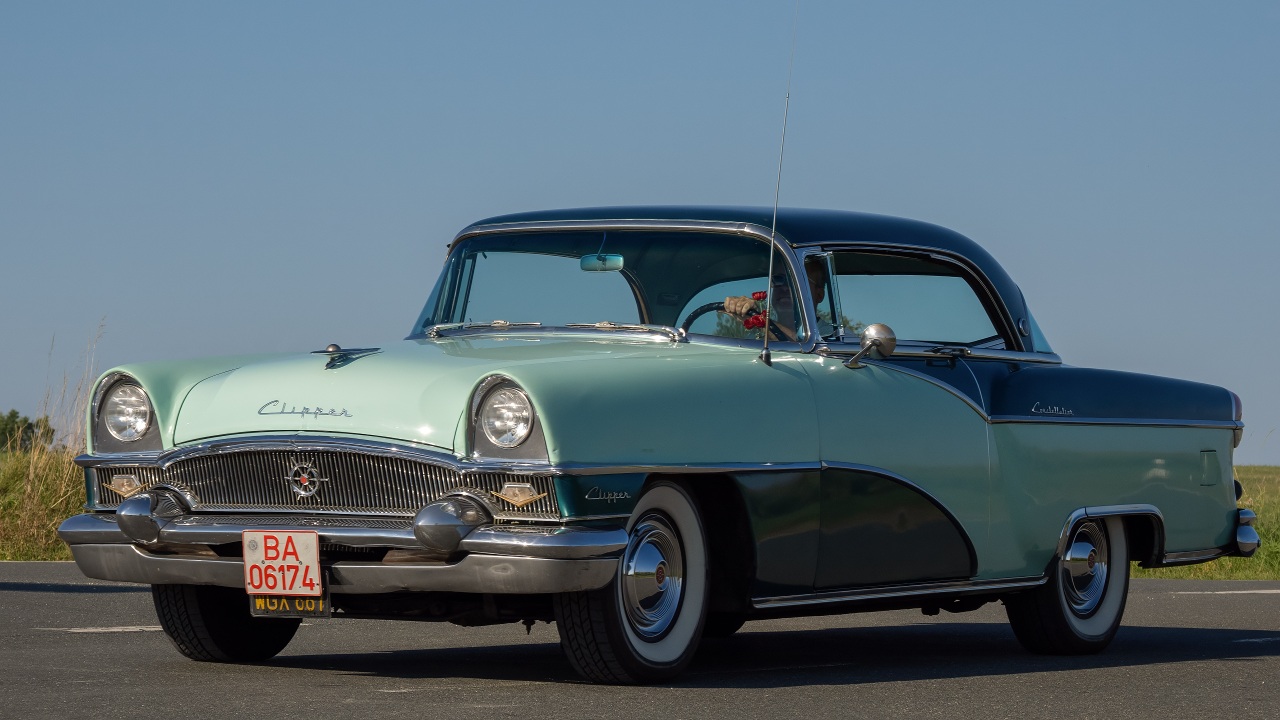
The 1957 Packard Clipper arrived at a moment when its parent company desperately needed a hit, yet instead of reviving the brand, it became a symbol of how quickly momentum can evaporate. Rather than building on Packard’s prestige, the Clipper exposed deep structural weaknesses in the Studebaker and Packard partnership and left buyers confused about what the name still stood for. I see its failure less as a single bad model year and more as the visible breaking point of a strategy that had been unraveling for years.
From luxury leader to badge-engineered orphan
By the time the 1957 Packard Clipper reached showrooms, the car was already fighting an identity crisis. Packard had long been known for refined, upper tier automobiles, but the Clipper rode on Studebaker underpinnings and looked far closer to a dressed up South Bend product than a true Detroit luxury machine. Enthusiasts quickly recognized that the Clipper was essentially a rebadged Studebaker, and that perception undercut the premium image that had once made Packard a peer of the most respected American marques. The shift from bespoke engineering to shared platforms signaled to buyers that the company was no longer playing in the same league.
The problem only grew more obvious with the so called Packardbaker that followed for 1958, which wore a new roofline and quad headlamps but remained fundamentally a Studebaker in Packard clothing. That evolution made clear that the Clipper was not the start of a renewed product line, but the first step in a rapid retreat from true Packard engineering. When a luxury nameplate becomes a trim level on someone else’s car, momentum is almost impossible to sustain, and the Clipper’s short run reflected that reality.
A merger that drained resources instead of creating strength
The Clipper’s struggles cannot be separated from the financial and structural strain inside Studebaker and Packard. The merger that created Studebaker-Packard was supposed to give both companies the scale to compete, yet it left the combined firm with serious cost problems and limited access to its own capital. Reports note that Studebaker-Packard still had $50 million in operating capital, but they could not touch most of it without violating the terms of their financing, a constraint that made it difficult to invest in the kind of all new Packard that might have justified the Clipper name. On paper, $50 m sounded like a cushion, in practice it was locked away when the company most needed flexibility.
Instead of funding a clean sheet luxury platform, management leaned on shared bodies and drivetrains to keep the lights on, which is how the 1957 Packard Clipper ended up so closely tied to Studebaker hardware. That choice may have been unavoidable given the balance sheet, but it meant the car arrived as a compromise rather than a statement of strength. When a brand that once built its own engines and chassis has to share almost everything with a smaller partner, the market reads it as weakness, and the Clipper paid the price in lost prestige and tepid demand.
Leadership decisions that boxed Packard into a corner
Leadership missteps magnified the structural problems behind the 1957 Clipper. James Nance came to Packard with a mandate to modernize, yet some of his most ambitious moves backfired. The consolidation of assembly and production at Conner Avenue is widely described as the single most criticized decision of Jim Nance, a move that was intended to streamline operations but instead disrupted production and quality at precisely the moment Packard needed flawless execution. When a company is struggling, customers are less forgiving of glitches, and any hint of inconsistency in fit or finish on a car wearing the Packard script eroded confidence further.
Critics have argued that it was James Nance who drove the nails into Packard’s coffin, pointing to aggressive expansion plans and risky operational changes that the company could not fully support. Whether Packard was truly doomed when Nance took over remains debated, but by the time the 1957 Clipper appeared, many of the consequences of those choices were baked in. The car was launched from a factory network still recovering from upheaval, under a leadership team that had already spent much of its political capital on earlier gambles, and that combination left little room to correct course when the Clipper failed to ignite demand.
Brand dilution and legal distractions
Even as Packard tried to reposition itself with models like the Clipper, the brand was pulled into side battles that distracted from the core task of rebuilding its image. One telling example was a dispute over model names that overlapped with Pan Am marketing terms, a conflict that dragged on until Packard agreed to drop the contested names. For a company already short on cash and focus, being forced to abandon carefully chosen branding under legal pressure was more than a nuisance, it was another blow to coherence. Every time Packard had to change course on names or positioning, it made it harder for buyers to understand what the Clipper and its siblings were supposed to represent.
At the same time, the very use of the Clipper name reflected a broader dilution of Packard’s identity. Once a distinct series within the lineup, Clipper had been repositioned and then spun as a separate marque before being pulled back under the Packard umbrella, a series of moves that blurred the line between premium and mainstream offerings. When the 1957 Packard Clipper arrived as a lightly disguised Studebaker, it landed in a marketplace already confused by years of shifting labels and mixed messages. Instead of clarifying Packard’s place in the market, the car became another chapter in a story of muddled branding and lost distinctiveness.
Too few cars, too late to change the outcome
Even if the 1957 Packard Clipper had sold better, there is strong evidence that volume alone would not have been enough to restore the company’s footing. Analysts looking back at the period have argued that, even with reasonably strong sales, the big question was whether that would have been enough cars to achieve the economies of scale needed to survive in a market dominated by far larger rivals. Packard was trying to sustain a full line manufacturer’s overhead on volumes that looked more like a niche producer, and the Clipper’s modest numbers did little to change that equation. Without the ability to spread development and tooling costs across hundreds of thousands of units, each new model became a financial risk.
The final years underscore how quickly the strategy unraveled. After the 1957 Clipper failed to build momentum, the Packardbaker of 1958 represented an even deeper retreat into badge engineering, and within a few seasons the Packard name disappeared from new car showrooms entirely. Jan and other observers who have revisited the company’s demise point out that the seeds of that outcome were planted long before the Clipper, in the merger terms, the capital constraints, and the leadership decisions that left Packard dependent on Studebaker platforms. By the time the 1957 Packard Clipper rolled out, it was less a fresh start than a last attempt to keep a storied badge alive with limited tools, and the market response showed that was not enough to keep the brand moving forward.
More from Fast Lane Only: