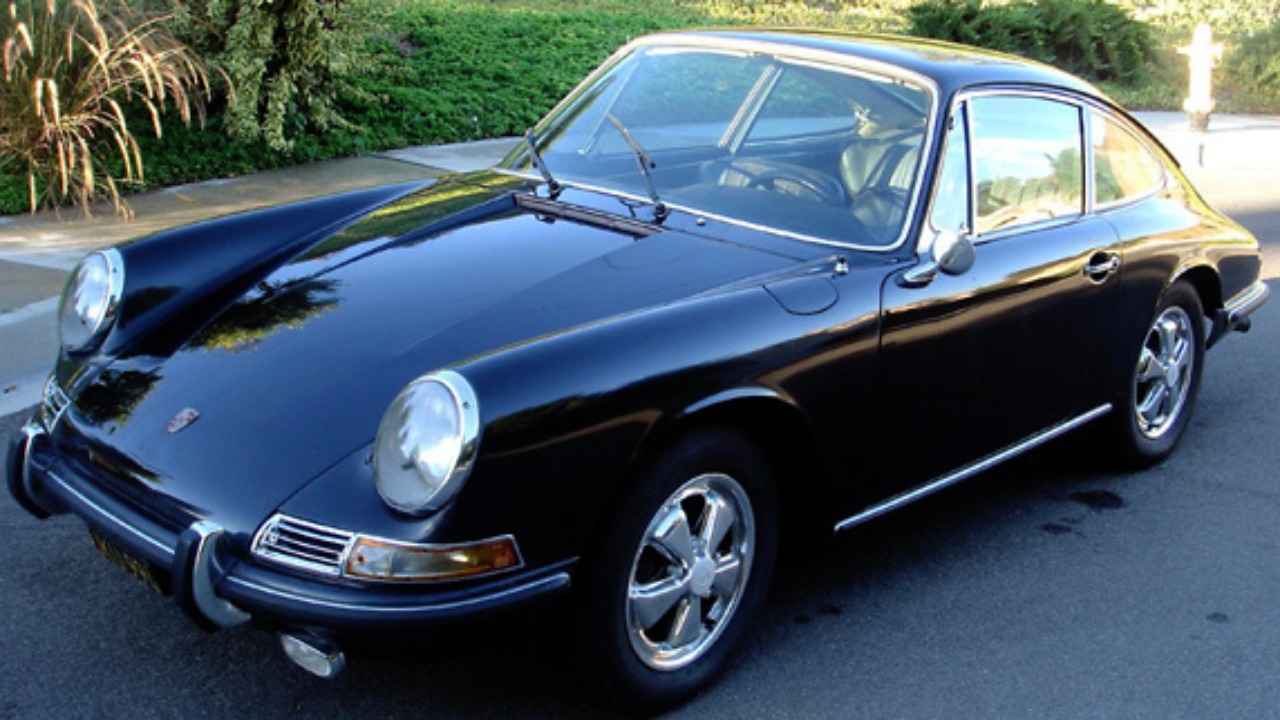
The 1967 Porsche 911S did not just add a letter to the decklid, it reset expectations for what a compact sports car could feel like on the road and the track. By sharpening the original 911 formula with more power, tighter suspension and purposeful weight saving, it created a template that still shapes how performance cars are judged today. When I look at how drivers and restorers talk about this model now, I see a car that raised the bar so convincingly that even modern machines are still chasing its balance of delicacy and intent.
The first true “S” and a new performance benchmark
When Porsche introduced the 1967 911S, it was not just a trim level, it was a statement that the company was ready to turn its new rear engined coupe into a serious sports-purpose tool. The car took the basic 911 and elevated it with a higher revving engine, stronger brakes and chassis tweaks that made it feel more like a competition car that happened to wear license plates. I see that moment as the point where the 911 stopped being an interesting newcomer and started becoming a reference point for everyone else building sports cars.
Contemporary and modern testers alike have zeroed in on how thoroughly Porsche reworked the underpinnings to justify that “S” badge. Reports describe how Porsche increased the front roll bar from 13 to 15 mm and added a bar at the rear, a not insignificant change that tightened body control and made the car more responsive to steering inputs. Those adjustments, combined with uprated brakes and factory sway bar tuning, meant the 1967 911S could carry more speed with greater stability, even as it remained prone to the kind of snap oversteer that demanded respect from the driver. That blend of precision and risk is exactly what gave the car its reputation as a serious driver’s machine.
Raw, mechanical and air cooled to the core
What really set the 1967 911S apart was how unfiltered it felt from behind the wheel. Owners and testers describe it as a raw, engaging and challenging driving experience, the kind of car where every control movement has a direct mechanical consequence. One detailed account of a well preserved example calls it mechanical, lightweight and nimble, with a relatively tiny footprint that lets the driver place it on the road with millimetric accuracy, yet still prone to snap oversteer situations if you get greedy with the throttle. That description of a definitive air cooled experience captures why the car continues to loom so large in enthusiast memory.
For me, the key is how the 2.0 liter flat six and the chassis speak the same language. The engine’s willingness to rev, the light flywheel feel and the way the car dances on its suspension at speed all reinforce the sense that you are working with a single, coherent machine rather than a collection of parts. Museum curators who have studied the 1967 Porsche 911 2.0 S point out that, because of this close connection between driver and hardware, many drivers became very attached to this style of driving, especially when it was matched with strong suspension and a lightweight body that encouraged them to choose the 911S over the standard car. That emotional bond is a big part of why the model still feels like a benchmark rather than a relic.
Race bred roots and the “Simple” hot rod formula
The 1967 911S also raised the bar by serving as the platform for some of Porsche’s most focused competition cars. Period insiders and modern specialists describe it as the platform for the infamous 911R and 911 rallye cars, which took the already sharpened S specification and pushed it further into motorsport territory. When I watch restorers and racers talk about these cars, I hear the same theme repeated: the S provided the right mix of power, weight and durability to be turned into a serious endurance and rally weapon without losing its road going character.
That dual personality has inspired a whole cottage industry of sympathetic hot rods built around the 1967 shell. One respected shop lays out a philosophy for a custom 1967 Porsche 911S that it simply calls Simple: add power, reduce weight, improve handling. That same builder notes that the original S already came with stronger brakes and a factory sway bar, so the modern hot rodder is really just extending a logic that Porsche itself embraced in period. In other words, the 1967 911S did not just set a standard in its own time, it handed later generations a clear blueprint for how to make a small sports car faster without losing its soul.
From barn finds to “Holy Grail” status
The way people chase and restore these cars today says as much about their impact as any period road test. In one enthusiast group, a story circulates about a 1967 Porsche 911 discovered in a collapsing barn, a car that had been left long enough for the building around it to start giving way. The restorer explains that it Took over two years to make a deal on this one, with many twists and turns before the project could even begin. That kind of persistence is not about flipping a car for profit, it is about rescuing a piece of history that enthusiasts see as too important to leave to rot.
On the other end of the spectrum, pristine and sympathetically upgraded examples are treated almost like rolling museum pieces. In a widely shared video, a host walks around a 1967 Porsche 911 S and calls it a Holy Grail 911 while comparing its feel to earlier competition machines like the America Roadster, marveling at how race car intent has been distilled into a compact coupe you can drive on the street. The way that clip lingers on the details, from the thin rimmed steering wheel to the sparse interior, underlines how this car has become a touchstone for what a pure driver’s 911 should be, and the America Roadster reference makes clear that Porsche’s competition lineage is part of the appeal.
Why the 1967 911S still feels modern
Spend time listening to modern specialists and you notice how often they describe the 1967 911S in present tense, as if it were still a current product. In one detailed walkaround, Greg Bartley of Makellos Classics introduces a custom build by saying, “hey guys this is Greg Bartley with McKel’s Classics and you’re watching the Pace Notes,” then proceeds to explain how carefully chosen upgrades can make the car feel even more alive without erasing its character. That Pace Notes approach treats the S as a living platform rather than a museum piece, which is exactly how a truly great sports car ages.
Dealers who specialize in early 911s echo that sentiment when they describe a New Arrival 1967 Porsche 911S as the first “S” example of the venerable 911 and emphasize how it set the stage for all subsequent high performance variants. They highlight how Porsche focused on the handling on the 911S, not just straight line speed, and how that balance still resonates with drivers who are used to modern performance cars. When I put all of this together, from the raw air cooled feel to the race bred roots and the obsessive restorations, it is clear to me that the 1967 911S raised the bar by proving that a small, relatively simple sports car could deliver a level of engagement and purpose that still feels fresh decades later, a standard that even today’s most advanced machines struggle to surpass.
More from Fast Lane Only: