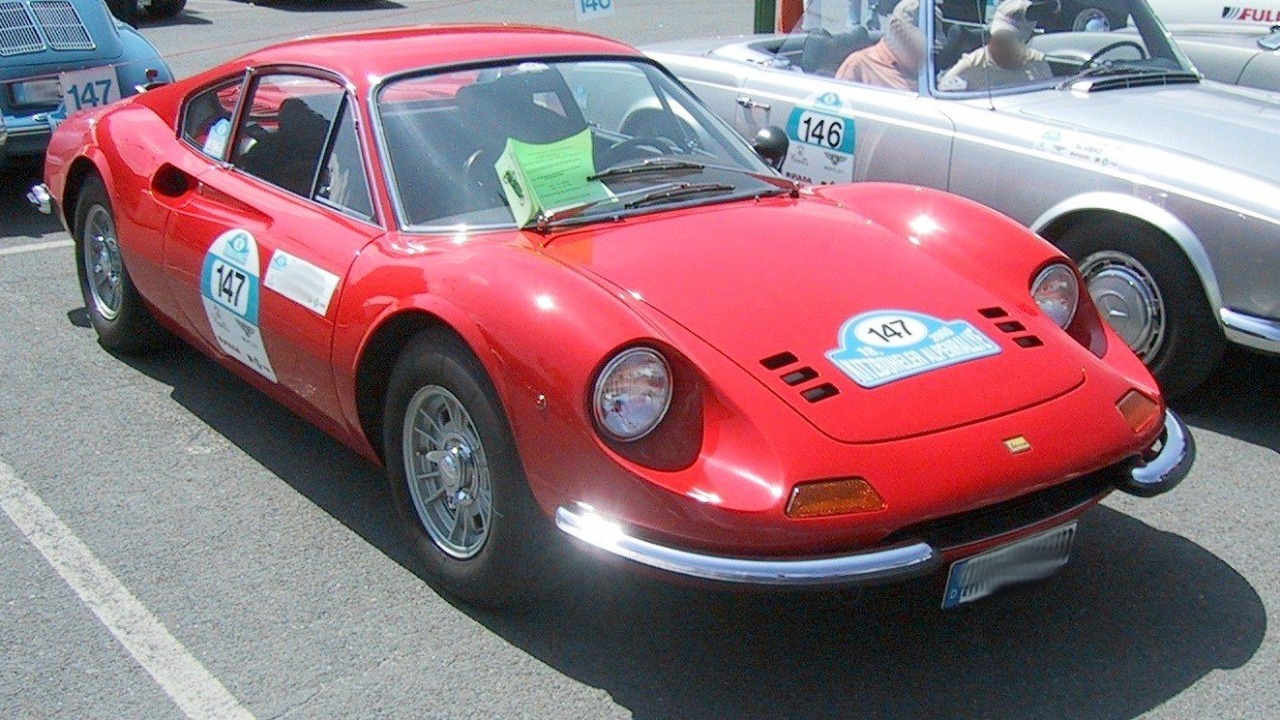
The 1969 Ferrari Dino 246 GT arrived as a contradiction on wheels, a mid‑engined Italian sports car that refused to wear the famous prancing horse yet drove like the future of Maranello. It was lighter on power, smaller in stature and humbler in branding than the 12‑cylinder flagships around it, but it quietly reset what enthusiasts expected from a roadgoing Ferrari product. I see its impact today not just in auction results, but in the way drivers talk about balance, usability and beauty as essential parts of performance.
The “almost Ferrari” that changed the badge game
On paper, the Dino project should have been a footnote, because Enzo Ferrari reserved the Ferrari name for 12‑cylinder cars and pushed his new V6 line into a separate marque. The History of that decision is rooted in family, since the name Dino honored Ferrari founder Enzo Ferrari’s late son, Alfredo “Dino” Ferrari, who was credited with the V6 concept that powered the car. Early road models like the 206 GT carried only the Dino script, because the boss did not want to give the company name to a six‑cylinder. That separation was supposed to keep the halo of the big V12s intact, yet it ended up giving the 246 its own mythology.
By the time the Introduced 1969 Dino 246 GT arrived from Maranello, the car was a thoroughbred sports machine in everything but badge, still not permitted to bear the Ferrari brand name despite its factory origin. Instead of the traditional Cavallino Rampante emblem, the Pininfarina‑designed body carried the signature of Alfredo “Dino” Ferrari on its nose, a detail that a concours‑level restoration of an early L‑series car highlights as a deliberate break from the usual Cavallino Rampante and Prancing Horse Ferrari branding. In practice, that “almost Ferrari” status gave the 246 GT permission to be different, and it quietly taught buyers that the soul of the company was not limited to cylinder count or a badge.
Mid‑engine layout, race‑bred V6 and a new way to go fast
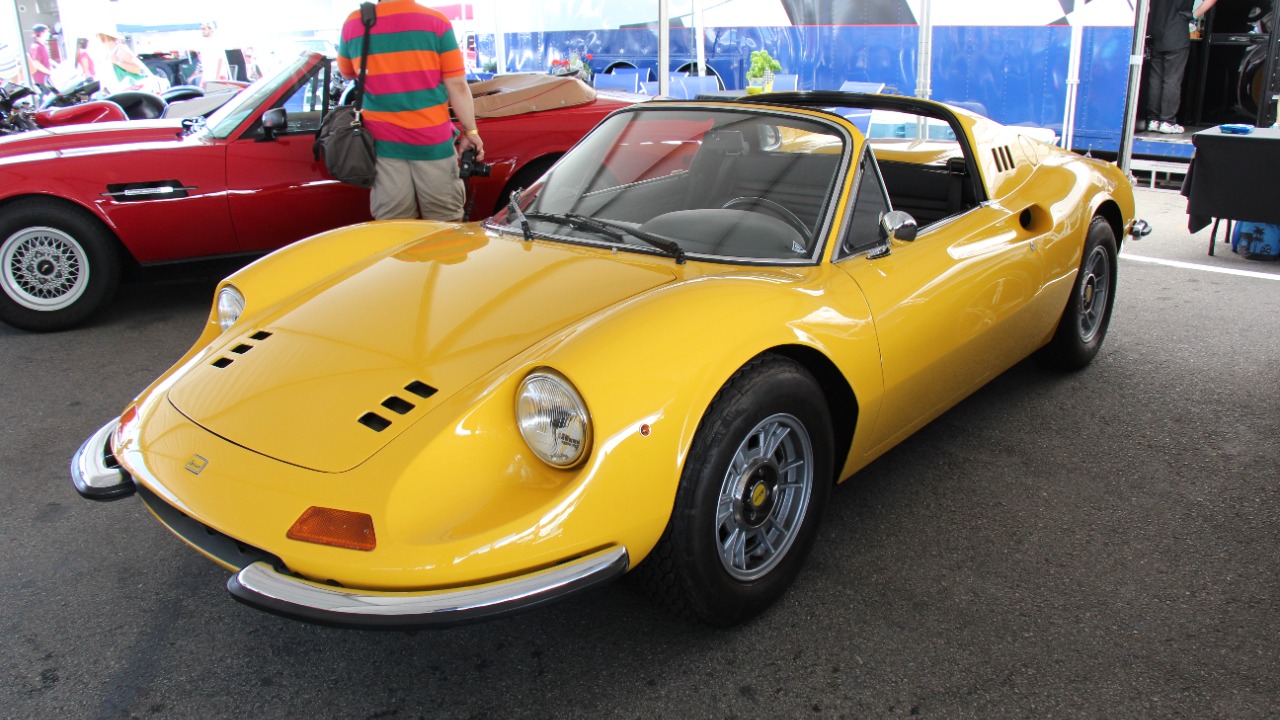
What really rewrote expectations was the way the 246 GT put its power to the road. Built on the earlier Ferrari 206 architecture, the production car adopted a mid‑engine layout that mirrored the direction Ferrari was taking in competition, with the The Dino road car echoing the racing direction seen in mid‑engined Ferraris. The V6 itself traced its DNA back to Formula 2, and period commentary on the open‑roof GTS version stresses that the same modest but thoroughbred joint‑venture V6 engine, with its Powered racing DNA, sat just behind the driver. Instead of chasing headline horsepower, the 246 GT focused on balance, revs and response, which made it feel alive at speeds where earlier front‑engined cars were only just waking up.
That philosophy shows up clearly when you look at how the model evolved from the lighter 206 to the steel‑bodied 246. Production of the original 206GT was low, and just one year after its release it was replaced with the revised 246 G T, a heavier car thanks largely to the switch from aluminum to steel bodywork. Yet contemporary driving impressions, including modern track sessions where instructors use a 1969 Ferrari Dino 246 GT to help people become a better driver in vintage machinery, underline that the extra weight did not blunt the car’s agility. Instead, the mid‑engine layout and compact V6 created a template for Ferrari Mid Engine road cars that would stretch from the Dino 246 GTS to later V8s.
Design that made “beautiful” a performance metric
Even parked, the 246 GT challenged what a serious sports car was supposed to look like. Styled by Pininfarina, its sensuous, organic curves might have been of a style typical of the late 1960s, but the perfection of their execution was anything but ordinary, as one detailed design study of the Styled Pininfarina bodywork makes clear. The proportions were pure mid‑engine berlinetta, with a low nose, tucked cabin and muscular rear haunches that visually explained where the mass sat. It looked delicate, but the stance suggested intent, and that combination of grace and purpose has led more than one commentator to call the Ferrari 246 Dino GT the most beautiful car ever made.
That aesthetic influence did not stop with the coupe. The Dino badge later appeared on the 308 GT4 2+2 designed by Bertone, a car that carried the same mid‑engine idea into a more angular, practical package, with The Dino badge also seeing the 308 G T4 produced between 1973 and 1976 by Bertone. That lineage matters, because it shows how the 246 GT’s design language and packaging opened the door for Ferrari to experiment with new silhouettes and seating layouts without sacrificing identity. When I look at a modern mid‑engined Ferrari, I still see echoes of that original Dino roofline and the way the rear fenders rise gently behind the cabin.
From undervalued outlier to market benchmark
For years, the Dino sat in the shadow of its V12 siblings in the marketplace, dismissed by some as not a “real” Ferrari. That perception has flipped. Detailed market analysis notes that the 246 Dino is a car that simply does not follow the usual rules, with values continuing to defy expectations as collectors recognize its importance, and the figure 246 itself becoming shorthand for a blue‑chip classic. Valuation tools focused on the 1969 Ferrari Dino 246 GT underline how widely prices can vary depending on condition, mileage, options and history, with guidance that the value of a 1969 Ferrari Dino 246 G T can swing significantly even for cars in good condition with average spec. That spread reflects a market that has finally learned to discriminate between tired examples and carefully preserved or restored cars.
Production numbers help explain the surge. Thie Dino would then be the first Ferrari road car produced in any considerable numbers, with a total of 3,761 examples across a six‑year production run, which is enough to create a real market but not enough to dilute rarity. When I scroll through enthusiast posts, I see owners proudly sharing that The Ferrari 246 GT Dino, produced from 1969 to 1974 under the Dino marque as a tribute to Enzo Ferrari’s late son Alfr, still turns heads on modern streets, a sentiment captured in an Oct social clip that calls out the 246 G T by name. That mix of emotional story, limited supply and rising recognition has turned the once‑overlooked Dino into a benchmark for how quickly collector sentiment can change.
How it drives, and why that still feels modern
Numbers and badges only tell part of the story; the rest lives in the way the 246 GT moves. Modern reviewers who climb into a well‑sorted example often come away surprised at how contemporary it feels, with one detailed spec breakdown inviting readers to Discover everything about the Ferrari Dino 246 G T, from its V6 mid‑engine layout to its balanced performance that set the stage for future Dino models. The same theme runs through enthusiast videos that ask whether the 246 GTS Dino is one of the most engaging Ferraris of all time, with drivers eager to run through the gears time and time again, a feeling captured in an Aug review that groups it among the most involving Ferraris of its era. When I listen to those engines sing, I hear a car that rewards precision and rhythm rather than brute force.
Owners echo that sentiment in more informal corners of the internet. One widely shared comment describes how the 246 Dino is famous in modern pop culture for being Ferrari’s first publicly sold mid‑engine sports car, with the number 246 itself now shorthand for that shift. Another discussion pushes back on the idea that the Dino 246 and 308 GT4 were “less‑than” Ferraris, pointing out that From the channels video description, Popular lore has taken an out‑of‑context quote from Enzo Ferrari about what makes a Ferrari, and that the cars themselves prove otherwise, a point that a Jul thread underlines. When I add in the perspective of long‑time owners who say they have owned ten Dinos, bought and sold them and still come back because they always drive as intended, as one Dino 246 GTS, Ferrari Mid Engine, Tim, Enthusiast Garage episode puts it, the pattern is clear: this is a car that feels timeless from behind the wheel.
The legacy that outgrew the badge
Looking back now, it is striking how much corporate and cultural weight the Dino carried despite its outsider status. A detailed feature on the Dino, The “Almost” Ferrari That Changed The Company, argues that The Dino, Almost, Ferrari That Changed The Company helped shift Ferrari’s road‑car strategy toward mid‑engine layouts and more accessible performance, a point that a Carfection deep dive reinforces. Another long‑form history of the model notes that the 246 GT debuted at a major European show with a slightly lengthened wheelbase and detail changes like five‑bolt wheels and bumpers extending into the grille mouth, subtle tweaks that signaled Ferrari was learning how to refine a mid‑engine platform for everyday use, as chronicled in that same Ferrar history.
Even the way enthusiasts talk about the car today reflects that expanded legacy. A detailed retrospective on the Dino 246 GT calls it the Ferrari that was not allowed to be one, yet also emphasizes that the 246 G T was introduced in 1969 as a thoroughbred sports car from Maranello, a framing that captures both the corporate hesitation and the engineering confidence behind it, as set out in the However section of that account. When I put all of this together, from the family story of Dino and Enzo Ferrari to the way modern drivers still celebrate the 246 G T on track days and social feeds, it is clear that the 1969 Ferrari Dino 246 GT did more than launch a model line. It redefined what a Ferrari‑built sports car could be, and in doing so, it quietly rewrote expectations for an entire generation of performance cars.
More from Fast Lane Only: