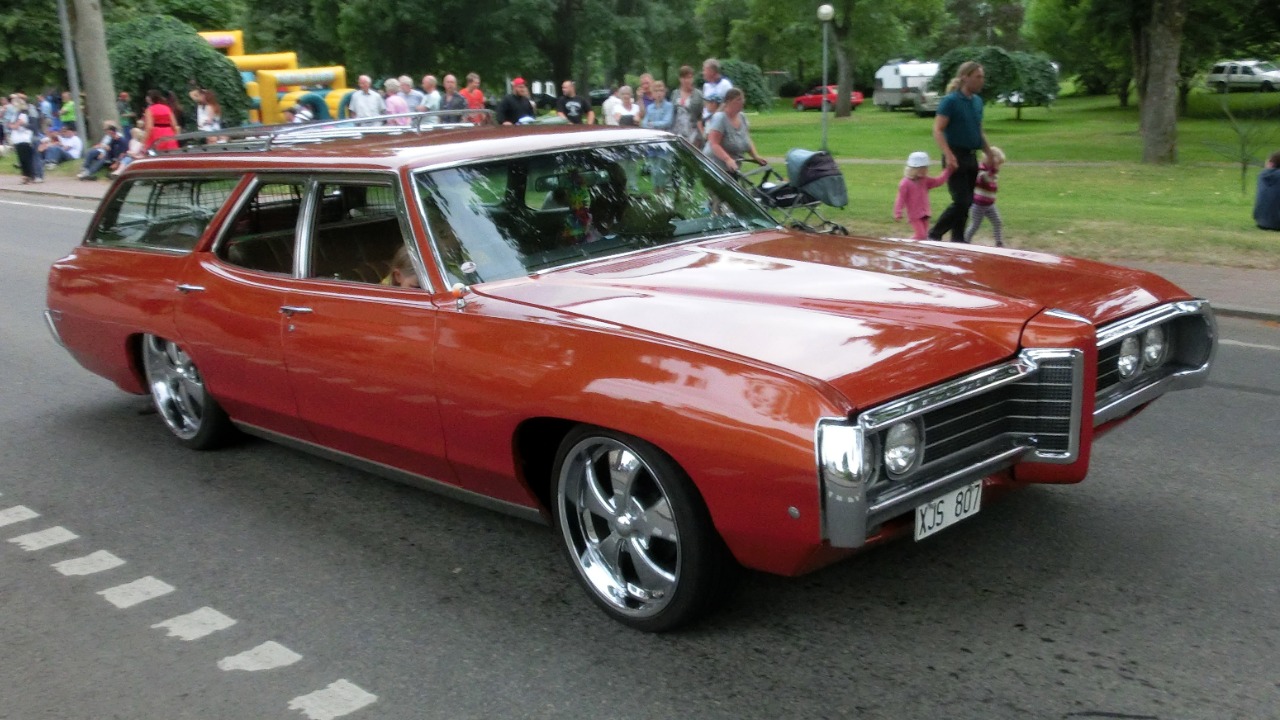
The 1969 Pontiac Executive sat in a curious middle ground. It shared the big car swagger of the Bonneville and Catalina, yet it never earned the same spotlight or sales. To understand why it lingered in the background, I have to look at how Pontiac positioned its full size lineup, how buyers actually shopped, and how the Executive’s quiet competence was overshadowed by louder badges and bolder stories.
On paper, the Executive should have been a sweet spot: more upscale than a Catalina, less costly than a Bonneville, and backed by the same muscular V8 heritage that made Pontiac a force in the 1960s. In practice, the car’s name, equipment mix, and marketing left it stranded between identities, even as the Bonneville became the aspirational choice and the Catalina the volume leader.
The Executive’s name and place in Pontiac’s hierarchy
When Pontiac retired the long running Star Chief, it did not abandon the idea of a mid range full size car. The Executive name replaced that familiar Star Chief badge, signaling a fresh attempt to appeal to upwardly mobile buyers without stepping on the Bonneville’s toes. The new label was meant to sound modern and professional, a better fit with the image Pontiac was cultivating than the more dated Star Chief identity. Yet that very shift, away from a storied nameplate and into corporate sounding territory, made the car feel less like a character and more like a trim level.
Writers who have revisited this era note that Executive was logically chosen, but logic does not always translate into emotional pull in a showroom. The earlier Star Chief had once sat at the very top of the Pontiac range, and when the Star Chief (often called the Pontiac Star Chief) lost that clear identity, its sales faded. The Executive inherited that mid range slot but not the old car’s aura, and as a result it entered the lineup already fighting to define itself between the more clearly branded Catalina and Bonneville.
Priced between Catalina and Bonneville, but squeezed from both sides
By 1967, Pontiac had locked in the Executive’s role as the literal middle child. The Pontiac Executive Sedan was described as Priced halfway between the budget Catalina and the deluxe Bonneville, and that basic strategy carried into 1969. The Executive shared much of its hardware and body shell with the cheaper car, while trying to borrow some of the prestige of the pricier one. For a buyer, that meant a decision that often came down to a few dollars a month on a payment book, and the temptation to stretch to a full Bonneville was strong.
Production figures underline how thoroughly the mid range idea was overshadowed. In 1969, Pontiac built 98,005 Bonnevilles and an even larger 240,971 Pontiac Catalinas. The Executive’s own totals, listed separately in Sta Wag and sedan lines with codes like 252 and wheelbase figures such as 121, never came close to those headline numbers. With base prices in the low 3,174 to 3,935 dollar range and total full size output around 84,006 units for some body styles, the mid tier car was numerically and emotionally boxed in by a cheaper workhorse and a more glamorous flagship.
Mechanically similar, emotionally different
From a mechanical standpoint, the Executive did not give up much to its siblings. Contemporary descriptions stress that Mechanically, the Executive was virtually identical to the Catalina, sharing the same standard and optional V8 engines. Across the full size line, Pontiac Facts sheets list Powertrain Options that started with a Three speed manual and a Hydra Matic automatic, and climbed through increasingly potent V8s. That meant an Executive buyer could tap into the same big car performance that defined Pontiac’s image, even if the badge on the fender was quieter.
The emotional gap, however, was wide. Earlier in the decade, the Under the hood story of the Bonneville had already set expectations, with Standard power coming from a 389 cubic inch V8 and optional engines that reinforced its status as the full size performance leader. When the When the 421 arrived, the big Poncho added it to the options list, and when the 389 gave way to the famed 400-incher, the association between Bonneville and big cube bravado only deepened. The Executive could be ordered with similar muscle, but the marketing spotlight rarely followed it into the driveway.
Trim, equipment, and the quiet Executive Series 256
Where the Executive did try to stand apart was in its standard trim and equipment. In 1969, Pontiac organized its full size offerings into series, with the Executive Series 256 positioned above the Catalina Series 252. The Full sized 1969 Pontiac Catalina models gained features like pulse wipers and concealed blades, and the Executive layered on additional trim and comfort touches. Yet those niceties were subtle, the kind of upgrades that made sense to a careful shopper but did not jump off a billboard or a TV spot.
Even the way Pontiac cataloged its full size cars hints at how the Executive was treated as a bridge rather than a star. The Jan specification sheets group the Executive alongside the Catalina and Bonneville under shared Pontiac Facts, with common Powertrain Options and overlapping equipment. In that context, the Executive reads less like a distinct model and more like a carefully optioned Catalina, which made it harder for dealers to pitch and easier for buyers to skip in favor of a base car with a few extras or a lightly optioned Bonneville.
Bonneville’s glamour and Pontiac’s broader performance story
While the Executive tried to sell rational value, the Bonneville sold a feeling. Contemporary enthusiasts still single out the 1969 Pontiac Bonneville convertible as a standout, noting that Pontiac offered droptops in two full size series and that production of those convertibles was nearly identical, at about 5,400 apiece, for the model year. Another surviving I had to wait style road test of a Matador Red Bonneville ragtop, paired with the big V8s described in the Jan coverage of that When the era, reinforces how the flagship car embodied the brand’s mix of luxury and speed. The Executive, offered only as a sedan and wagon, simply could not compete with the glamour of a big convertible or the cachet of the top trim.
At the same time, Pontiac’s performance narrative in the 1960s was being driven by more overtly sporty models. Commentators looking back on that decade point out that Back then, Pontiac, under the General Motors umbrella, sliced its full size formula into multiple flavors to reach buyers at different price points, while halo cars like the Pontiac GTO Judge grabbed headlines as an Underground Muscle Car to Erase. In that crowded performance and prestige landscape, a sensible mid range sedan with a businesslike name was always going to struggle for attention, no matter how competent it was.
More from Fast Lane Only: