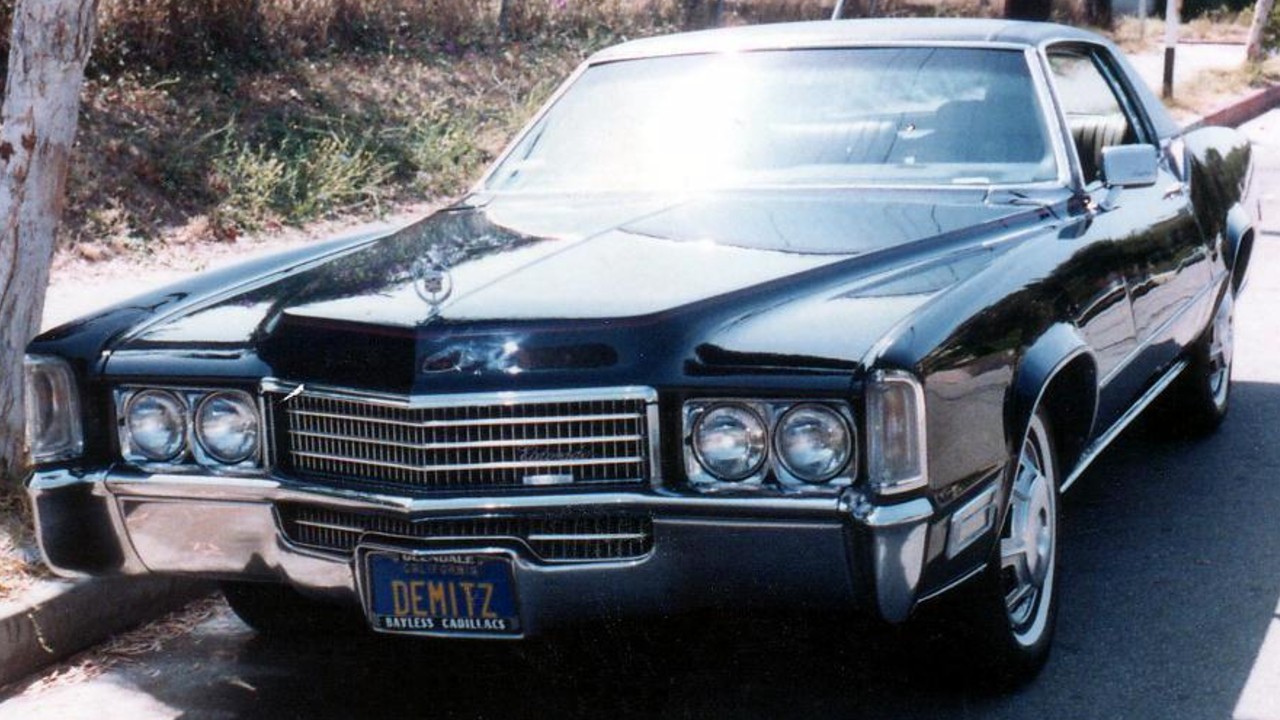
The 1970 Cadillac Eldorado arrived at a moment when American luxury cars were expected to be vast, chrome laden, and softly sprung, yet it refused to behave like a traditional Cadillac. It combined a radical front wheel drive layout, a massive new engine, and crisply tailored styling that broke with the brand’s own excesses. In doing so, it set a template for personal luxury that was technically daring, visually disciplined, and unmistakably American.
Rather than simply updating a familiar formula, the 1970 model sharpened a bold experiment that had begun a few years earlier and pushed it to its logical extreme. The result was a coupe that looked leaner than its size suggested, drove with unexpected composure, and quietly introduced engineering solutions that would influence Cadillac for years.
A cleaner, more modern kind of Cadillac glamour
By 1970, the Eldorado had already distanced itself from the flamboyant fins and heavy ornamentation that had defined Cadillac in the 1950s and early 1960s. Designers pared back the chrome and surface decoration, favoring long, unbroken lines and sharp creases that made the big coupe appear more athletic than its footprint suggested. Commentators have noted that the Eldorado took a step away from Cadillac gaudiness, with its proportions and surfacing reading as more restrained and contemporary than the brand’s sedans of the period.
The basic body introduced for the late 1960s carried through 1970, but subtle refinements gave the car a more assertive stance and made its distinctive rear treatment more visible from the side than the rear. The roofline, with its formal C pillar and narrow side glass, underscored the Eldorado’s role as a personal luxury car rather than a traditional chauffeur oriented Cadillac. Some observers have even argued that the 1967 to 70 Eldorado represented the best looking postwar Cadillac, a judgment that reflects how decisively it broke from the marque’s earlier visual language while still reading as unmistakably Cadillac.
Front wheel drive and a radical drivetrain layout
Under the crisp sheet metal, the 1970 Eldorado was even more unconventional. The Eldorado adopted a front wheel drive layout that was a bold step into a new generation of cars for Cadillac, especially in a market segment dominated by rear drive luxury coupes. Packaging the engine and transmission transversely ahead of the passenger compartment required a complex powertrain arrangement, but it delivered a flat floor and impressive interior space for a two door car.
The Eldorado’s transmission package used a roller chain to transfer power through a torque converter positioned beside the engine rather than behind it. This configuration allowed Cadillac engineers to keep the drivetrain compact while still handling the immense torque of the big V8. The layout, which paired the engine with a Turbo Hydramatic unit and a robust final drive, was sophisticated for its time and helped the Eldorado deliver smooth, confident acceleration without the rear axle squat and wheelspin that plagued many powerful rear drive contemporaries.
The 500 cubic inch V8 that redefined excess
If the front wheel drive system made the Eldorado technically unusual, the engine that arrived for 1970 made it unforgettable. Cadillac fitted its big block V8 with a crankshaft stroke of 4.304 inches, or 109.3 m in metric terms, which increased total displacement to 500.02 cubic inches. That figure, often rounded in conversation, was not marketing bravado but a precise engineering specification that underscored how far Cadillac was willing to go in pursuit of effortless power.
In Eldorado trim, this 500 cubic inch engine was tuned for immense torque rather than high rev horsepower, a choice that suited the car’s mission as a rapid, unflustered long distance machine. Contemporary descriptions of the 1970 Cadillac Fleetwood Eldorado highlight its 8.2 litre V8 and note that this formidable V8 could sprint the big coupe from rest to highway speeds with ease and carry it to a top speed in the region of 126 mph. Later analysis has emphasized that Cadillac paired the 500 V8 with a Turbo Hydramatic 425 transmission and a stout three speed final drive, creating a drivetrain capable of handling roughly 500 pound feet of torque without drama.
Personal luxury, not just traditional prestige
Cadillac positioned the Eldorado as more than a coupe version of its sedans. Marketing and product planning framed it as the world’s finest personal luxury car, a vehicle for owners who wanted to drive themselves rather than be driven. The long hood, short deck proportions, and intimate two door cabin all reinforced that message, as did the car’s emphasis on performance and handling relative to Cadillac’s more formal Fleetwood models. The 1970 Cadillac Fleetwood Eldorado was presented as the only way to travel for buyers who wanted exclusivity and speed in equal measure.
Inside, the Eldorado combined traditional Cadillac cues with features that reflected its more individualistic brief. Power windows, power seats, and a power trunk lid were available, along with richly upholstered seating and extensive sound insulation. Yet the driving position, dashboard layout, and relatively firm suspension tuning signaled that this was a car meant to be enjoyed from behind the wheel. Enthusiasts who have revisited the model describe it as a pinnacle of Cadillac personal luxury, a car that balanced comfort with a degree of driver engagement that surprised those accustomed to the brand’s softer sedans.
Concept car drama made real
The Eldorado’s styling did not emerge in a vacuum. The distinctive body was defined by sharp corners and creased sides, with a rear treatment inspired by the GM X Stiletto concept car. That influence was evident in the way the rear fenders tapered and in the vertical emphasis of the taillamps, which gave the car a futuristic, almost aerospace quality without resorting to the exaggerated fins of earlier decades. The result was a production coupe that looked as if a show car had been carefully adapted for the street.
From some angles, the Eldorado’s length and low roofline made it appear even more dramatic than the Stiletto that had inspired it. The interplay of light along the crisp body sides, combined with the hidden or exposed headlamp treatments used across the 1967 to 70 run, gave the car a presence that has aged gracefully. Enthusiasts who debate whether the 1969 or 1970 version is the most attractive often focus on these details, but they generally agree that the generation as a whole stands apart within Cadillac history for its blend of concept car flair and disciplined execution.
More from Fast Lane Only