The 1973 Chevrolet Corvette did not shout about its reinvention. Instead, it slipped into a new era with a series of quiet but decisive changes that softened its image, reshaped its structure, and repositioned it for a world that was suddenly less interested in raw muscle and more focused on safety, comfort, and regulation. What looked like a mild facelift at first glance was, in reality, a turning point that redirected the Corvette from street brawler to refined grand tourer.
A softer face for a harder regulatory era
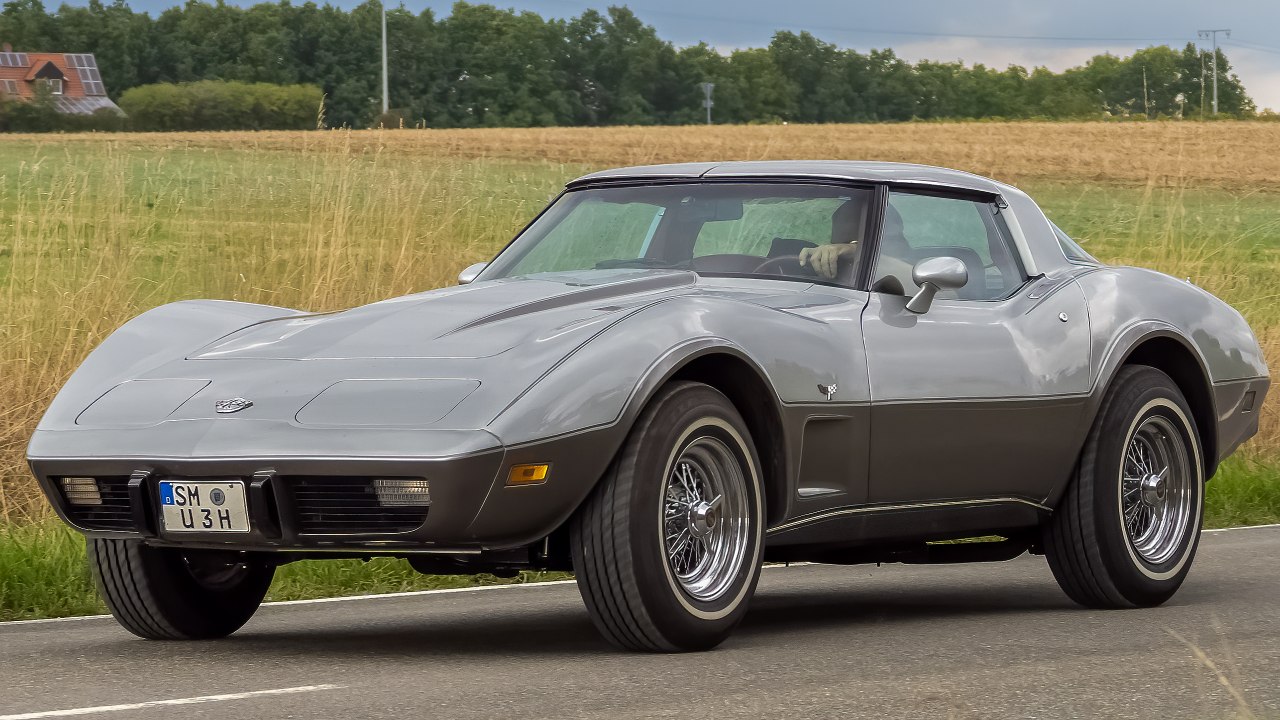
The most visible signal that the 1973 Corvette was changing course sat right at the nose. Chevrolet replaced the familiar pointy chrome front bumper and grille with a resilient, body colored urethane front end that could absorb low speed impacts and still spring back into shape. That new front bumper was engineered to meet 5 mph impact standards, making the 1973 Corvette the first of the line to carry a federally compliant energy absorbing nose while the rear of the car remained chrome for one more year. Contemporary references to the C3 generation note that, although the basic front end design theme stayed recognizable, the chrome hardware disappeared and the front fascia extended upward to hide the windshield wipers, a subtle but telling move toward a cleaner, more integrated look.
Underneath that smoother face, the structural story was just as important. The 1973 model year introduced a longitudinal steel beam inside each door to improve protection in side impacts, a safety upgrade that did not change the silhouette but significantly altered how the car behaved in a crash. At the same time, the new air induction hood and revised front structure were designed to work with the urethane bumper and steel guard rails to manage impact forces more effectively. Factory specifications for the 1973 Corvette highlight the combination of the new front end, the air induction hood, and additional steel guard rails as part of a package aimed at both compliance and occupant protection, even if the styling changes drew more attention than the hidden reinforcements.
From raw muscle to refined grand tourer
Performance fans who had grown up on big block Corvettes felt the shift most acutely under the hood. By the early 1970s, the classic muscle car era was closing, and the Corvette’s once dominant power figures were being trimmed by emissions rules, insurance pressures, and changing fuel realities. Reporting on the period notes that, with the close of that muscle era, the Corvette’s performance had become a shadow of its former self in pure horsepower terms, a reality that made the 1973 model feel less like a drag strip hero and more like a balanced sports car. The 1973 Corvette sacrificed the sheer horsepower of its immediate predecessors, but it did so in exchange for a more livable, better rounded driving experience that pointed the car toward a different kind of buyer.
That repositioning became even clearer as the decade unfolded. Analysis of the 1973 to 1977 C3 models describes the 1973 Corvette as a pivotal and highly collectible transitional model, one that bridged the gap between the high compression brutes of the late 1960s and the more civilized grand tourers that followed. Even the sales data reflects this pivot. Corvette sales climbed despite the 1973 oil crisis, in part because the car was one of the few American performance options that could still appeal to buyers looking for a refined grand tourer rather than a pure muscle machine. In that context, the quieter ride, improved safety, and more polished manners of the 1973 car were not compromises so much as strategic adjustments to keep the Corvette relevant.
Quieter cabin, stronger shell
The 1973 Corvette did not just look softer, it felt different from the driver’s seat. Engineers targeted noise and vibration, areas that earlier C3s had often treated as secondary to speed. Factory specifications for the model year emphasize that the new front end structure and additional steel guard rails were paired with changes aimed at a smoother, quieter ride, reducing the harshness and vibrations that owners had felt inside the car. Accounts of the 1973 model year point out that the design work on the front fascia and bumper system was not only about crash performance, it also helped cut down on wind noise and improved the sense of solidity at highway speeds.
Safety advances went beyond the front bumper and door beams. Coverage of the 1973 to 1977 period notes that this was when Corvette began to integrate more modern restraint systems, including a shoulder belt and lap belt combination that reflected evolving federal expectations. The addition of the longitudinal steel beams in each door, combined with the new bumper system and structural guard rails, meant that the 1973 car was significantly more robust in side and frontal impacts than earlier C3s, even though the basic chassis layout remained familiar. That combination of a quieter cabin and a stronger shell helped shift the Corvette’s identity from a raw sports car to something closer to a long distance touring machine, a change that aligned neatly with the grand touring role buyers increasingly expected.
Styling continuity hiding structural change
One reason the 1973 Corvette’s directional shift felt so understated at the time is that the overall shape barely changed. The C3’s dramatic fender curves, long hood, and fastback roofline carried over, which made the car look, at a glance, like a mild update rather than a reengineered product. Historical overviews of the C3 generation describe the 1973 model as the first in several years to see notable aesthetic changes, yet those changes were concentrated in the front bumper, grille area, and subtle details like the extended fascia that concealed the wipers. The rear of the car, with its chrome bumper, still tied it visually to earlier models, reinforcing the impression of continuity even as the front half moved into a new regulatory era.
That visual continuity is part of why the 1973 Corvette’s structural upgrades can be easy to underestimate. The addition of the longitudinal steel beams in the doors, the new air induction hood, and the internal guard rails did not alter the car’s proportions or stance, so they attracted less attention than a full redesign would have. Yet, when I look at the way collectors and historians now describe the 1973 model, it is clear that these hidden changes are central to its reputation as a transitional car. The 1973 Corvette is the only model year to combine the resilient, body colored urethane front bumper with the older style chrome rear, a one year configuration that visually encodes the car’s role as a bridge between eras. That mix of old and new, familiar curves over a more modern safety structure, is exactly what allowed the Corvette to change direction quietly without alienating its core audience.
Why collectors now prize the quiet pivot
At the time, some enthusiasts saw the 1973 Corvette as a compromise, a car caught between the high power past and an uncertain future. Yet the way the market now treats well preserved examples suggests a different story. Descriptions of a 1973 Chevrolet Corvette Convertible that has been meticulously preserved and award winning emphasize how this model year represents a rare opportunity to own a car that captures a turning point in one of America’s most iconic sports cars. Collectors value not only the unique one year front and rear bumper combination but also the fact that the 1973 car still retains much of the classic C3 character while incorporating the safety and comfort upgrades that later models would build on.
That retrospective appreciation fits with how the broader C3 timeline is now framed. Detailed references to the C3 generation list the 1973 to 1974 period under “Major Changes,” underscoring that the shift from chrome to urethane, from exposed wipers to a cleaner cowl, and from unreinforced doors to steel beam structures marked a fundamental reorientation. When I consider the pressures of the early 1970s, from the oil crisis to tightening safety rules, it is striking how deftly the 1973 Corvette managed to adapt without losing its identity. The car did not announce a revolution, but through its new bumper system, structural reinforcements, quieter ride, and repositioned performance, it quietly set the template for the Corvette as a modern grand tourer, a direction that would define the nameplate for decades.
More from Fast Lane Only: