The Renault Dauphine did not just arrive in 1957, it landed in a Europe hungry for small, stylish, affordable cars and quickly became one of the continent’s defining shapes. Its surge in popularity came from a rare mix of clever packaging, targeted design research, and a marketing push that sold driving as a lighthearted pleasure rather than a chore. I see its success as the moment when a modest French saloon briefly set the global template for what a modern city car could be.
Postwar Europe and the search for a new small-car star
To understand why the Dauphine caught fire, I have to start with the postwar context that shaped it. Western Europe was moving from austerity to cautious prosperity, and families who had never owned a car were suddenly in the market for something compact, economical, and easy to park in dense cities. The Dauphine was conceived as the successor to Renault’s earlier small models and was positioned as the new crown in the French small car hierarchy, a role that made it central to the country’s industrial and social recovery. Reporting on its development describes how it was framed as an heir to the French small car crown, a car that could carry the nation’s design and engineering reputation into a more optimistic era.
That ambition mattered because small cars were not just consumer products, they were political and cultural symbols of modernity. The same sources that trace the Dauphine’s rise also note how the progress of Europe from wartime devastation to mass mobility depended on compact, efficient vehicles that ordinary workers could afford. In that landscape, the Dauphine was engineered to be inexpensive to run, easy to live with in congested Parisian streets, and exportable to markets that were still wary of large, fuel-hungry cars. Its popularity was therefore not an accident of styling, it was the result of Renault reading the postwar mood and designing a car that fit the new European way of life.
Design, packaging, and the “French” flair that sold the car
The Dauphine’s shape and layout were central to its appeal, and I see its design as a calculated blend of practicality and charm. Renault placed the engine at the rear, which freed up interior space and allowed a surprisingly roomy cabin within a very compact footprint, a configuration that suited narrow European streets and tight parking spaces. Contemporary descriptions emphasize that the car was tailored to be suitable for congested Parisian streets, with light controls and a compact body that made it unintimidating for new drivers. That packaging, combined with soft suspension and a relaxed driving character, made the Dauphine feel like a friendly companion rather than a machine to be wrestled with.
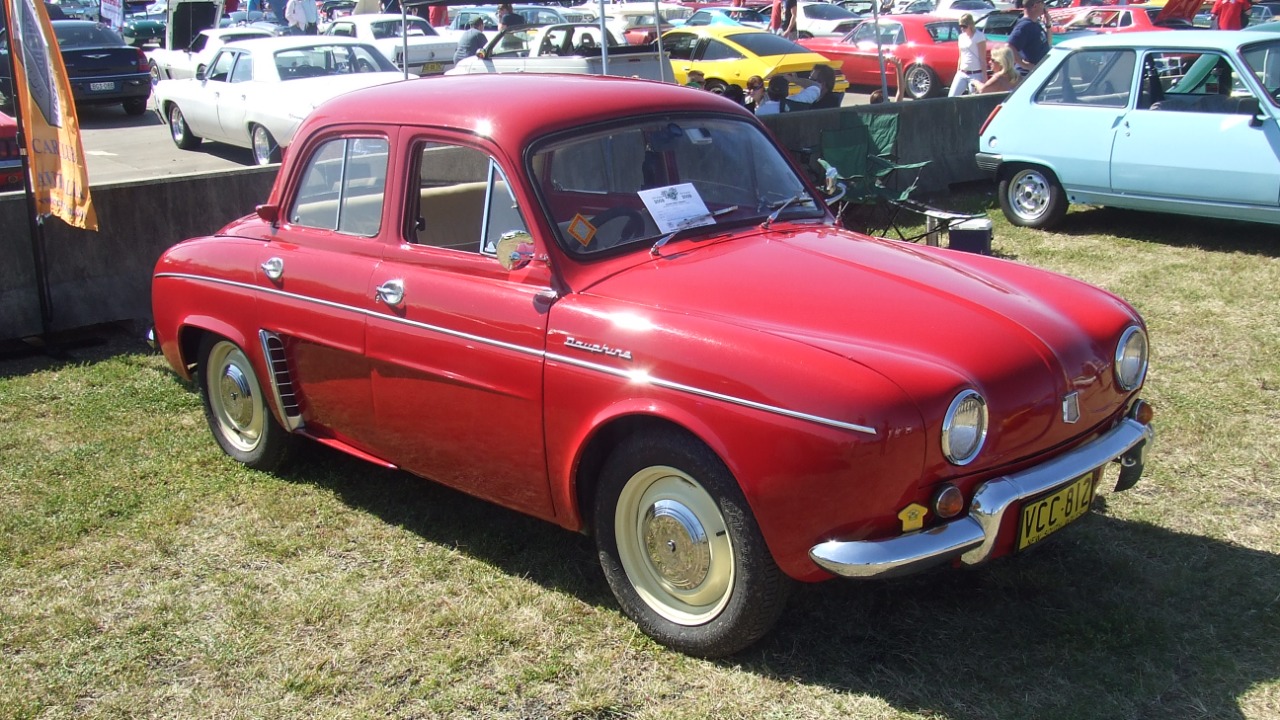
Styling was just as deliberate. The Renault Dauphine Style Renault was the result of market research that asked potential buyers what they wanted their car to say about them, and the findings showed that many cared more about the image of their car than the mechanical details. Designers responded with a rounded, almost delicate silhouette, subtle chrome, and pastel colors that projected a distinctly French sense of elegance rather than brute utility. Later enthusiasts still single out original paint codes and finishes, as seen in detailed looks at surviving cars such as a Renault Dolphine that retains what appears to be original paint, which underlines how much the visual identity helped the model stand out. By wrapping everyday practicality in a fashionable skin, Renault turned a basic saloon into a style object that people aspired to own.
Engineering range: from everyday runabout to Gordini hot-saloon
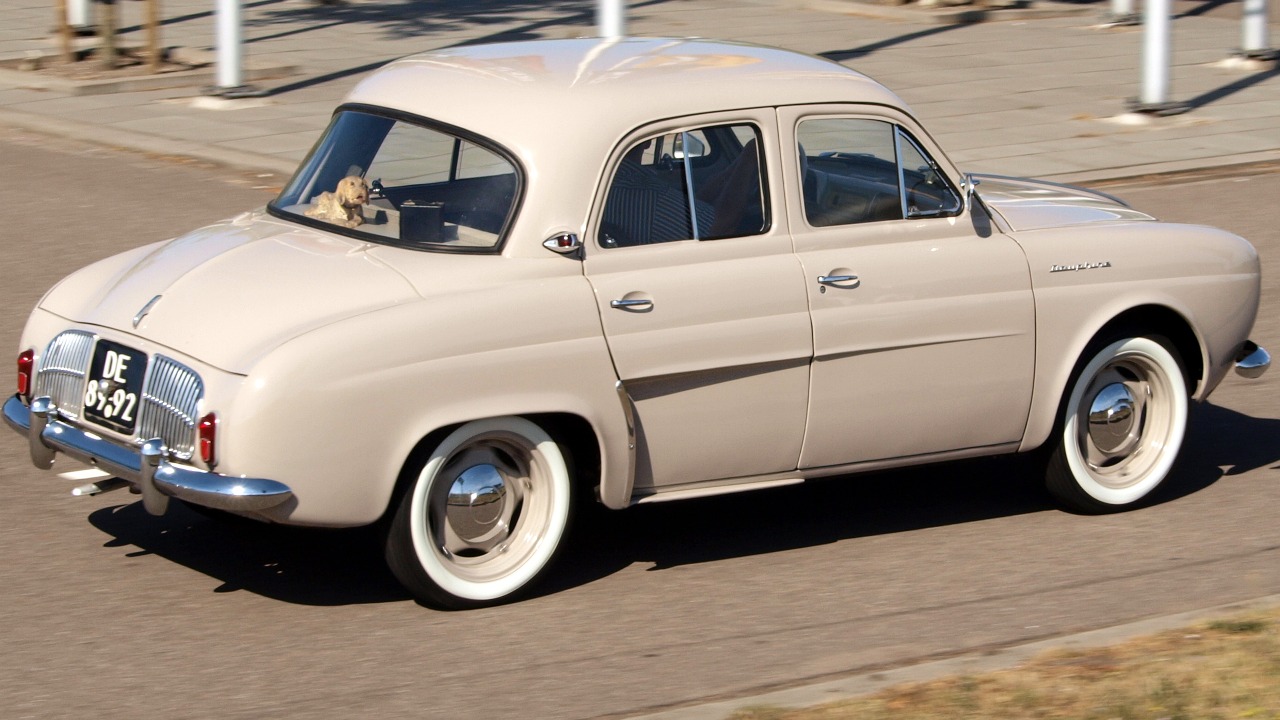
What really broadened the Dauphine’s reach was the way Renault built a family of variants around the same basic shell. At its core, the standard car was a modestly powered, rear engined saloon aimed at commuters and families who valued low running costs over performance. Yet the platform proved flexible enough that engineers could spin off more specialized versions without losing the core identity. Documentation of the model’s evolution lists several Variants, including sportier and more luxurious trims that allowed the Dauphine to appeal to very different buyers while still looking recognizably like the same car.
The most famous of these was the Dauphine Gordini, a re engineered version created by Amédée Gordini that turned the gentle city car into something far more lively. Technical summaries describe the Dauphine Gordini as having 38 to 40 horsepower and a four speed manual transmission, figures that may sound modest today but were transformative in such a light, compact body. Contemporary accounts even note that for those who really wanted to terrify themselves, the Gordini tuned Dauphine delivered a level of performance that felt wild compared with the standard car. By offering everything from basic transport to a genuine enthusiast’s toy under the same badge, Renault kept the Dauphine in the public eye and gave it a sporting halo that amplified its everyday popularity.
Marketing, media, and the joy-of-driving message
Renault did not rely on engineering alone, it sold the Dauphine with a marketing message that made driving look fun, modern, and accessible. Period advertising framed the car as another handy way to get around and have fun doing it, explicitly linking the Renault Dofine to a more carefree lifestyle. That tone was a departure from the purely utilitarian pitch of earlier economy cars, which had focused on necessity rather than enjoyment. By presenting the Dauphine as a way to enjoy mobility, not just endure it, Renault tapped into the aspirations of a generation that wanted to travel, socialize, and participate in a new consumer culture.
The company also understood the power of media and public image. The Dauphine appeared in promotional films and commercials that highlighted its ease of use in France and abroad, often showing it gliding through city streets or along scenic roads with a lightness that contrasted with heavier, more traditional sedans. Later coverage of classic examples, including detailed video walkarounds of cars like a Renault Dolphine in apparently original condition, underscores how much attention was paid to paint, trim, and visual presentation from the start. That consistent emphasis on style and enjoyment helped the car become a familiar sight not only on roads but in the broader cultural imagination, reinforcing its status as a fashionable choice rather than a bare bones compromise.
Export ambitions and the Dauphine’s global footprint
One of the most important reasons the Dauphine exploded in popularity was Renault’s decision to treat it as a global product rather than a purely domestic one. Reports on its commercial strategy describe the Dauphine as a major French export, a car that carried French industrial know how and design flair to international audiences. At a time when other European manufacturers were still focused on rebuilding their home markets, Renault was shipping Dauphines abroad and positioning them as an affordable taste of European style. That export push multiplied the car’s visibility and sales, turning it from a national success into a worldwide presence.
The company’s broader cultural strategy reinforced that reach. The Group has since highlighted its historic role in French industry by opening the doors of its historic building in Boulogne Billancourt in France for events that showcase its heritage, including early models that set the stage for later successes. While those exhibitions focus on a wide span of Renault history, they underline how central models like the Dauphine were to the brand’s identity as an innovator and exporter. By the time production wound down, the car had become a familiar sight in markets far from its French roots, and its combination of compact practicality, distinctive styling, and accessible pricing had inspired competitors from other European makers, including companies such as Volkswagen that were also turning small cars into global products. In that sense, the Dauphine’s rapid rise was not just a sales story, it was a chapter in the broader shift toward mass motorization that reshaped the postwar world.
More from Fast Lane Only: