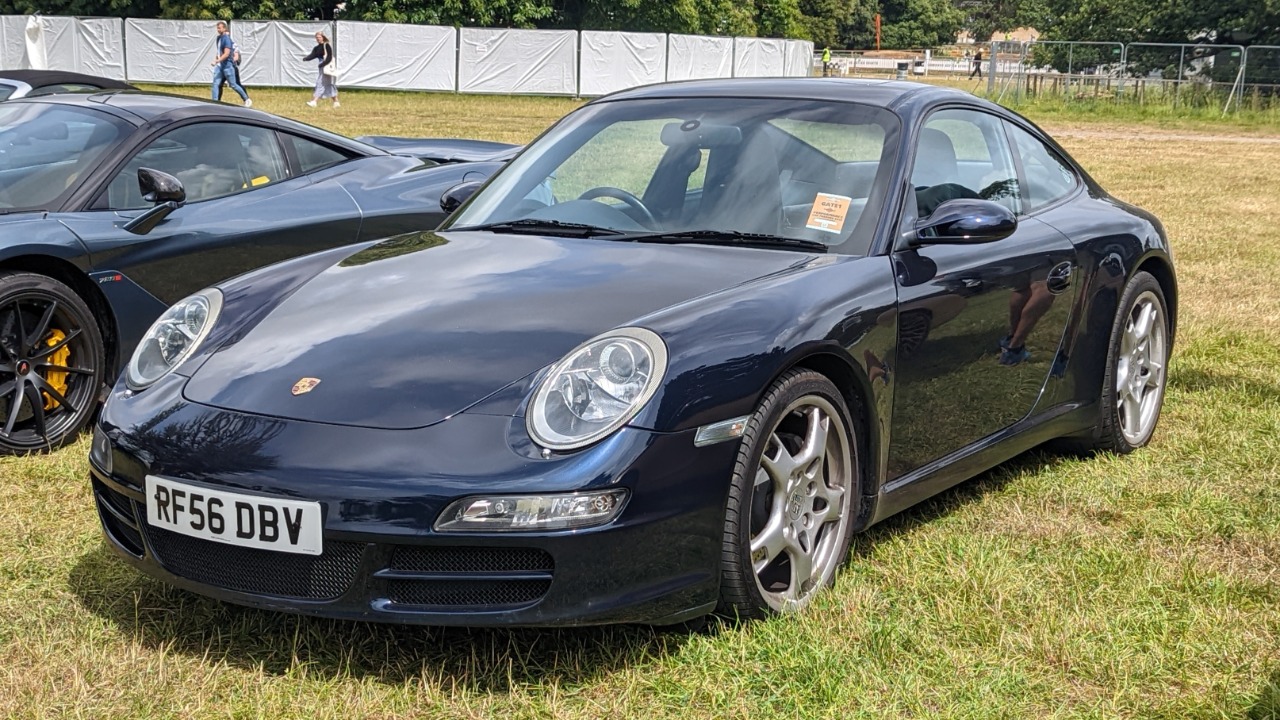
The 2006 Porsche 911 Turbo arrived at a moment when supercars were still expected to be temperamental toys, not tools you could trust on a wet Monday commute. By blending huge performance with all-weather traction, everyday ergonomics and real refinement, it quietly reset expectations for what a 911 could be. In the process, it proved that usability was not a compromise for speed but a new kind of benchmark.
Looking back now, I see that car as the pivot point between the raw, occasionally spiky Turbos of the past and the ultra-capable machines that followed. It showed that a supercar could be devastatingly fast, yet calm, predictable and even comfortable enough that owners would actually use the performance they were paying for.
The moment the 997 Turbo changed the brief
When Porsche launched the 2006 911 Turbo, internally known as the 997, it was presented as the sixth generation of the breed and a step change in how accessible a supercar could feel. The car kept the familiar 911 silhouette but widened the body, refined the cabin and, crucially, paired huge power with a chassis that ordinary drivers could exploit. Contemporary descriptions of the 997 Turbo as more “maneuverable to drive by ordinary mortals” underline how deliberately Porsche chased approachability rather than just headline speed, a point reinforced by the way the Highlights The launch story framed the car.
That shift was not only about marketing language, it was baked into the engineering. The 2006 Turbo introduced a new generation of all-wheel drive and stability systems that worked with, rather than against, the driver. Period coverage noted that the advanced multi-plate clutch four-wheel drive system was “Allied” to the engine’s output to create what was described as perhaps the most drivable supercar of its time, with the wider body and traction working together to inspire confidence instead of fear, as early reports of the Allied drivetrain made clear.
Variable Turbine Geometry and the power you could actually use
The heart of the 2006 911 Turbo’s usability story sat in the engine bay. Porsche fitted the 3.6 litre flat six with turbochargers that used Variable Turbine Geometry, or VTG, a road-car first for a petrol engine. By adjusting the guide vanes inside the turbo housing, the system could change how exhaust gas hit the turbine, effectively giving the car a small, responsive turbo at low revs and a larger, high-flow turbo at the top end. Official material on the 997 makes it clear that this was the first series petrol engine where the turbocharger could be adjusted dynamically, a breakthrough that the Porsche 911 Turbo (type 997) documentation highlights as central to the car’s character.
That technology translated directly into power that felt less like a light switch and more like a big, elastic band. Tuners quickly discovered how much headroom VTG offered, with one Techart-enhanced example described as “Equipped” with BorgWarner’s Variable Turbine Geometry turbos and delivering 473 bhp at 6,000 rpm in standard form, with tuning potential far beyond that. The fact that the same hardware could be civil in traffic yet capable of delivering up to 918 bhp in modified guise, as detailed in the Equipped overview, underlines how Porsche engineered a wide, friendly performance envelope rather than a narrow, intimidating peak.
All-wheel drive, Tiptronic and the rise of the everyday supercar
Usability is not just about how an engine makes power, it is about how the whole car behaves when the weather turns or the traffic thickens. The 2006 Turbo’s all-wheel drive system, with its electronically controlled multi-plate clutch, was designed to shuffle torque quickly and transparently, giving the driver traction without drama. Technical breakdowns of the model describe how, At the heart of this technology, adjustable guide blades in the VTG turbos work alongside one of the most advanced four wheel systems on the market, a pairing that made the 997 Turbo feel planted in conditions that would have humbled earlier cars, as detailed in analyses that open with the phrase At the heart of this technology.
Transmission choice also spoke directly to daily usability. Alongside the manual, Porsche offered the Turbo Tiptronic, an automatic that broadened the car’s appeal to drivers who wanted supercar pace without a heavy clutch in city traffic. One sales presentation introduced the 2006 Porsche 911 Turbo Tiptronic as a masterpiece of engineering and iconic design, underlining how the automatic option was not a consolation prize but a core part of the car’s identity. That positioning is clear in dealer material that opens with the words Introducing the 2006 Porsche 911 Turbo Tiptronic, where the emphasis falls as much on comfort and ease of use as on outright speed.
From feared weapon to trusted companion
Earlier 911 Turbos had a reputation for being thrilling but unforgiving, especially in the 996-era. When the 997.1 generation arrived for 2006, it was widely described as a major evolution that softened the edges without diluting the essence. Historical overviews of the 911 Turbo lineage describe the 911 Turbo (type 997.1) that ran from 2006 to 2009 as a clear step on from the 996-era car, with a focus on broader capability and refinement that still respected the model’s performance roots. That framing, in which the 911 Turbo (type 997.1) is singled out as a key evolution from the 996-era, captures how the 2006 car shifted the Turbo from something to be respected at arm’s length into something owners could genuinely trust.
That trust shows up in how people talk about the car today. Enthusiast reviewers who drive the 997.1 alongside other 911s often describe it as a sweet spot between analog feel and modern security, with one presenter at Invictus Motors introducing a Porsche 911 Turbo and explicitly calling it the 997.1 Turbo while comparing it to another 911 in the same garage. The way that video, which opens with “welcome to Invictus Motors we’ve got this Porsche 911 Turbo this is the 997.1 turbo and ironically I’ve got a 911 here,” frames the car as a usable, desirable keeper rather than a fragile collectible shows how the Jan era 997.1 has aged into a trusted companion rather than a museum piece.
How the 2006 Turbo set the template for modern daily supercars
The real legacy of the 2006 911 Turbo is how closely it foreshadowed the way we talk about today’s supercars as daily drivers. Modern reviews of the latest 992 Turbo routinely describe it as perhaps the world’s best everyday performance car, with one presenter remarking that “this is what 0 to 60 in two and a half seconds looks like” while arguing that the 992 Turbo might be the world’s best daily driver. That line, delivered in an Oct video that celebrates the Turbo’s blend of comfort and speed, could just as easily be applied in spirit to the 2006 car, which first proved that such a combination was not only possible but desirable.
Even outside the factory narrative, the Turbo badge has come to stand for technological leadership at Porsche At Porsche, and that reputation rests heavily on the groundwork laid by the 997. Official commentary on the model designation makes the point that “Turbo” also stands for technological leadership at Porsche At Porsche, despite all its exclusivity, using the example of how the turbocharging system is integrated with the engine. That philosophy, spelled out in detail in a Turbo explainer, is exactly what the 2006 car embodied when it paired VTG hardware with user-friendly calibration.
Why owners actually used this supercar
Usability ultimately lives or dies in the hands of owners, and the 2006 911’s reputation among people who bought and drove it daily is telling. Consumer feedback on the 2006 Porsche 911 consistently praises its outstanding performance, handling and driving experience, with many describing it as an exceptional sports car that still works in the real world. Those owner impressions, captured in aggregated 2006 911 Reviews, show that the balance Porsche struck between comfort and speed was not just a spec sheet claim but something people felt every day.
Independent reviewers echoed that sentiment. One long-term assessment framed the understated 911 Turbo as a car that makes other supercars look faintly ludicrous, noting that the 911 is like any other car to use, yet offers sky diving levels of visceral thrills when you want them. That juxtaposition, captured in a review that begins with the invitation “Put me in the driving seat…” and goes on to praise the Put balance between normality and excitement, is exactly what made the 2006 Turbo such a watershed.
The 2006 Turbo’s echo in the wider 911 world
The usability lesson from the 2006 Turbo did not stay confined to that model. Broader commentary on the 911 Turbo line often points out that, in contrast to rivals, the 911 Turbo remains remarkably usable every day, so owners never have to compromise between comfort and outright speed. That sentiment, spelled out in a description that notes how the Therefore 911 Turbo stands apart from its peers, is really an endorsement of the template the 997 set: supercar numbers, everyday manners.
Even within the broader 997 family, you can see how that thinking filtered down. Reviews of the 2006 911 Carrera 4S, for example, talk about the appeal of all-wheel drive security and a higher pitch sound that, when combined with the traction system, make the car feel like something you might actually choose over a rear-drive 997 C2. One owner-reviewer, identified simply as Apr in the video description, muses about whether he should have gone for the all-wheel drive car after experiencing its blend of noise and grip, a reflection captured in the Apr comparison between a 2006 Porsche 911 C4S and a 997 C2. That kind of second-guessing only happens when usability becomes a performance metric in its own right, a shift the 2006 Turbo helped to cement.
More from Fast Lane Only: