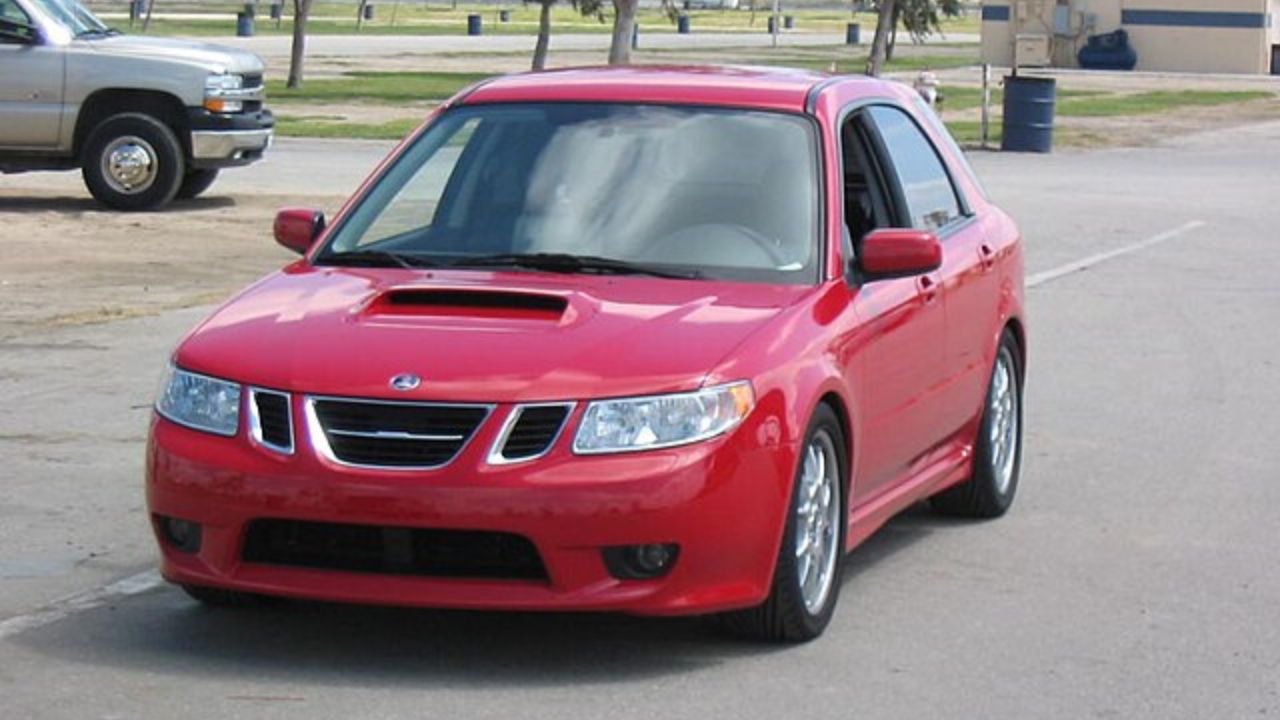
The compact Saab that quietly arrived in North American showrooms for the 2005 model year looked, at first glance, like a fresh Scandinavian take on the small wagon. Underneath, though, it was something very different. The Saab 9-2X was built on Subaru bones, a calculated experiment in badge engineering that tried to blend Swedish design cues with Japanese hardware and General Motors strategy.
When I look back at that short-lived car today, what fascinates me is not just the mashup itself, but how clearly it captures a moment when big automakers believed a new grille and a different badge could unlock a whole new audience. The 9-2X did wear a different emblem, yet its story is really about how far you can stretch brand identity before enthusiasts call your bluff.
The “Saabaru” idea and GM’s big bet
The starting point for the 9-2X was not Trollhättan, but a corporate spreadsheet. General Motors had taken a stake in what was then called Fuji Heavy Industries, the parent of Subaru, and saw an opportunity to give Saab a quick entry into the booming market for all wheel drive compacts. Rather than fund a clean-sheet small car, GM chose to adapt the Subaru Impreza platform, reasoning that a proven chassis and drivetrain could be dressed in Swedish clothes and sold at a premium. It was a classic top down move, driven by portfolio logic more than by Saab’s own engineers.
That is how the car enthusiasts later nicknamed the “Saabaru” came to be, a Saab that was in reality a 20 percent Subaru in corporate ownership terms and much more than that in mechanical content. Under the skin, the 9-2X shared its basic structure, suspension layout, and all wheel drive system with the Subaru Impreza, while GM’s role was to position the car as a gateway into the premium small car segment. The strategy was simple on paper: take Subaru’s reliability and traction, add Saab’s design language and dealer network, and hope the combination would feel like more than the sum of its parts.
What made the 9-2X different from a Subaru Impreza
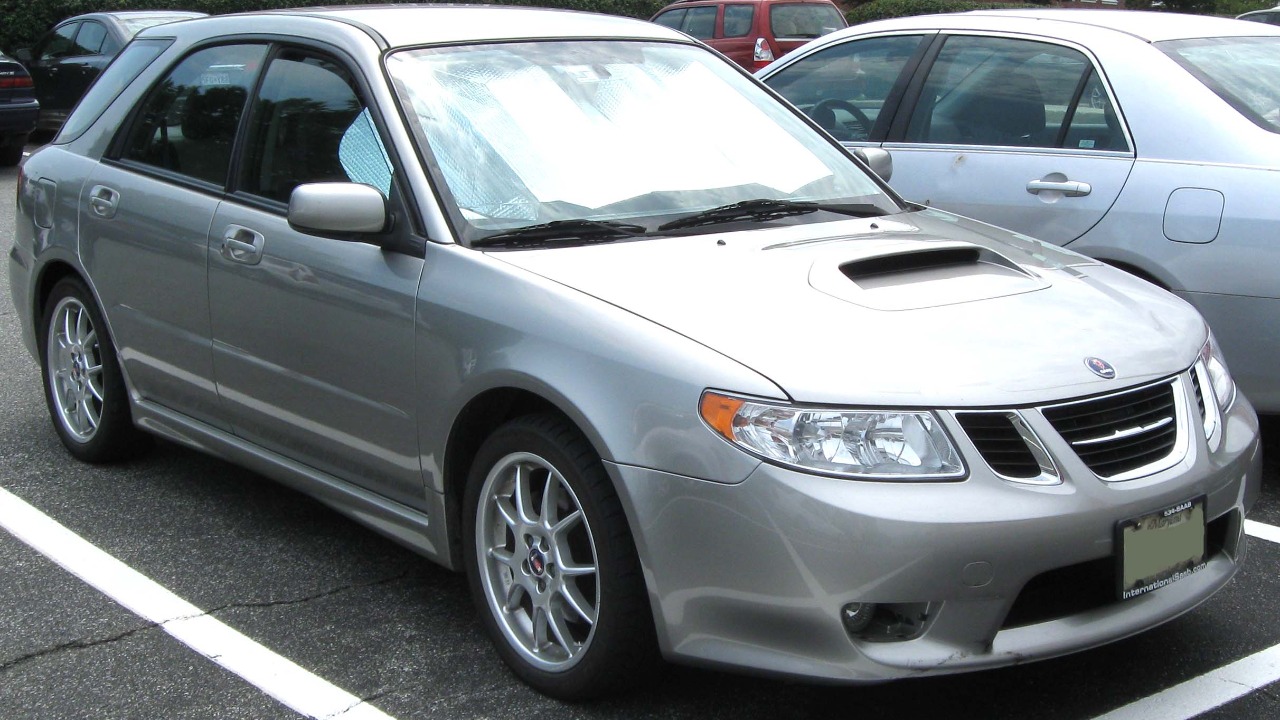
From the driver’s seat, the 9-2X did not completely hide its origins, but it did not simply copy the donor car either. Saab’s designers reworked the front end with the brand’s traditional three port grille and distinctive upswept headlamps, details that gave the wagon a sleeker face than the equivalent Subaru. Period tests noted that Saab styling touches extended to the rear as well, with a reshaped tail that looked more upscale than the Impreza’s utilitarian hatch. Inside, extra sound deadening and upgraded materials tried to justify the higher price and align the car with Saab’s more refined image.
Mechanically, though, the kinship was obvious to anyone who cared to look. The base 9-2X used a 2.5 liter flat four that mirrored the Subaru Impreza “Linear” configuration, while the Aero version essentially matched the Impreza WRX in layout and intent. Later, some Aero models would feature a turbocharged 2.5-liter engine paired with a 5 speed manual transmission and Subaru’s permanent all wheel drive system, a combination that gave the car real pace and year round usability. The result was a compact wagon that drove very much like a Subaru, but looked and felt just different enough to appeal to buyers who might never have considered a Japanese brand.
Not quite a true Saab, not quite a Subaru WRX
For all its competence, the 9-2X sat in an awkward space between identities. Enthusiasts who loved the raw, rally bred character of the Subaru WRX sometimes saw the Saab badge and extra insulation as a dilution of that formula, while Saab loyalists wondered whether a car so heavily based on another company’s product could really carry the brand’s quirky, engineer led spirit. One analysis of the period described the 9-2X Aero as a car that was not a true Saab, but rather a mashup of GM DNA and Subaru hardware, a judgment that captured the unease some fans felt about the project.
That tension was part of a broader GM pattern. The same corporate thinking that produced the 9-2X also gave the world the Saab 9-7X, which was closely related to a Chevy Trailblazer, and other transatlantic experiments that tried to stretch brands into new segments with minimal development time. In that context, the 9-2X was both better executed and more coherent than some of its siblings, because the underlying Subaru WRX mechanicals were so strong. Yet the car still raised a hard question: if a Saab is essentially a rebadged Subaru WRX, how much of what made Saab special is left once the grille and dashboard are swapped?
Short production run, long afterlife
Commercially, the answer came quickly. The 9-2X was only produced for the 2005 and 2006 model years in North America, a brief window that reflected both the limits of the badge engineering strategy and the shifting alliances inside GM. When the corporate relationship with Subaru changed, the business case for a Saab based on the Impreza evaporated, and the car quietly left the lineup. Yet that short run has helped the 9-2X develop a small but devoted following, especially among drivers who appreciate the idea of a stealthy performance wagon with a slightly more understated image than a traditional Subaru.
On the used market, that combination of rarity and shared mechanicals has its advantages. Owners can tap into the deep pool of Subaru Impreza parts and knowledge while enjoying a cabin that feels a bit more upscale and a body that stands out just enough in a parking lot full of crossovers. I have heard more than one enthusiast describe the 9-2X as the car you buy when you want WRX capability without the boy racer reputation, a sentiment that fits neatly with the way GM originally pitched the model as an entry into the premium small car segment.
How the 9-2X fits into Saab’s longer story
To me, the 9-2X makes the most sense when I place it alongside the rest of Saab’s history, from the classic 900s to later experiments. Longtime owners of cars like the Saab 9000 Turbo often talk about the way they keep their machines alive through a mix of passion and resourcefulness, hunting for spares on Also Ebay and other portals in the German speaking world, then installing those partially unused parts step by step. That culture of dedication is part of what made Saab such a beloved niche brand, and it is the lens through which many fans judged the 9-2X. Compared with the deeply idiosyncratic older models, the Subaru based wagon could feel like a pragmatic shortcut rather than a pure expression of the company’s engineering philosophy.
Yet I also see the 9-2X as a reminder that car brands are always negotiating between heritage and survival. GM’s decision to create a Saab out of Subaru components was not an act of cynicism so much as a gamble that a small, characterful wagon could bring new buyers into the fold at a time when resources were tight. The fact that the car still sparks debate, and that some of those compact wagons are now cherished by owners who value their mix of Swedish styling cues and Japanese reliability, suggests that the experiment was not a total misfire. It was, instead, a snapshot of an era when a different badge on a familiar shape could still feel like a bold idea.