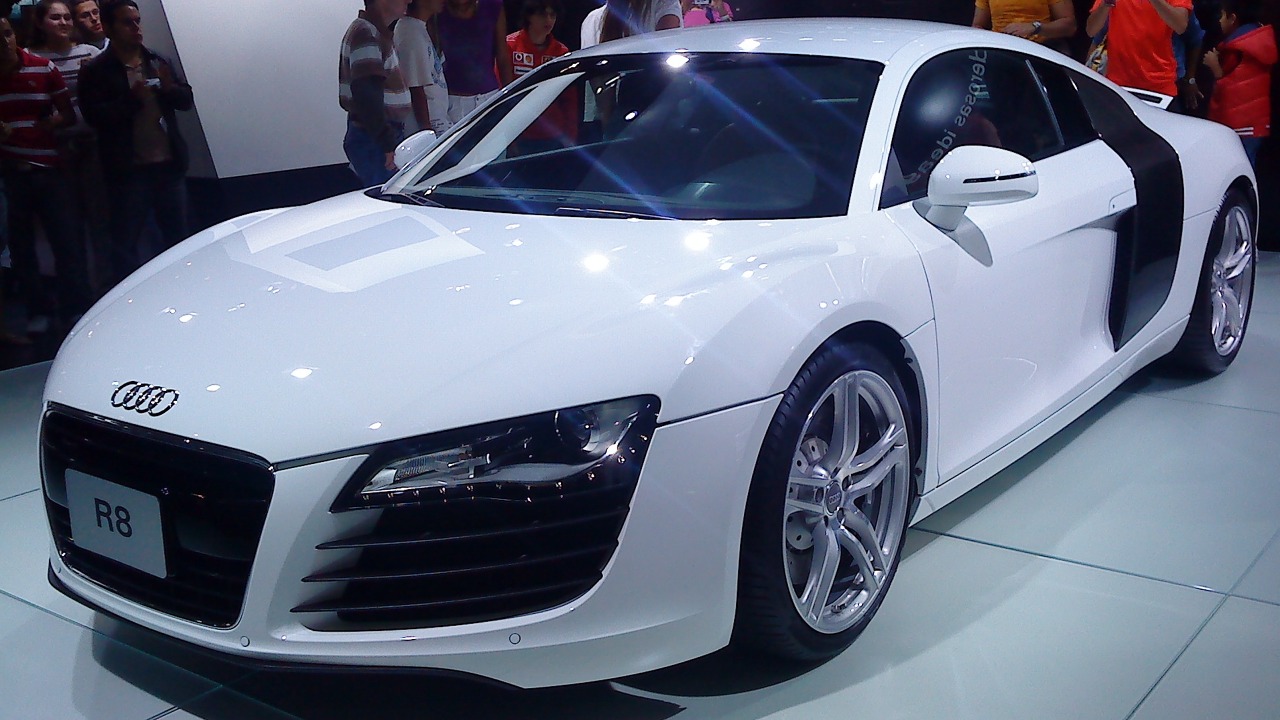
The first Audi R8 did not feel like a tentative first draft. When it reached customers for the 2008 model year, it arrived as a mid‑engine supercar that already looked, drove, and felt like a fully realized flagship rather than a cautious experiment. I want to unpack why that debut car seemed so complete from day one, and how Audi’s quiet groundwork meant its first super sports car barely needed a learning curve.
From concept fantasy to road reality with no half measures
The 2008 R8 looked shockingly resolved because it had been effectively rehearsed in public long before the first customer turned a key. The production car was based on the Audi Le Mans quattro concept, a design by Frank Lamberty and Julian Hoenig that previewed the silhouette, side blades, and mid‑engine stance years in advance. By the time The Audi R8 reached showrooms, the basic shape and proportions had already been refined in front of global audiences, so the road car did not need the usual awkward first‑generation compromises that plague many new nameplates.
That design continuity mattered mechanically as well as visually. The Audi R8 was not a rebodied sedan or a lightly tweaked GT; it was engineered from the outset as a mid‑engine super sports car, something Audi had never offered before. Internal development treated the concept as a dress rehearsal for a full production platform rather than a styling exercise, which meant the transition from show stand to street involved validating an already coherent package instead of inventing one on the fly. The result was a car that felt like a direct translation of the concept fantasy into road reality, rather than a watered‑down approximation.
Racing first, road car second
The R8’s instant maturity also came from a reversed development order: Audi proved the idea on the track before it ever sold a road‑legal version. The company had already built its reputation in endurance racing with the R8 LMP prototypes, then used that experience to shape the philosophy of the mid‑engine road car that would carry the same badge. By the time customers saw the 2008 coupe, the R8 name was already associated with durability, high‑speed stability, and relentless lap‑after‑lap performance, so the production model was expected to behave like a serious tool rather than a styling exercise.
That motorsport lineage filtered directly into the street car’s structure and dynamics. The Audi R8 (Type 42) used an aluminum spaceframe and mid‑engine layout that mirrored race‑car priorities, with weight distribution and torsional rigidity treated as non‑negotiable fundamentals instead of late‑stage tweaks. The German engineers behind Type 42 were not improvising a supercar architecture from scratch; they were adapting lessons from long‑distance racing to a car that had to survive daily use, potholes, and traffic. That is why the first R8 felt unusually composed at speed and on poor surfaces, behaving more like a seasoned endurance racer in civilian clothes than a fragile exotic.
Borrowed bones, bespoke character
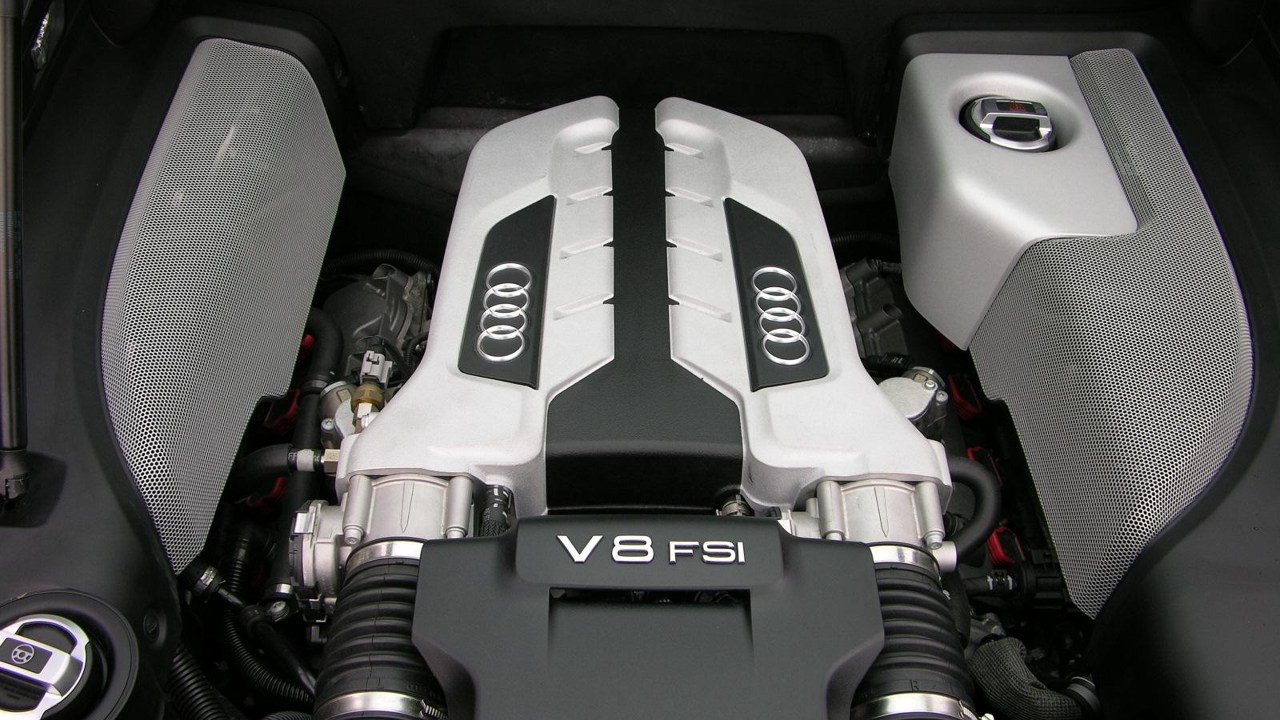
Under the skin, the R8’s poise owed a lot to a very specific piece of corporate parts sharing. The car took the Lamborghini Gallardo extruded aluminum spaceframe and all‑wheel drive system as a starting point, which meant its basic structure and drivetrain layout were already proven in a high‑performance environment. Instead of spending its first generation debugging fundamental geometry or drivetrain packaging, Audi could focus on tuning, refinement, and usability, confident that the underlying hardware could handle serious power and track work.
Yet the R8 never felt like a rebadged Lamborghini. Audi reworked the chassis tuning, cabin layout, and ergonomics to create a car that was easier to place on a narrow road and less intimidating in daily traffic. The driving position, visibility, and control weights were calibrated so that someone stepping out of an A4 could acclimate quickly, even though the engine sat behind their shoulders. That blend of shared bones and bespoke character is a big reason the 2008 R8 felt so complete: it combined the hard‑won reliability of an existing supercar platform with a fresh, user‑friendly personality that did not feel derivative.
Design that skipped the awkward phase
Visually, the original R8 arrived without the usual first‑generation clumsiness because its designers committed early to a bold, cohesive theme. The low nose, wide stance, and signature side blades gave it an identity that was instantly recognizable yet clean enough to age gracefully. Enthusiasts still point to that first shape as “way ahead of its time,” arguing that later versions have struggled to improve on its mix of drama and restraint. The fact that a mid‑2000s design can still look contemporary in 2026 is evidence that the initial styling did not need a second try to make sense.
Inside, the cabin followed the same philosophy of confident simplicity. The driver‑focused dashboard, clear analog instruments, and solid switchgear felt familiar to anyone who had driven other Audi models, but the low seating position and expansive view over the front wheels made it clear this was something different. Owners and reviewers noted that the interior avoided the gimmicks and fragile materials that often plague early supercars, instead feeling like a high‑quality evolution of the brand’s existing design language. That meant the R8 did not just look finished from the outside; it felt finished from the driver’s seat as well.
A supercar that behaved like a daily driver
Where the 2008 R8 really separated itself from traditional exotics was in how easy it was to live with. The car offered all‑wheel drive, a relatively compliant ride, and a cabin that could genuinely accommodate taller drivers, which made it plausible as a daily driver rather than a weekend toy. Reviewers highlighted how predictable the handling felt at normal speeds, with progressive breakaway and strong traction that inspired confidence instead of fear. That usability was not an afterthought; it was baked into the engineering brief, which is why the car did not need a mid‑cycle overhaul to become friendly on real roads.
Pricing reinforced that sense of accessibility. The R8’s base price of $109,000 undercut comparable offerings from Porsche and Lamborghini, positioning it as a supercar that did not require quite the same financial leap of faith. At that figure, buyers were getting a mid‑engine, all‑wheel‑drive machine with race‑bred hardware and a premium interior, yet the ownership experience felt closer to a high‑end GT than a temperamental exotic. That combination of approachable dynamics and relatively attainable pricing helped the first R8 feel like a fully thought‑through product rather than a halo car built purely for bragging rights.
Why the first R8 still feels definitive
Looking back from today, I find that the 2008 R8 still reads as the template that later versions have been trying to match. Enthusiasts often argue that the old Audi R8 is better than newer iterations, not because the later cars are slower or less capable, but because the original struck such a precise balance between usability, drama, and purity. It delivered supercar looks and performance without sacrificing visibility, comfort, or reliability, and it did so from its very first model year. That is a rare achievement in a segment where early cars are usually remembered for their flaws as much as their flair.
The car’s legacy inside Audi’s own lineup underlines how complete that first effort was. The R8 opened the door for the brand to move into more exclusive territory, yet it did so without alienating buyers who associated the four rings with understated luxury and all‑weather practicality. With the R8, Audi proved it could build a mid‑engine super sports car that felt as carefully engineered as its sedans and SUVs, and it managed that feat without a messy, compromised first generation. The 2008 model arrived not as a prototype in disguise, but as a finished statement, which is why it still feels like the definitive expression of the idea.
More from Fast Lane Only: