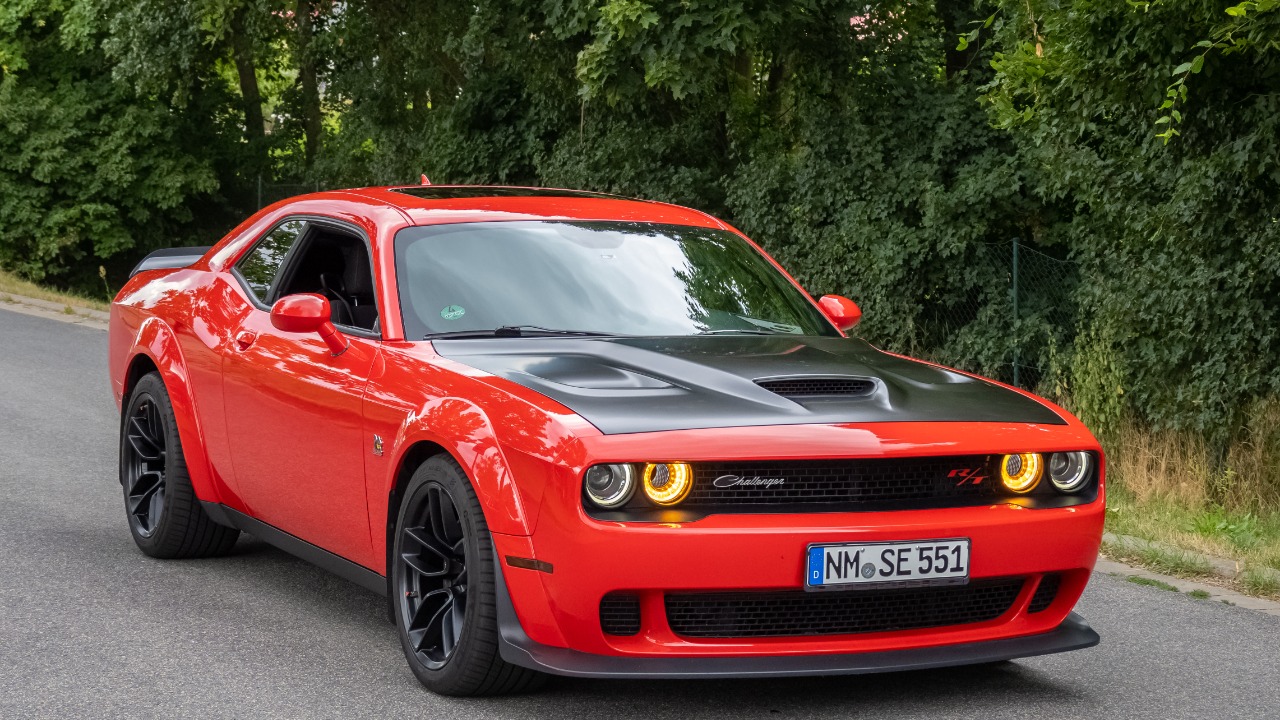
The 2015 Dodge Challenger Hellcat did not just nudge the performance envelope, it tore it open and set the scraps on fire. By bolting a supercharged V8 with four-figure personality into a familiar two-door shell, Dodge created a car that made 700‑horsepower feel almost casual, even as it exposed the limits of tires, drivetrains and, very often, drivers. It is the rare modern production car that felt slightly unhinged right out of the showroom, and that is exactly why it still reads as a break with sanity.
The moment Dodge decided to go too far
When the first 2015 Dodge Challenger Hellcat hit the spotlight, the message was simple: muscle cars were not done escalating. The launch of the original When the car arrived, it instantly shoved contemporary offerings from Ford and Chevrolet into the shadows, not through subtle engineering nuance but through raw, unapologetic numbers. Dodge leaned into that shock factor, turning the Hellcat into a rolling billboard that the horsepower wars were alive and well.
Underneath the bravado sat a very deliberate corporate calculation. Internal teams knew that if They were going to revive the Challenger yet again, They had to answer the question of how to deliver the most. Ever. The official press material spells it out, noting that engineers responded by delivering a new supercharged engine that made it the most powerful muscle car ever, a claim anchored in a factory rating that left rivals scrambling to catch up Ever. As I see it, that decision to chase an absolute superlative, rather than a balanced spec sheet, is the first place the Hellcat stepped outside the bounds of reason.
The 6.2-liter heart that redefined “too much”
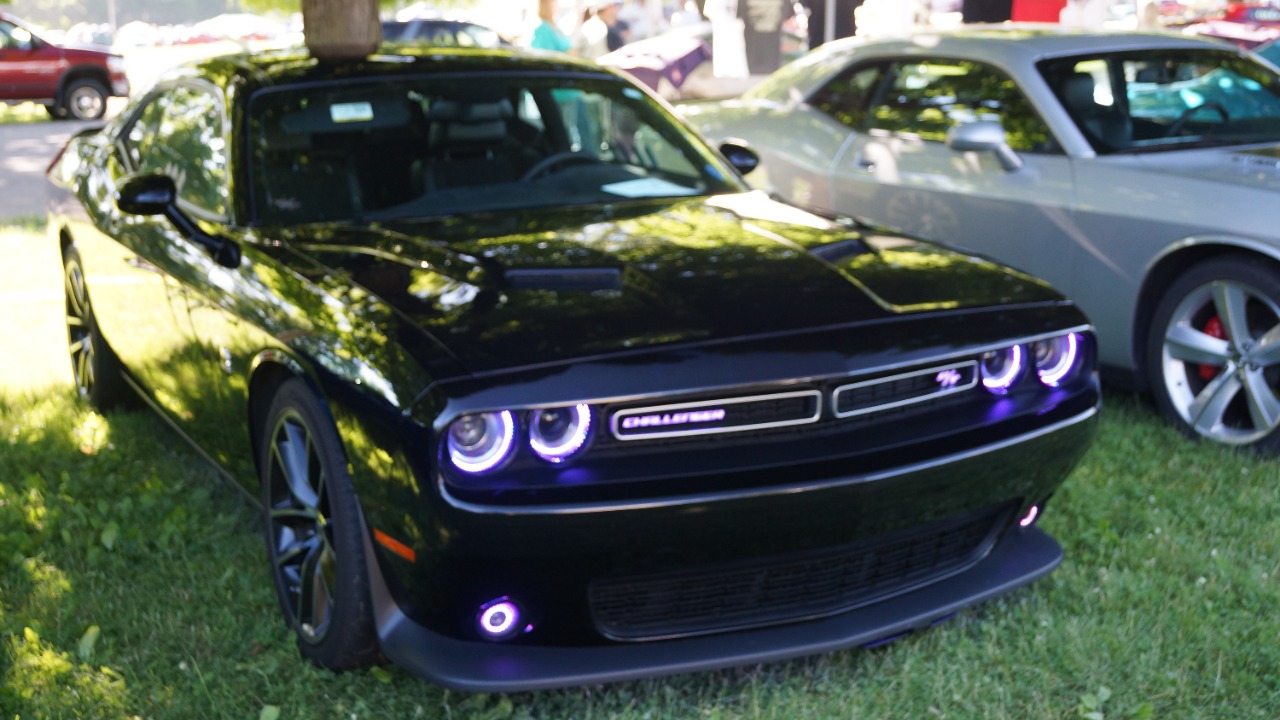
At the center of the insanity sat a supercharged 6.2-liter HEMI V8 that treated restraint as an optional extra. Official materials for the Dodge Challenger SRT Hellcat describe a supercharged 6.2-liter HEMI V8, with SRT engineer Chris Cowland walking through how the powertrain was built specifically to handle the stress of forced induction and high output Dodge Challenger SRT Hellcat. That engine did not just give the car speed, it gave it a personality, one that idled with a restless lope and turned every on-ramp into a test of self-control.
On paper, the numbers still look unhinged. Its 6.2-liter supercharged HEMI produced 707 horsepower, and the world collectively asked, “How fast will it go,” with the answer pegged at a top speed of 199 MPH according to detailed performance breakdowns that list Top Speed: 199 M and emphasize the 707 figure as the headline stat Its. In dealer walkarounds, sales staff leaned into that shock value, describing how There is no other production car that can match the hard-core power of the 2015 Dodge Challenger SRT Hellcat, even rattling off specs like a 6.2L 392 CID SRT Hellcat Hemi V8 to underline how overbuilt the package really was There. From my perspective, that combination of brochure bravado and real-world brutality is exactly what made the Hellcat feel like it had slipped its leash.
How the Hellcat turned the street into a drag strip
Once that power hit the pavement, the Challenger stopped behaving like a typical modern coupe and started acting like a street-legal drag car. Early first drives of the SRT Hellcat framed it as the most powerful production muscle car of its time, with the SRT Hellcat model taking the crown and demanding a different level of respect from the driver every time the throttle was opened 2015 Dodge Challenger SRT Hellcat First Drive. The car’s sheer torque meant that traction control was not a safety net so much as a constant negotiation, and I remember thinking that the stability systems felt less like guardians and more like referees trying to keep a bar fight from spilling into the street.
Independent reviews captured the same sense of excess in more clinical terms. One widely shared road test of the Dodge Challenger SRT Hellcat Fully throttled noted that, at full tilt, the 2015 Dodge Challenger SRT Hellcat burns 1.5 g of fuel every minute, a figure tied to a supercharged V8 that generates 707 horsepower and 650 lb-ft of torque Auto. Another profile of the Dodge Challenger SRT Hellcat highlighted that it lives up to its name with a top speed of 199 m and a 707-horsepower engine, calling it the highest-horsepower V-8 Chrysler has ever built and underscoring how far beyond normal road use the car’s capabilities really were Dodge Challenger SRT Hellcat. When a car’s fuel consumption at full throttle sounds like a fire hose and its top speed belongs on a runway, it is hard to argue it was built with everyday sanity in mind.
The flaws that came with outrageous power
Of course, when you bolt that much power into a heavy coupe, something has to give, and with the Hellcat it was often the hardware. A class action filing alleged that FCA failed to disclose that 2015-2019 Dodge Challengers and Chargers, including Hellcat and Demon variants, are equipped with a defective rear differential that can fail under the kind of hard use the cars were marketed for FCA. That allegation cuts to the heart of the Hellcat’s identity, because a car sold as track-ready but saddled with a fragile rear end feels like a superhero with a glass jaw.
The structural headaches did not stop there. Chrysler, operating as FCA US LLC, issued recalls for certain model year 2015 Dodge Challenger vehicles built over a narrow production window, citing issues like an improperly torqued or missing rear mounting bolt that could affect the car’s stability and safety Chrysler. Enthusiast discussions have also zeroed in on what some call the Dodge Hellcat’s fatal flaw, with one detailed breakdown pointing to how the Hellcat drivetrain can be pushed to the edge when owners treat it like a race car every weekend, a point driven home in a video that bluntly labels the issue as the Dodge Hellcat’s Fatal FLAW and features a host named Richard walking through the weak links Richard. From my vantage point, those mechanical limits are not just footnotes, they are part of the story of a car that asked more of its components than some of them were ready to give.
The human factor: drivers, hype and the used-market hangover
If the hardware was stressed, the humans behind the wheel were often overwhelmed. One widely shared forum thread chronicled how an owner wrecks 707hp Dodge Challenger Hellcat 1 hour after buying it, with commenters dryly noting that the only thing Chrysler can’t qualify are the drivers, a line that captures how much of the risk lives in the right foot rather than the spec sheet Dec. I have heard similar stories from owners who underestimated how quickly the car could light up its rear tires on a cold morning or how little margin there was between a brisk pull and a full sideways slide.
That learning curve has followed the Hellcat into the used market. One detailed vlog on 5 BIG Problems To Look For When Buying A Used Hellcat walks through the pitfalls that second and third owners face, with the host, identified as Oct, warning about abused drivetrains, neglected maintenance and the cost of putting a hard-used car back into fighting shape Oct. On enthusiast forums, a thread titled Question for Hellcat owners, especially 2015-2017 years includes one owner on Apr 3 explaining that they have not heard of the tranny failure being a common problem and that they do not plan on putting the car under any serious stress, a reminder that some buyers treat the Hellcat more like a collectible than a burnout machine Apr. From where I sit, that split between thrill-seekers and cautious caretakers is part of what makes the Hellcat’s legacy so complicated.
Culture clash: green goals, price gouging and a cult classic
Beyond the garage, the Hellcat also crashed headlong into broader debates about performance and responsibility. A thoughtful analysis of why the 707-hp Dodge Challenger Hellcat does not necessarily conflict with environmental goals argued that the car’s buyers are often enthusiasts whose households also shop for more efficient vehicles, noting that But their more practical better halves may decide that a nice crossover, sedan, or truck from that same Fiat Chrysler dealership may be just the ticket But. I tend to agree that the Hellcat functioned as a halo car, a loud, thirsty flagship that drew people into showrooms where they often drove out in something far more sensible.
Inside the brand, the Hellcat’s story has already been dissected as a case study. A deep-dive video on The Dodge Hellcat – History, Major Flaws, and Why It Got, posted in Jan, walks through how the engine program evolved, why certain engineering decisions were made and how those choices led to both legendary performance and well-known weak points Jan. At the retail level, a Challenger Update on Big Recalls & Hellcat Price Gouging Planning on buying a new Dodge Challenger this year warned shoppers that while recalls could be fixed, dealership gouging on Hellcats was not so fixable, highlighting how demand for the car pushed prices far beyond MSRP in many markets Challenger Update. Put together, those threads show how a single model could warp not just expectations of power, but also the economics and ethics of selling speed.
Why the Hellcat still feels unhinged, even in hindsight
Looking back now, with the benefit of distance and a market full of electric cars that can match its acceleration, the 2015 Hellcat still feels like a singularly wild idea. The Dodge Hellcat – History, Major Flaws, and Why It Got retrospective makes clear that the program was never just about numbers, it was about staking out an identity for Dodge in a crowded performance landscape, even if that meant living with major flaws and a reputation for overkill The Dodge Hellcat – History, Major Flaws, and Why It Got …. Another enthusiast breakdown of the Dodge Hellcat’s Fatal FLAW reinforces that point by showing how the car’s weak spots became part of its mythology, something owners talk about with a mix of frustration and pride The Dodge Hellcat’s Fatal FLAW!. To me, that blend of awe and exasperation is exactly what you get when a manufacturer decides that sanity is a secondary concern.
Even now, when I hear a supercharged HEMI spool up, I think back to that first 2015 Dodge Challenger SRT Hellcat and the way it made 707 horsepower feel like a dare. The car’s combination of a 6.2-liter engine, a 199 MPH top speed, fragile differentials, spectacular fuel burn and a trail of wrecked egos and bent sheetmetal adds up to something more than a spec sheet, it is a cultural marker of how far one brand was willing to go in the name of speed. In that sense, the Hellcat did not just break sanity limits once, it reset the baseline for what “too much” looks like on four wheels, and we are still living in the shadow of that decision every time a new performance car chases a bigger, louder number.
More from Fast Lane Only: