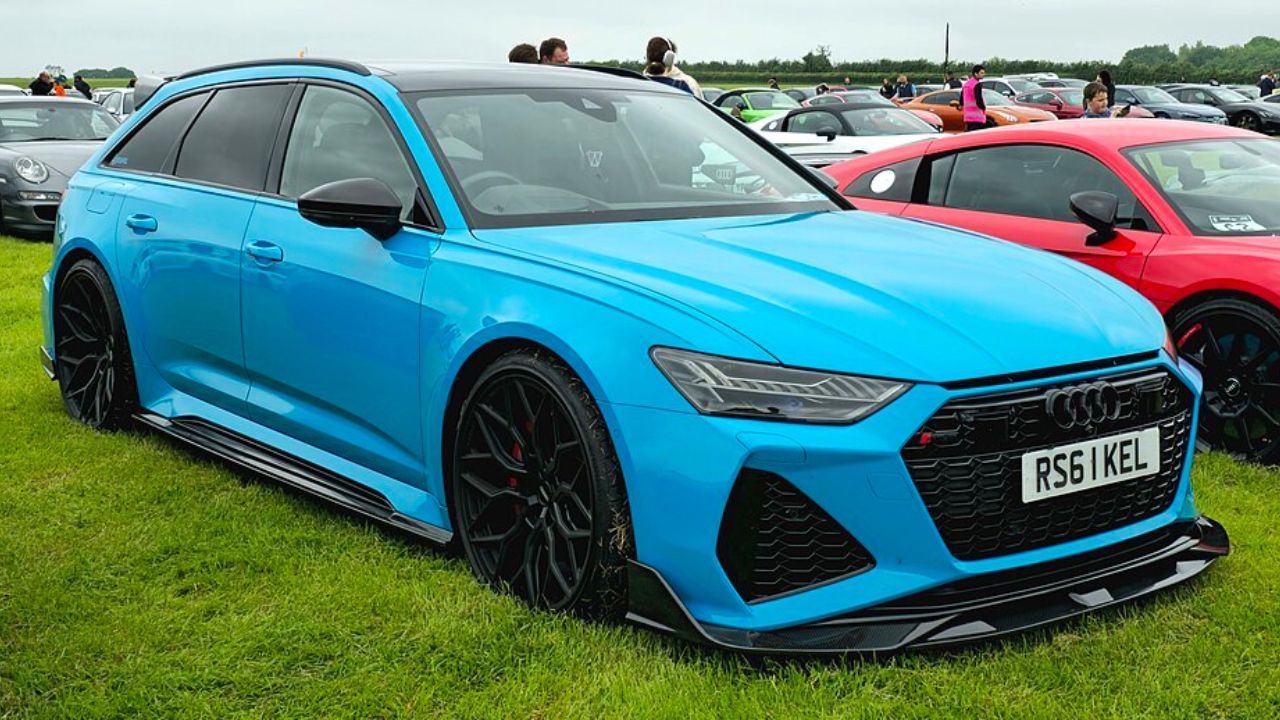
The 2020 Audi RS6 Avant arrived as a shock to wagon loyalists because it overturned years of American market neglect in a single, unapologetically aggressive package. Instead of another anonymous family hauler, it delivered supercar pace, extroverted styling, and genuine daily usability in a body style many enthusiasts had written off as extinct. In a landscape dominated by crossovers, it proved that a long-roof car could still be the most exciting thing in the showroom.
From forbidden fruit to American halo wagon
For the past several decades, it has, as one early review put it, “sucked to be a wagon fan in the United States,” with icons like the original RS2 Avant kept firmly out of reach while buyers were nudged toward taller, softer machines. That is why the decision to bring the 2020 Audi RS6 Avant across the Atlantic felt less like a routine product launch and more like a course correction, a recognition that enthusiasts who grew up lusting after fast estates finally deserved a factory-sanctioned option. When I look at that history, the car’s arrival reads as a deliberate statement that the long-roof faithful had been heard.
The RS6 Avant did not simply appear as another trim level, it landed as a kind of unicorn, a wagon that enthusiasts had been told for years would never make business sense in this market. One video review framed the very idea of such a wagon coming to the United States as “a pretty big deal,” noting that a powerful wagon that looks good had become “somewhat of a unicorn” in a sea of crossovers, a sentiment that captured the disbelief many fans felt when they first saw an RS6 Avant in America. That sense of improbability is central to why the car hit so hard: it was not supposed to exist here, and then suddenly it did.
Design that finally gave the wagon some aggression
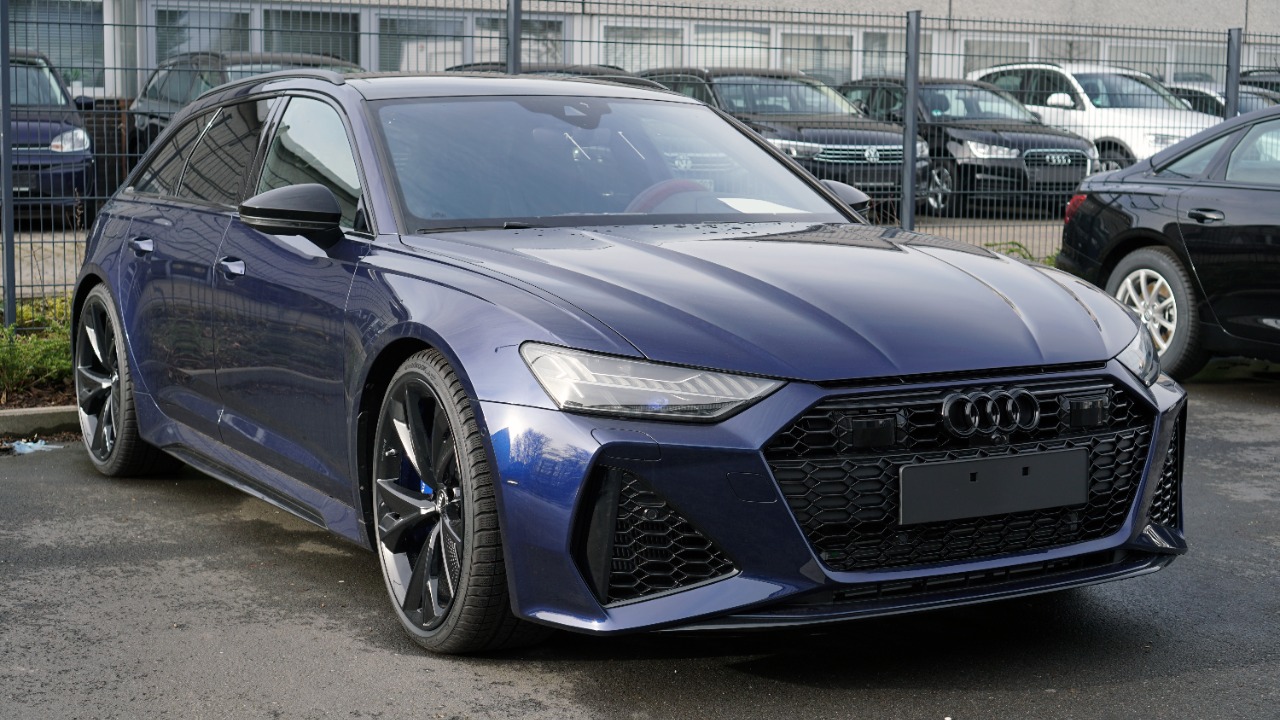
Part of the shock came from how the RS6 Avant looked, because this was not a subtle evolution of the Audi A6 wagon but a transformation that made the standard car seem almost anonymous. When reviewers last drove the Audi A6 sedan, they criticized its styling as too vanilla and said they would rather wait for the spicier RS version, a judgment that set the stage for how radical the RS6 would feel when it finally appeared. In that context, the RS6 Avant’s swollen arches, gaping intakes, and low, wide stance felt like a direct answer to those complaints, a visual manifesto that the family wagon could be as dramatic as any coupe.
The exterior was described as “Finally, Some Aggression,” a phrase that captured how thoroughly the RS6 Avant broke from Audi’s more conservative recent designs. The car’s massive front and rear diffusers, its unique bodywork, and its hunkered-down posture made it clear that this was not just an A6 with a bigger engine but a purpose-built performance machine. One detailed first look emphasized that, compared with the standard car, only the roof, front doors, and tailgate are shared, and that “Everything else is unique to the RS 6 Avant,” underlining how far Audi went to differentiate this model from its more restrained siblings in the RS6 Avant bodywork.
Supercar numbers in a family-car shell
What truly rewired expectations, though, were the numbers hiding behind that sheetmetal, because the RS6 Avant did not merely aim to be quick “for a wagon.” Under its hood sat a 4.0 liter V8 that produced a quoted 592-horsepower, a figure that would have been the preserve of exotic machinery not long ago. One early technical breakdown highlighted that this 592-horsepower wagon could surge from rest to highway speeds with startling ease, and that its acceleration to 124 mph took just 12 seconds, figures that made the long-roof silhouette feel almost subversive when paired with such performance in a 2020 RS6 Avant specification.
Top speed figures reinforced the point that this was a supercar in disguise rather than a warmed-over family car. Depending on specific options, its top speed is said to be 190 miles per hour, and it will hit 62 miles per hour from rest in a time that would embarrass many sports cars, numbers that one detailed overview framed as proof that we were dealing with a genuine “super wagon” rather than a marketing exercise. In a world where SUVs dominate, that same analysis argued that such performance, combined with real cargo space and seating, meant we might finally have the ultimate family car on our hands in the form of the RS6 Avant super wagon.
Inside, a cockpit that treats the driver like a hero
Step inside the RS6 Avant and the surprise continues, because the cabin refuses to treat the wagon as a purely utilitarian object. The driving position, materials, and technology all work together to make the person behind the wheel feel like the protagonist, not the chauffeur. One early look at the interior highlighted a new flat-bottom steering wheel, deeply bolstered seats, and RS-specific displays that turn the cockpit into a performance command center, details that underscored how thoroughly Audi reimagined the cabin for the RS6 Avant interior.
From my perspective, what makes this interior so effective is the way it balances that drama with genuine long-distance comfort and everyday practicality. Reviewers who had previously found the A6 sedan’s cabin a little too restrained noted that the RS6 Avant finally injected the sense of occasion they had been waiting for, while still preserving the space and usability that define the wagon format. One assessment explicitly contrasted the earlier Audi A6 sedan’s “too vanilla” feel with the RS6’s more focused environment, arguing that this was the version enthusiasts had been willing to wait for when they first evaluated the Audi A6 baseline.
On the road, a complete package that converts skeptics
Out on real roads, the RS6 Avant’s impact becomes even clearer, because it manages to reconcile conflicting demands that usually pull performance cars apart. One seasoned tester described always having liked the RS6 and called it “the complete package,” noting that even though it is not a lightweight track special, it combines speed, comfort, and practicality in a way that few rivals can match. That same review, delivered in a measured on-road evaluation, framed the 2020 Audi RS6 as a car that could handle school runs and spirited back-road drives with equal ease, a balance that came through strongly in the Jul RS6 review.
Another first-drive account from America went further, opening with the assertion that “So the 2020 Audi RS6 Avant is here in America—and it is extremely good,” before reassuring long-suffering wagon fans that “Your hopes haven’t been for naught.” That evaluation emphasized how the car’s adaptive suspension, all-wheel drive, and powerful brakes made it feel secure and composed even when exploiting its performance, while also acknowledging that it remained a serious financial commitment. For motorists who want a single vehicle that can do almost everything, that same piece argued that the RS6 Avant might be the answer, even if some skeptics would insist that crossovers prove us wrong about the RS6 Avant on American roads.
How owners and fans turned a niche car into a cult object
The RS6 Avant’s shock value did not end with the press drives, it deepened as real owners began to share their experiences and as the car filtered into enthusiast communities. One detailed one-year ownership review on a popular forum described it as “the perfect second car for someone who already has their dream enthusiast vehicle,” while also warning that buyers should be honest about costs if this is their only car. That same owner praised its practicality and even compared it favorably to a Mercedes-AMG rival, concluding that it was “Way better than the E63,” a verdict that carried weight precisely because it came from someone living with an RS6 Avant every day.
Even among Audi enthusiasts, the RS6 Avant has sparked debate about what makes it so compelling. In one discussion titled “Why the Rs6,” a commenter admitted seeing “alot of fans of the RS6” and noted that the body of this particular model looks more station wagon than some might expect, before grappling with why that shape inspires such loyalty. That thread, which unfolded within a community of brand loyalists, underscored how the RS6 Avant has become a touchstone for conversations about design, performance, and identity in the Oct RS6 discussion.
The moment wagon fans realized the game had changed
For many enthusiasts, the RS6 Avant’s turning point was not a spec sheet but a first in-person encounter, the moment the car stepped out of internet mythology and into a local parking lot. One popular video captured that feeling with the exclamation “WE GOT ONE,” as the host walked viewers around a 2020 Audi RS6 Avant up close, lingering on its flared fenders, intricate wheels, and muscular stance. That clip, framed as an intimate look for a community of automotive and motorsports enthusiasts, conveyed the sense that simply seeing an RS6 Avant up close on American soil was an event in itself.
Earlier coverage had already primed fans for that reaction by stressing how unusual it was to have such a machine in this market at all. One first-look review opened by noting that, “For the past several decades, it has sucked to be a wagon fan in the United States,” before detailing how the RS6 Avant’s massive front and rear diffusers, wide track, and aggressive detailing finally gave long-roof devotees something to celebrate. That same piece framed the car as proof that the fast wagon had returned, a sentiment that resonated deeply with those who had spent years watching Europe enjoy cars like the RS6 Avant from afar.
Why this wagon still matters in an SUV world
Looking back now, I see the 2020 Audi RS6 Avant as more than a single model year, it is a proof of concept that a wagon can still command attention in a market saturated with SUVs. One comparative video that set the RS6 Avant against its competition argued that a wagon coming to the United States is a pretty big deal, precisely because a powerful wagon that looks good has become such a rarity. That framing, which cast the RS6 as a kind of automotive unicorn, helps explain why its arrival felt like a cultural moment for enthusiasts who had been told for years that their tastes were out of step with mainstream demand in the Aug United States comparison.
At the same time, the RS6 Avant’s existence has forced even casual observers to reconsider what a family car can be. One early walkaround emphasized that this was not a half-hearted experiment but a fully realized product, with Audi investing in unique bodywork, a bespoke interior, and serious performance hardware rather than simply dressing up an existing wagon. That commitment is why, when I think about the 2020 RS6 Avant today, I still see it as a shock to wagon fans: it did not just return a beloved shape to the spotlight, it proved that the long roof could once again sit at the very top of the performance hierarchy in the modern Audi lineup.
More from Fast Lane Only: