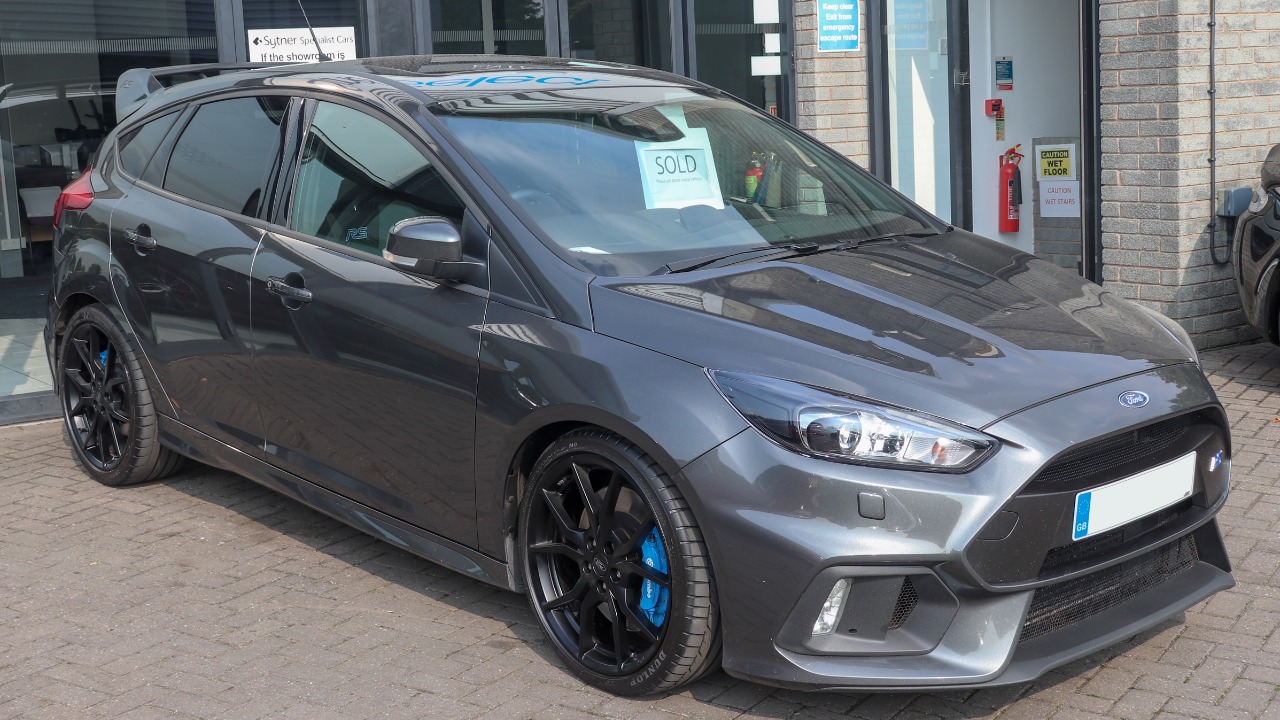
The 2016 Ford Focus RS did not just add all wheel drive to a humble hatchback, it turned the whole idea of a practical performance car on its head. By building an AWD system that seemed happiest when it was slightly unhinged, Ford created a car that could commute on Monday and slide like a rally special stage on Saturday. I want to unpack how that happened, and why this particular Focus still feels like a benchmark for controlled chaos.
The hot hatch that needed more than front drive
When I look at the 2016 Focus RS in context, it is clear Ford was chasing something far more serious than a warmed over commuter. The car arrived with power figures that pushed it beyond the usual front wheel drive limits, and it needed a driveline that could keep up. In spirit, it was pitched as a compact counterpart to icons like the Shelby Mustang, but squeezed into a five door shell that still had to haul kids, groceries, and track tires. That dual mission, everyday usability wrapped around track ready aggression, is exactly where all wheel drive stopped being a luxury and became a necessity.
From the start, the Focus RS was defined by the fact that it was the only version of the Focus to send power to all four wheels. The Mk III generation had already spawned quick front drive models, but this car stood apart because the rear axle was no longer just along for the ride. Obviously, the star of the show was the all wheel drive system, which let the RS rip off 4.7 second takeoffs while still feeling planted enough to use that performance on real roads. That combination of brutal launches and everyday stability set the stage for the more unhinged tricks the system could pull once you started exploring its modes.
The Twinster that rewrote the Focus playbook
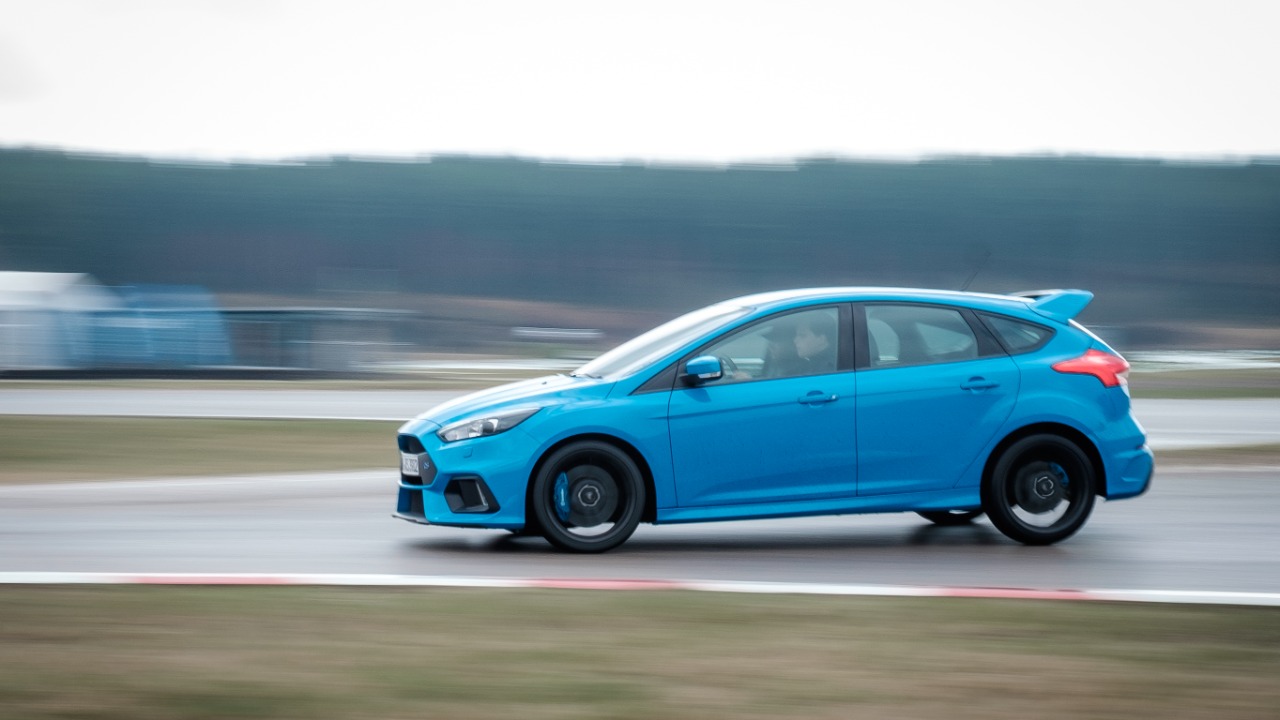
What really fascinates me is how the hardware at the back of the Focus RS quietly changed the way the whole car behaved. Instead of a simple center differential, Ford used a rear drive unit built around a clutch pack system known as The Twinster, which could send more torque to the rear wheels than the front when AWD was active. When AWD was engaged, the Twinste layout did more than just share the workload, it fundamentally changed how the car felt and handled by biasing power rearward in a way that was rare for a transverse engine hatchback.
Because the system could apportion torque side to side as well as front to rear, it turned the rear axle into an active partner rather than a passive follower. In curves, the Twinster did not simply help the car hold on, it made the Focus RS turn in more sharply and rotate with a kind of eagerness that felt closer to a rear drive coupe than a family hatch. That is the quiet genius of this setup, the clever gearing ratios and clutch control made the car feel alive at the limit without demanding heroic inputs from the driver, and that balance is what allowed Ford to lean into more theatrical modes without losing the underlying composure.
Over-speeding the rear for playful precision
The real party trick of this AWD system is how it uses speed differences between the axles to bend physics in your favor. By deliberately Over speeding the rear wheels relative to the fronts, the control software can nudge the car into a more aggressive yaw angle without relying solely on steering input. That over speeding alters the way the car feels and handles, helping it pivot into a corner and then drive out with the rear axle still contributing meaningful thrust instead of just following along.
From behind the wheel, that translates into a car that seems to tighten its line when you get back on the throttle, rather than washing wide in understeer. The Twinster hardware, working with those tailored gearing ratios, lets the Focus RS put power onto the road in a way that feels both intuitive and slightly mischievous. I find that this is where the so called chaos becomes usable, the car encourages you to explore its balance, but the underlying torque vectoring is constantly trimming and supporting your inputs so the experience stays more precise than the smoky slides might suggest.
Drift Mode and the marketing of mayhem
No discussion of this car’s AWD character is complete without talking about Drift Mode, the feature that turned a technical driveline story into viral video fodder. In the Focus RS, the drive selector includes a setting that relaxes stability control and pushes even more torque to the rear, effectively inviting the driver to hang the tail out. Ford leaned into this with promotional clips that showed the Ford Focus RS using Advanced performance Technologies to pull off extreme driving maneuvers, and those images did as much as any spec sheet to cement the car’s reputation.
Underneath the theatrics, Drift Mode is still a carefully managed use of the same torque vectoring tools. The system was not a clean sheet invention for the RS, since While the core hardware had already appeared on the Range Rover Evoque, the demands of a 345 horsepower hot hatch forced engineers to recalibrate it for far more aggressive duty. That figure of 345 is not just a bragging point, it is the reason the AWD system had to be so proactive, because without that level of control the car would simply overwhelm its tires and devolve into wheelspin instead of the controlled slides that made Drift Mode famous.
From rally stages to YouTube demos
What I appreciate most about the Focus RS is how its AWD story plays out in the real world, not just in engineering diagrams. On road tests and rally style evaluations, reviewers repeatedly compared the car’s attitude to classic performance machines, noting that the Ford Focus RS AWD Demonstrated a willingness to rotate and power out of bends that felt more like a purpose built sports car than a compact hatch. Inside Lane style videos captured how the AWD system let the driver lean on the car’s balance, showing that the same hardware that made Drift Mode headline friendly also delivered confidence on a damp back road.
That dual character is what keeps the 2016 Focus RS relevant years after its debut. On one hand, it is a practical five door that can trundle through traffic without drama, on the other, it is a car that, when prodded, uses its sophisticated AWD and torque vectoring to turn every on ramp into a mini stage. For me, that is the essence of how it embraced AWD chaos, not as a gimmick bolted onto a sensible hatch, but as a deeply integrated system that made the car sharper, quicker, and more playful, while still letting ordinary drivers tap into a level of dynamic ability that used to be reserved for far more exotic machinery.
More from Fast Lane Only: