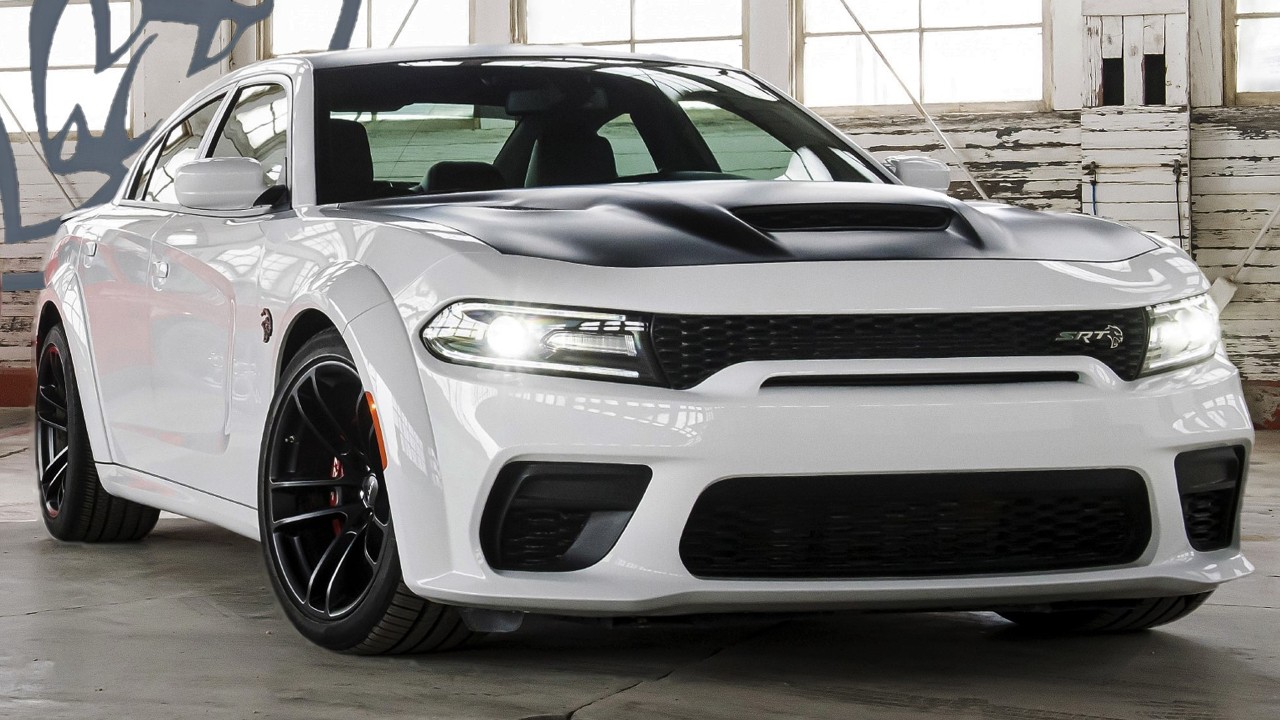
The 2020 Dodge Charger Hellcat Widebody arrived as a factory sedan that treated restraint as optional and engineering limits as a challenge. By stretching the body, reworking the chassis, and pairing it with one of the most extreme production powertrains on sale in America, Dodge turned a familiar four door into a purpose built weapon for street, strip, and track. I see it as the moment when the modern Charger stopped flirting with excess and fully committed to it.
From muscle sedan to factory widebody experiment
The standard Dodge Charger had already evolved into a serious performance sedan, but the Widebody Package pushed it into new territory. Dodge and SRT did not simply bolt on cosmetic flares, they created a dedicated configuration that widened the car, recalibrated the suspension, and reshaped the car’s mission. Internal fact sheets for the 2020 Dodge Charger and Charger SRT Hellcat describe how the brand in Auburn Hills, Mich treated the Widebody as a distinct high performance variant rather than an appearance package, with the Charger SRT Hellcat positioned at the top of the lineup.
Corporate materials on the 2020 Charger explain that Dodge literally expanded its high performance Charger models by adding a Widebody Package to what it calls America’s four door muscle car. In those documents, Dodge and SRT frame the move as “Pushing the Limits,” a phrase that captures how the Widebody was engineered for the street, strip, and road course instead of just straight line bravado. The result is a car that uses its extra girth as a functional tool, not a styling gimmick, and that decision is central to why this version of the Charger felt like a turning point.
Powertrain excess with real numbers to match
Under the hood, the 2020 Dodge Charger SRT Hellcat Widebody did not chase subtlety. Official configuration data for the CHARGER SRT HELLCAT WIDEBODY lists up to 707 horsepower and 650 pound-feet of torque on tap, figures that would be wild in a two seat coupe and are almost surreal in a full size sedan. A separate “By The Numbers” breakdown for the Dodge Charger SRT Hellcat Widebody pegs the Powertrain as a 6.2-liter supercharged V8, a displacement and layout that tie the car directly to classic American muscle while delivering contemporary output.
That power translated into headline performance. Dealer and manufacturer summaries of the Charger SRT Hellcat Widebody’s capabilities note a top speed of 196 miles per hour, a figure that kept the car’s claim as one of the most powerful and fastest mass produced sedans in America intact. When I look at those numbers alongside the listed Base Price of $69,645 for the Hellcat Widebody, it is clear Dodge was deliberately compressing supercar level acceleration into a price bracket that undercut many European rivals, which is part of why this model felt like it was stretching the boundaries of what a mainstream brand would sell off the showroom floor.
The “Widebody” that actually works
The widebody treatment itself was not just about stance, it was about physics. Technical descriptions of the 2020 Charger SRT Hellcat Widebody explain that integrated fender flares make the body 3.5 inches wider, a change that allows the car to run 20-by-11-inch wheels wrapped in significantly wider rubber than earlier Chargers, which had been limited to 275 section tires. A detailed review of the 2020 Dodge Charger Scat Pack and Hellcat Widebody echoes that figure, noting that the car’s overall width is up 3.5 inches thanks to large fenders expanded to accommodate the new tires, especially improving traction when powering out of turns.
That extra width is paired with a suite of chassis upgrades. Factory information on the Widebody highlights an upgraded, specially tuned suspension with Bilstein three-mode adaptive damping, along with standard EPS steering that offers selectable modes to match the suspension tuning revisions. Another analysis of the 2020 Charger Scat Pack and Hellcat Widebody describes this as a Superb Suspension Upgrade, emphasizing that The Widebody package goes far beyond bigger wheels and wider fenders, with Dodge putting significant effort into springs, damping, and geometry to keep the car composed when unleashing this much horsepower. In practice, the widebody hardware and suspension work together to turn what could have been a blunt instrument into something that can genuinely use its power on a road course.
Track data that backs up the attitude

For a car this extreme, lap times and stopping distances matter as much as dyno charts. Internal performance notes on the Charger SRT Hellcat Widebody report that Stopping distance is four feet shorter, specifically 107 feet from 60 to 0 mph, compared with the narrower car. That same set of materials describes how SRT engineers took this wider, stickier beast to the track and found that the Widebody could cut roughly 13 car lengths per lap compared with the standard body Charger SRT Hellcat, a concrete measure of how the extra grip and revised suspension translate into real world speed.
Independent first drive impressions of the Dodge Charger Hellcat Widebody reinforce that the car feels “thick with excess,” but they also note that the powertrain formula has not changed so much as the chassis has finally caught up. Those accounts describe how the Widebody’s broader tires, adaptive Bilstein dampers, and recalibrated EPS steering give the driver more confidence to carry speed through corners instead of just relying on the supercharged V8 down the straights. When I line up the factory test data with those on track reviews, the pattern is clear: the Widebody package did not simply add drama, it materially improved lap time consistency and braking performance, which is exactly what a car needs if it is going to credibly claim to push the limit.
Electronics that tame, not dilute, the chaos
Raw power and mechanical grip are only part of the story, especially in a sedan that can reach 196 miles per hour. Dodge and SRT layered in electronic aids that are designed to preserve driveline components and keep the car controllable without sanding off its character. Dealer level technical write ups on the new 2020 Charger SRT Hellcat and Scat Pack Widebody describe a feature called Launch Assist, which uses wheel speed sensor data to watch for driveline damaging wheel hop at launch and then modifies the engine torque to regain full grip. Later fact sheets for the Charger family list Highlights that include Launch Control, which manages tire slip while launching the vehicle so the driver can achieve consistent straight line acceleration runs.
Those systems sit alongside the adaptive Bilstein damping and EPS steering modes to create a car that can be tailored to conditions rather than locked into a single aggressive setting. Additional engineering notes on the Widebody mention that the suspension valving and spring rates were revised to complement the wider tires, with the goal of improving both high speed stability and low speed maneuvering, including efforts at parking lot speeds. When I consider those details together, the picture that emerges is of a car that uses electronics and sensors as a safety net for its 707 horsepower and 650 pound-feet of torque, not as a way to mute them, which is a delicate balance for any performance brand.
Cultural impact and the end of an era feel
Beyond the spec sheet, the 2020 Dodge Charger Hellcat Widebody carried a cultural weight that helps explain why it felt like a limit case. Enthusiast reactions at the time framed it as one of the craziest factory sedans on sale, with some commentary pointing out how it channeled Detroit heritage into a modern Charger that still felt connected to the 1970s muscle era. One widely shared video review of the 2020 Dodge Charger Hellcat Widebody in Oct described it as an “insane 707” horsepower sedan and noted that in America the Charger nameplate had become one of the brand’s longest running vehicles, which gave this Widebody variant the aura of a greatest hits album pressed into sheet metal.
Official Dodge communications leaned into that image. A branded review of the 2020 Dodge Charger SRT Hellcat Widebody described the car as one that begs you to push it to its limits, and even punctuated that claim with a simple “Yes” to the question of whether it delivers on that promise. At the same time, internal press kits for the 2020 Dodge Charger and Charger SRT used phrases like Pushing the Limits and highlighted how SRT engineers built the Widebody for improved performance on the street, strip, and road course. Taken together, the marketing language, the enthusiast response, and the hard numbers on power, width, braking, and top speed show why this car felt like a high water mark for factory built American sedans, a point where Dodge chose to see how far it could stretch the Charger formula before physics and common sense pushed back.
More from Fast Lane Only: