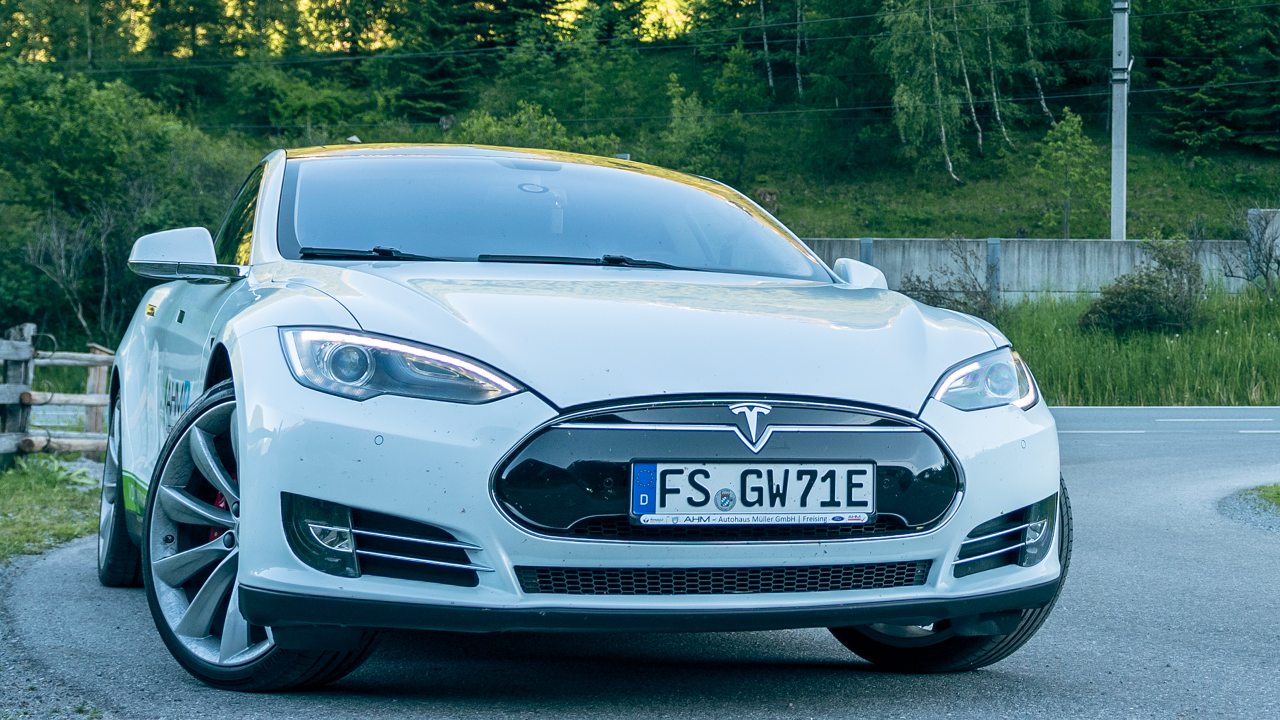
The 2013 Tesla Model S P85 did more than make an electric sedan quick. It reset expectations for how a large, luxury four door could launch off the line, turning instant torque into a defining feature rather than a party trick. By pairing sports car acceleration with everyday practicality, it forced both drivers and rival engineers to rethink what performance should feel like in the electric age.
Instead of chasing top speed bravado, the P85 focused on the first few seconds after a stoplight turns green, where real world driving actually happens. That shift in emphasis, backed by hard numbers and real owner experiences, is what allowed this early Tesla Model S to quietly rewrite the rules of acceleration.
From luxury sedan to stoplight weapon
On paper, the 2013 Tesla Model S P85 looked like a well appointed executive car, not a drag strip regular. It was a five seat Sedan with four Doors, a spacious cabin and a Body length of 196.0 inches that put it firmly in the full size category. Yet buried in the spec sheet was a powertrain that delivered 416 horsepower and 443 lb-ft of torque, figures that would have been notable in a dedicated sports coupe, let alone a car that weighed around 4,700 pounds. That combination translated into quarter mile times in the low 12 second range, a level of performance that put the P85 in direct contention with contemporary high performance gasoline sedans.
What made those numbers transformative was how accessible they were. There was no need to rev an engine, slip a clutch or wait for a transmission to kick down. The single speed electric drive simply delivered its 416 horsepower and 443 lb-ft the moment the driver pressed the accelerator, turning the car into what many early testers described as a silent slingshot. That immediacy helped the P85 earn a reputation for straight line performance that did not seem to match its size, and it set the tone for how later electric models would be judged on their ability to deliver instant thrust rather than just peak output.
Redefining “fast enough” for everyday drivers
The P85 did not exist in a vacuum. It sat at the top of a broader 2013 Tesla Model S lineup that already offered brisk acceleration by conventional standards. At the lower end, the Sedan 4D version delivered 302 horsepower and a 0 to 60 time of 5.9 seconds, figures that would have been considered quick for a mainstream luxury car. The P85 simply pushed that envelope further, trimming the sprint to 60 and turning what had been a strong performer into something that felt genuinely rapid in any traffic situation. That spread within a single model range showed how quickly electric powertrains could scale from competent to startling without changing the basic vehicle package.
For drivers used to traditional muscle, that raised a new question: how much acceleration is actually usable on public roads. One owner who arrived on a Tesla focused forum from the world of high powered gasoline cars described daily driving a Shelby Supersnake with 656 RWHP, a car that would easily outrun most sedans in a straight line. Yet in that discussion, the appeal of the P85 was not just raw speed, it was how simple and repeatable the acceleration felt, with no gear changes and far less drama. That shift in perception, from chasing ever higher horsepower to valuing instant, controllable thrust, is one of the clearest ways the P85 reframed what “fast enough” meant for everyday use.
Instant torque as a brand signature
Acceleration in the 2013 Tesla Model S was not just a party trick for the P85 variant, it became a defining trait of the entire nameplate. Contemporary assessments of the early cars highlighted their smooth, instantaneous surge as the characteristic that set them apart from both hybrids and conventional luxury sedans. That feel, particularly in the P85 Performance version, quickly turned into a hallmark for Tesla, to the point where the company’s identity in the market was closely tied to how quickly its sedans could leap away from a stop. The P85 sat at the center of that perception, acting as the most vivid demonstration of what the underlying platform could do.
That reputation was reinforced by broader evaluations that rated the Tesla Model S highly not only for efficiency and technology but also for its driving dynamics. It earned a top Overall Score in independent testing, with early reviewers describing it as brimming with innovation in areas that ranged from infotainment to power delivery. The P85’s acceleration played directly into that narrative, showing that an electric luxury car did not have to trade performance for range or comfort. Instead, it could deliver both, and in doing so it helped cement instant torque as a core part of the Tesla brand rather than a niche engineering curiosity.
Influencing supercar thinking and engineering
The impact of the P85’s acceleration was not limited to family car buyers or early adopters. It also caught the attention of engineers working at the sharp end of performance. Koenigsegg founder Christian von Koenigsegg purchased a Tesla Model S P85+ in 2013 and was struck by how the car could deliver full thrust without any need to downshift or wait for turbochargers to spool. For someone whose business was building some of the fastest gasoline powered cars in the world, that experience highlighted a different way to think about acceleration, one that prioritized seamless torque over complex multi gear transmissions.
That exposure fed into the development of the Koenigsegg Regera, a hybrid hypercar that uses a direct drive system instead of a traditional gearbox. The goal was to replicate the kind of immediate, uninterrupted surge that the P85 delivered, but at supercar power levels. In that sense, the 2013 Tesla Model S P85 did not just redefine acceleration for sedans, it helped push even the most exotic performance brands toward solutions that mimic the feel of an electric launch. When a low slung, multi million dollar hypercar borrows its acceleration philosophy from a five seat Sedan, it is a clear sign that the original idea has shifted the wider performance conversation.
Balancing speed with practicality and value
Part of what made the P85’s acceleration so disruptive was that it arrived in a package that still had to function as a daily driver. The 2013 Tesla Model S was designed as a practical electric car with a focus on range, stability and interior space, not as a stripped out sports machine. Reports on the 2013 Tesla Model S characteristics emphasized that it was engineered to maximize performance while maintaining high stability on the road, with a chassis and suspension tuned for both comfort and control. The P85 Performance variant layered its extra power on top of that foundation, which meant drivers could experience supercar like launches without sacrificing the ability to carry passengers or luggage in comfort.
That balance also shaped how the car held its value over time. Comparisons between early 2013 models and later long range versions noted that the original cars still felt quick years later, largely because their smooth, instantaneous acceleration remained competitive even as newer models added more power. The P85 Performance version in particular stood out as the most vivid expression of that early formula, combining strong range with acceleration that continued to feel modern. For buyers weighing used options, that enduring sense of speed helped keep the 2013 Tesla Model S, and especially the P85, relevant in a market where newer electric cars were constantly arriving with higher peak outputs.
How the P85 shaped expectations for electric performance
Looking back, the 2013 Tesla Model S P85 did not just post impressive numbers, it changed what drivers expected an electric car to do when they pressed the accelerator. By delivering 416 horsepower and 443 lb-ft in a full size, five seat package that could cover the quarter mile in the low 12s, it proved that instant torque could coexist with comfort, range and everyday usability. That combination helped the broader Tesla Model S line earn top marks for innovation and performance, and it turned rapid, seamless launches into a core part of the brand’s identity.
The ripple effects reached far beyond Tesla. From forum debates where owners compared the P85 to 656 RWHP gasoline muscle cars, to hypercar engineers like Christian von Koenigsegg rethinking transmissions after driving a P85+, the car’s acceleration reshaped how both enthusiasts and professionals thought about speed. In the years since, many electric models have chased quicker 0 to 60 times and higher peak outputs, but the template they follow, a quiet surge of torque in a practical body, was set early by the 2013 P85. Its legacy is not just that it was fast, but that it made this kind of acceleration feel normal in a family sized sedan, raising the baseline for what performance means in the electric era.
More from Fast Lane Only: