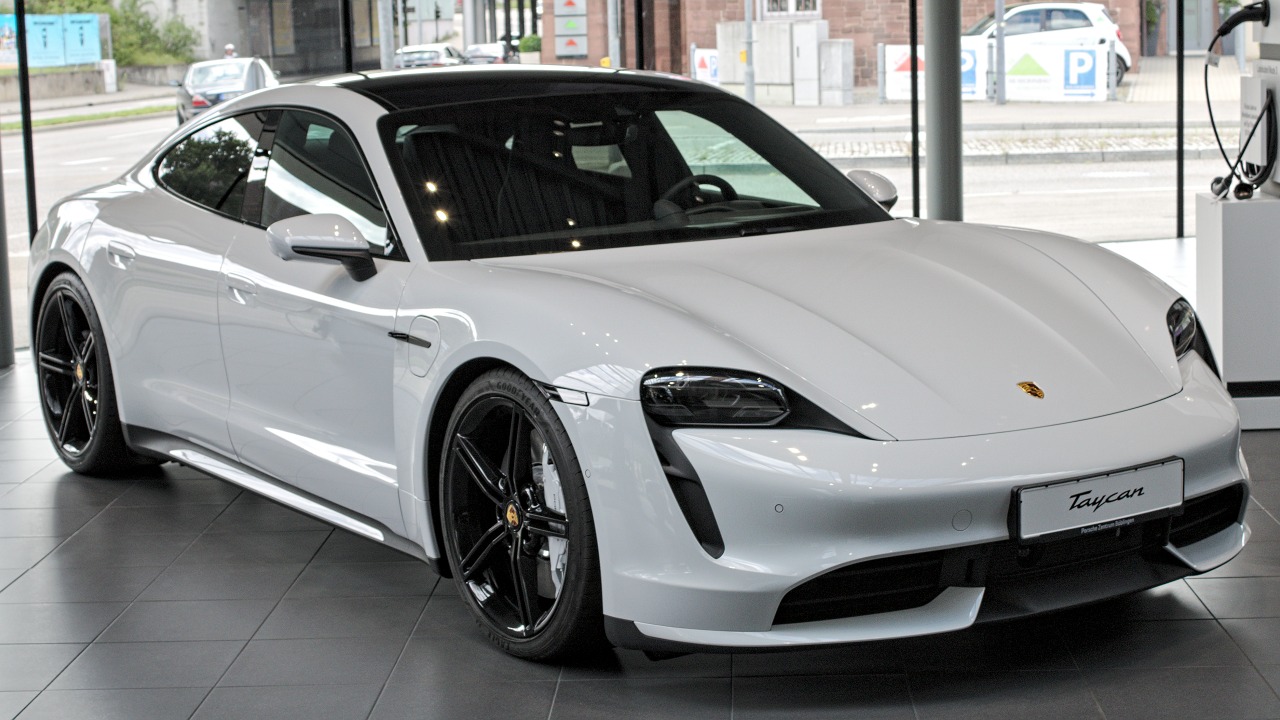
When the 2020 Porsche Taycan arrived, it did more than add another battery pack to the luxury market. It showed that an electric sedan could deliver the kind of repeatable, track-ready performance that drivers once assumed belonged only to combustion engines. By pairing brutal acceleration with race-circuit stamina and sophisticated engineering, it turned electric speed from a party trick into a credible new benchmark.
I saw the Taycan’s impact most clearly in how quickly it reset expectations. Instead of asking whether an EV could be fast in a straight line, the question shifted to how long it could stay fast, how precisely it could handle, and whether it could stand up to the abuse that enthusiasts routinely dish out to sports cars.
From drag-race novelty to track weapon
The Taycan’s most important achievement was not its headline sprint numbers but its ability to deliver them again and again. Early electric performance cars often produced staggering acceleration once or twice before heat and software pulled power, yet testing of the Taycan Turbo S showed that its launch-control runs stayed remarkably consistent, with only a small increase in times even after repeated hard launches. Owners and testers comparing it with rivals noted that the Taycan Turbo held its pace while some competitors faded, a pattern that turned the car into a reference point for repeatable performance rather than a one-shot thrill.
That consistency mattered because it aligned with how drivers actually use performance cars, from back-to-back highway pulls to full track days. Reviews of the 2020 Taycan 4S described how the car maintained composure and power on demanding routes that ranged from the climb up Angeles Crest out of Los Angeles to frost-packed roads in Northern Finl, highlighting not just straight-line speed but stability and control at high speeds. Instead of an EV that excelled only in short bursts, the Taycan behaved like a traditional sports sedan that happened to be electric.
Engineering a new kind of electric powertrain
Under the skin, the Taycan’s powertrain showed how much engineering it takes to turn raw battery output into durable performance. Porsche developed compact electric motors with a special hairpin winding design in the stator, a layout that packs the copper more densely and improves both power and cooling. That attention to detail allowed the car to combine high continuous output with thermal stability, while a maximum potential recuperation capacity that could reach hundreds of kilowatts meant the system could claw back significant energy under braking instead of wasting it as heat.
The flagship Turbo S version of the Taycan could generate up to 560 k and 761 PS of overboost power in combination with launch control, figures that put it squarely in super-sedan territory. The Taycan Turbo and Turbo S models shared a similar dual-motor setup that delivered 616 horsepower in normal driving, with launch control unlocking even more aggressive acceleration and enabling a factory-quoted sprint to 60 mph in the mid two second range. Crucially, the Taycan paired that output with a large 93.4 k Wh performance battery in some trims, giving the car the energy reserves to sustain hard driving rather than relying on a small pack pushed to its limits.
800‑volt architecture and the importance of control
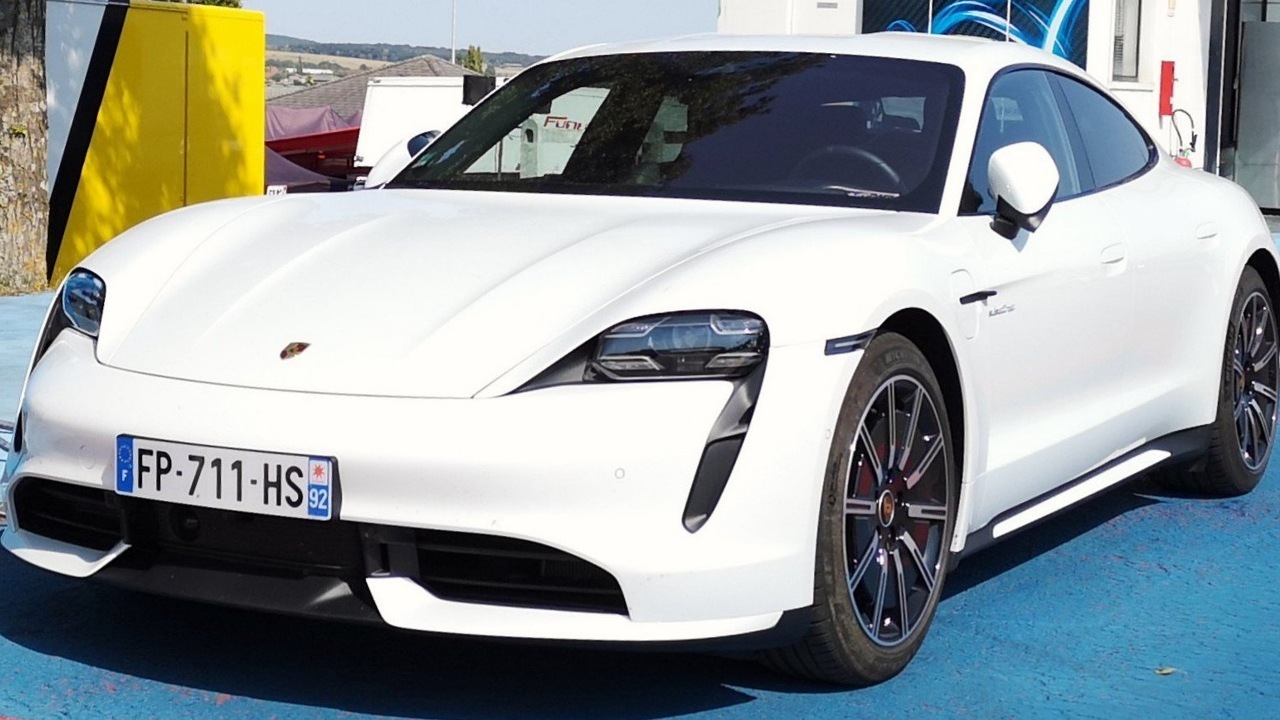
Where many early EVs used 400 volt systems, The Porsche Taycan arrived as the first production vehicle with a system voltage of 800. That higher voltage allowed thinner cabling, reduced weight, and, most importantly, enabled very high charging and power delivery without excessive heat. The Taycan could accept extremely rapid DC charging when conditions allowed, shrinking downtime on long trips, while its onboard systems still supported alternating current at home for everyday use. The electrical backbone was not just about convenience at the plug, it was a prerequisite for the kind of sustained power output the motors demanded.
Power, however, is only as useful as the chassis that manages it. At launch, the Taycan was offered in a Turbo trim on 20 inch wheels and a Turbo S specification with even more aggressive hardware, but both leaned heavily on sophisticated control systems. Adaptive air suspension, torque vectoring, and powerful brakes worked together so that the car could translate its straight line numbers into real-world pace on twisty roads and circuits. Porsche engineers emphasized that the Taycan’s recuperation system reduced brake wear by harvesting energy in everyday driving, yet the friction brakes remained strong enough for repeated high speed stops when the car was pushed hard.
Proving ground: Nürburgring and Road Atlanta
The turning point for the Taycan’s reputation came on some of the world’s most demanding racetracks. At the Nurburgring Nordschleife, a pre series Taycan set a benchmark lap for four door electric cars, prompting headlines that the 2020 Porsche Taycan Is the Fastest Four Door EV at the Nurburgring Nordschleife. Porsche test drivers described how, again and again, they were impressed by how stable the all electric sports car felt in high speed sections such as Kes and Adenauer Forst, a level of composure that suggested the chassis and powertrain were working in harmony rather than fighting heat and weight.
The story continued at Michelin Raceway Road Atlanta, where a Porsche Taycan Turbo S set a production EV lap time that underscored its handling credentials. A production spec Taycan charged over the same DC fast chargers available to customers, then went out and recorded a time that showed it could cope with the circuit’s elevation changes, heavy braking zones, and long straights. Engineers highlighted that the Taycan set a new handling benchmark for electric series vehicles, reinforcing the idea that this was not a fragile prototype but a showroom car capable of serious track work.
How it felt from behind the wheel
On paper, the Taycan’s numbers told a compelling story, but the subjective experience mattered just as much in convincing skeptics that electric performance was real. Early ride impressions from near Porsche’s Weissach facility in Germany described the very first g force attack just two corners into the drive, with the car delivering instant thrust while remaining eerily composed. Testers noted how the Taycan blended brutal acceleration with what Porsche engineers called dynamic efficiency, meaning the car did not simply lunge forward but did so in a way that felt precise and repeatable rather than wild.
That same balance showed up in more everyday scenarios. On canyon roads leading up Angeles Crest from Los Angeles, the Taycan 4S was praised for its steering feel and stability at high speeds, traits that made it feel like a familiar sports sedan rather than a science experiment. On frost packed rural highways in Northern Finl, the car’s all wheel drive system and finely tuned traction control allowed it to deploy its power even on low grip surfaces. Later reviews framed the Taycan Turbo S as a kind of circuit breaker for the segment, a litmus test that combined outstanding pace with repeatability, and suggested that even drivers who never took their EVs onto a racetrack would benefit from the robustness that level of engineering demanded.
More from Fast Lane Only: