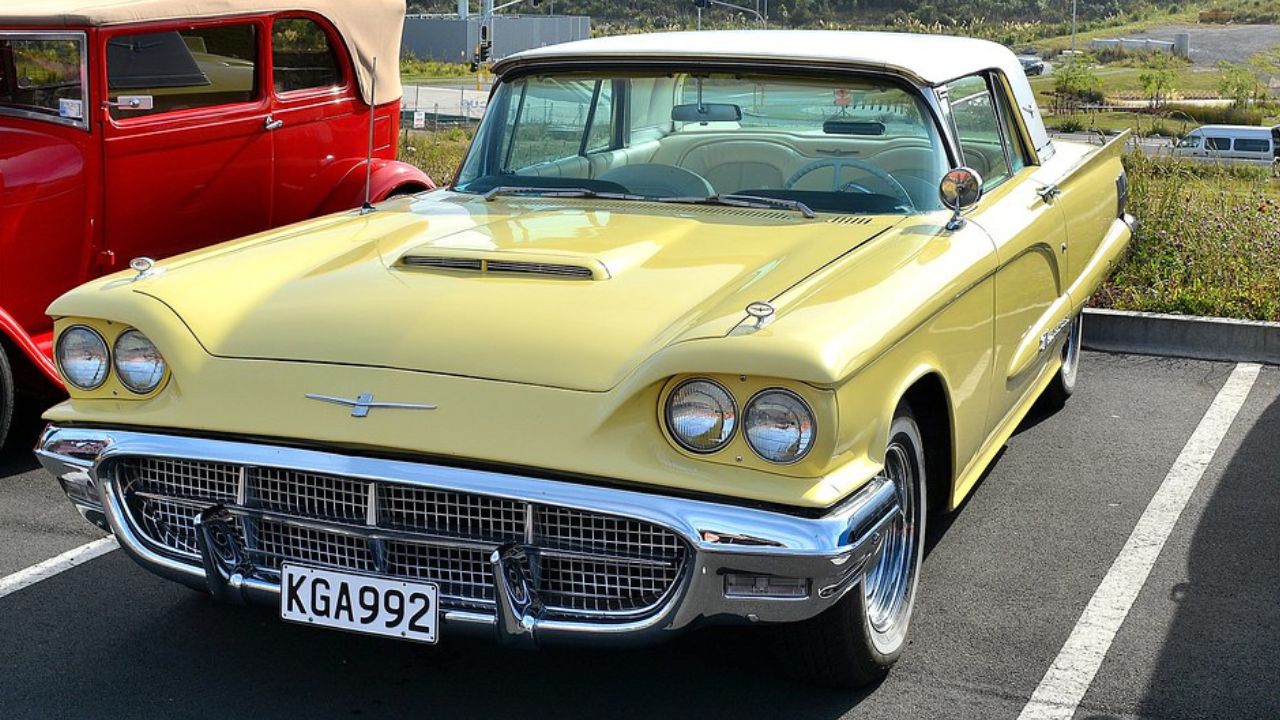
The 1960s Thunderbird never quite fit into one box. It wasn’t a muscle car, not quite a full luxury coupe, and it didn’t chase the Corvette’s sports car lane either. But that’s exactly what made it interesting. Through the decade, the T-Bird quietly shaped American car design, engineering choices, and personal luxury long before it became a buzzword. Here are 10 facts that explain why the ’60s Thunderbird deserves more recognition than it usually gets.
It helped create the personal luxury segment

The 1961 Thunderbird wasn’t built to race anyone off the line—it was designed to make driving feel upscale without jumping into Cadillac territory. With a long hood, short deck, and serious chrome, it projected confidence. Ford offered features like swing-away steering wheels and power everything at a time when most cars were still manual.
It wasn’t cheap either. Prices started around $4,000—well above your average family sedan. Sales stayed strong because it filled a niche: luxury and style in a two-door package without the size or price of a Lincoln.
The ‘Bullet Bird’ changed the shape of coupes
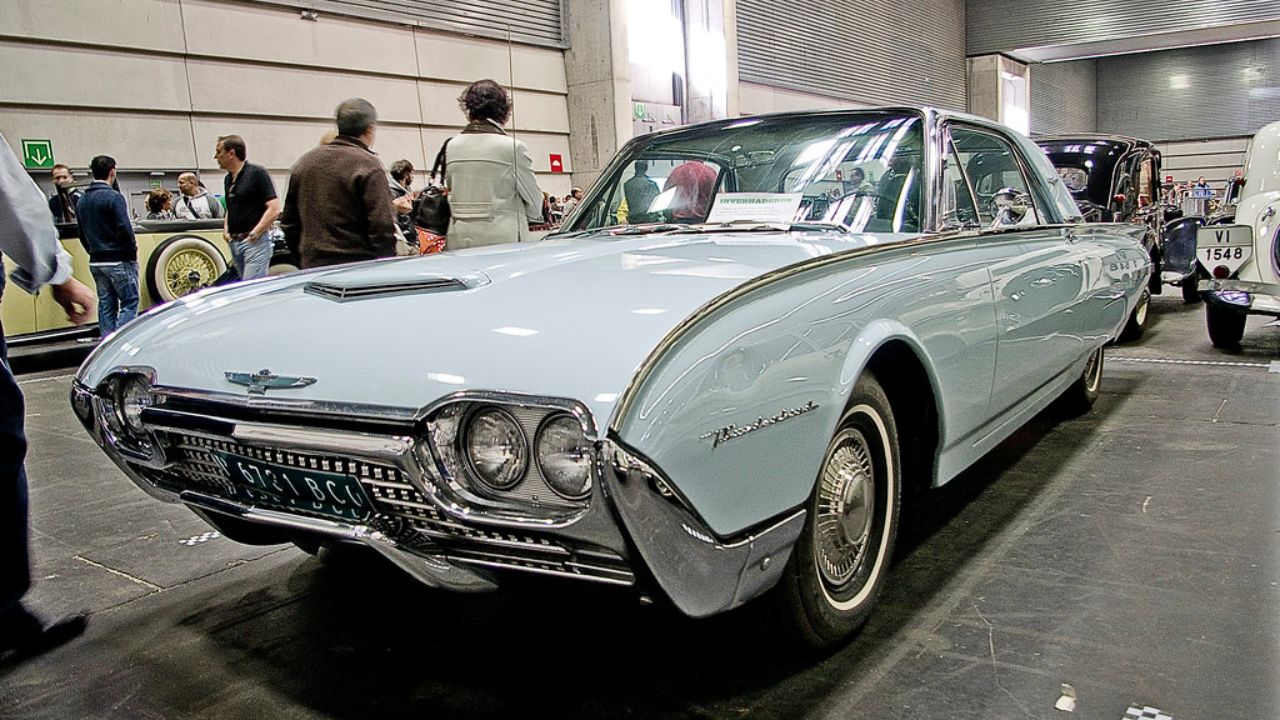
The 1961–63 Thunderbirds earned the nickname “Bullet Birds” for their sleek, pointed styling. The rounded body, jet-age tail lamps, and recessed grille gave the car a futuristic look without going overboard. The roofline was low and the beltline clean—nothing exaggerated, just purposefully drawn.
Under the hood, it carried a 390-cubic-inch V8 with 300 horsepower, paired to a 3-speed Cruise-O-Matic. Performance wasn’t blistering, but it wasn’t built for stoplight drag races. The T-Bird was a cruiser—and it looked like it belonged in a movie shot in widescreen.
Rear seats actually mattered

Unlike the Corvette or many European two-doors, the Thunderbird came with a real back seat—and it wasn’t an afterthought. Ford gave the rear seats contoured padding, armrests, and ashtrays, clearly expecting passengers to ride in comfort. For families or couples who didn’t want to choose between performance and practicality, this mattered.
Interior trim included brushed aluminum, padded vinyl, and thick carpeting. Later models even offered optional reclining seats, which was nearly unheard of at the time. The T-Bird may have been a personal car, but it didn’t ignore passengers.
The 1964 redesign set the tone for the mid-’60s
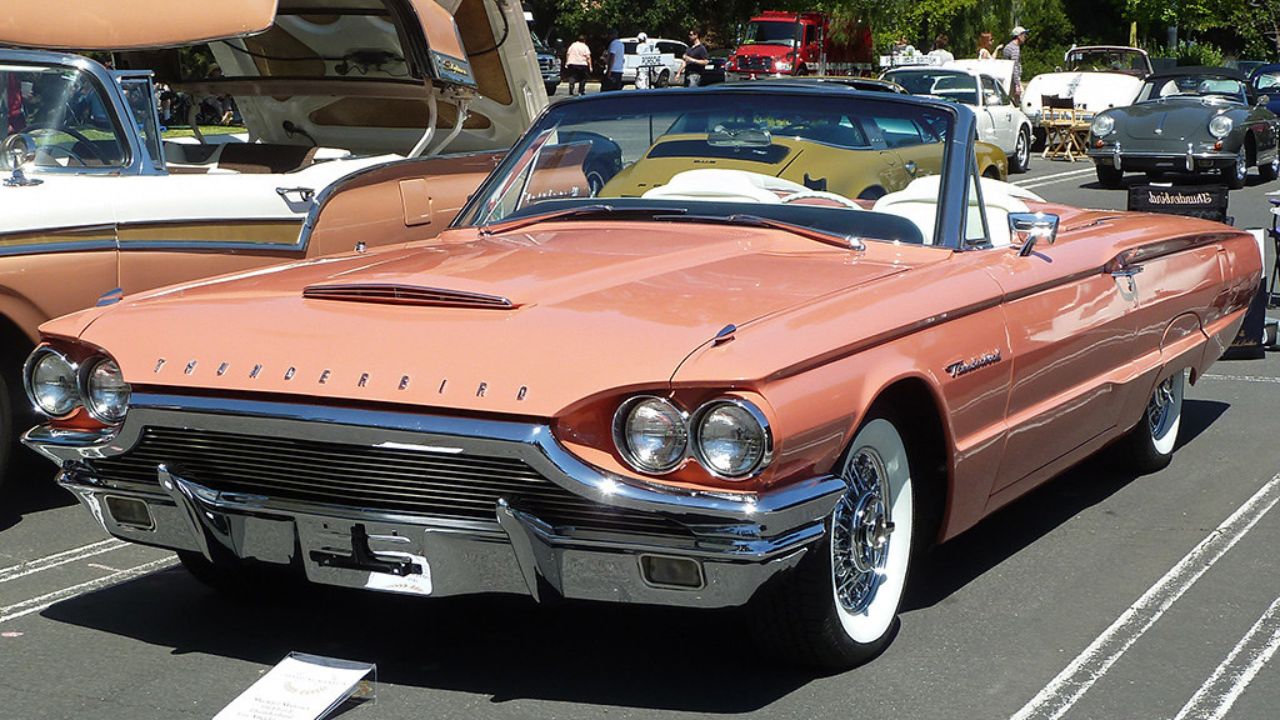
The 1964 Thunderbird got a major styling reset. Gone was the jet-age roundness; in came squared-off edges, a wide grille, and a more upright stance. It still looked upscale but had a tougher presence. Inside, wraparound dash clusters and full-length consoles gave it a cockpit feel.
Power came from the same 390 V8, but Ford refined the suspension for a smoother ride. The revised styling helped the car stay relevant as the muscle car era kicked off—and while it didn’t compete directly, it didn’t fade into the background either.
You could get a factory roadster
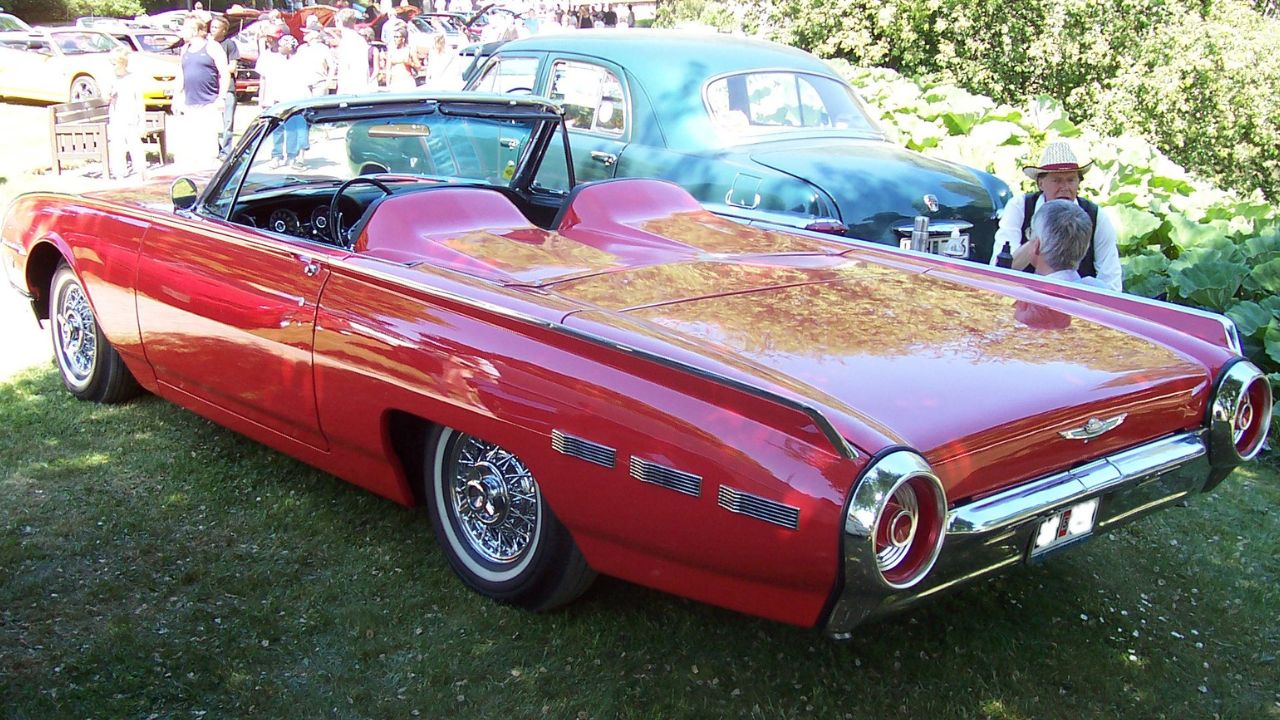
In 1962 and 1963, Ford offered the Sports Roadster package—essentially a removable fiberglass tonneau that transformed the back seat into a two-seat roadster look. It came with Kelsey-Hayes wire wheels and a unique badge, giving it serious presence.
Only around 1,900 were built over those two years, making it a rare option. This was Ford testing the waters between personal luxury and something sportier. It didn’t sell in huge numbers, but it added another layer of personality to the Thunderbird lineup.
It quietly packed performance

While not a muscle car, the ’60s Thunderbird wasn’t slow either. The standard 390 V8 made 300 hp, but the 1966 model could be optioned with a 428-cubic-inch V8 making 345 hp. That’s a lot of torque for a personal coupe. It moved its 4,300-pound weight without much drama.
0–60 times hovered around 9 seconds, and while that wouldn’t scare a GTO, it was perfectly adequate for the T-Bird’s intended role. The bigger deal was how composed it felt at speed—long-distance cruising was its real strength.
The Landau roof helped define the decade

In 1962, Ford added a vinyl-covered Landau roof option, complete with decorative bars and script badges. It was a styling move that caught on fast. By the mid-’60s, the Landau look had become standard issue on luxury coupes everywhere.
The Thunderbird didn’t invent it, but it helped make it mainstream. Buyers saw it as an upscale touch, and Ford capitalized on that with plenty of trim variations—especially in the ’66 model, which featured new interior and exterior Landau treatments to go with the squared-up styling.
The interiors were borderline architectural
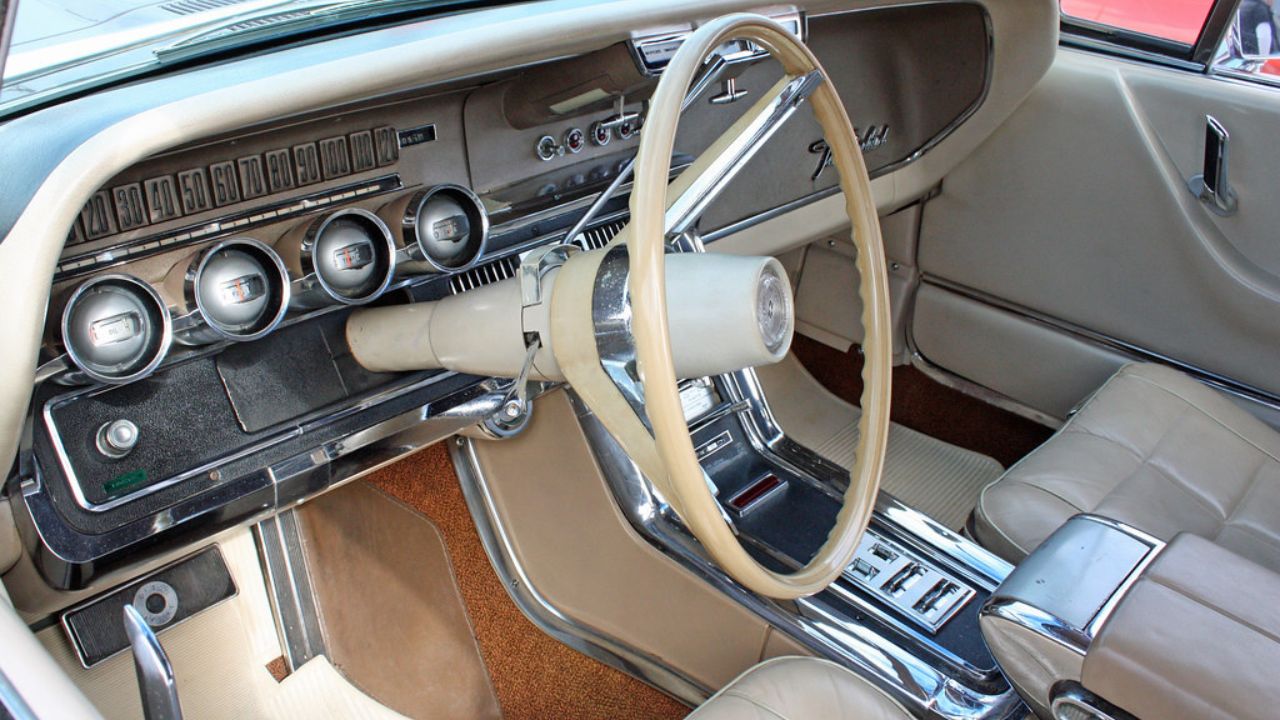
By 1966, the Thunderbird’s interior felt more like a lounge than a cockpit. The dash wrapped around the driver and flowed into a massive console. Aircraft-style toggle switches, individually housed gauges, and padded panels gave it a refined, almost architectural look.
Even base models came loaded with power seats, power windows, and courtesy lighting. Top trims added tilt-away steering, air conditioning, and 8-track players. It was the kind of car you could spend hours in—especially when long road trips were part of the plan.
It stayed rear-wheel drive while the world shifted

As front-wheel drive crept into luxury and personal cars in later decades, the ’60s T-Bird stuck with traditional rear-wheel drive. That meant balanced handling, better weight transfer under acceleration, and a driving feel that leaned closer to performance than convenience.
Ford also tuned the suspension for stability at highway speeds. It wasn’t a canyon carver, but it tracked straight and rode smooth, especially with the optional rear sway bar. You could hustle it, and it felt stable doing so.
Its cultural role got overshadowed

The ’60s Thunderbird made plenty of appearances in pop culture—TV, movies, and celebrity garages—but it never became a symbol the way a Mustang or Corvette did. That’s partly because it didn’t pick a side: it wasn’t a muscle car, wasn’t a sports car, and wasn’t a land yacht.
But for buyers who didn’t want to fit into one box, the T-Bird made sense. It was different on purpose. That nuance might have kept it from icon status, but it also made it quietly influential—setting the tone for a generation of personal coupes that followed.
Like Fast Lane Only’s content? Be sure to follow us.
Here’s more from us:
*Created with AI assistance and editor review.