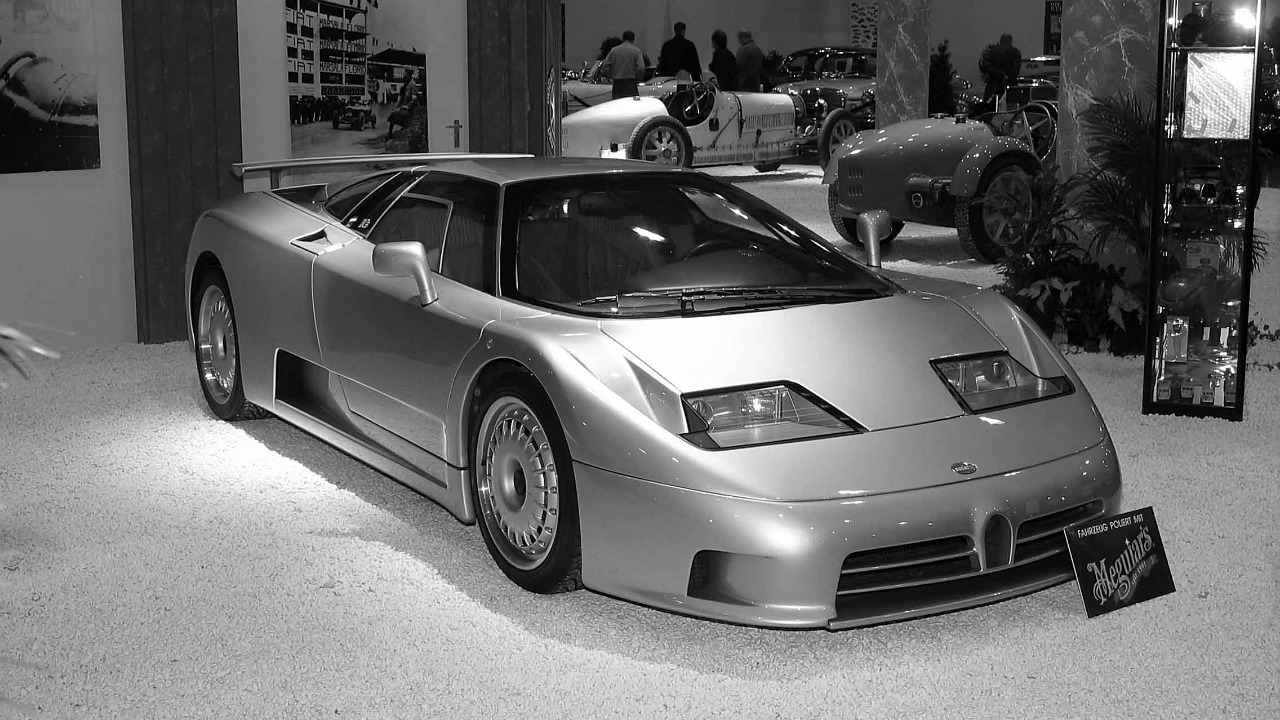
The Bugatti EB110 arrived in the early 1990s looking like a spaceship that had accidentally been given license plates. It was not just fast, it was a dense bundle of ideas that would quietly define what a hypercar should be long after its own factory went dark. When I look back at that car today, I see a machine that anticipated the future so clearly that the rest of the industry spent decades catching up.
To understand why, you have to look past the nostalgia and focus on the engineering choices that made the EB110 feel almost out of time. From its bespoke quad-turbo V12 to its carbon chassis, all-wheel drive and everyday usability, it stitched together technologies that rivals either ignored or treated as science fiction. The result was a template for the modern hypercar long before that term became marketing shorthand.
The radical heart: a bespoke quad‑turbo V12
At the center of the EB110 story is an engine that did not borrow its soul from anything else on the road. Unlike the often-mentioned McLaren F1, which relied on a BMW V12, the 1991 Bugatti EB110 used a dedicated powerplant built from scratch specifically for this car, a compact 3.5‑liter V12 force‑fed by four turbochargers that turned displacement into an almost academic detail. That decision to engineer a clean‑sheet engine, rather than adapt an existing block, signaled how aggressively Bugatti was willing to chase performance and refinement at the same time.
With the EB, the team did not stop at cylinder count or turbo bragging rights. They paired that V12 with four turbochargers and intercoolers, then wrapped it in an ultra‑lightweight structure that let the powertrain dominate the driving experience rather than simply overwhelm it. The combination of a high‑revving twelve‑cylinder, dense boost and careful packaging made the EB110 feel like a laboratory experiment that somehow passed emissions and crash tests, a car that previewed the multi‑turbo, high‑specific‑output engines that would later become normal in the upper reaches of performance.
Carbon, all‑wheel drive and a new kind of supercar
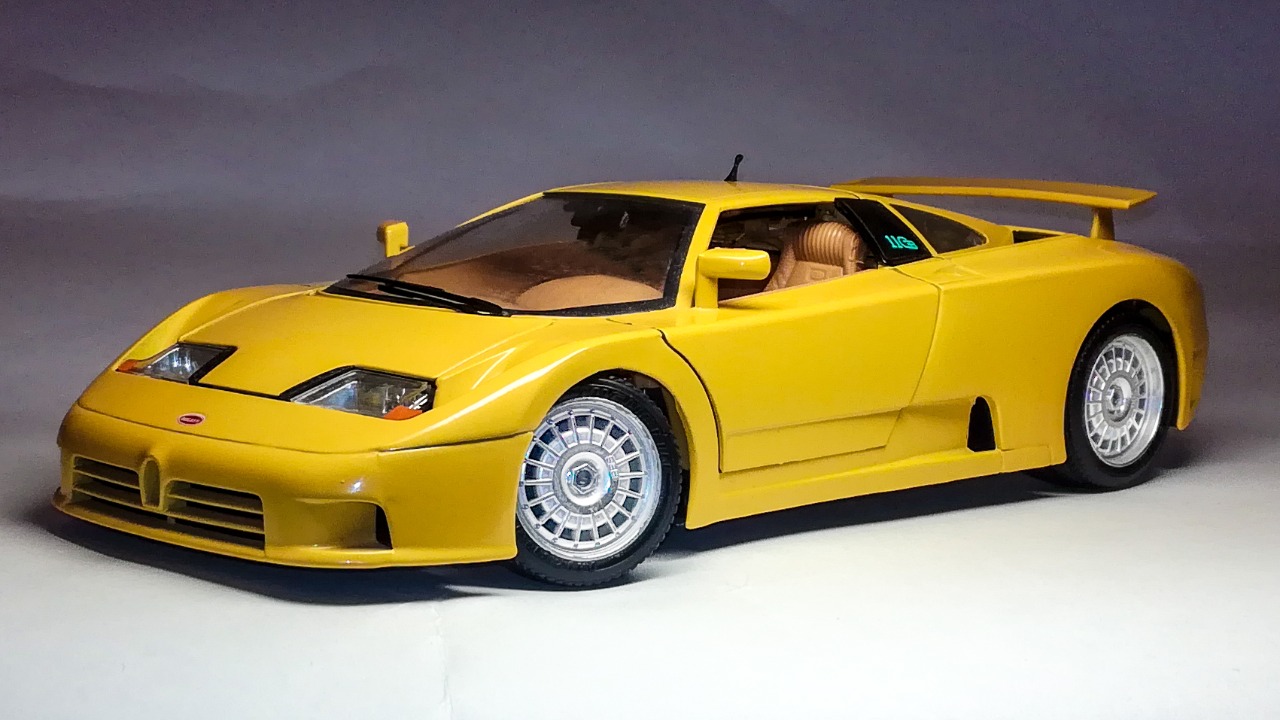
What really sets the EB110 apart in my mind is how it treated the chassis and drivetrain as equal partners to the engine. With the EB 110, Bugatti developed a completely innovative super sports car that used an ultra‑light carbon structure and permanent all‑wheel drive at a time when most exotics still clung to steel frames and rear‑drive drama. That decision to go carbon and four‑wheel traction together created a car that could deploy its power with a calm, almost clinical efficiency that felt decades ahead of its peers.
Bugatti itself has described how, with the EB 110, it combined a powerful V12 engine, four turbochargers with intercoolers and an ultra‑lightweight chassis into a package that redefined what a road‑going supercar could be. The layout, with its compact engine mounted behind the driver and the scissor doors set up high for easy entry, turned the EB110 into a rolling manifesto about how to balance speed, stability and usability in one shape. In hindsight, that mix of carbon construction, advanced aerodynamics and all‑wheel drive reads like a checklist for the hypercars that followed, which is why the official anniversary reflections on With the EB 110 feel less like nostalgia and more like a blueprint.
Comfort at 200‑plus‑mph: technology that made speed livable
Raw numbers are only part of why the EB110 feels so modern. The other part is how it treated the driver. The Bugatti had power steering and anti‑lock brakes, features that were conspicuously absent from its 200-plus-mph rivals such as the McLaren F1 and the Ferrari F40, and that choice changed the character of the car. Instead of demanding constant muscle and monk‑like concentration, the EB110 invited you to use its performance more often, and in more conditions, without feeling like you were wrestling a race car on the street.
That blend of speed and civility is what makes the EB110 read like the first true hypercar rather than just another poster car from the 1990s. Contemporary accounts describe how The Bugatti combined towering performance with a level of refinement that drivers now take for granted in modern exotics, from the way the steering assisted low‑speed maneuvers to the confidence that ABS provided in the wet. When I compare that to the bare‑knuckle approach of its contemporaries, it is clear that the EB110 anticipated the era when 200‑plus‑mph machines would be expected to behave like well‑mannered grand tourers on the commute, a shift captured neatly in later reflections on The Bugatti and its everyday usability.
Setting the template for future Bugattis and hypercars
Like all history‑making Bugattis, the EB110 was innovative to the point that it implicitly wrote the rulebook for what would follow. The combination of a compact, highly stressed engine, forced induction, advanced materials and all‑wheel drive created a package that later Bugattis would echo, from the Veyron to the Chiron, even as the details changed. When I look at the EB110 America and its evolution, I see a car that did not just chase numbers, it established a philosophy of excess that still guides the brand.
That is why enthusiasts and historians describe how it (Bugatti EB110) was innovative to the point that it (Bugatti EB110) implicitly set the standard for road‑going hypercars for years to come, a sentiment that feels more accurate with every new generation of ultra‑performance machines. The way Like all history‑making Bugattis are discussed in that context underlines how the EB110 sits at the root of the modern hypercar family tree, not just as a curiosity from a failed company but as the conceptual ancestor of the cars that now dominate speed records and auction catalogs.
A legacy that finally caught up with the car
Three decades on, the EB110’s reputation has grown into the space its engineering always deserved. With the EB 110, Bugatti created a super sports car that was pioneering not only for its era but for the years that followed, a point that becomes obvious when you line up its spec sheet against cars that arrived long after its factory closed. The carbon structure, the quad‑turbo V12, the all‑wheel drive system and the focus on drivability all feel like features from a much later generation.
That is why modern retrospectives describe how, with the EB 110, Bugatti developed a completely innovative super sports car 30 years ago that was pioneering not only for its time but also for the hypercars that followed over the years to come. When I read those assessments of With the EB 110 and then look at the current crop of carbon‑tub, all‑wheel‑drive, turbocharged flagships, it is hard to escape the conclusion that the EB110 was not just ahead of its competition. It was quietly living in the future while everyone else was still figuring out how to get there.