Sergio Pérez’s Formula 1 story has never followed a straight line. His path from a teenage hopeful leaving Mexico for Europe to a veteran still reshaping his future in the sport is defined by late twists, unlikely rescues and a resilience that keeps resetting expectations around his ceiling.
I see his journey as a case study in how talent, timing and team politics collide in modern F1, and why his career continues to surprise even as he moves into its later chapters. To understand that, it helps to trace how Sergio Michel Pérez Mendoza built a reputation, nearly lost it, and then kept finding ways back to the front.
From Guadalajara prodigy to European long shot
The foundations of Pérez’s unpredictably durable career were laid long before his first Formula 1 start. Born Sergio Michel in Guadalajara, he grew up in a racing family that pushed him into karts early, and he began his competitive career in the 125cc Shifter Regional category in Mexico while still a child, a step that set him on a path very few Latin American drivers manage to follow into Europe’s junior ladder. That early move into structured competition is documented in his biography, which notes how Pérez began his career in that domestic series before chasing bigger stages abroad.
What makes that leap stand out is how aggressively he and his family bet on Europe at a young age. Barely 15, he left Mexico to race in Germany, where he entered the intensely competitive Formula BMW ADAC series and often found himself the youngest driver on the grid, a teenager trying to adapt to new circuits, language and culture all at once. He has described how he simply went onto the internet, searched for opportunities and found a programme that was “very attractive, very cheap,” a detail that underlines how improvised the move really was, and how much of it depended on his willingness to take a risk in Formula BMW ADAC.
Building a reputation as F1’s tire whisperer
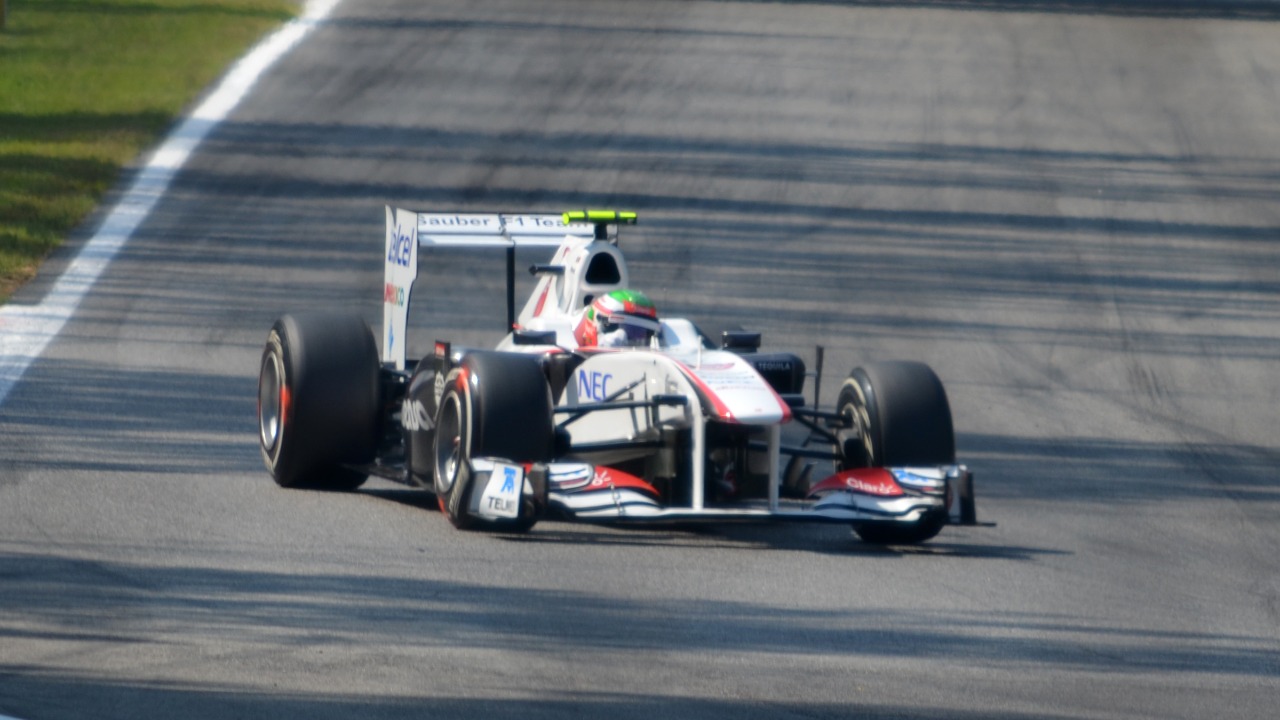
By the time he reached Formula 1, Pérez had already forged a reputation for extracting results from imperfect machinery, and that trait would define his early years in the sport. His full name, Sergio Michel Pérez Mendoza, appears on the record as a driver who has achieved six race wins and multiple podiums in F1, a tally that looks modest at first glance but becomes more impressive when you consider how often he delivered those results in midfield cars rather than title contenders. The statistical record notes that Pérez has achieved six race victories, a figure that anchors his status as more than just a supporting act.
His breakthrough came with the team then known as Force India, where he turned opportunistic strategies and gentle tire usage into podiums that few rivals could match from similar machinery. On the podium in just his third race with that outfit in Bahrain, he showed how the Force India iteration of Pérez could live on the edge of strategy and still make it work, often by stretching stints longer than seemed possible and then attacking late. That early podium in Bahrain with Force India crystallised his image as a tire management master who could turn chaos into opportunity.
Highs, lows and the Red Bull pressure cooker
The volatility of Pérez’s career is most visible in his swings between career-defining highs and brutally exposed lows. After a stint at McLaren that yielded 49 points and left questions about his readiness for a top team, he rebuilt his standing in the midfield and eventually earned a move to Red Bull, where he became both race winner and lightning rod. In one of his more difficult seasons, he finished the year with 52 points, his lowest tally since that 49-point McLaren campaign in 2013, yet he still ended inside the top ten in the championship, a reminder that even his down years at the front came with a solid baseline of results, as reflected in the record that he scored 52 points, his lowest tally since he scored 49.
Life alongside a generational teammate in a car tuned to razor-edge performance exposed his weaknesses more starkly. Analysis of his Red Bull stint has highlighted how he often struggled with a car on the limit that also lacked rear stability, a combination that punished any hesitation and made confidence swings more dramatic. One detailed breakdown notes that it has looked like Pérez has been wrestling with a machine on the razor’s edge that also has a lack of rear grip, and that his form seemed to get worse from there, a pattern captured in the assessment that Not only has it looked difficult, it has also fed a narrative of decline.
The night he saved his career and the debate that followed
For all the scrutiny, Pérez’s career might have ended earlier if not for one extraordinary night that effectively saved his place on the grid. A widely watched analysis of that turning point frames it as the moment he went from facing the exit to forcing a top team to take notice, describing how his performance left Red Bull weighing whether to sign him or bring back Alex Albon, and how only time would tell how the season would play out for “Czecho.” That video essay, titled in a way that underlines the stakes, recounts how the team had to decide whether to retain Alex Albon or open the door to Pérez, and how his late-season heroics tipped the balance.
Among fans, that rescue drive has become shorthand for everything that makes Pérez so hard to categorise. One widely shared discussion argues that a single win alone cemented his place as one of the most reliable and clever midfield drivers of the 21st century so far, and insists that he should not be remembered only for his struggles in the last two seasons. The thread’s central claim is that That win alone cemented his reputation, and it captures a broader sentiment that his legacy is bigger than any single slump.
Rise, fall and what comes next
As Pérez moves into the later phase of his F1 life, the conversation around him has shifted from whether he belongs to how he will be remembered. A detailed career study describes the dramatic rise and fall of Sergio Perez’s F1 trajectory, noting that he has had a proud record that earned him a place at the top table even as recent seasons have exposed his limits against the very best. That same analysis stresses that Mark Hughes sees his story as one of both achievement and erosion, a reminder that longevity at the front always comes with scars.
Looking ahead, his decision to join a new project with Cadillac from 2026 underlines how his career keeps finding unexpected chapters. A recent driver spotlight tracks Sergio Perez’s F1 career so far as he prepares to link up with that programme, framing it as the next twist for a driver who has already moved from Sauber to McLaren, Force India, Racing Point and Red Bull. The profile notes how this DRIVER SPOTLIGHT on his Career connects his early years to a future with Cadillac, and it reinforces the idea that he remains a valuable asset for ambitious manufacturers.
Why Pérez still divides opinion
Part of what keeps Pérez’s career so compelling is how sharply opinions diverge on his true level. In one fan analysis of his recent form, a commenter argues that there are probably 50 drivers in the world who could be competitive in an F1 car if given the chance, using that figure to suggest that the gap between elite and merely very good is smaller than it looks from the outside. The discussion, posted in early July, stresses that you must first understand there are 50 potential contenders before judging why “Checo” might be lacking relative to a benchmark teammate.
At the same time, more forensic breakdowns of his performance argue that the story is more nuanced than raw pace alone. One video essay asks how a driver can go from saving a team, winning races and being hailed as a tire management master to facing constant criticism, and it dissects his strengths and weaknesses across different cars and regulations. That piece, titled in a way that questions how bad he actually was, frames the debate around whether his downturn is structural or circumstantial, and it invites viewers to reconsider their assumptions by asking How Bad was Sergio Perez Actually? in the context of his full body of work.
A national hero with an unfinished legacy
Strip away the noise and what remains is a driver who has carried the weight of a country’s expectations while navigating one of the most unforgiving environments in sport. As a Mexican with the Spanish naming convention of Pérez as his paternal surname and Mendoza as his maternal family name, he has become a national hero whose success resonates far beyond the paddock, inspiring a new generation of fans and young racers. His profile as a national hero and trailblazer is now as central to his identity as his on-track statistics.
That is why his career keeps surprising: every time the narrative seems settled, Pérez finds a way to complicate it, whether by pulling off an unlikely win, enduring a brutal slump or signing up for a fresh challenge that few saw coming. His journey from Guadalajara to the top tier of motorsport, through Force India podiums, Red Bull pressure and a future with Cadillac, shows how persistence and adaptability can stretch a career far beyond its apparent limits. However the final chapters unfold, Sergio Michel Pérez Mendoza has already ensured that his story will be argued over, rewatched and reinterpreted for years to come.