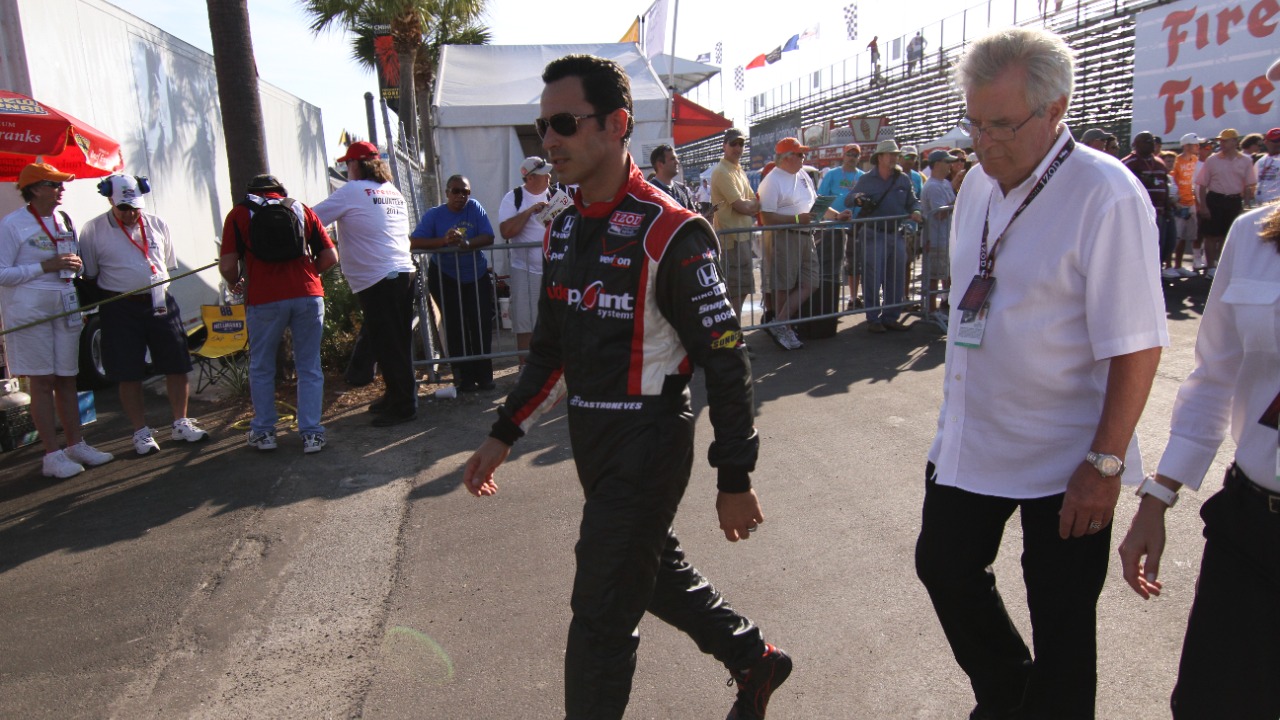
Hélio Castroneves has spent decades turning raw speed into something closer to performance art, blending results with a showman’s touch that feels rare in modern motorsport. His flair is not a side dish to the trophies, it is the reason his victories still feel like shared celebrations rather than private achievements.
I see his enduring popularity as the product of that mix: elite numbers, a distinctive style on and off the track, and a willingness to let fans all the way in. The stats explain why he matters, but the way he carries himself explains why people still care so much.
The numbers that gave the flair real weight
Before anyone fell in love with the fence climbs or the megawatt smile, Castroneves built a résumé that could stand in any era. With Team Penske, After 21 seasons and 344 combined career starts, he stacked up 36 wins and 60 poles, a line of numbers that puts him among the most productive drivers that organization has ever had, and that is saying something for a team that treats victory as a baseline expectation rather than a pleasant surprise. Those 344, 36 and 60 figures are not just trivia, they are the hard proof that the charisma is backed by relentless, repeatable excellence.
That production is also why his name sits in the most exclusive club in American open-wheel racing. As a member of the illustrious group of four-time Indianapolis 500 winners, Helio Castroneves turned the Indianapolis Motor Speedway into a personal stage, joining legends whose faces are carved into the sport’s mythology. The official driver bio that invites fans to Get to Know Helio spells it out clearly, describing Helio Castroneves as a Brazilian NTT IndyCar Series star whose career has been defined by that relationship with the 500, and it is that combination of nationality, series identity and event mastery that helped him become a global figure rather than just another fast driver on the grid.
Spider-Man, the fence, and a new kind of IndyCar showman
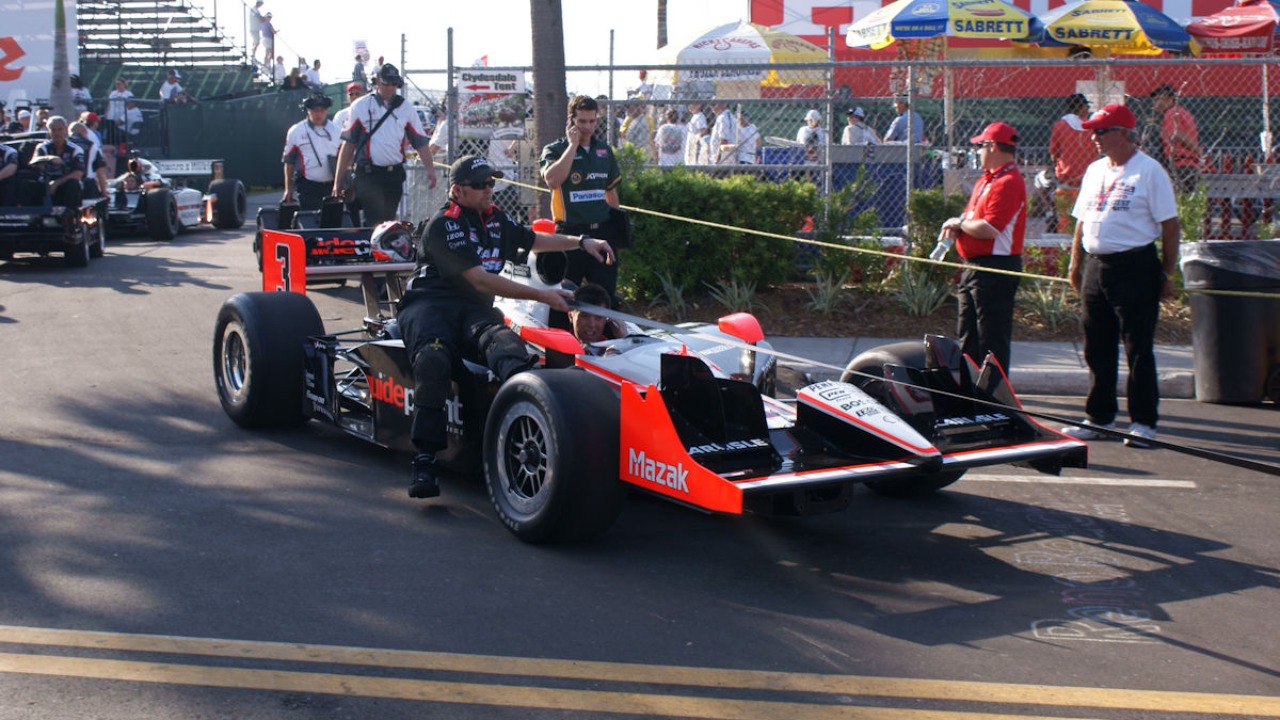
What has always struck me is how early Castroneves understood that winning was only part of the job. From his early IndyCar Stardom and the “Spider-Man” persona, he leaned into the idea that a driver could be both ruthless competitor and joyful entertainer. The way Castroneves and Team Penske moved into the IRL full-time and then watched him climb the Indianapolis Motor Speedway fence after his victories turned a simple celebration into a ritual, one that kids could imitate in the backyard and that television cameras could not resist. That Spider-Man nickname, captured in a kids-focused profile that also notes how he later took the 500 for a third time, shows how his brand seeped beyond hardcore race fans and into broader pop culture.
That instinct to perform did not stop at the track limits. Castroneves stepped into mainstream American living rooms when he won the reality show “Dancing with the Stars,” a detail that sits right alongside his racing achievements in the same Team Penske Hall of Fame write-up that notes his 344 starts, 36 wins and 60 poles. When a driver can glide across a ballroom floor on national television and then strap into an Indy car the next weekend, it changes how casual viewers see the sport, and it changes how they see him. He became the rare racer whose name your non-racing friends might know, not because he chased celebrity for its own sake, but because he treated every stage as another chance to connect.
The fourth 500 and the joy of proving people wrong
For all the showmanship, Castroneves’ most powerful moment might be the one that looked least likely on paper. Written off as too old to race full-time and too old for a fourth Indianapolis 500 win, Heli lined up at the Speedway with a smaller operation and a lot of outside skepticism. When he took the checkered flag for that record-tying fourth 500, the story was not just that he had matched the legends, it was that he had done it after so many had quietly moved on from the idea that he could still own the biggest day in American open-wheel racing. The disbelief in the paddock turned into pure noise from the grandstands, and the fence climb that followed felt like a defiant encore.
That victory also reframed the late stage of his career. Instead of a graceful fade into retirement, Castroneves used that fourth Indianapolis triumph to reset expectations for what a veteran could still accomplish. Earlier this year, Helio Castroneves was embracing a milestone season with trademark charm and optimism, talking about turning 50 while preparing to chase yet another shot at the 500 with the team he now part owns, Meyer Shank Racing. The same update that described how he was getting ready for the Sonsio Gran Prix weekend also made clear that he was not treating age as a ceiling, he was treating it as another storyline to play with, another reason for fans to lean in and see if he could pull off one more surprise.
Charisma that starts at home and spills into the paddock
What separates Castroneves from a lot of other charismatic athletes, at least in my view, is how consistent the warmth feels whether he is in front of a camera or in a quiet family moment. A long-form profile once opened on a scene where the unborn child’s future godfather wraps an arm around his sister, with Castroneves gently choreographing a dip that looked like something out of a movie rather than a hospital hallway. That same piece described how he will grab a partner, press them to his chest, twirl them and dip, a reminder that the ballroom grace and the paddock charm come from the same place. The public persona is not a mask, it is an extension of how he moves through the world.
That energy carries into the garage and the media pen. In one interview, he talked about how “This year we were very close, really, really very close and at the end we had wing damage by another driver but you know that is racing,” before pivoting almost immediately to hope, saying that hopefully next year we can bring that result home. In the same conversation, he added, “Hopefully many more seasons I can race,” while looking ahead to an appearance in Newton, IA on July 10, and the tone was pure Castroneves: honest about the frustration, but already selling the next chapter. That blend of transparency and optimism is catnip for fans who want their heroes human but not bitter.
Why the fan connection still feels fresh at 50
Even as the years stack up, Castroneves has managed to keep his relationship with fans feeling current rather than nostalgic. The official driver page that invites people to Get to Know Helio Castroneves as a Brazilian NTT IndyCar veteran still reads like an active invitation, not a museum plaque, because he keeps adding new layers to the story. The fact that he is still chasing the Indianapolis 500 with the same intensity he showed as a younger driver, while also juggling part ownership responsibilities, signals that he sees himself as part of the sport’s present and future, not just its past.
At the same time, his induction into the Team Penske Hall of Fame, which highlighted how After 21 seasons and 344 combined career starts he delivered 36 wins and 60 poles, gives fans a concrete way to measure the journey they have taken with him. Those numbers, the Spider-Man fence climbs, the Dancing with the Stars trophy, the fourth 500, the family moments and the hopeful interviews all stack together into a single throughline. I see that throughline as the real reason he remains a fan favorite: Hélio Castroneves has never asked people to choose between greatness and joy, he has spent his entire career proving that in the right hands, racing can deliver both at full speed.