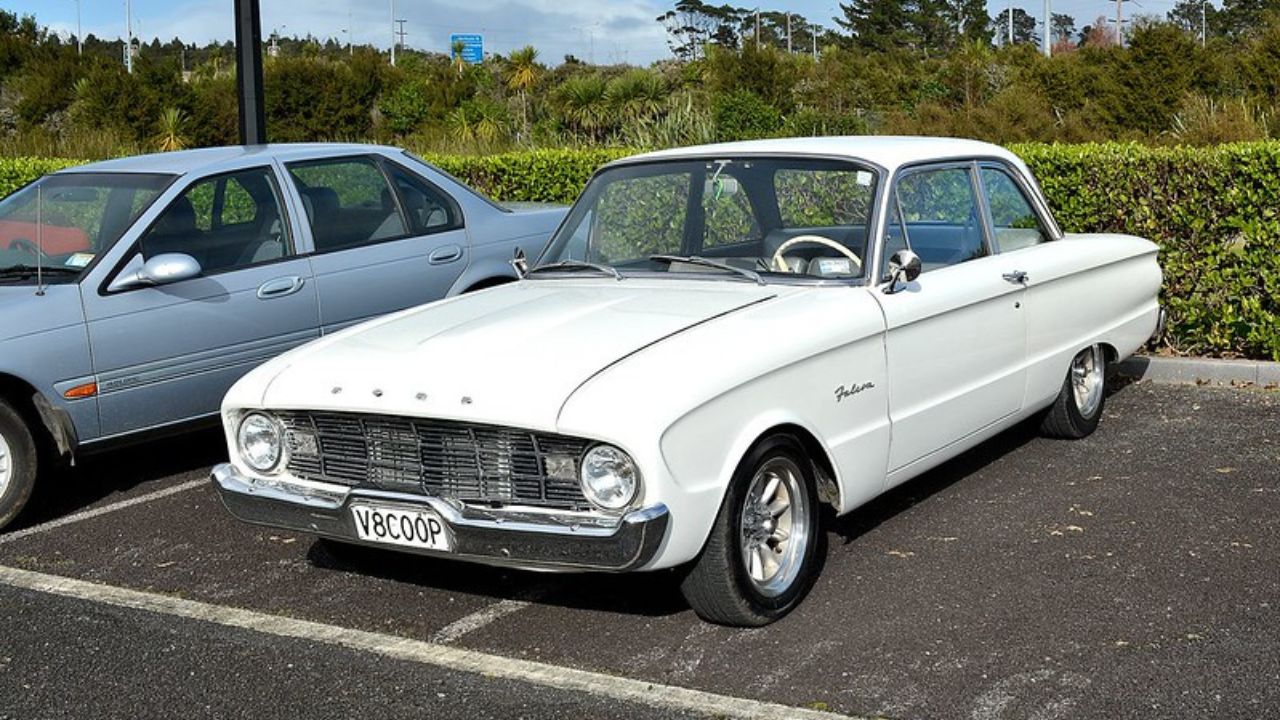
When the Ford Falcon was introduced to Australia in 1960, it was originally intended to be a practical family sedan based on an American design. Few could have predicted that it would evolve into one of the country’s most iconic automobiles. Over the following decades, the Falcon was reshaped to suit Australian conditions, becoming a trusted family car, a capable work vehicle, and eventually a high-performance legend that left a lasting mark on the nation’s automotive culture.
Australia Forced Ford to Rethink the Falcon
The first Australian Falcons faced significant challenges. Built from an American platform, the early cars struggled with Australia’s rough roads, long travel distances, and harsh climate. Suspension components and other mechanical parts often proved inadequate for local conditions.
Rather than abandoning the model, Ford Australia invested heavily in redesigning it. Engineers strengthened the suspension, improved cooling systems, reinforced the chassis, and adapted the car to withstand demanding environments. These changes transformed the Falcon from a vehicle criticized for its durability into one that was well suited to Australian roads.
As each new generation arrived, the Falcon became increasingly Australian in both engineering and character.
Its evolution reflected local needs rather than overseas expectations.
It Became More Than a Family Car
One reason the Falcon became so influential was its remarkable versatility. Available as a sedan, station wagon, ute, and panel van, it appealed to families, tradespeople, businesses, and government fleets alike.
The Falcon’s spacious cabin, dependable mechanicals, and comfortable ride made it a practical everyday vehicle, while its utility versions became favorites among farmers and contractors who needed vehicles capable of handling demanding workloads.
Ford also offered a wide range of engines, allowing buyers to choose economical six-cylinder models or powerful V8 versions depending on their needs. This broad lineup helped the Falcon become a familiar sight in cities, rural communities, and worksites across Australia.
Few vehicles served such a wide variety of roles so successfully.
Motorsport Turned It Into a National Icon
The Falcon’s greatest influence came through Australian motorsport. High-performance versions competed in touring car racing, particularly at the demanding Bathurst endurance race, where fierce rivalries with Holden captivated generations of fans.
Success on the racetrack strengthened the Falcon’s reputation for performance and durability. Special models developed by Ford Performance Vehicles (FPV) and earlier performance divisions demonstrated that the Falcon could compete with the world’s best sports sedans while remaining practical enough for everyday driving.
For many Australians, the Falcon represented far more than transportation. It became a symbol of national engineering, friendly competition, and a uniquely Australian approach to building powerful rear-wheel-drive cars.
Its motorsport legacy elevated the Falcon beyond ordinary family transportation.
A Lasting Legacy in Australian Automotive History
Production of the Australian Ford Falcon ended in 2016, closing a chapter that had lasted more than half a century. By then, it had become one of the country’s most significant automobiles, influencing generations of drivers and helping define Australia’s domestic automotive industry.
Well-preserved Falcons remain highly sought after by collectors and enthusiasts, particularly performance variants associated with Bathurst success and limited-production models. Clubs and enthusiast communities continue celebrating the car’s history, ensuring its legacy remains alive long after production ceased.
Looking back, the Ford Falcon became unexpectedly influential in Australia because it evolved into a vehicle built specifically for Australian conditions and drivers. Its combination of practicality, durability, versatility, and racing success transformed it from an imported idea into a genuine national icon.
More from Fast Lane Only
- Unboxing the WWII Jeep in a Crate
- 15 rare Chevys collectors are quietly buying
- 10 underrated V8s still worth hunting down
- Police notice this before you even roll window down
*Research for this article included AI assistance, with all final content reviewed by human editors