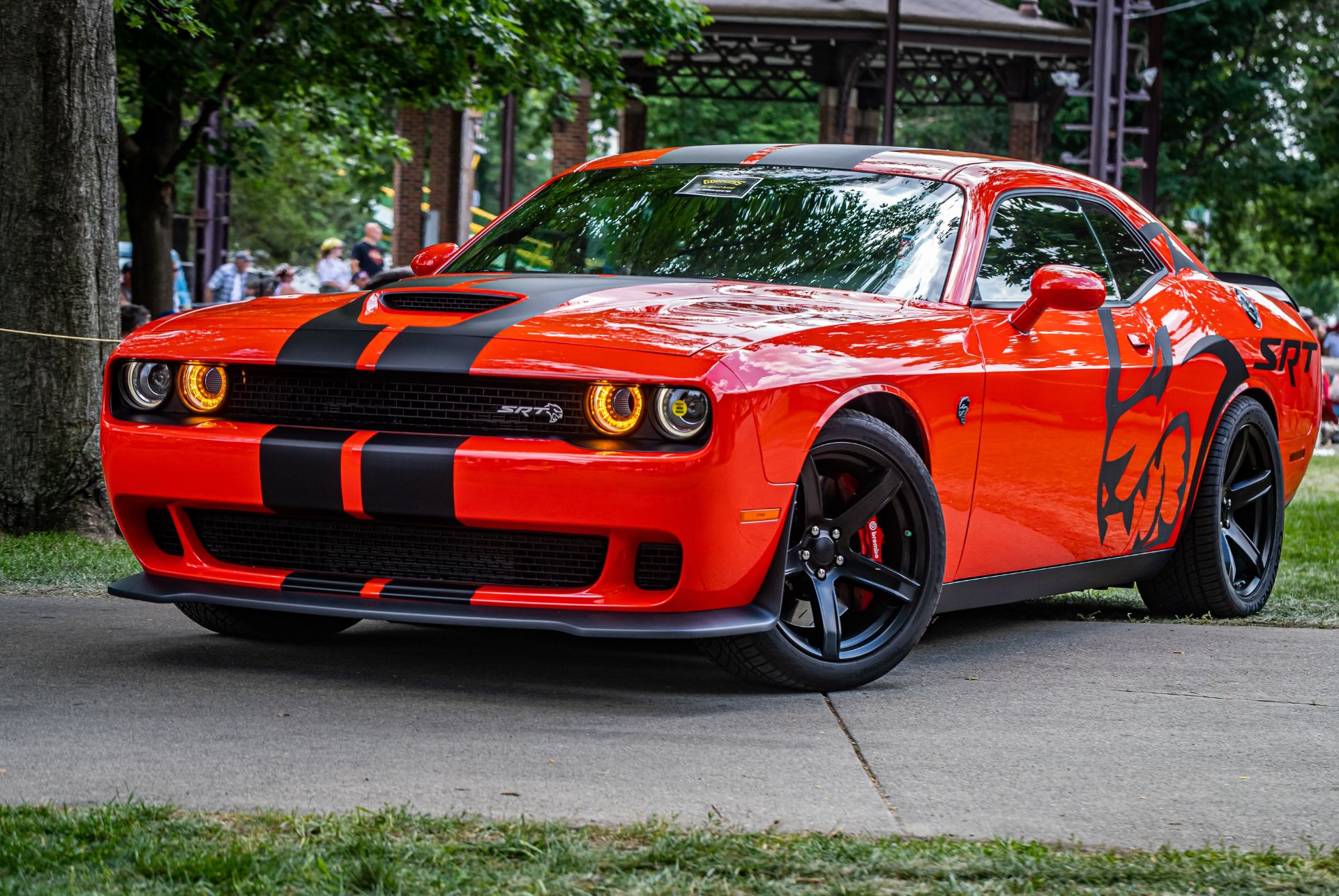
There’s a moment every Dodge Hellcat owner remembers the first time they hear it—that sharp, high-pitched scream that cuts through everything else on the road. It doesn’t sound like a typical V8. It doesn’t even sound like most performance cars. It sounds mechanical, aggressive, and unmistakably different.
That signature supercharger whine isn’t an accident. It’s the result of deliberate engineering choices that blend raw power with acoustic identity. While other performance cars rely on exhaust noise to make a statement, the Hellcat announces itself through its intake system before you even see it. And once you understand what’s happening under the hood, that sound becomes even more impressive.
Because what you’re hearing isn’t just noise—it’s a precise combination of airflow, rotor speed, and engine design working together in real time.
What Makes the Hellcat’s Supercharger Whine Unique
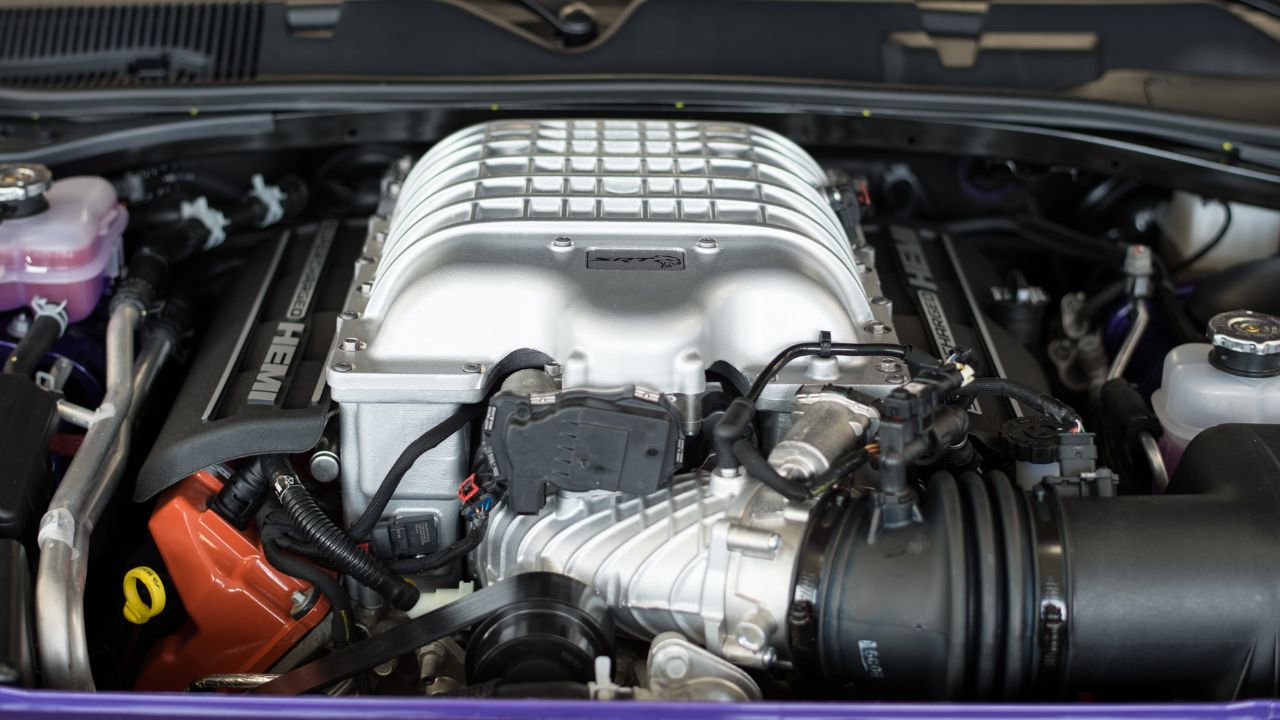
The Hellcat’s whine stands out because of three tight design factors: the Roots-type supercharger’s rotor geometry and gearing, the HEMI V8’s intake/exhaust architecture, and the way the blower couples mechanically to the engine. Those elements produce a clear, high-pitched tone that carries farther and retains harmonic purity under load.
Hellcat Supercharger Engineering
The Hellcat uses a twin-lobe Roots-style supercharger with large-diameter rotors turning at a high ratio relative to crank speed. That rotor shape forces air in discrete pulses, creating tonal pressure waves rather than broadband turbulence. The blower’s gear reduction and close-tolerance clearances emphasize a narrow-band frequency that people perceive as a musical whine.
Mechanical coupling matters. The supercharger drive, pulley sizes, and belt routing set rotor speed; changing pulley ratio changes pitch. Bypass and boost control valves alter flow and can reduce whine at cruise, but under throttle the sealed, high-boost path makes the whine dominant.
Key points:
- Roots-style rotors → discrete pressure pulses
- High rotor speed and gear ratio → high-pitched fundamental
- Tight clearances and pulleys → pronounced, stable tone
The Role of the HEMI V8 in Sound
The Hellcat’s HEMI V8 contributes both acoustically and functionally. Large displacement, long intake runners, and a cylinder firing order shape intake pressure transients that interact with the supercharger’s pulses. Those interactions reinforce specific frequencies instead of smearing them, so the whine sounds pure and engine-synced.
Exhaust and intake plumbing amplify or dampen the whine. Short, minimally baffled intake tracts and performance-oriented airboxes allow more supercharger noise to reach the front of the car. Meanwhile, the HEMI’s exhaust pulses create a complementary low-frequency note that contrasts with the blower’s high pitch, making the whine more perceptible against a bass backdrop.
Important factors:
- Intake geometry syncs with blower pulses
- Cylinder firing and displacement reinforce tonal clarity
- Intake/exhaust architecture controls how much whine escapes
Supercharger Whine Versus Exhaust Note
Supercharger whine and exhaust note occupy different frequency bands and travel differently. The whine sits in a higher frequency range, narrow and tonal; exhaust occupies lower, broadband frequencies. That separation makes the whine audible even when the exhaust is loud.
Perceptual contrast plays a role. The high-pitched whine cuts through ambient noise and building reflections more efficiently than low-frequency exhaust rumble. Design choices — such as intake resonators, muffler packing, and supercharger bypass tuning — determine the balance a driver hears. Owners chasing a louder whine typically alter pulley ratios or reduce intake damping, while changes to mufflers affect mostly the exhaust character, not the blower’s pitch.
Practical differences:
- Whine: high-frequency, narrowband, travels far
- Exhaust: low-frequency, broadband, provides body and punch
- Tuning choices affect one more than the other
Key Engineering Factors Behind the Signature Sound
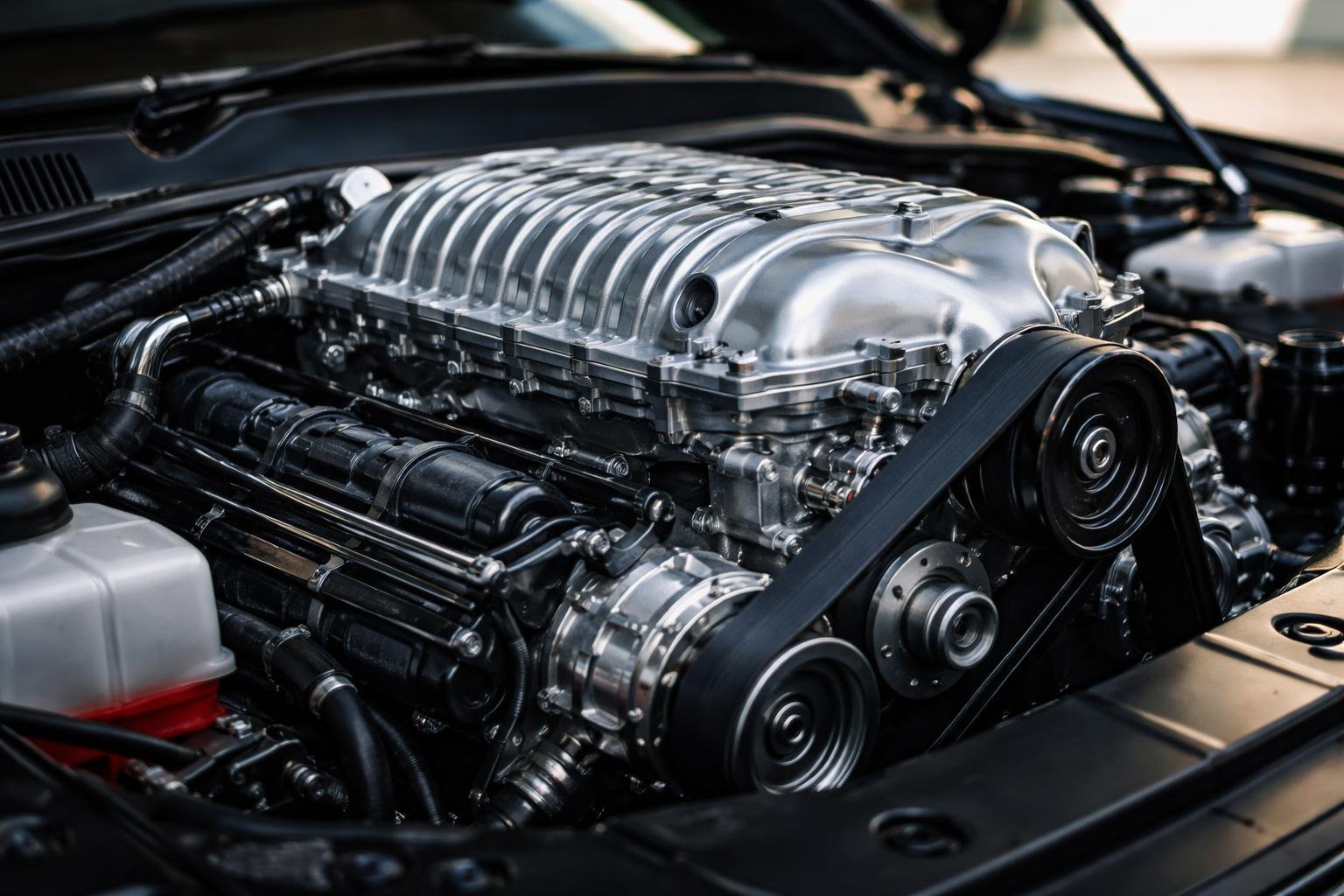
The Hellcat’s whine comes from a combination of compressor type, internal rotor geometry and drive ratio, plus how the system vents and routes air under varying load. Each element shapes pitch, harmonic content, and how the whine changes with throttle.
Twin-Screw Versus Centrifugal Supercharger Designs
The Hellcat uses a roots-style/positive-displacement blower (close in behavior to twin-screw types) rather than a pure centrifugal unit. Positive-displacement designs deliver airflow at low RPM and produce discrete mechanical tones from meshing rotors and trapped-air compression. That gives a steady, high-pitched presence even at idle or low throttle.
Centrifugal superchargers behave more like centrifugal pumps: their sound energy rises dramatically with impeller speed and often produces a higher-pitched, turbine-like scream under high RPM. They lack the consistent meshing signature of a twin-screw/Roots blower, so the perceived character is more ramping and less gear-like.
For listeners, the difference means the Hellcat’s whine is audible earlier in the rev range and carries a mechanical, rotor-driven timbre that contrasts with the centrifugal’s turbine timbre.
Rotor Design and Pulley Ratios
Rotor geometry determines the whine’s harmonic content. Hellcat-style rotors have tight clearances and lobed profiles that trap and compress air rapidly, creating sharp pressure pulses. Those pulses produce narrow-band frequency components that register as the familiar whine.
Pulley ratio sets the supercharger’s rotational speed relative to engine RPM. A higher drive ratio spins the rotor faster at the same engine speed, raising the primary whine frequency and loudness. Small changes in pulley diameter shift pitch noticeably because the whine frequency scales directly with rotor RPM.
Manufacturers tune rotor shapes and drive ratios together to balance boost, thermal load, and acoustics. In the Hellcat, the combination prioritizes immediate boost and a prominent, audibly rich whine across common driving RPM ranges.
Bypass Valve Functionality
The bypass valve (also called a blow-off or bypass system on some setups) controls airflow through the supercharger at partial throttle. When open, it routes compressed air back into the intake or atmosphere depending on design, reducing compression across the rotors and damping the whine.
Under cruise or light load the bypass opens to lower parasitic loss and quiet the supercharger. Under wide-open throttle it closes, forcing full compression and revealing the full rotor whine. The valve’s response rate and plumbing length influence transient sounds—slow-closing valves produce brief whoops and overlaps, while rapid-seating valves create a sharper transition to the steady whine.
Tuning the bypass (spring rates, solenoid control, and piping) changes how often the whine is masked or exposed, so it acts as an acoustic on/off that engineers use to manage NVH without sacrificing performance.
Comparison With Other Performance Vehicles
The Hellcat’s supercharger produce a high-pitched, continuous whine that stands out for its rotor-driven tone, intake resonance, and the way Dodge tunes intake and bypass behavior. Other performance cars use different compressor types, intake paths, and chassis acoustics that change pitch, harmony, and prominence.
How Hellcat’s Whine Differs From Other Supercharged Cars
The Hellcat uses a large Roots-style twin-screw/Roots-derived supercharger that spins at engine-driven speeds, producing a steady, mechanical whine with strong harmonic content. Its rotors and tight clearances create tonal peaks in the mid‑to‑high frequency range that the intake plumbing and hood routing project forward.
Other supercharged cars often use smaller, high-speed centrifugal units or different rotor profiles that yield a thinner or more turbine-like tone. Packaging and intake muffling also vary: many manufacturers add intake resonators and acoustic foam that reduce perceived whine. The Hellcat’s front-scoop, looser intake piping, and deliberately tuned bypass valve let more compressor noise into the cabin and forward-facing aperture, making the whine more audible and characterful compared with quieter supercharged setups.
Contrasts With Turbocharged and Naturally Aspirated Engines
Turbocharged engines center their sound around exhaust-driven spool and compressor surge events, so the audible signature is a whoosh, flutter, or whistle tied to exhaust flow and boost lag. Turbos produce less consistent, more transient high-frequency whine than a mechanically driven supercharger.
Naturally aspirated performance engines emphasize intake roar, cam and valve train harmonics, and exhaust tone. Those sounds change with RPM more organically, lacking the continuous gear-driven pitch the Hellcat shows. In mixed setups (turbo + NA characteristics), the engine’s tonal palette is broader but less focused on a single screaming harmonic the Hellcat’s supercharger creates.
Influence of American Muscle Heritage
American muscle tradition values bold, easily identifiable engine character that signals raw power at a distance. Dodge engineers tune the Hellcat’s induction and exhaust to preserve and amplify the supercharger’s mechanical voice in service of that identity.
That heritage affects hardware choices: large-displacement HEMI V8s, accessible hood scoops, and minimal acoustic dampening all favor audibility. It also affects marketing and product decisions; the pronounced whine reinforces the Charger Hellcat’s image among performance vehicles as a visceral, attention-grabbing machine rather than a stealthy track tool.
Modifications, Driving Experience, and Culture
The Hellcat’s whine gets shaped by bolt-on hardware, engine calibration, and how owners drive and display the car. Hardware changes and community preferences amplify or tame the supercharger’s signature sound.
Aftermarket Intake and Exhaust System Influence
Aftermarket intakes change airflow velocity and filter element acoustics, which can raise the high-frequency note of the supercharger whine. Cold-air or short-ram intakes with less restrictive filters let more intake noise into the cabin and the engine bay, making the rotor-driven whine more prominent at mid-to-high RPMs.
Exhaust upgrades have a larger audible effect at a distance. Cat-back systems, high-flow mid-pipes, and straight-through mufflers reduce backpressure and raise overall volume while shifting tonal balance toward mid and low frequencies. Combining a freer-flowing exhaust with an aggressive intake often makes the supercharger whine sound sharper and clearer compared with stock setups like those on standard Hellcat, Redeye, or Demon trims.
Tuning matters. ECU or ECU+supercharger pulley changes alter boost curves and when the bypass/recirculation valve closes, which changes when the whine intensifies. Owners seeking a louder or crisper whine typically pair intake, exhaust, and tune rather than relying on a single mod.
Impact on the Driving Experience
The audible supercharger contributes to perceived power. When the bypass valve closes under load, the whine rises instantly and signals boost delivery, giving drivers a clear sensory cue for throttle input and shifts. That cue enhances muscle-car engagement during hard acceleration or spirited driving.
However, louder intakes and exhausts change everyday comfort. Higher cabin noise at cruising speeds and more pronounced drone on the highway affect comfort for long trips. Some owners balance performance and refinement with resonators or variable-valve exhausts to reduce drone while keeping a strong charge sound under acceleration.
On-track, the whine provides real-time feedback during launches and gear changes. Racers and drag-focused owners—especially those running Redeye or Demon variants—use that feedback to time shifts and manage traction. Street drivers prioritize different setups, often trading peak volume for less cabin intrusion.
Enthusiast Community and Cultural Significance
The whine functions as an identity marker within car-enthusiast circles. At meets and cruise nights, Hellcats and Demons draw attention precisely because the supercharger sound distinguishes them from naturally aspirated or turbocharged cars. Owners often showcase exhaust and intake builds to emphasize that identity.
Community norms influence modifications. Some clubs prefer stock-like aesthetics but amplified sound, while other groups favor extreme bolt-ons and drag-oriented builds. The cultural value also shows in media and music references that elevated Hellcat variants like Redeye and Demon into icon status among younger enthusiasts.
Modification trends spread quickly in forums and social feeds. That accelerates aftermarket product adoption and tuning strategies, reinforcing a feedback loop where sound, performance, and cultural signaling all push each other forward.
More from Fast Lane Only
- Unboxing the WWII Jeep in a Crate
- 15 rare Chevys collectors are quietly buying
- 10 underrated V8s still worth hunting down
- Police notice this before you even roll window down
*Research for this article included AI assistance, with all final content reviewed by human editors.