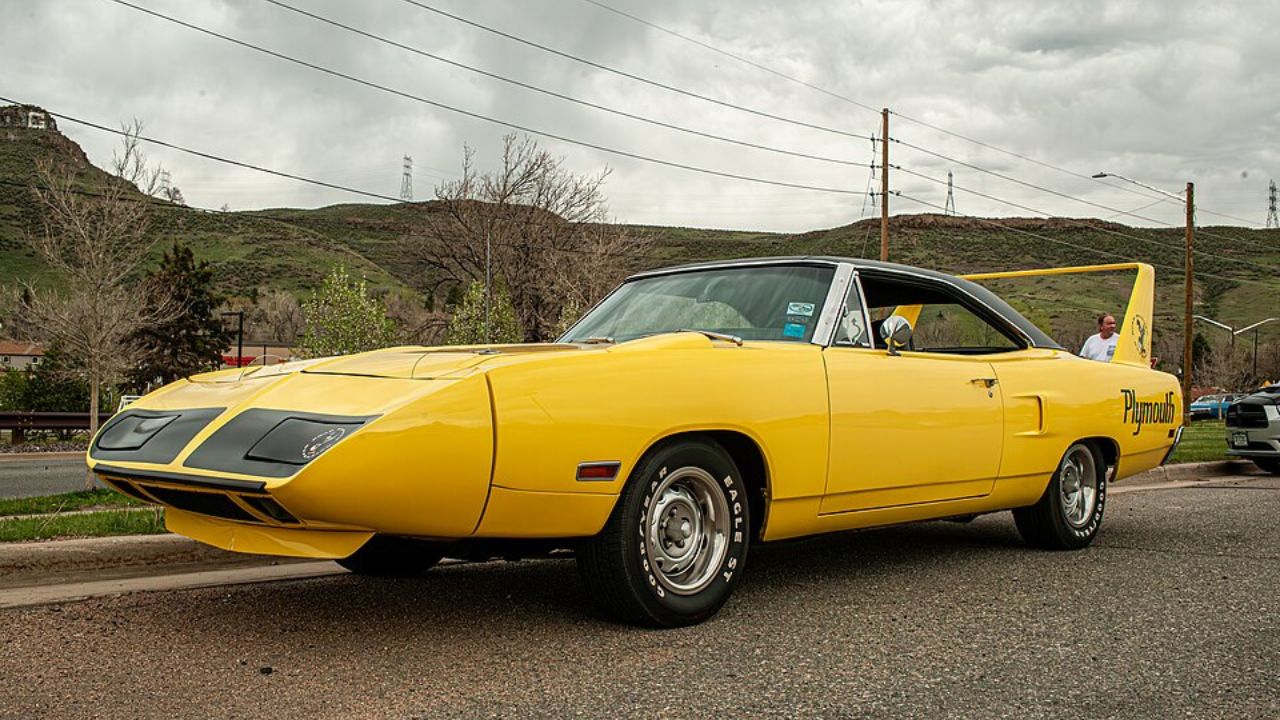
The Plymouth Superbird is one of the most recognizable muscle cars ever built, thanks to its towering rear wing and aerodynamic nose cone. Yet despite its legendary status today, the Superbird was produced for only a single model year. Created to satisfy racing requirements rather than long-term showroom demand, it became an icon whose brief lifespan only added to its mystique.
NASCAR Rules Inspired Its Creation
By the late 1960s, NASCAR competition had become a major battleground for American automakers. Plymouth wanted to return to the front of the field after Dodge introduced the Charger Daytona, another aerodynamic race car built specifically for high-speed competition. To remain competitive, Plymouth developed the Superbird for the 1970 model year.
NASCAR’s homologation rules required manufacturers to build and sell a certain number of street-legal versions before the race car could compete. As a result, Plymouth produced the Superbird with its distinctive aerodynamic nose, oversized rear wing, and performance-focused engineering.
Every major styling feature served a functional purpose. Rather than creating an eye-catching design for marketing alone, engineers prioritized stability and speed on NASCAR’s high-banked tracks.
The Superbird existed because racing regulations demanded a production version before it could become a competitive race car.
Aerodynamics Changed American Muscle
The Superbird looked unlike anything else on American roads. Its extended front nose reduced aerodynamic drag, while the tall rear wing generated stability at the high speeds common in NASCAR competition. These features allowed the car to slice through the air more efficiently than conventional muscle cars of the era.
Beneath its dramatic bodywork, buyers could choose from several powerful V8 engines, including the legendary 426 Hemi and the 440 Super Commando. Combined with its aerodynamic advantages, the Superbird became one of the fastest production cars available.
Although some buyers admired its bold appearance, others found the styling too unconventional for everyday driving. Its race-inspired design appealed to enthusiasts but limited its broader market appeal.
Even so, the Superbird demonstrated how advanced engineering could dramatically improve high-speed performance.
Changing Times Ended the Program
Despite its racing success, the Superbird’s production run lasted only one year. NASCAR eventually revised its rules, reducing the competitive advantage of specialized aerodynamic cars. Without the need to build homologation specials, Plymouth had little reason to continue producing such an unusual model.
The broader automotive industry was also beginning to change. Rising insurance costs, tightening emissions regulations, and growing concerns about fuel economy made high-performance muscle cars increasingly difficult to sell.
Many Superbirds remained on dealership lots long after production ended, as their radical styling proved challenging for mainstream buyers. Some dealers even discounted them to clear inventory.
These changing market conditions brought the Superbird’s remarkable but brief story to an end.
A Short Life Created a Lasting Legend
Although the Plymouth Superbird existed for only the 1970 model year, its influence has lasted for decades. Its unmistakable appearance, NASCAR heritage, and limited production have made it one of the most sought-after American collector cars ever built.
Today, surviving Superbirds regularly command impressive prices at collector auctions and remain highlights at automotive events around the world. Enthusiasts appreciate not only their rarity but also the engineering innovation that made them so effective on the racetrack.
The Superbird represents a unique moment when racing technology directly shaped production automobiles, creating a car unlike any before or since.
Its brief production run ensured that the Plymouth Superbird would become more than just a muscle car—it became one of the greatest legends of the golden age of American performance.
More from Fast Lane Only
- Unboxing the WWII Jeep in a Crate
- 15 rare Chevys collectors are quietly buying
- 10 underrated V8s still worth hunting down
- Police notice this before you even roll window down
*Research for this article included AI assistance, with all final content reviewed by human editors