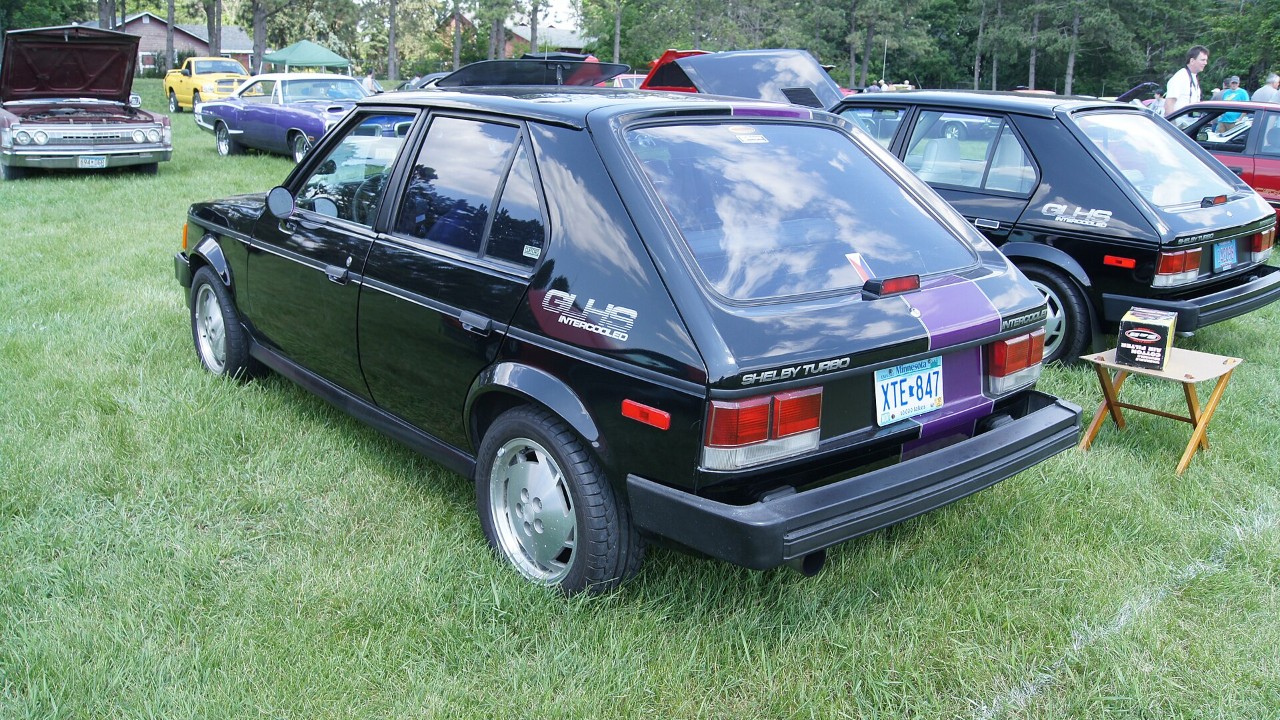
A sleeper is a fast car that looks like it should be hauling groceries. The Shelby GLH-S is the purest example we know. Plain shapes, family doors and modest badges hid real speed in every car on this list. Most went to buyers who wanted more pace than the neighbors expected, and many never told anyone.
The trouble with a good disguise is that it works on history too. Hatchbacks got used up, sedans got traded in, and wagons went to college with the kids. As a result, a lot of these cars slipped out of the conversation early. The people who drove them never really stopped talking about them.
These are our picks, the forgotten sleepers we think deserve another look. They suit anyone who cares more about driving than about being noticed. The verdicts are our opinion. The numbers come from the sources we read for this story, and where we could not confirm a figure, we left it out.
1. 1986 Shelby GLH-S
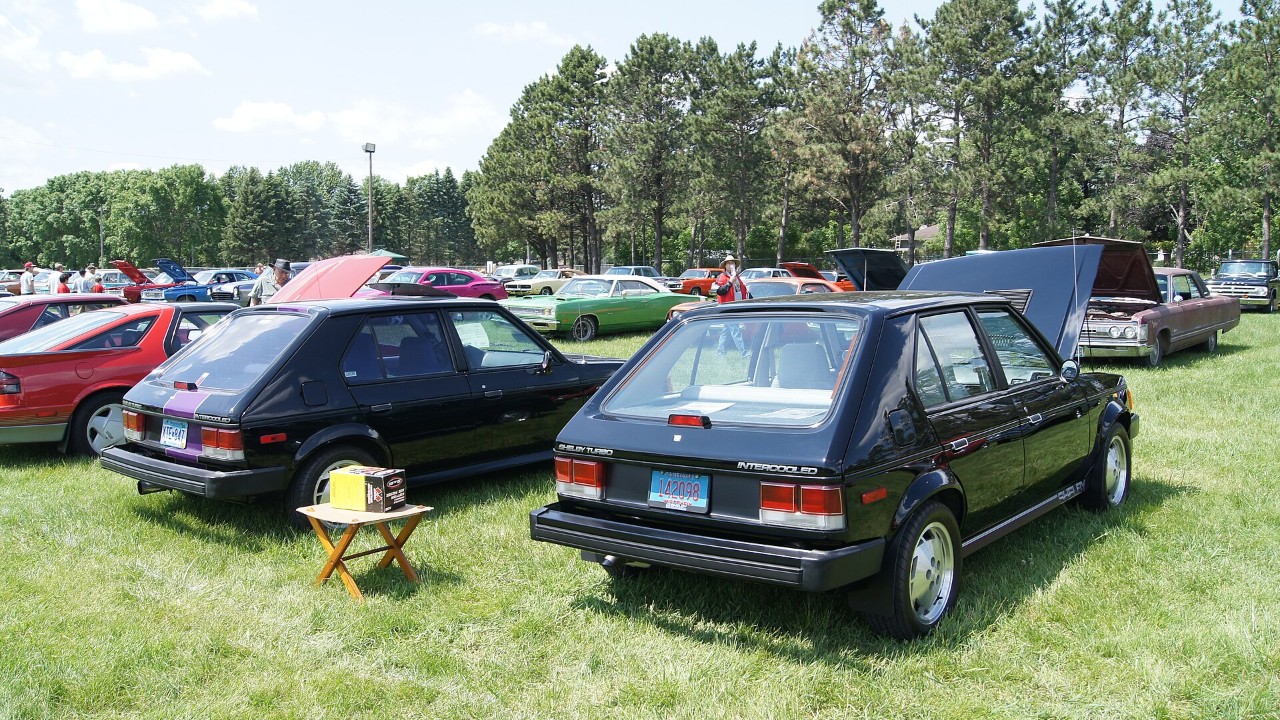
Carroll Shelby took a Dodge Omni, the boxy commuter hatch, and turned it into something that embarrassed V8 owners. Shelby joked that GLH-S stood for “Goes Like Hell, S’more.” The Shelby GLH-S used a “Turbo 2” four-cylinder that made 175 hp at 12 psi of boost. A front-mounted intercooler fed it, according to Hagerty’s look at the GLH. Shelby built only 500 of them.
Those numbers translated into real results. Road & Track’s 1986 test ran 0 to 60 mph in 6.7 seconds, Hagerty reports. Hot Rod also found the car a full second quicker through the quarter mile than a 1966 Shelby Mustang GT350. The hardware matched the attitude, with Koni shocks, Goodyear tires, Bosch fog lights and one-piece Shelby Centurion wheels. Meanwhile, the body looked like the car a dentist might buy for a teenager.
In our view, that contrast is the whole point of a Shelby GLH-S. Dodge has since brought the letters back, as we covered when Dodge revived the GLH badge. Even so, the original is the one we’d hunt for. Find one with its Centurion wheels and intercooler plumbing intact. Those parts separate a real GLH-S from a dressed-up Omni.
2. 1998 Volvo V70 R

Volvo spent decades selling safety, so a turbocharged all-wheel-drive wagon came as a pleasant surprise. The first V70 R appeared in May 1997 and went on sale for 1998. Under the hood sat a 2.3-liter turbocharged five-cylinder. In 1998, Volvo rated the manual version at 247 hp and the automatic at 237 hp.
American buyers got the version that made the most sense for snowy roads. In fact, Volvo did not offer the front-drive car or the manual gearbox in the U.S. for 1998. Every American V70 R that year came with all-wheel drive and an automatic. For a wagon with a big cargo floor, that was a lot of grip and boost in one calm package. Later cars moved to a 2.4-liter turbo for 2000, rated at 261 hp.
Our take is simple: the first V70 R might be the most convincing disguise of the 1990s. It looks like the car that picks up the soccer team. Yet it pulls hard enough to make a highway on-ramp fun. If you want more Swedish oddities, our rundown of 12 Volvos worth remembering covers the brand’s wider history. For buyers, the all-wheel-drive system and turbo plumbing deserve a careful inspection before any money changes hands.
3. 2004–2007 Volvo S60 R

The sedan version of Volvo’s R formula went further than the wagon ever had. The S60 R used a 2.5-liter turbocharged five-cylinder rated at 300 metric horsepower. Power went through a Haldex all-wheel-drive system. In normal driving it sent most torque to the front wheels, then shifted up to 30 percent to the rear when needed.
What made the car special was the chassis. Volvo developed its Four-C semi-active suspension with Öhlins and Monroe. Its dampers could adjust up to 500 times per second, and the driver picked Comfort, Sport or Advanced modes. Large Brembo four-piston brakes sat at both ends, and a six-speed manual came alongside the automatic. However, the 2004 and 2005 automatics limited torque in first and second gear. The six-speed automatic dropped that restriction for 2006.
We think the S60 R is the sleeper that rewards homework most. It sits in parking lots looking like a tidy executive sedan. Only blue-faced gauges and small R badges tip anyone off. Our advice is to favor the manual or a 2006–2007 automatic. Also, confirm that the Four-C dampers work in every mode before you buy.
4. 2008 Chrysler 300C SRT-8

Chrysler’s big sedan already looked like a formal limousine, so few people guessed what the SRT-8 version carried. The model arrived for 2006 with a 6.1-liter Hemi V8. It made 425 hp at 6,000 rpm and 420 lb-ft of torque, according to auto123’s 2006 road test. A five-speed automatic with AutoStick was the only transmission.
The rest of the package aimed at speed without shouting about it. The SRT-8 rode on 20-inch wheels and wore a sharper front fascia and a small deck-lid spoiler. Its speedometer read up to 300 km/h. Inside, bolstered seats with suede inserts held occupants in place. Even so, from the curb it read as a large, comfortable four-door with a chrome grille.
In our opinion, this is the most practical sleeper on the list. It seats five adults, swallows luggage and sounds like it belongs at a drag strip. By 2008, the shape had become a familiar sight on the road, which only helped the disguise. If you shop for one, check the service history closely. A heavy sedan with this much torque eats tires, brakes and suspension parts faster than a regular 300.
5. 2009 Pontiac G8 GT
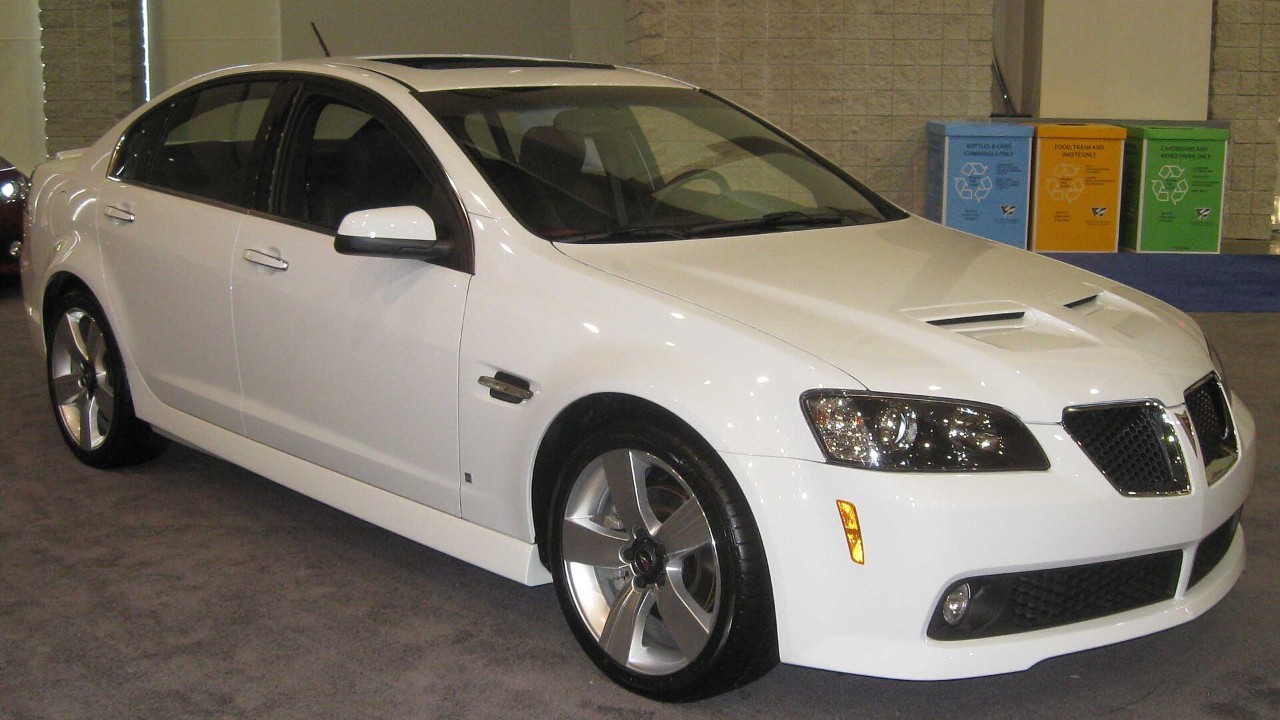
Pontiac’s last great performance car came from the other side of the world. The G8 was essentially a rebadged Holden VE Commodore, according to SlashGear’s look at the G8 GT. Holden built it at its Elizabeth plant in South Australia. The GT version used GM’s 6.0-liter L76 V8, rated at 361 hp and 385 lb-ft.
That engine was based on the LS2 from the C6 Corvette. It drove the rear wheels through a six-speed automatic, and SlashGear lists a 0-to-60 time of 5.2 seconds. Then the timing went wrong. During its financial restructuring, GM said Pontiac would stop operations in 2010. As a result, the G8 GT disappeared after the 2009 model year.
That short run is exactly why we think this rear-drive V8 sedan slipped from memory so fast. It had the shape of a family car and the badge of a brand on its way out. For anyone who wants a Corvette-derived V8 with a back seat, though, it makes a strong case. Look for a car with a clean automatic and no signs of hard track use.
6. 1988 Dodge Lancer ES Turbo
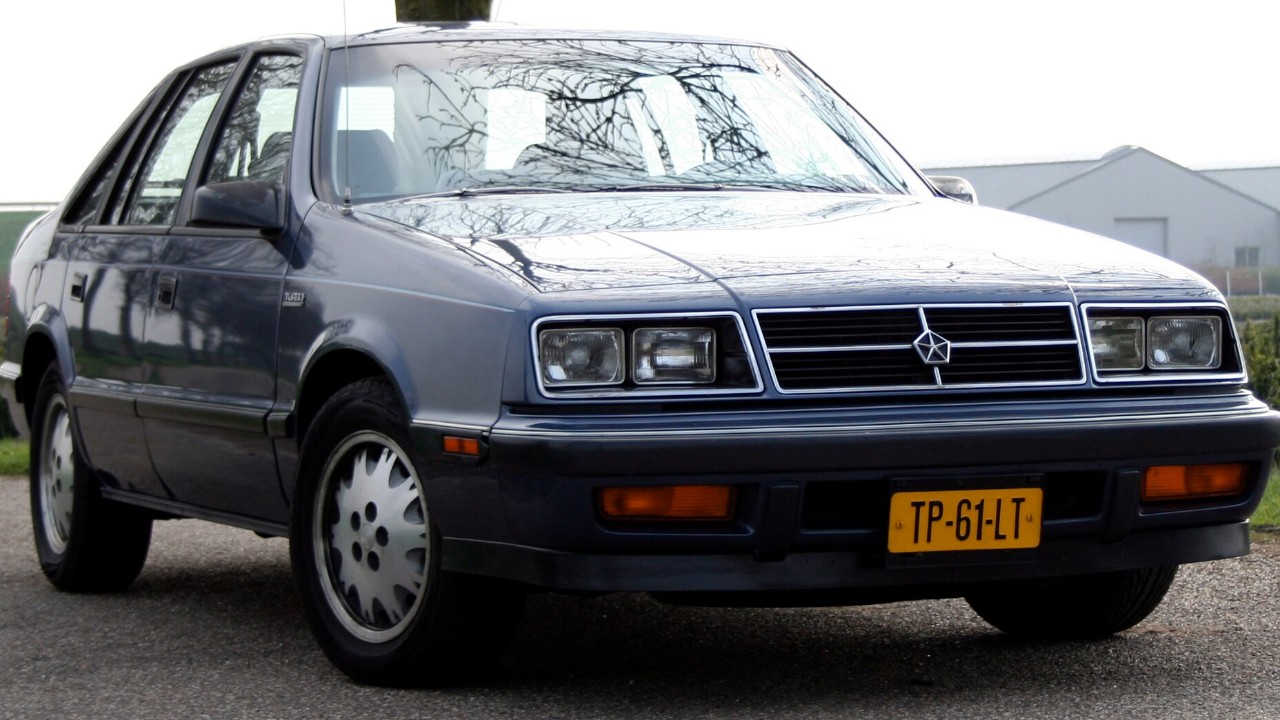
The Lancer was a five-door hatchback on Chrysler’s front-drive H platform. It was a rebadged version of the Chrysler LeBaron GTS, and it looked like a sensible sedan with a hidden tailgate. Turbo versions of the 2.2-liter four made it livelier. The Turbo I carried a 146-hp rating, while the intercooled Turbo II in the Shelby Lancer made 175 hp and 175 lb-ft.
Dodge built the car in Sterling Heights, Michigan. Production of the regular hatchbacks reached 135,968 between 1985 and 1989. The last one rolled out on April 7, 1989, and the Dodge Spirit took its place. Interestingly, Chrysler also sold the Lancer ES in Europe as the Chrysler GTS. That says something about how well the shape traveled.
We like the ES Turbo because it hides so well in plain sight, much like the smaller Shelby GLH-S. It has four doors, a big cargo opening and a turbo that wakes up the whole car. Most lived hard lives as daily transportation, so in our view the real challenge is finding a clean one. When you do, check the turbo for oil leaks and the interior plastics for sun damage. Both get expensive to sort out on a car this uncommon.
7. 1996 Buick Roadmaster Estate Wagon
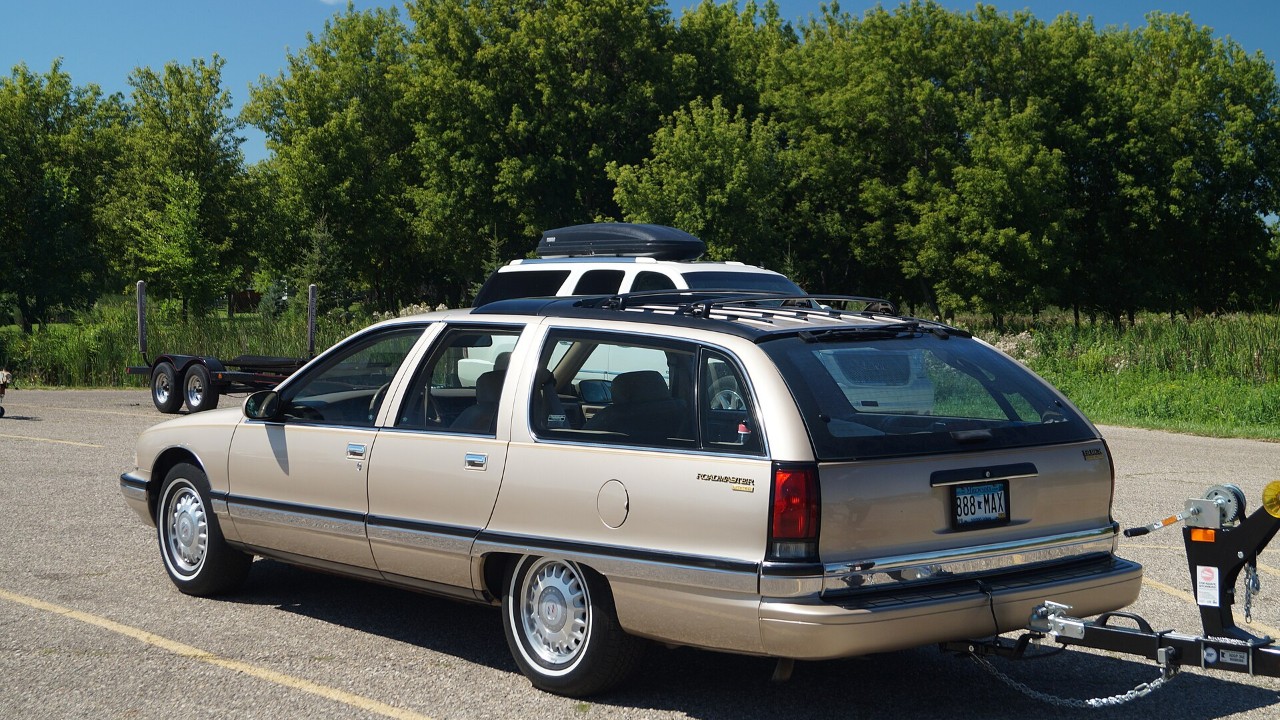
Buick’s final full-size wagon ended its run with a small trophy on the hood. Every 1996 Roadmaster Estate received a “Collector’s Edition” hood ornament. The last example left the Arlington Assembly plant on December 13, 1996. GM then converted the plant to build SUVs and pickups, which tells you where the market was heading.
The wagon went out strong. From 1994, a modified 5.7-liter LT1 V8 with standard dual exhaust raised output to 260 hp. With the factory towing package, Buick rated it to pull up to 5,000 pounds. It measured about 217.5 inches long, and Buick built 8,962 of the 1996 wagons. That was a late burst rather than a fade. Wagon output had dropped from 11,019 in 1992 to 5,522 in 1995.
Our view is that this is the sleeper for people who need cargo room and a trailer hitch. Because of its wood-look panels and soft ride, almost nobody suspects a 260-hp V8 under the hood. If you want one, pick a 1994–1996 car for the LT1. Then have the cooling system and ignition checked by someone who knows that engine.
8. 1991 Dodge Shadow ES
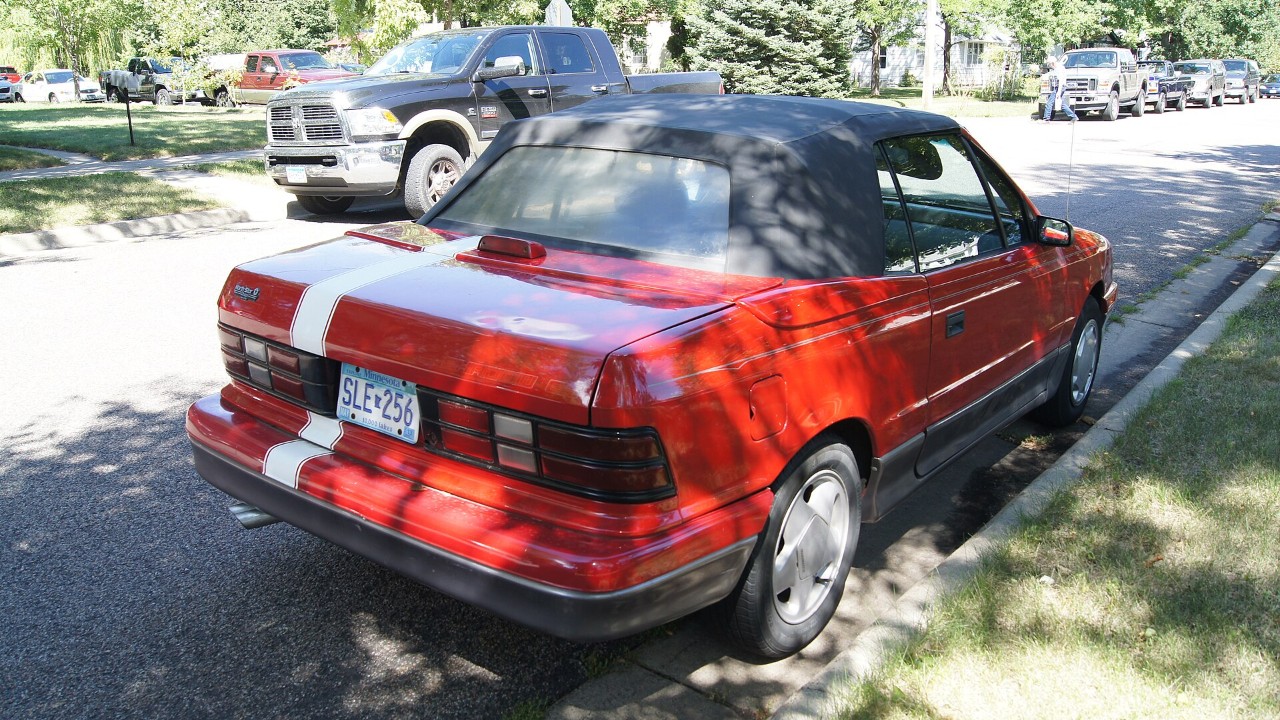
The Shadow was Dodge’s compact on the P-body, a variant of the K-car platform. Dodge built it for model years 1987 through 1994, and the ES was the sporty trim. During this period, Dodge offered the Shadow with a 2.5-liter Turbo I rated at 150 hp and 190 lb-ft. A 1990-only 2.2-liter Turbo IV made 175 hp.
That mix made the Shadow ES a strong performer for a car that looked like an economy hatchback. Also, the ES appeared as a convertible from 1991 to 1993. That gave buyers an open-air option at a compact price. By 1992, a 3.0-liter V6 joined the range and the turbo engines faded out. So the early-1990s turbo cars carry the most interest today.
In our opinion, the Shadow ES gets overlooked because Dodge built so many ordinary Shadows around it. That’s exactly what makes it a good sleeper now. Buyers should confirm which engine a car carries, since a turbo car and a V6 car feel very different. Also, check the hatch and floor for rust, because most of these cars spent their lives as daily drivers.
9. 1987 Ford Thunderbird Turbo Coupe
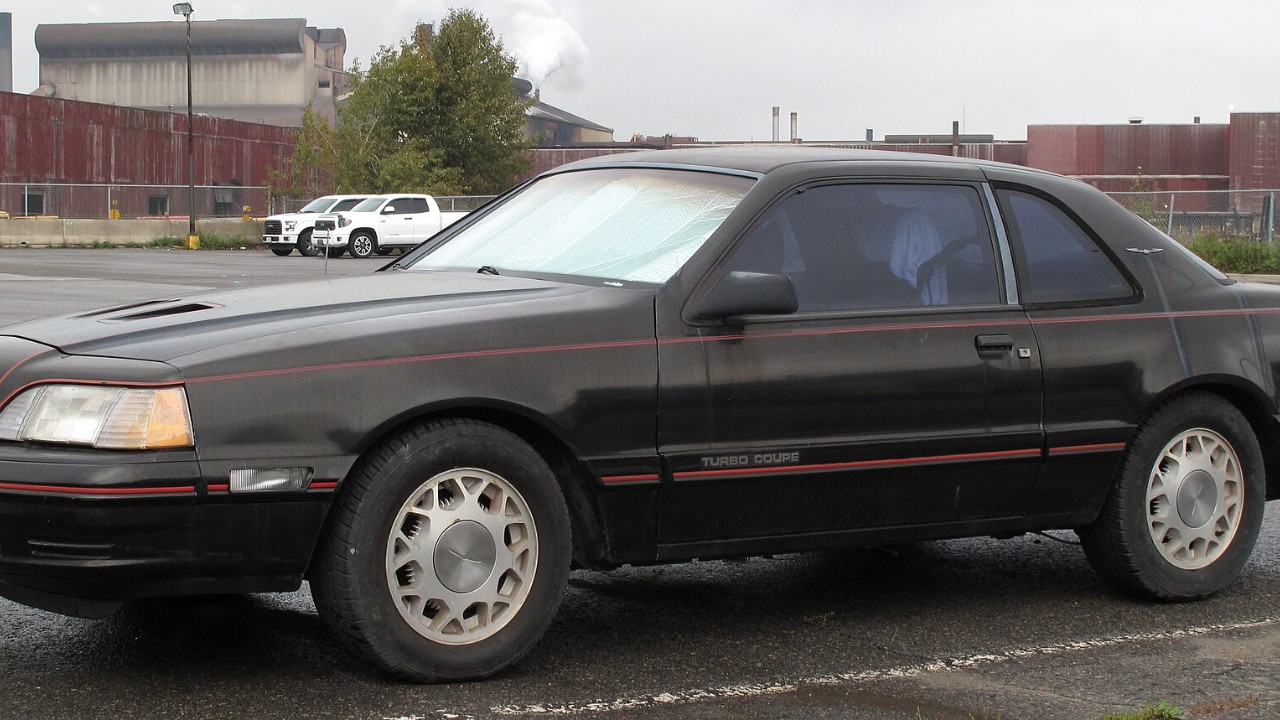
Ford’s turbocharged Thunderbird took the personal luxury coupe in a sharper direction. The Turbo Coupe ran from 1983 through 1988. It used a turbocharged 2.3-liter four managed by Ford’s EEC-IV computer. For 1987, Ford added an intercooler, and manual cars made 190 hp, while automatics settled for 150 hp.
The refinements kept coming until the end. Motor Trend named the Turbo Coupe its Car of the Year for 1987. Then, for 1988, Ford let the manual car run the full 15 psi of boost in all forward gears. After that final season, the Super Coupe took over for 1989, and the turbo four left the Thunderbird for good.
We think the Turbo Coupe works as a sleeper because of its badge. Most people hear “Thunderbird” and picture a soft cruiser, not a boosted four-cylinder with a manual gearbox. The body gave little away, with not much beyond its badges to separate it from a regular Thunderbird. For a buyer, the 1987–1988 manual cars are the ones to find. A careful check of the turbo and intercooler hoses is money well spent.
10. 1985–1989 Merkur XR4Ti

Ford tried to sell a European hatchback to American Mercury shoppers, and the result was one odd sleeper. The Merkur XR4Ti arrived for 1985, based on Ford of Europe’s Sierra. Ford dropped the Sierra’s V6 because it did not meet U.S. emissions rules, according to Grassroots Motorsports. Instead, it fitted the turbocharged 2.3-liter four from the Mustang SVO.
The car sold through Mercury dealers. But “foot traffic in Merkur dealerships never came close to expectations,” Grassroots Motorsports reports. Later fixes, such as 15-inch wheels and color-matched cladding, did not change the outcome. By 1990, the Merkur name had left the market. For more of the story, see our feature on how the 1986 Merkur XR4Ti gave Ford buyers something different.
In our view, only the unusual styling gives this car away. Underneath sits rear-wheel drive, a turbo four and a chassis tuned for European roads. When Grassroots Motorsports wrote its piece, $2,000 to $5,000 bought a decent example, based on Merkur Club of America listings. If you find one, budget for rubber bushings and turbo work. Most of these cars are now well past thirty.
More from Fast Lane Only