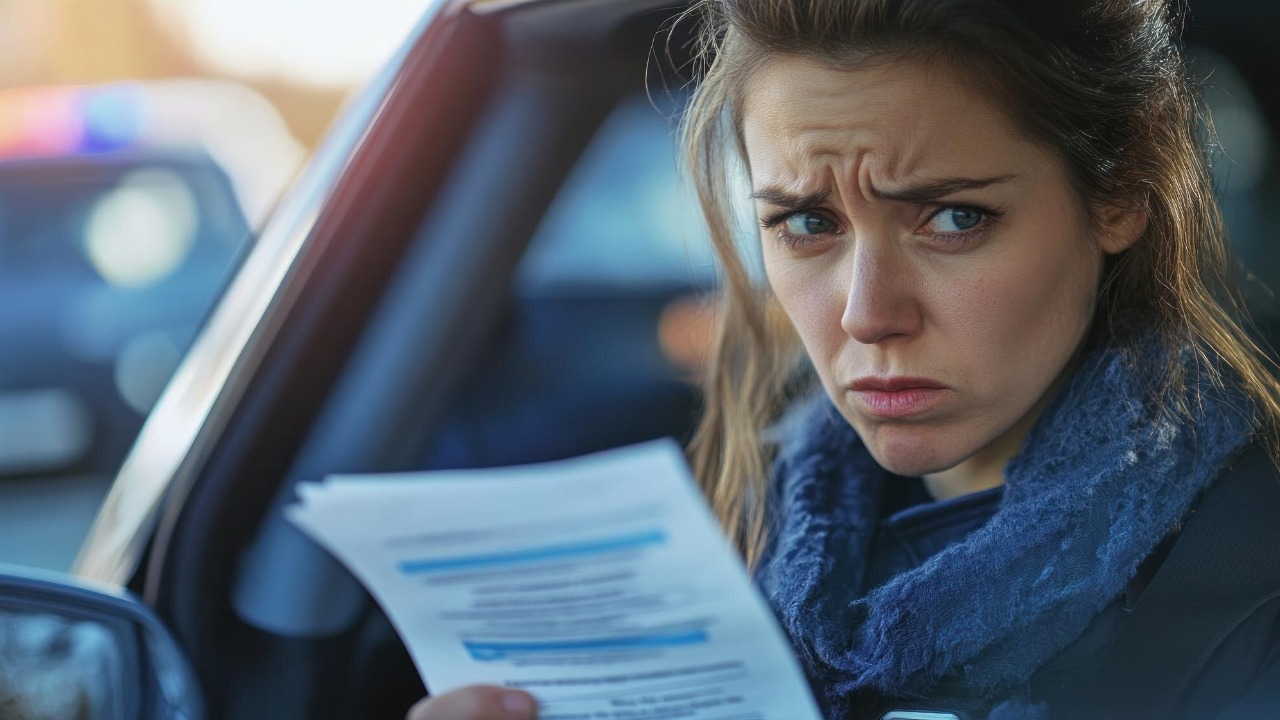
It started like a lot of modern mysteries do: not with a dramatic confession, but with a normal errand and a messy center console. While digging around for a parking receipt and a half-melted mint, she pulled out a folded envelope wedged under the manual. Inside was a vehicle registration that looked almost right—same make and model—but the name on it wasn’t hers, and it wasn’t his, either.
For a moment, it felt like the kind of oddity you’d laugh about later. Then the “later” didn’t arrive. The address on the document didn’t match their current home, the date wasn’t ancient, and the name was someone she’d never heard him mention—ever.
A Routine Search Turns Into a “Wait… What?” Moment
According to people familiar with the situation, the discovery happened in the middle of a weekday afternoon, the kind of time when nobody expects their life to suddenly resemble a true-crime cold open. She was looking for proof of insurance before heading to an appointment, because of course the glove box was empty and the console had become the family’s unofficial junk drawer. That’s when the second registration showed up, tucked low in a compartment beneath a stack of old charging cords.
At first glance, it seemed like it could be a harmless mix-up—maybe a leftover from the previous owner, maybe a dealership mistake, maybe a forgotten renewal. But it didn’t have that “clearly old paperwork” look. It looked current, crisp enough to suggest it hadn’t been living in the console for years.
What a Second Registration Could Mean (And Why It Feels So Personal)
Car paperwork is weirdly intimate. It’s not like finding a random flyer or a receipt for coffee; registration ties a person to a vehicle in a very official, “the state knows about this” kind of way. So when the name doesn’t match your household, the brain does what brains do: it starts filling in blanks with the worst possible suggestions.
Friends said her first thought wasn’t even anger—it was confusion. The second thought was the kind you don’t want to say out loud, because saying it makes it more real. Was the car used for something she didn’t know about? Was there a second address? Was there… someone else?
The Conversation That Followed Wasn’t Simple
When she brought it up, she didn’t come in swinging. She asked, casually at first, the way you ask about a mysterious charge on a bank statement: “Hey, why is there another registration in the car?” People close to them said his reaction didn’t settle the question as quickly as she’d hoped.
He reportedly said he didn’t know where it came from, then suggested it might have been in the car when they bought it. But that explanation didn’t line up with what she was holding—especially because they’d owned the vehicle long enough that most “previous owner” leftovers should’ve surfaced by now, along with the missing French fry and that one sock nobody claims.
Paperwork Errors Happen—But So Do Other Things
Experts who deal with vehicle records say mistaken documents do happen. A DMV can misprint, a dealership can mix paperwork between similar vehicles, or an insurer can generate documents tied to an old file. If the vehicle identification number doesn’t match exactly, sometimes you’re just holding someone else’s administrative headache.
But here’s the catch: a second registration that matches the vehicle’s details can signal something more complicated. In some states, duplicate registrations can be issued for co-owners, lienholders, or after a change in address. And in messier scenarios, a vehicle can be tied to older transactions, title issues, or even fraud—rare, but not impossible.
The Details She Noticed (Because She’s Not Wrong to Notice)
People who heard her describe the document said she immediately checked the obvious stuff: the vehicle year, the plate, and the VIN. She also noticed the issue date, which didn’t feel like a “this has been here forever” timeline. The address listed wasn’t their current one, and the name didn’t ring any bell—no friend, no relative, no coworker she’d heard about in passing.
That’s the part that makes these situations so unsettling. A single inconsistency can be explained away. A handful of specifics lined up in a way that didn’t make sense, and it left her feeling like she’d stumbled into a story she didn’t ask for.
What People Usually Do Next in Situations Like This
When something like this surfaces, consumer advocates say the first practical step is to confirm whether the paperwork matches the car. That means comparing the VIN on the registration to the VIN visible on the dashboard near the windshield and inside the driver-side door jamb. If the numbers don’t match, the document likely belongs to someone else, and the “mystery” becomes a bureaucratic mix-up instead of a personal betrayal.
If the VIN does match, the next step is contacting the local DMV (or equivalent agency) to ask how many active registrations are associated with that vehicle and what names are on file. They can’t always disclose everything due to privacy rules, but they can usually confirm whether the registration is valid, whether it’s expired, and whether there’s been a recent change in ownership or address tied to the record.
Why Trust Feels Like the Real Issue, Even If the DMV Explains It
Even if the second registration turns out to be mundane, the emotional math doesn’t immediately reset to zero. Finding official paperwork with an unfamiliar name can rattle anyone, because it suggests a parallel version of your life where details are being managed without you. And if the initial response you get is vague or defensive, that doesn’t help.
Friends said she wasn’t trying to play detective so much as trying to feel grounded again. She wanted a clear explanation, not a debate. And like a lot of couples, they were suddenly in that uncomfortable space where the facts and the feelings were both demanding attention.
A Small Document That Opens Bigger Questions
As of the latest updates, those close to them said she planned to verify the document’s details and check directly with the appropriate agency. She also saved photos of the registration, not because she wanted drama, but because that’s what you do when something doesn’t add up—you document it, just in case. It’s the same instinct that makes you screenshot an odd email before it “mysteriously disappears.”
The bigger question—what the second registration says about their relationship—was still unfolding. Sometimes these stories end with an apologetic clerk and a simple correction. Other times, they end with a very different kind of paperwork entirely.
What This Story Taps Into for a Lot of People
This isn’t just about a piece of paper in a console. It’s about how easily ordinary life can tilt into uncertainty, and how quickly our minds start connecting dots we didn’t even know were on the page. A car is supposed to get you from place to place, not drop you into a spiral while you’re looking for an insurance card.
For now, the second registration remains what it is: a document with an unfamiliar name and a whole lot of unanswered questions. And whether it turns out to be a clerical ghost or a real secret, it’s a reminder that the smallest discoveries can carry the loudest echoes.
More from Fast Lane Only
- Unboxing the WWII Jeep in a Crate
- 15 rare Chevys collectors are quietly buying
- 10 underrated V8s still worth hunting down
- Police notice this before you even roll window down
*Research for this article included AI assistance, with all final content reviewed by human editors.