A routine car appointment turned into a small mystery for a local driver after one mechanic told her her brakes were “unsafe” and needed immediate work, only for a second shop to say everything looked fine. The woman, who asked to be identified only as “Maya” for privacy, said the whiplash of opinions left her wondering whether she’d narrowly avoided danger or narrowly avoided an expensive repair bill.
“I went in thinking it was just an oil change,” she said. “Then suddenly it was, ‘You shouldn’t be driving this car home.’ That’s a scary sentence to hear when you’ve got a commute and groceries in the trunk.”
A warning that didn’t match how the car felt
Maya said she hadn’t noticed obvious brake trouble before the appointment. No grinding, no squealing, no vibrating pedal, and no warning lights on the dashboard. Like most people, she figured that meant she was in the clear, or at least not in “stop driving now” territory.
At the first shop, she said a technician told her the brake pads were worn down and the rotors looked “bad,” recommending replacement right away. The estimate, she recalled, was “hundreds more than I expected,” especially compared with the simple service she’d come in for. “It wasn’t just, ‘Keep an eye on it,’” she said. “It was urgent.”
Getting a second opinion — and a different story
Instead of authorizing the repair immediately, Maya said she paid for the original service, asked for the inspection notes, and drove to a second shop the next day. She admits she drove there like a nervous new driver, leaving extra space and listening closely for any suspicious sounds. “I was convinced I’d hear a screech at every stop sign,” she said.
The second shop inspected the brakes and told her the pads had life left and the rotors didn’t need replacement. Their advice was more along the lines of “check again soon” rather than “do it today.” Maya said she left relieved, but also baffled. “How can it be ‘unsafe’ on Tuesday and ‘fine’ on Wednesday?” she asked.
How two shops can look at the same brakes and disagree
Auto experts say brake inspections can involve judgment calls, and different shops may use different thresholds for what they consider “needs attention.” Brake pads wear gradually, and there’s a big difference between “worn, but serviceable” and “worn to the point of metal-on-metal.” If you’re right in the middle, one technician might recommend replacing early for safety and performance, while another may say you’ve still got time.
There’s also the matter of measurement and communication. Some shops measure pad thickness in millimeters and explain the numbers; others may speak in general terms like “low” or “borderline.” And of course, the words “unsafe” can mean different things: unsafe right now, unsafe soon, or unsafe if you’re planning a road trip through mountains in the rain.
The parts that often get people: pads, rotors, and the “bundle” quote
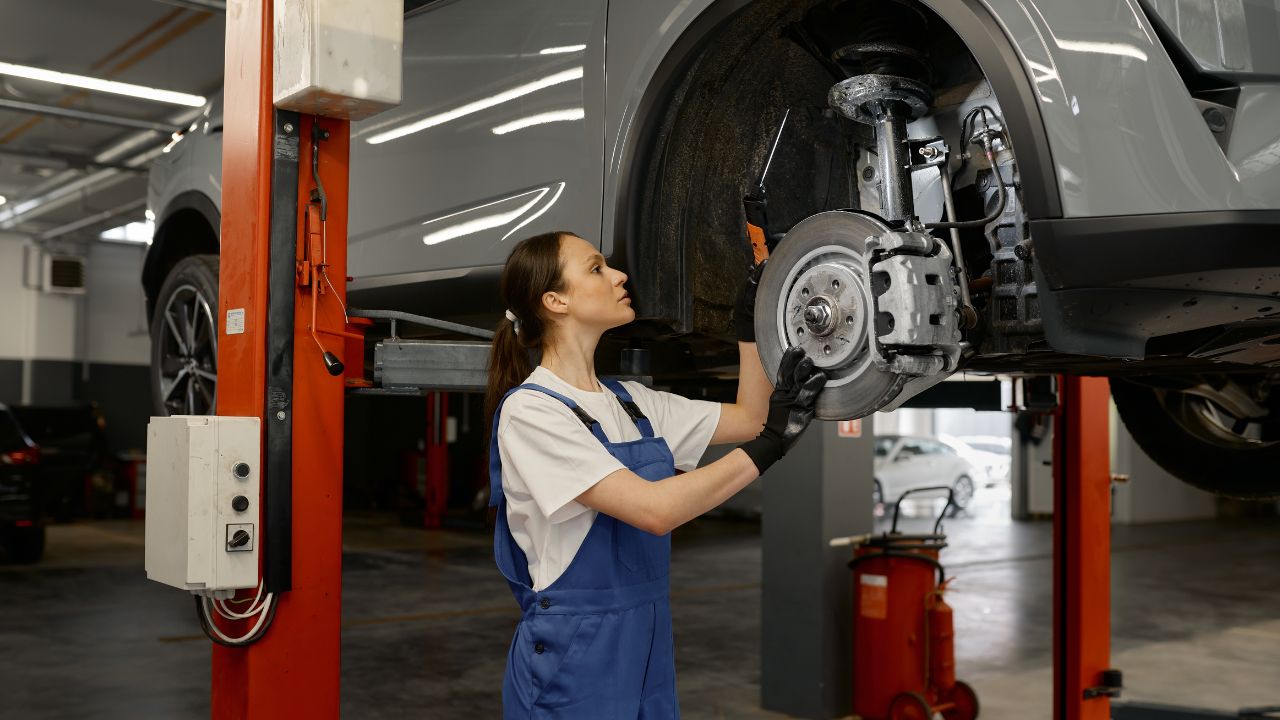
When customers get a surprise brake quote, the big cost drivers are usually pads and rotors, plus labor. Pads are the friction material that wears down; rotors are the metal discs the pads clamp onto. Rotors can last a long time, but they can also develop grooves, rust, or heat spots that lead a shop to recommend replacement sooner.
Maya said the first shop’s estimate included rotors, which is common because many shops prefer replacing rotors rather than resurfacing them, depending on equipment and manufacturer specs. Some places also quote brakes as an axle set (both front or both rear), which is standard, but it can make the number look extra dramatic when you’re expecting a $70 oil change. “It felt like ordering a salad and being told the kitchen also recommends a new refrigerator,” Maya joked.
What Maya did next: asking for numbers, not vibes
After hearing the second shop’s assessment, Maya went back to her paperwork and noticed something: the first shop didn’t list pad measurements, just a general warning. That detail mattered, she said, because it made it hard to compare one opinion with the other. “If you tell me it’s 2 millimeters, I can understand why that’s urgent,” she said. “If it’s ‘low,’ I don’t know what that means.”
She also said she learned to ask a few specific questions that changed the tone of the conversation. What’s the pad thickness now, and what’s the recommended replacement threshold? Are the rotors below minimum thickness, or is replacement just suggested based on wear? And can the shop show the parts or photos while the car is on the lift?
Signs your brakes really do need attention
Even with differing shop opinions, there are a few symptoms that tend to be less ambiguous. If you hear grinding (not just occasional squeaks), feel pulsation or vibration when braking, notice the car pulling to one side, or see a brake warning light, those are strong signals to take seriously. A soft or sinking brake pedal can also indicate a hydraulic issue that deserves prompt attention.
That said, not every noise is a crisis. Some pads squeal because of dust, moisture, or worn indicator tabs that are designed to make noise before things get dangerous. The tricky part is you usually can’t diagnose it from the driver’s seat with certainty, which is exactly why these disagreements make people feel stuck.
Consumer advocates: second opinions aren’t “being difficult,” they’re smart
Consumer advocates say Maya’s approach—asking questions and getting another inspection—is a reasonable response to any high-pressure repair recommendation. Reputable shops typically won’t mind explaining how they reached a conclusion, and many will gladly show measurements or visual evidence. If a shop gets annoyed by polite questions, that’s useful information all by itself.
They also recommend keeping a simple maintenance log. If you know when pads were last replaced, roughly how many miles you’ve driven since, and whether you do mostly highway or stop-and-go driving, you’ll have a better sense of what “normal wear” looks like. It won’t turn you into a mechanic, but it does make it harder for anyone to talk you into mystery repairs.
What to do if you get conflicting brake advice
If two shops disagree, experts suggest starting with the measurable basics: pad thickness, rotor thickness, and any visible damage like cracking or deep grooves. Ask both shops to write down the numbers and note whether they’re referencing manufacturer minimums or shop policy. That way you’re comparing apples to apples, not “urgent” to “probably fine.”
If you’re still unsure, a third opinion from a brake-focused shop can help, especially if they’ll show you the components while the wheels are off. It’s also reasonable to ask whether the recommendation is “replace now” versus “plan for replacement within X miles.” For many drivers, that timeline is the difference between panic and a calm plan.
For Maya, relief mixed with a lingering question
Maya said she’s grateful she didn’t ignore the warning entirely, but also glad she didn’t approve a big repair on the spot. For now, she plans to recheck her brakes in a few months and keep copies of both inspection reports. “I’m not trying to catch anyone doing something shady,” she said. “I just want to know my car’s safe and my money’s not disappearing into the void.”
Her experience is a familiar one for many drivers: cars are complicated, time is short, and the line between “preventive” and “premature” can be fuzzy. But as Maya put it, “Apparently the most powerful tool in car ownership is the sentence, ‘Can you show me?’”
More from Fast Lane Only