The Glas V8 arrived in the mid-1960s as a glamorous German coupe with an Italian suit and a brand-new V8 motor, yet it slipped out of production so quickly that even many enthusiasts have never heard of it. Built in tiny numbers and swallowed by BMW almost as soon as it appeared, the car became a case study in how bold engineering, fragile finances and bad timing can doom an ambitious project.
Today the Glas 2600 and 3000 V8 survive as rare curiosities, remembered by specialists and club members but largely absent from mainstream classic conversations. Their story helps explain why a car with Maserati style, a De Dion rear axle and serious performance could not secure a future, even once it carried a BMW badge.
The Bavarian scooter maker that aimed at Ferrari
To understand why the Glas V8 struggled, it helps to look at the company that created it. Hans Glas GmbH grew out of an agricultural machinery business in Dingolfing and only moved into vehicles with motor scooters and microcars in the 1950s. Those modest products gave Glas a foothold in Europe, but they also defined it as a budget manufacturer just as the firm decided to chase prestige.
By the early 1960s, the German Bundesrepublik was cooling after the postwar Wirtschaftswunder, and the first recession put pressure on smaller carmakers that had expanded quickly on the back of rising demand. A detailed history of Glas describes how the firm poured money into new model lines, engines and production facilities just as the market became more cautious. The company did not have the reserves of the big German players, so every new program carried existential risk.
Despite that, Glas wanted to move upmarket. The Glas GT sports coupe, styled by Pietro Frua, already showed that ambition. Contemporary coverage of the GT compared its silhouette to a Ferrari and stressed the contrast between its exotic looks and its roots in rural Bavaria the Glass GT. Owners such as the enthusiast Uvaen, who keeps multiple GTs, treat the car as proof that a small Bavarian company could build something with genuine Italian flair.
The V8 project was the logical next step. Rather than another compact sports car, Glas planned a larger four-seat coupe with a powerful motor and comfort to rival established grand tourers. The company was small, but its ambitions were not.
Italian style, German engineering and the “Glaserati” nickname
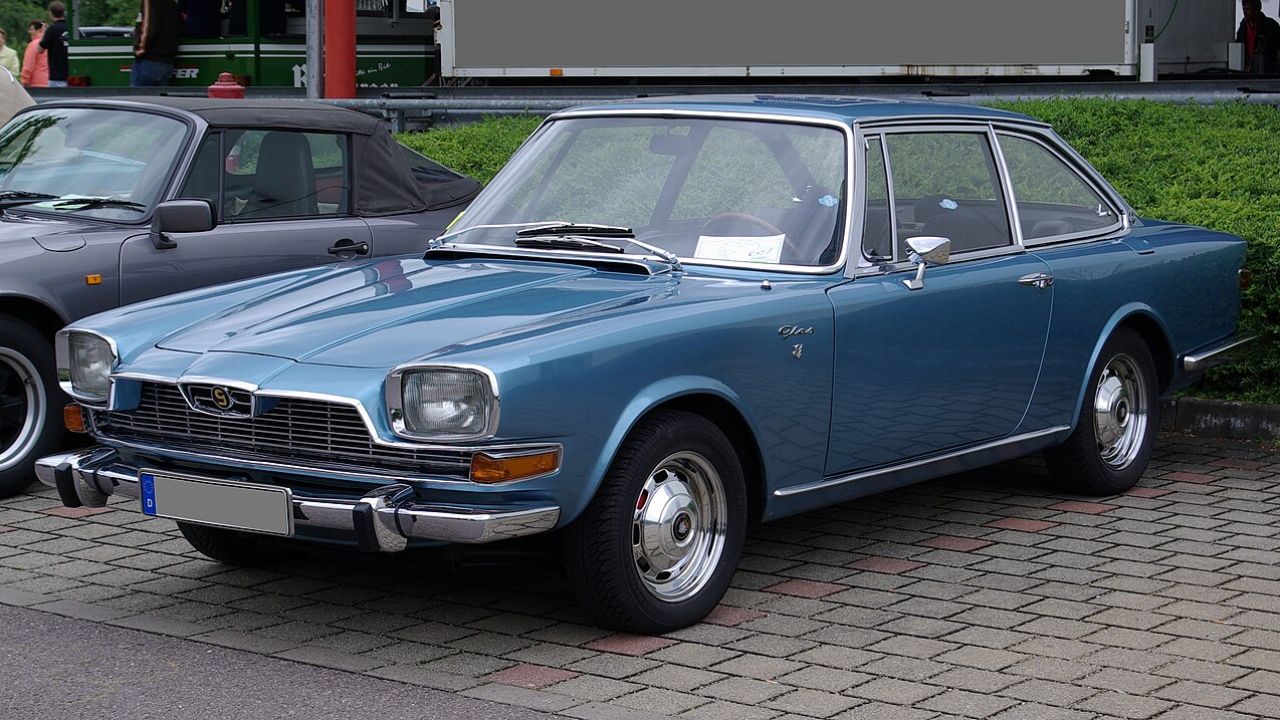
The Glas V8, also known as the Glas 2600 V8 and later as the BMW Glas 3000 V8, brought that plan to life. According to the detailed model overview on Glas V8, the car used a newly developed V8 engine mounted in a front-engine, rear-drive layout and sat on a chassis with a sophisticated De Dion rear axle. The body was designed by Pietro Frua, the same stylist behind the GT, and its proportions and detailing were clearly inspired by contemporary Maserati coupes.
The official description from the Glas club calls it a sporty four-seat coupe with V8 motor, De Dion rear axle and a Frua body kept in Maserati style, which explains why German enthusiasts later nicknamed it the “Glaserati.” The car combined a long hood, a low roofline and crisp side surfacing with subtle chrome and a restrained grille, giving it a clean, expensive look that stood apart from more conservative German saloons.
Under the hood, the initial 2.6 liter V8 produced strong power for the period and gave the car performance that matched its appearance. A period review cited in an enthusiast history describes brisk acceleration and relaxed high-speed cruising, with the De Dion layout offering better composure than a simple live axle. The interior followed through with a driver-focused cockpit, multiple round instruments and generous front seating, a layout later praised in a detailed feature on the Glas 2600 V8.
From the outside, the V8 looked like the product of a seasoned luxury manufacturer. In reality it was stretching a small company to the limit. Every major component, from the V8 engine to the rear suspension and the Frua body tooling, required fresh investment. That decision would shape the car’s fate more than its styling or performance ever could.
A costly halo car in the wrong economy
Glas did not simply adapt an existing platform. The V8 demanded new engineering, new production processes and complex bodywork. A detailed analysis on Glas V8 costs notes that the unusually designed cars led to very high production costs, which came on top of the fees for the many new developments within a relatively small company. In other words, Glas tried to fund a flagship program at the same time it was still paying for its other recent models.
The timing was unforgiving. As the Book of the Dead profile of Glas explains, by the time the V8 appeared the young Bundesrepublik had already moved past the easy growth of the Wirtschaftswunder years. The first recession reduced demand for expensive, low-volume cars, and buyers with money tended to trust established brands with larger dealer networks and stronger reputations for service.
The V8’s pricing reflected its cost base. Contemporary accounts point out that the car was expensive compared with six-cylinder models from better-known German manufacturers, while its badge did not carry the same weight. Even with the glamorous Frua body and the Maserati-inspired nickname, Glas struggled to persuade buyers to pay a premium for a name they associated with scooters and small cars.
Production numbers stayed tiny. A detailed register compiled by the Glas club and echoed in the English-language model history lists only a few hundred Glas 2600 V8s built before the company’s independence ended. That low volume made each car more expensive to produce, creating a feedback loop that Glas could not break.
BMW steps in and the birth of the BMW Glas 3000 V8
As financial pressure mounted, Glas became a takeover target. BMW eventually acquired the company and its Dingolfing plant, seeing value in both the factory and the engineering talent. After the acquisition, BMW decided to keep the V8 coupe in production for a short period, updating it with a larger engine and its own branding.
A detailed Facebook feature from BMW Welt describes the 1966 and 1968 Glas 3000 V8, also known as the BMW Glas 3000 V8 after BMW took over Glas. It notes that the car was produced by Hans Glas GmbH from 1966 to 1968 and highlights how the BMW badge sat on a body and chassis that still owed much to the original Glas design. The same post mentions that only 68 G examples of a particular specification were built, underlining how rare the car remained even after the takeover.
BMW increased displacement to around 3.0 liters and refined the car’s detailing, but it did not attempt a full redesign. A later sales video of a BMW Glas 3000 V8 LHD car notes that this rare 3.0 version used a 160 BHP engine and that only 418 were produced, figures that show how limited the run was even with BMW’s backing. In total, production of both the original Glas 2600 V8 and the BMW Glas 3000 V8 barely cleared a few hundred units.
BMW’s decision to keep the model alive briefly was strategic rather than sentimental. The company was in the process of building out its own range of six-cylinder coupes and saloons, including cars that would lead to the later 2800 CS and 3.0 CS luxury sports coupe. The Glas-based V8 filled a short-term gap while BMW integrated the Dingolfing facility and absorbed Glas staff, but it never sat at the heart of BMW’s long-term product plan.
Enthusiast commentary, including a detailed video review that jokingly calls the car a “Glaserati,” argues that BMW saw the V8 as a useful stepping stone. It allowed the company to offer a stylish V8-powered coupe while it refined its own models, but once those new cars arrived the Glas-based design no longer made sense to keep in production.
Why the Glas V8 disappeared from memory
Given its looks and rarity, the Glas V8 might seem like an obvious candidate for cult status. Yet outside specialist circles it remains obscure. Several factors explain why.
First, the car’s production run was extremely short. The English-language review on Glas 2600 V8 notes that the model was only built for a brief period in the mid-1960s, then replaced in BMW’s lineup by more modern designs. With only a few hundred examples ever made, there were never enough cars on the road to build broad recognition.
Second, the takeover blurred its identity. Some surviving cars carry Glas badging, others wear BMW roundels, and later histories often refer to them as BMW Glas hybrids. A classic vehicle spotlight on the related 2600 and 3000 GT models points out that the 3000 GT with BMW roundel logo produced between September 1967 and May 1968 sold 389 m units, resulting in only 706 cumulative cars for that model line. While those figures apply to the GT rather than the V8 coupe, they illustrate how BMW treated Glas-based products as niche side projects rather than core offerings.
Third, the car arrived at a time when the market was already crowded with glamorous coupes. Italian brands offered V8 and six-cylinder GTs with strong motorsport reputations, while German buyers could choose from established luxury models with better dealer support. A detailed feature on the 1960s German coupe that combined a V8 heart and Italian soul argues that the Glas V8 had the style to compete but not the brand power.
Finally, the company that created it disappeared. Once BMW absorbed Hans Glas GmbH and fully integrated Dingolfing, there was no independent manufacturer to celebrate the car’s legacy or push its story. BMW understandably focused its heritage efforts on models that carried its own engineering DNA, leaving the Glas V8 in a grey area.
As a result, the car slipped into what one writer on Book of the Dead – Glas calls the automotive afterlife, remembered mainly by club members and historians. Occasional appearances at shows or in specialist magazines remind enthusiasts that it existed, but it never joined the mainstream pantheon of 1960s grand tourers.
What the Glas V8 reveals about ambition and survival
Even if it never became famous, the Glas V8 tells a larger story about how car companies rise and fall. It shows what happens when a small manufacturer tries to leap from scooters and microcars to high-end coupes in one jump, without the financial cushion to absorb setbacks.
The detailed history on Glas club archives makes clear that the V8 was both a technical achievement and a financial burden. The De Dion rear axle, the new V8 motor and the Frua body gave the car real substance, but they also required investment on a scale that a modest Bavarian firm could barely afford. When the wider economy cooled, there was no margin for error.
More from Fast Lane Only