Between the early 1950s and the late 1960s, the two-seat roadster was the sports car most people could actually buy. Britain, Italy, Germany and Japan all built them, and a great many of them crossed the Atlantic to American buyers. A roadster from that window has a certain look: a long hood, a short tail, a fold-down top and very little between you and the road.
Plenty of those cars moved on with the times. However, some feel as if their designers locked the doors in a given year and threw away the key. Sit in one today and the gauges, the steering wheel and the noise all point back to one moment.
These are our picks, the 10 roadsters that feel most completely frozen in their era. Each one earns a spot with a detail from its own history, followed by our take on why it belongs here.
1. 1958 MGA Twin Cam
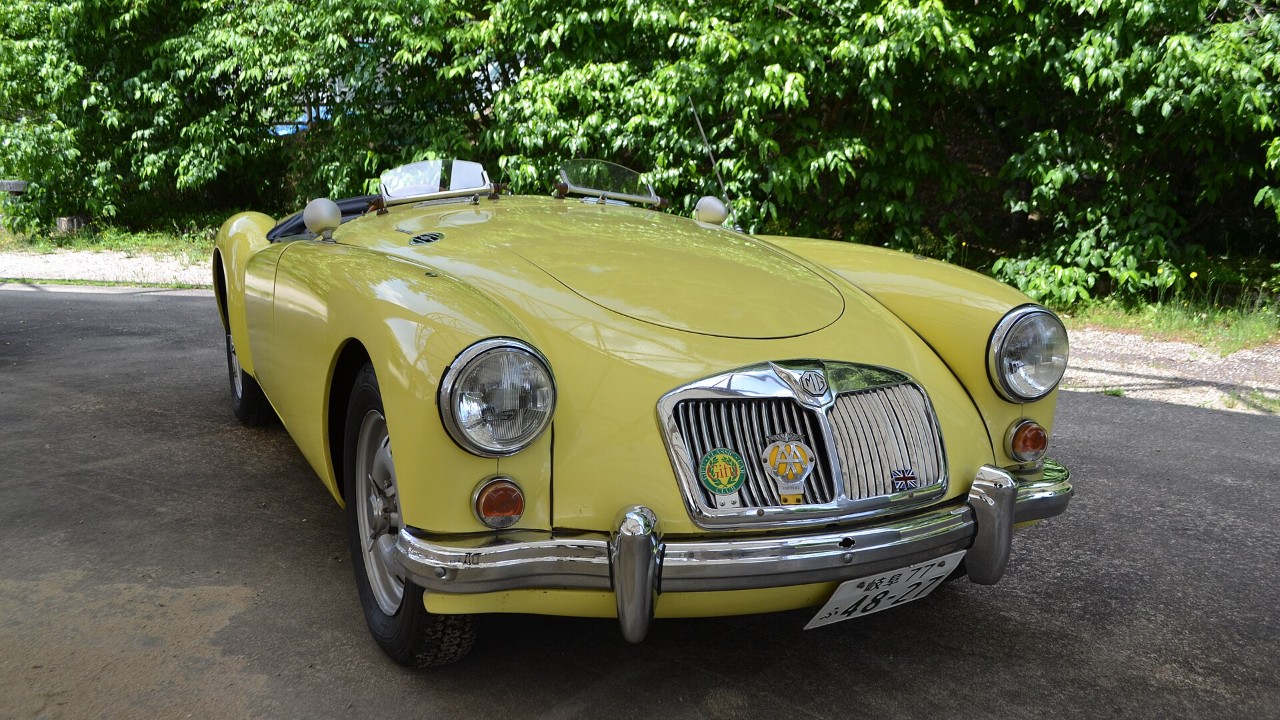
The Twin Cam was MG’s attempt to give the curvy MGA real racing hardware. According to the MG Car Club’s Twin Cam Group, the company announced it in 1958. Its 1588cc engine made 108 bhp at 6,700 rpm, a big jump for a small British four of the period.
The rest of the hardware was just as serious. The club lists Dunlop disc brakes at all four corners, with 10.75-inch discs. It also notes that the car rode on Dunlop pressed-steel centre-lock wheels, because wire wheels were not on the option list. Compression started at 9.9:1 and later dropped to 8.3:1. Production lasted only about two years, and MG built 2,111 examples between 1958 and 1960, 1,801 of them roadsters.
Our take: this is the purest time capsule on the list. Its twin-cam engine lasted just two model years in the MGA, so the car sits alone, a late-1950s experiment that ended almost as soon as it started. In our view, its short life is exactly why it feels so fixed in one year. Even the club’s one gripe, a separate handbrake caliper that “readily seized up without regular maintenance,” sounds like a note from another age.
2. 1955 MG TF 1500
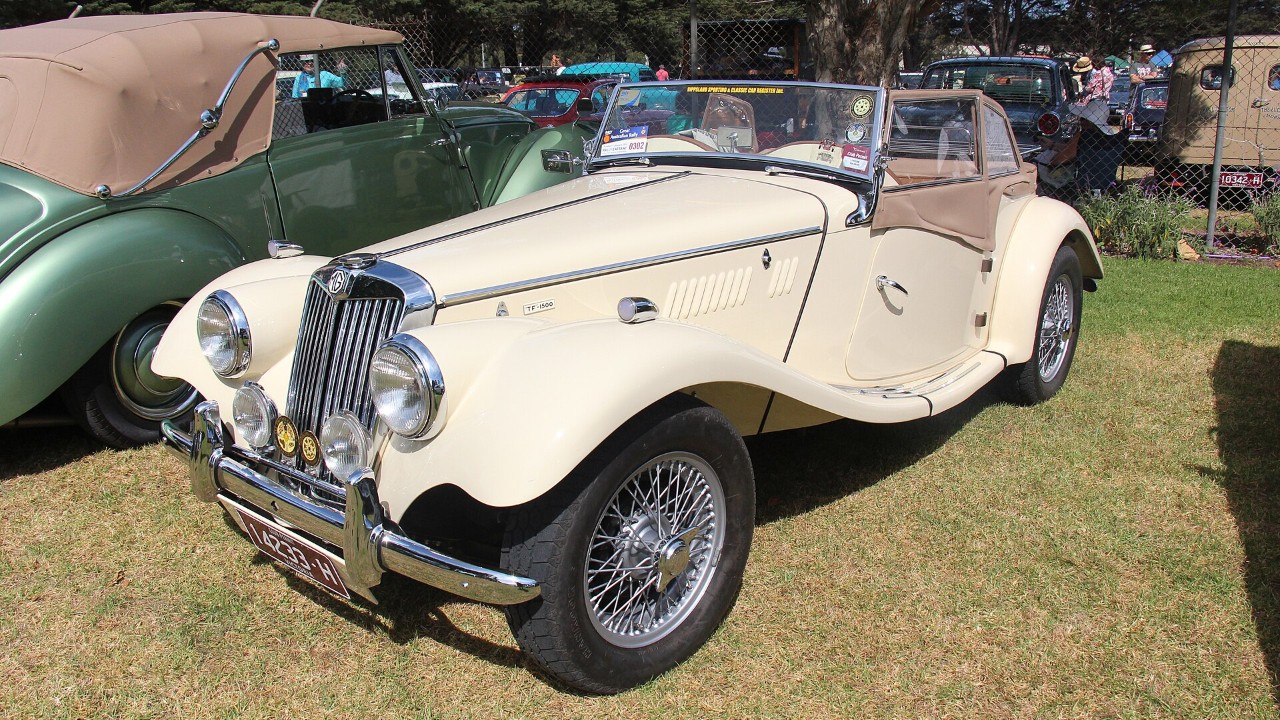
The TF looked older than its calendar year even when it was new. MG launched the TF Midget on 15 October 1953 as a facelifted TD. Its headlamps were faired into the wings, and a sloping grille hid a separate radiator behind a simulated external cap.
Then, in mid-1954, MG enlarged the engine by 17% to 1,466cc. That XPEG four made 63 bhp at 5,000 rpm, and the cars wore a TF1500 badge. Owners can spot one by a cream enamel nameplate on each side of the bonnet. Out of 9,602 TFs in total, about 3,400 were TF1500s. Production ended on 4 April 1955, and the all-new MGA replaced it that same year.
Our take: few cars capture the end of an era better. The TF 1500 has upright prewar proportions, flowing fenders and a tall grille, yet MG kept selling it until the MGA took over in 1955. In our view, that makes it the most honest snapshot of British sports cars just before the modern shape arrived. If you want a roadster with 1930s looks and a mid-1950s build date, this is the one.
3. 1956 Austin-Healey 100M
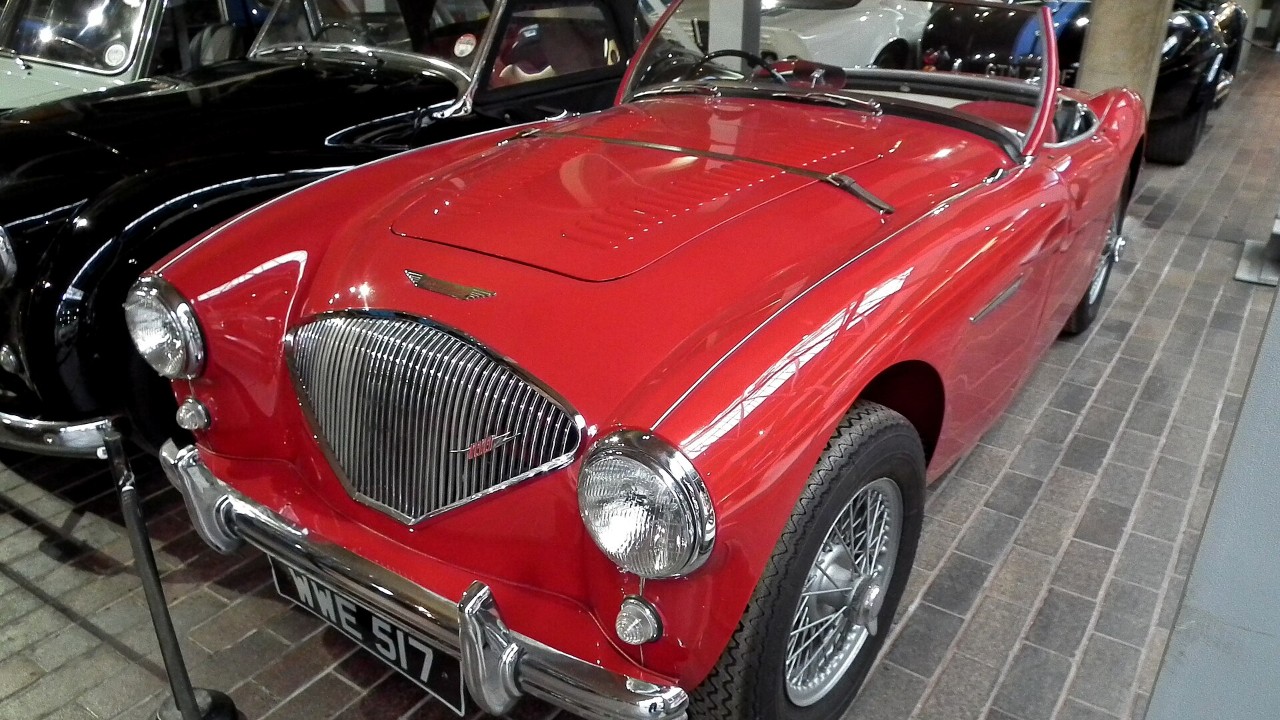
The 100M was the hot version of the BN2, the second Austin-Healey 100. The BN2 replaced the BN1 in August 1955 and gained a true four-speed gearbox with overdrive on the top two gears. It ran only until July 1956, and Austin-Healey built 4,604 BN2s, the 100M included.
The M package was the reason collectors care. Larger carburettors, a cold air box, a high-lift camshaft and 8.1:1 pistons lifted output to about 110 bhp at 4,500 rpm. The cars also got stiffened front suspension and a louvred bonnet held down by a bonnet belt. About 70% wore two-tone paint, and the factory built 640 of them. BMC also sold a Le Mans Engine Modification Kit, so owners could add much of the hardware to an existing car.
Our take: a bonnet strap and two-tone paint pin this car to the mid-1950s more firmly than any date code. We covered the model’s arrival earlier in our look at how the 1956 Austin-Healey 100M raised expectations. Here, we would add that originality matters. Because the kit existed, only factory-registered chassis numbers separate a true 100M from a converted car, so check before you pay the premium.
4. 1957 Porsche 356A Speedster
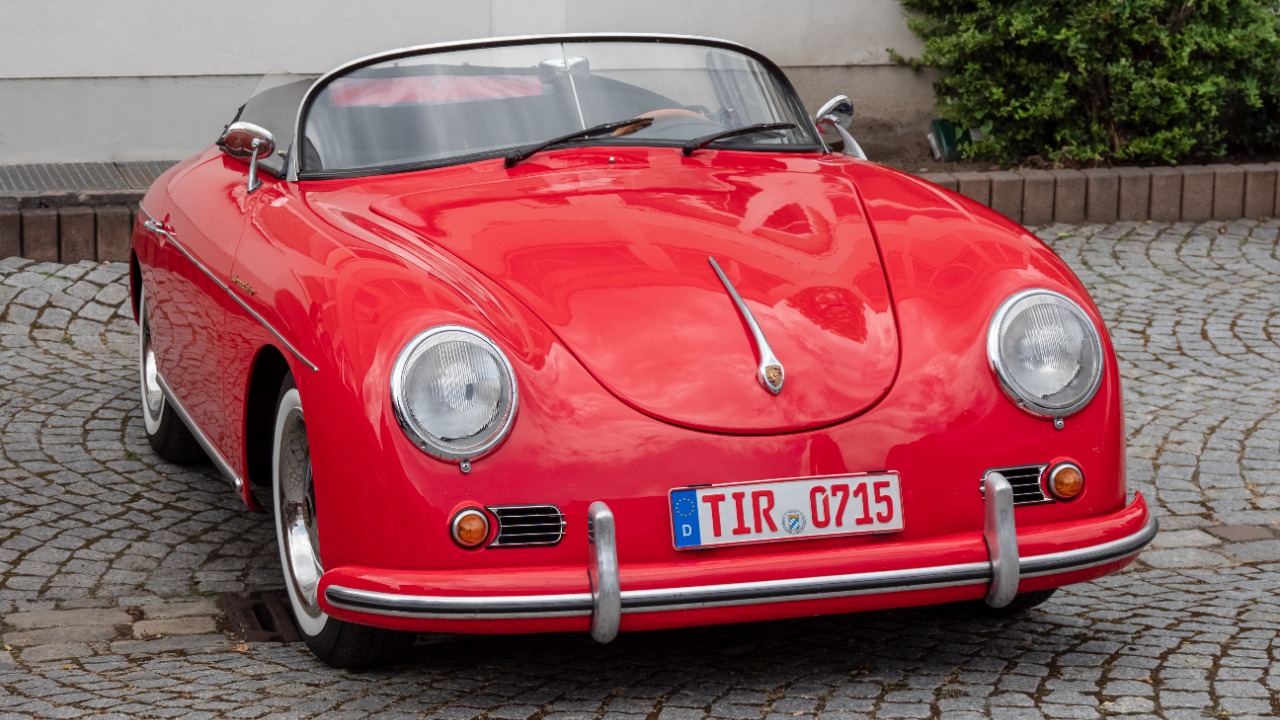
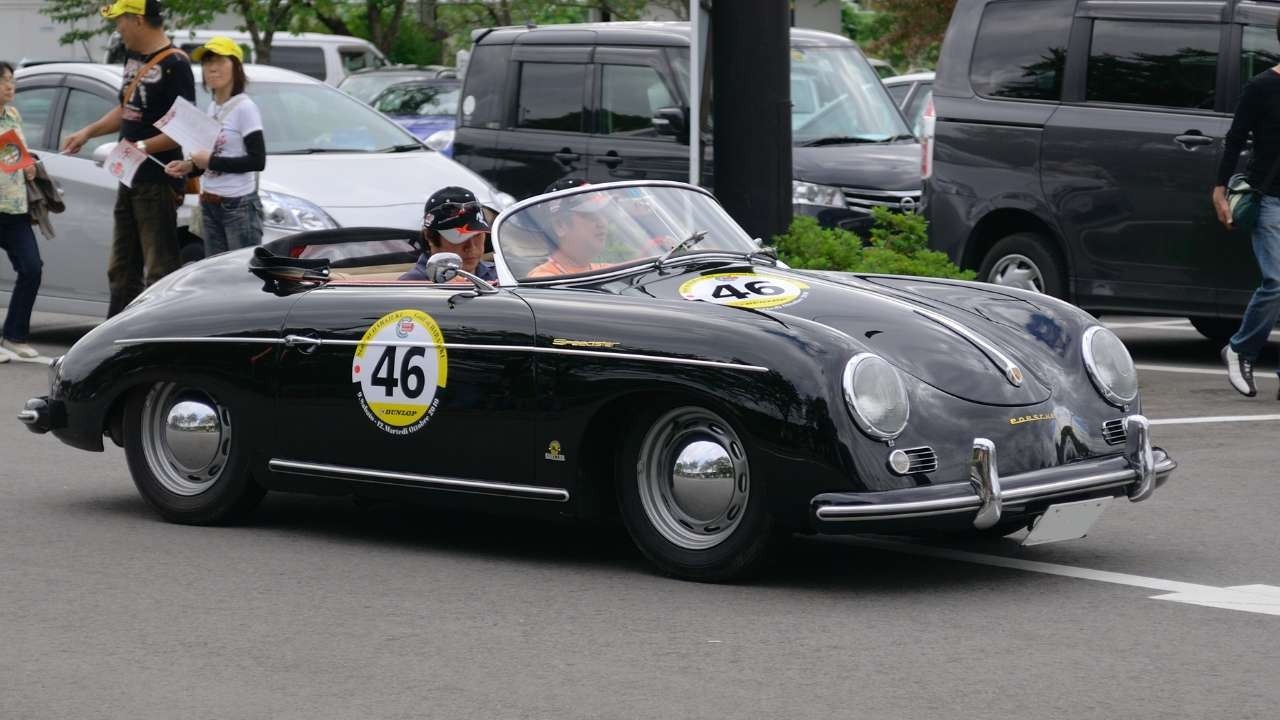
The Speedster exists because an importer asked for it. Max Hoffman, Porsche’s New York-based importer, wanted an inexpensive, stripped-back Porsche for under $3,000. As Motoring Research tells the story, the result sold for just $2,995 and was especially popular in Southern California.
The recipe was simple. Porsche combined the cabriolet’s steel body with a low, raked windscreen, a minimal rain top and fewer comforts. The screen could even come off for weekend racing. By 1957, the car rode on the 356A platform, whose most common engine was a 1,582cc air-cooled flat-four rated at 60 PS. That year was also the Speedster’s best, with 1,171 built. In late 1958, Porsche replaced it with the Convertible D, which brought a taller windshield and roll-up windows.
Our take: the Speedster’s whole personality comes from what it leaves out. That low screen and thin top tie it to a few short years in California sports-car culture. In our view, no later Porsche has recreated that exact feeling, even the modern cars that borrowed the name. It is a 1950s idea that never had to grow up.
5. 1966 Alfa Romeo Spider Duetto
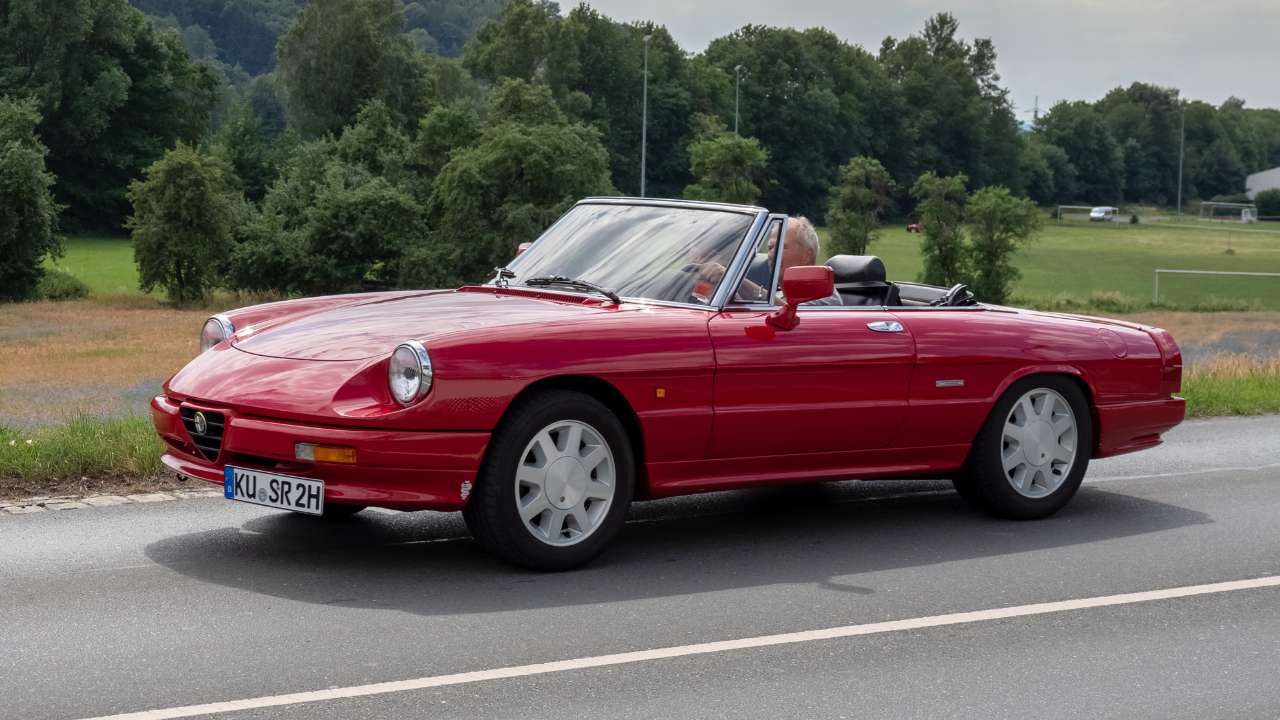
The Duetto came with a name fight attached. Alfa Romeo unveiled the Spider at the Geneva Motor Show in March 1966 and ran a write-in contest that drew more than 100,000 entries. A Brescia entrant suggested “Duetto,” but a court ruled that confectioner Pavesi held the rights, so Alfa sold the car as the Spider 1600.
Under the long, round tail sat a 1,570cc twin-cam four with dual Weber carburetors, rated at 109 PS. Pininfarina designed and assembled the body at Grugliasco. In fact, the 1600 Spider was the last car Battista Pininfarina himself worked on. Italians nicknamed its tail “osso di seppia,” or cuttlebone. A US buyer paid $3,950 at launch. Finally, the 1967 film The Graduate put a Series 1 Spider 1600 in front of millions of moviegoers.
Our take: the Spider ran for decades, but only this first boat-tail car feels sealed in 1966. Later versions switched to a chopped Kamm tail and lost that teardrop shape. Alfa built only 6,324 Spider 1600s, so in our view the original is the one to want. It is a mid-1960s Italian design sketch that happens to have an engine.
6. 1968 Fiat 124 Sport Spider
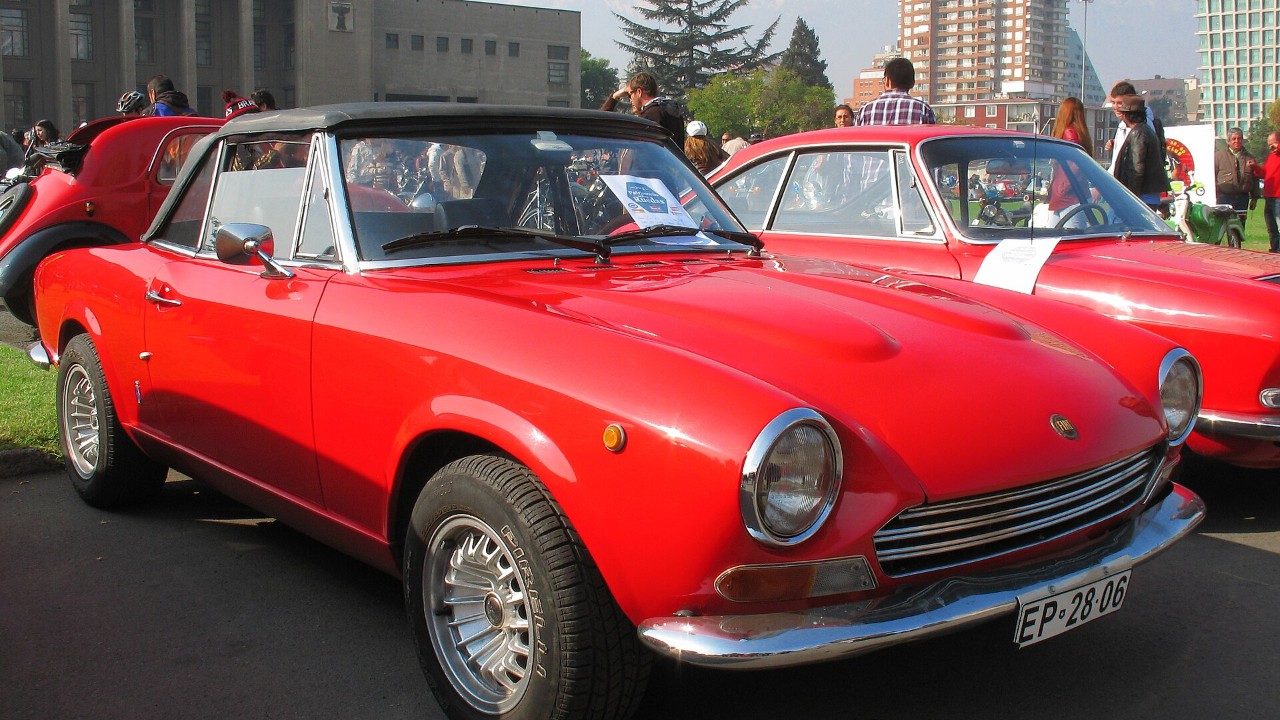
Fiat’s roadster debuted at the Turin Auto Show in November 1966. Tom Tjaarda styled it in-house at Pininfarina. The badge on the tail says Fiat, but to our eyes every line says Turin coachbuilder. Its launch engine was a 1,438cc twin-cam four, rated at 90 PS at 6,000 rpm, credited to former Ferrari engineer Aurelio Lampredi.
The car’s career was unusually long. Fiat built it from 1966 to 1982. After that, Pininfarina took over production until 1985, selling it as the Spidereuropa in Europe and the Azzurra in North America. Roughly 75% of production went to the United States. As a result, America is where most of these cars first landed.
Our take: an early 124 has the cleanest version of Tjaarda’s lines, before bigger bumpers and emissions gear arrived. We have written about how the 1969 Fiat 124 Spider delivered fun without needing big power. The 1968 car takes that idea one step closer to the original Turin show car. In our view, it feels like a late-1960s Italian weekend, preserved in steel. If you shop for one, the earliest chrome-bumper cars are the ones with that untouched look.
7. 1967 Datsun Fairlady 1600 SPL311

Datsun’s roadster proved Japan could build a convincing British-style sports car. The 1600 appeared at the 1964 Tokyo Motor Show and entered production in March 1965. Japanese buyers knew it as the Fairlady 1600, while export buyers saw Datsun Sports 1600 badges. The “L” in SPL311 marks the left-hand-drive version sold in markets such as North America.
Power came from a 1.6-liter R16 four with twin SU carburettors, rated at 96 PS. Top speed was about 105 mph. Meanwhile, the 1600 and its bigger 2000 sibling became regular winners in SCCA racing and took 10 national championships between them. The 1600 also stayed in production beside the 2000 until April 1970.
Our take: this is the roadster that shows the exact moment Japanese sports cars started to matter abroad. It straddles two eras, with twin SUs and a folding top on one hand and Datsun’s own engine on the other. In our view, that crossover gives it a period feel no other car here has. To us, it looks like a car built to take on 1965’s British roadsters on their own terms.
8. 1963 Triumph TR4
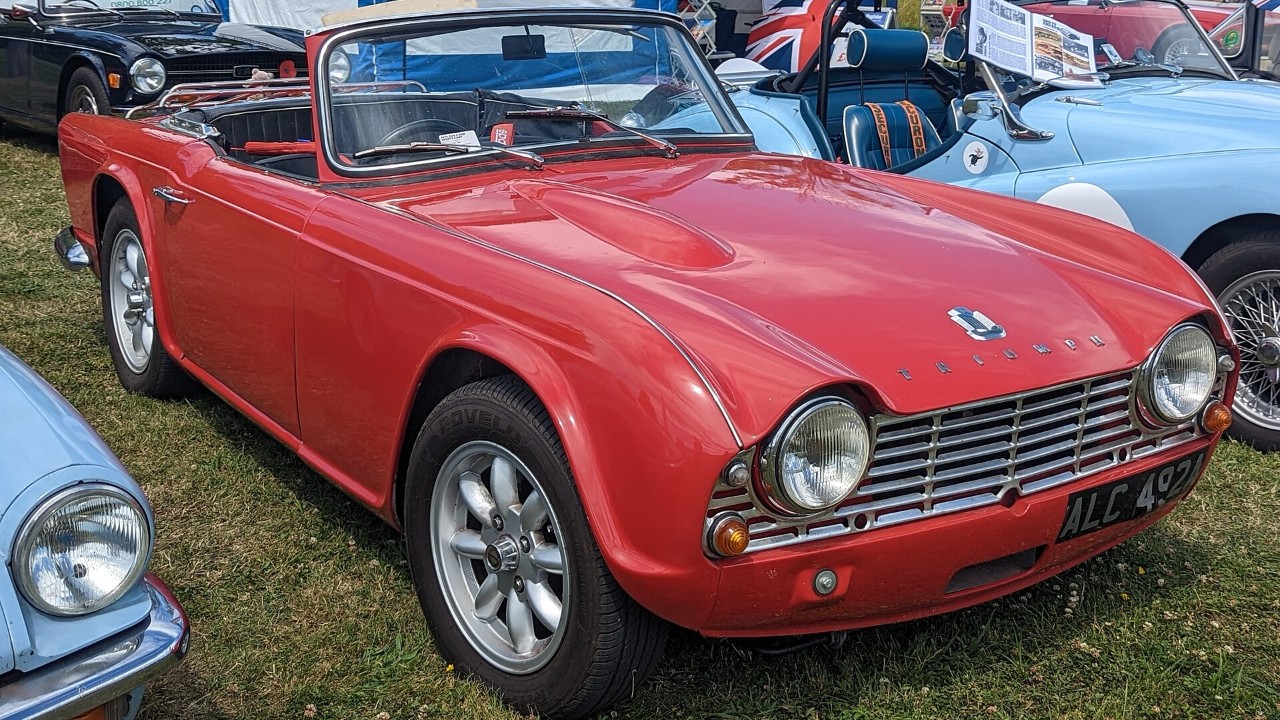
The TR4 dragged the Triumph TR into the 1960s without giving up its separate chassis. The first car was built on 18 July 1961, and the last on 6 January 1965. Giovanni Michelotti drew the body, which borrowed from his earlier Zest prototype.
Several changes made it more civilized than the TR3. Rack-and-pinion steering replaced the old cam-and-lever setup. Taller doors allowed wind-down windows instead of side curtains, and every forward gear finally got synchromesh. The engine grew to 2,138cc and made 100 bhp at 4,600 rpm. Buyers could also order a “Surrey top,” a vinyl insert and frame that stowed in the car. Of 40,253 TR4s built, 37,661 went to export markets, mainly the US.
Our take: the TR4 is caught halfway between eras, with a modern Italian shape on a 1950s-style ladder frame and live rear axle. In our view, that mix is what makes it feel so fixed in its moment. We have praised how the 1962 Triumph TR4 kept things simple and engaging. By 1965, the TR4A added independent rear suspension, and that simple formula was gone.
9. 1962 Morgan Plus Four Super Sports
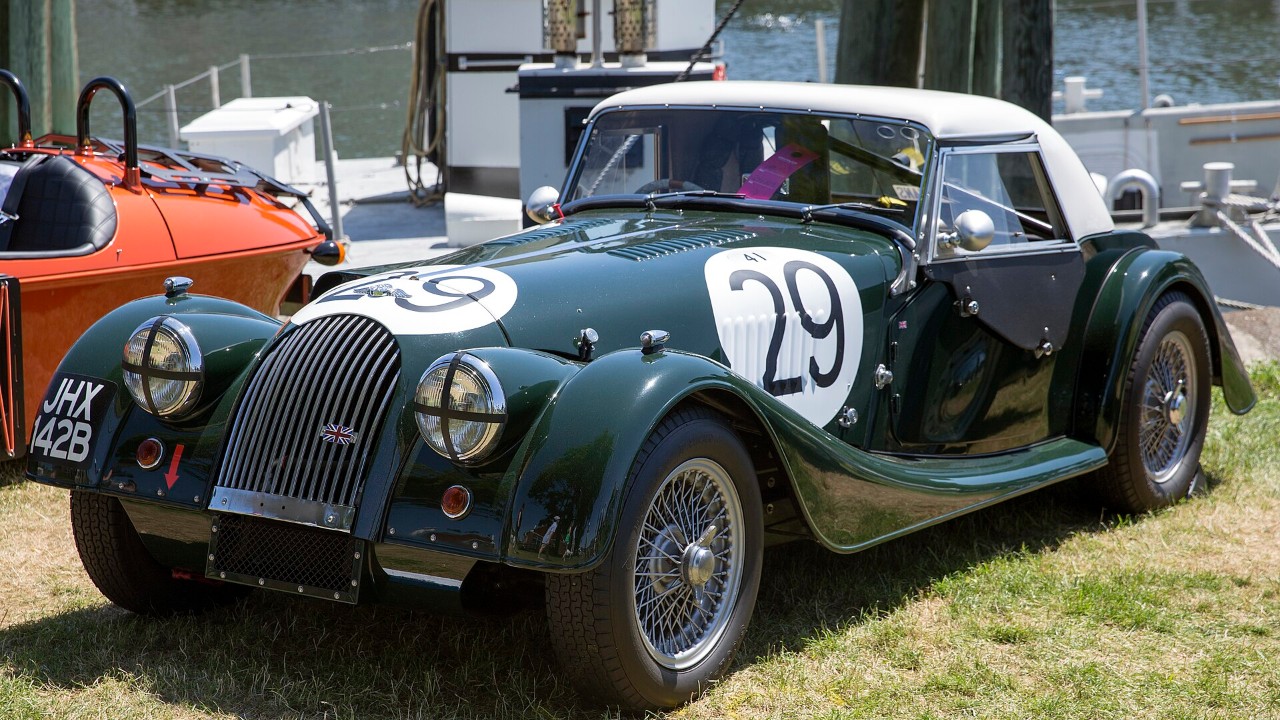
Morgan announced the Plus 4 at the 1950 Earl’s Court Motor Show, and the Plus 4 stayed in production until 1969. The Super Sports, built from the early 1960s, was the competition-minded version. It added a lightweight aluminium body with a lower profile and an engine tuned by Chris Lawrence’s firm.
A catalogue for one 1962 car offered at auction in France describes a “Lawrence Tuned” four fed by Weber carburetors, plus disc brakes. The same Gazette Drouot listing puts production at only 95 examples. Lawrence also proved the formula at the 1962 24 Hours of Le Mans. There, he and Richard Shepherd-Barron won the 1601 to 2000cc GT class in a Plus Four.
Our take: a Morgan already looks like it belongs to an earlier decade, so the Super Sports is frozen twice over. Its basic shape looks even older than its launch date, and its racing hardware ties it to one early-1960s season. In our view, no car on this list has stayed so close to its original form. If you find one, the factory records matter more than the badge.
10. 1955 Jaguar XK140 roadster
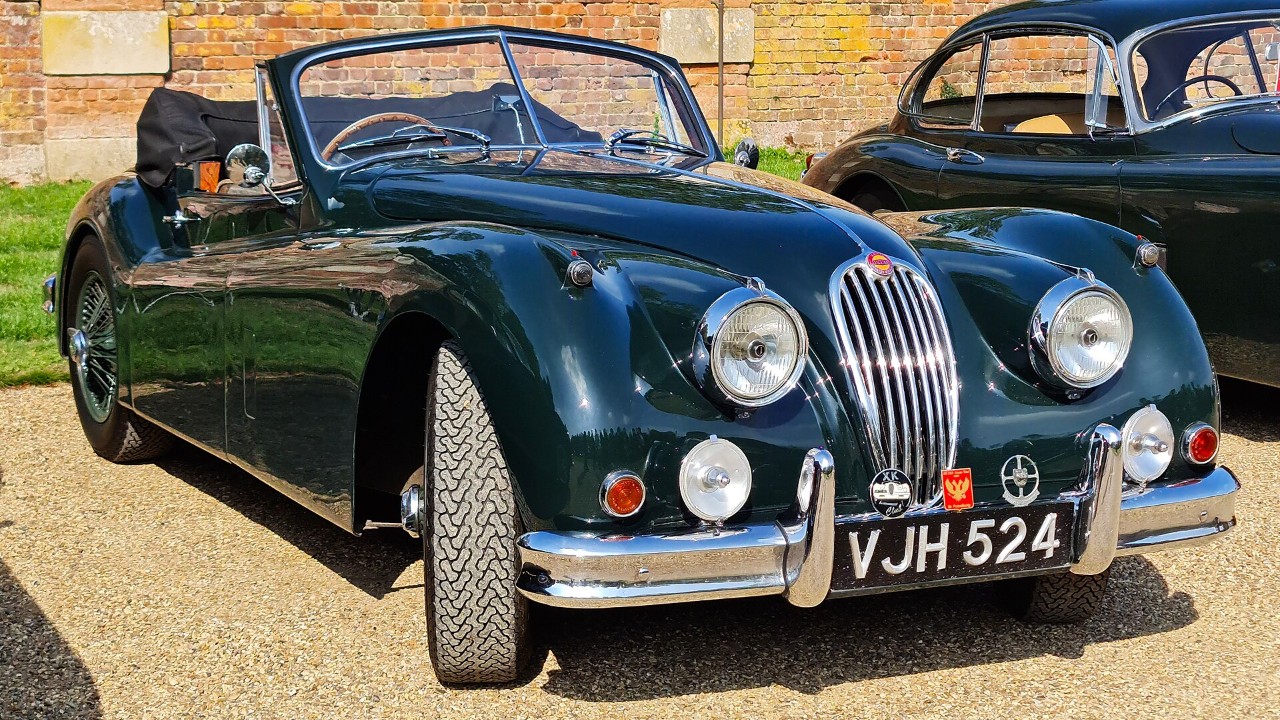
The XK140 replaced the XK120 and went on sale as a 1955 model. Jaguar built it from 1954 to 1957. Jaguar moved the engine, firewall and dash forward by 3 inches to free up legroom. It also added rack-and-pinion steering, telescopic shock absorbers and larger bumpers with overriders.
The standard 3.4-liter XK six produced 190 bhp at 5,500 rpm. With the optional C-Type head, the SE version made 210 bhp. In North America, that car was called the MC, and Road & Track recorded a best two-way average of 120.3 mph in one. Jaguar built 3,349 open two-seaters, and 3,276 of them were left-hand drive, a clear sign of where they were headed.
Our take: the XK140 roadster is the mid-1950s Jaguar in its most complete form. Its sweeping fenders and big chrome bumpers place it in that exact window. In our view, this classic roadster is the best way to feel what Jaguar sold to America right after its early Le Mans wins. That export split also tells you who Jaguar built it for. A well-sorted car is a time machine with a straight-six soundtrack.
More from Fast Lane Only