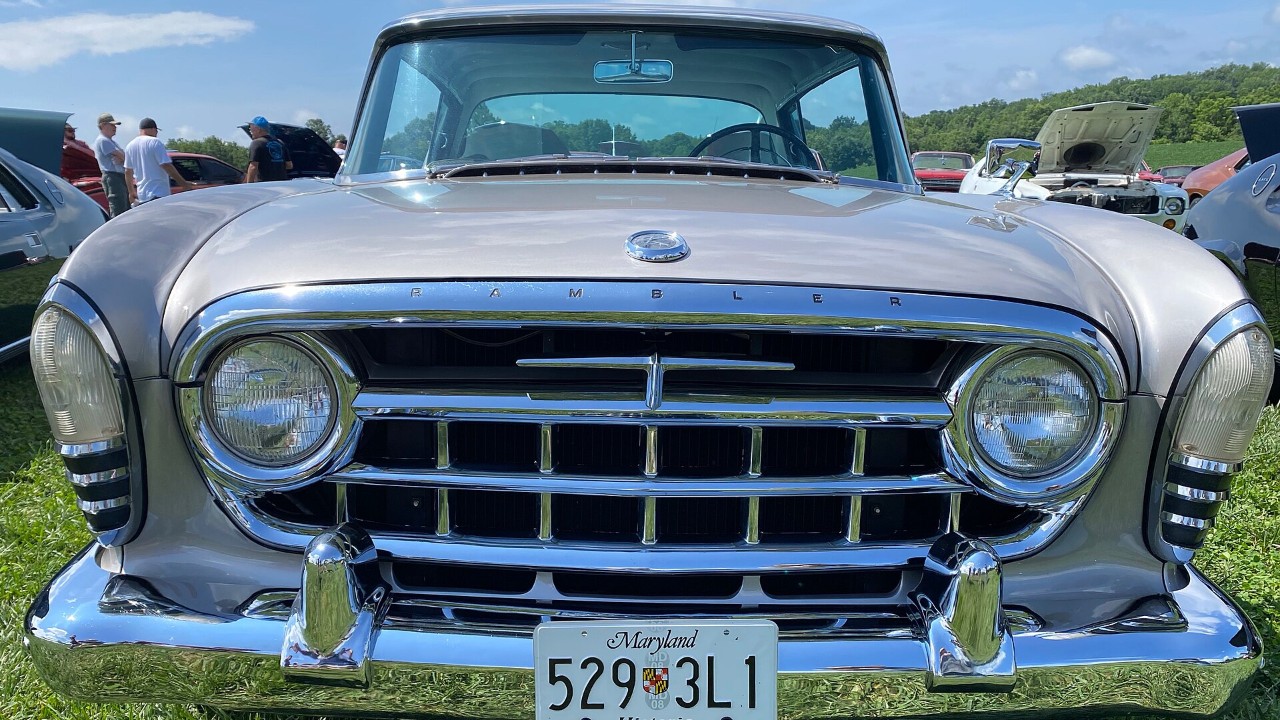
In February 1957, Motor Trend took a 1957 Rambler Rebel to Daytona Beach and ran it from 0 to 60 mph in 7.5 seconds. In fact, by the magazine’s account, only a fuel-injected Corvette could beat it. Yet that was a family-sized four-door from the company better known for sensible compacts.
The chrome era is mostly remembered for fins, two-tone paint and bumpers you could stand on. However, the same showrooms that sold plush cruisers also hid cars with dual quads, fuel injection, twin-cam engines and racing parts. Some came from Detroit, and others came from Turin, Stuttgart and Milan.
These 12 are our picks, the 1950s cars we think were built first for the person behind the wheel. You’ll find factory stock-car specials, Italian GT cars and a few sleepers in Sunday clothes. Here is what each one had, and why we’d want to drive it.
1. 1957 Chevrolet 150 Black Widow
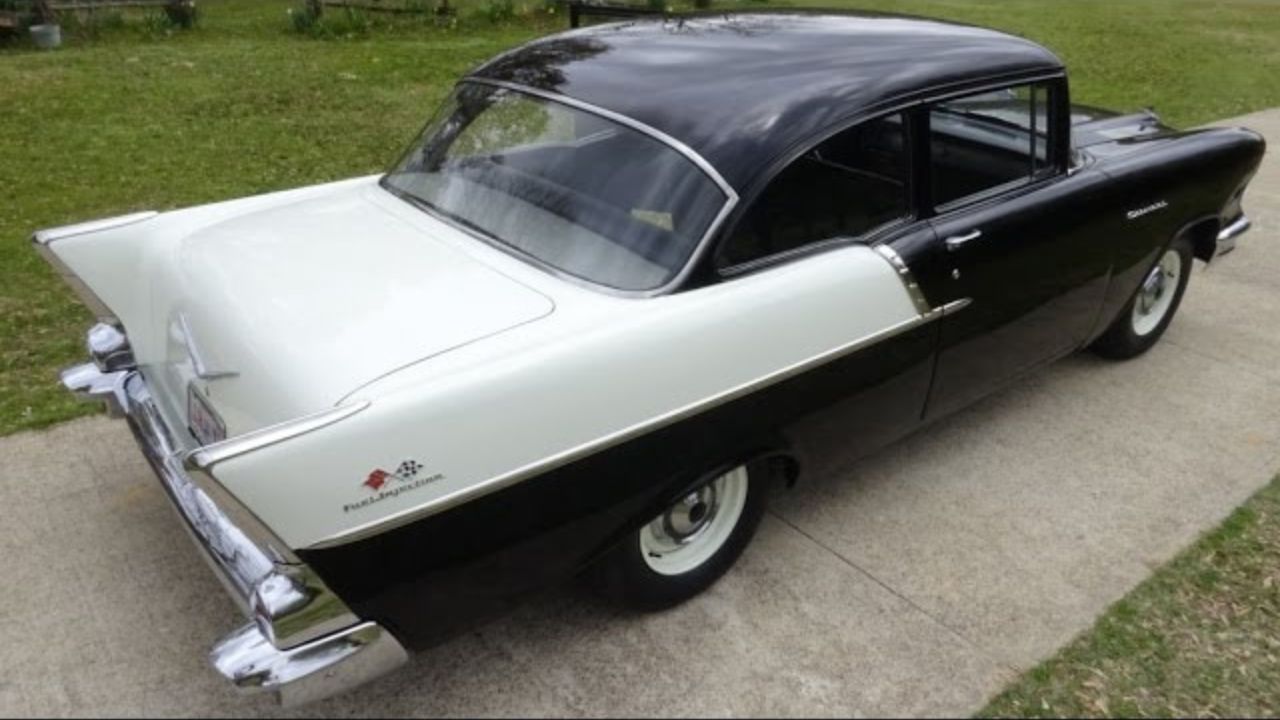
The cheapest Chevrolet of 1957 became one of its fastest. Chevrolet shipped six black-and-white 150 sedans to SEDCO, an outfit that worked on paper as a division of Nalley Chevrolet in Atlanta. Former Hudson race engineer Vince Piggins ran it, and the cars came with no options other than the 283-horsepower fuel-injected V8.
According to the Audrain Automobile Museum, which displays one of the six, SEDCO fitted six-lug wheels, a different exhaust and a bigger fuel tank. The museum also says the Black Widows helped clinch the 1957 NASCAR Grand National Championship. It also says their dominance led NASCAR to ban fuel injection until 2011. General Motors then ended the program in 1957.
Our take: few cars show the era’s split personality better. Outside, it was a plain sedan from the bottom of the price list. Underneath, it was a factory-backed racer that a mechanic could build from Piggins’s own competition guide.
2. 1957 Rambler Rebel
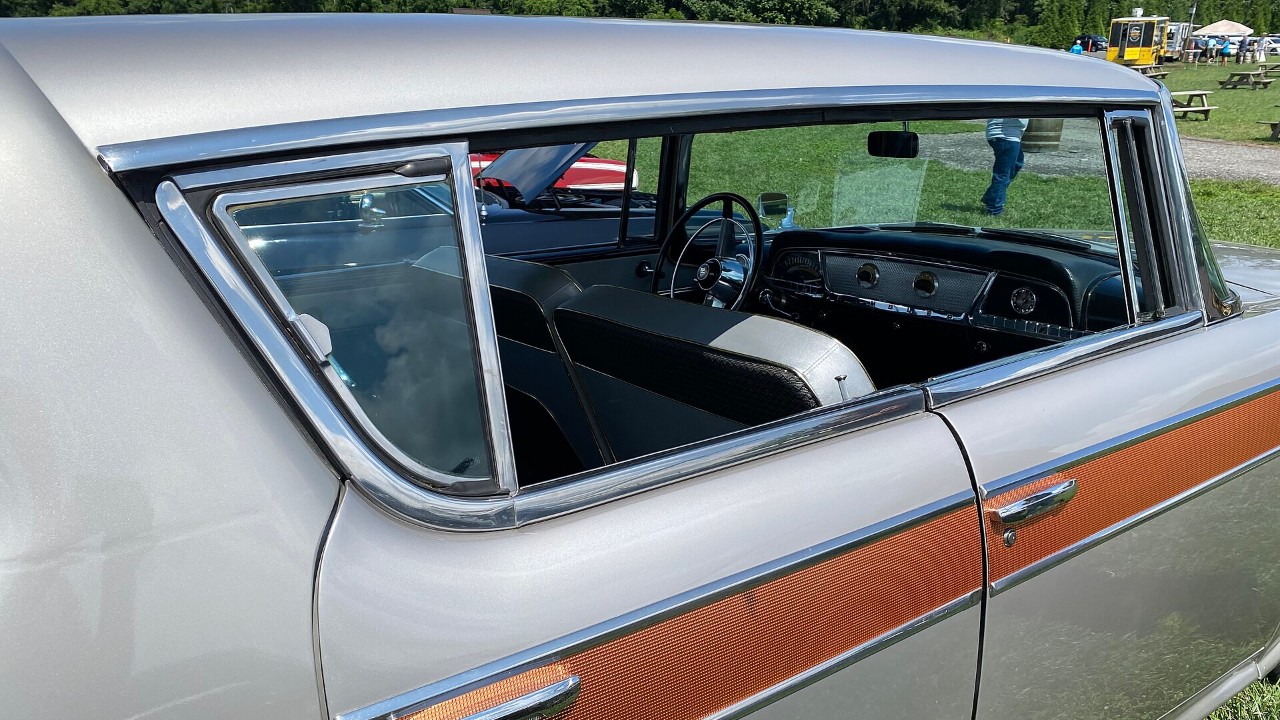
AMC built the Rebel for one season only, and every car looked alike. The four-door hardtop came in solid silver-gray, with a bronze-gold anodized insert running down each side. Meanwhile, under the hood sat a new 327-cubic-inch V8 rated at 255 horsepower, fed by a Carter four-barrel.
The plan had been even bolder. AMC wanted to offer Bendix’s Electrojector electronic fuel injection, but the system gave trouble. Old Cars Weekly says it is unlikely any injected cars reached buyers, and AMC built 1,500 carbureted Rebels. Even so, the price was $2,786, with reclining seats, power steering, power brakes and a radio included.
Hot Rod also timed a Hydra-Matic car at 9.4 seconds to 60 and a 17-second quarter mile at 84 mph. We like the 1957 Rambler Rebel because it got there with a small car and a big engine, a recipe the muscle-car makers used a few years later. If you want one, look for the overdrive manual car with the 4.10 axle.
3. 1958 Pontiac Bonneville Tri-Power
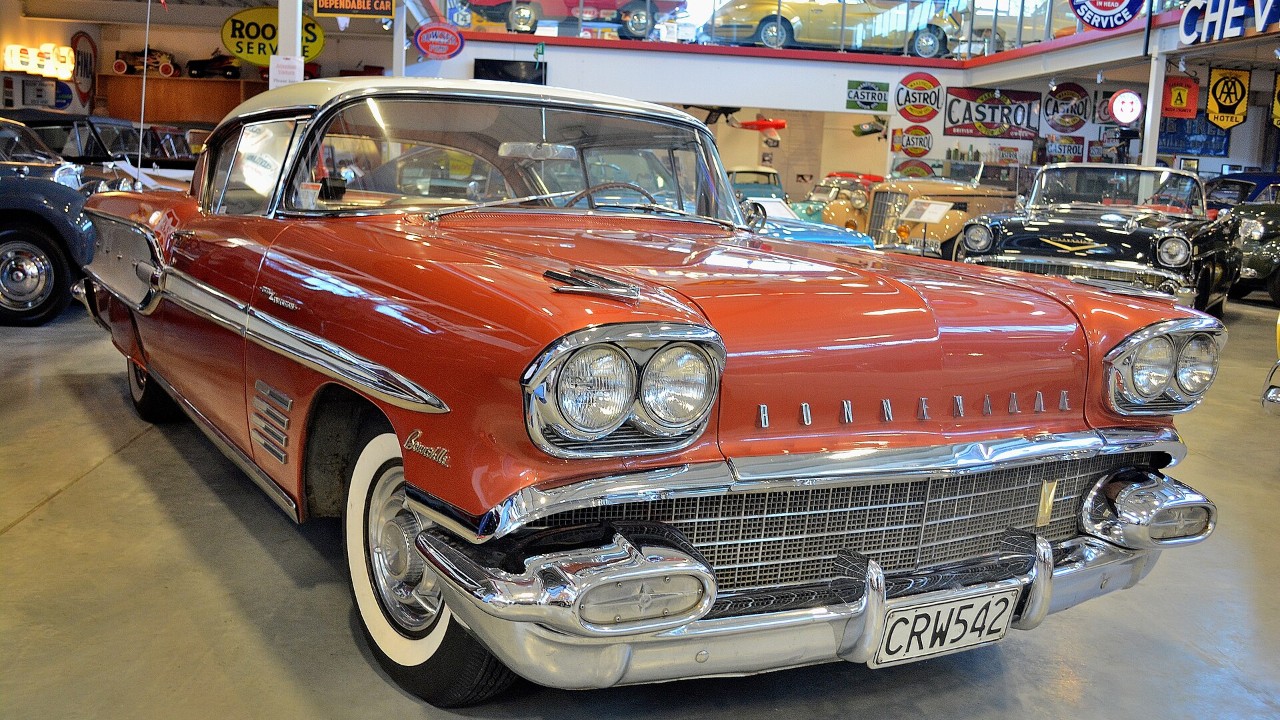
Pontiac made the Bonneville its own model for 1958, as a two-door hardtop and a convertible. That same year, a Bonneville also paced the Indianapolis 500. Its standard engine was a 370-cubic-inch V8 rated at 255 horsepower with a four-barrel and dual exhausts.
Tri-Power was the option to tick. Three carburetors lifted the claimed output to 300 horsepower, and the package cost only $93.50. By comparison, Pontiac’s fuel injection made 310 horsepower but cost $500, and only about 400 injected cars were built before the option was dropped.
In our view, the Tri-Power Bonneville is the smart way to buy late-1950s Pontiac speed. After all, you get nearly all of the injected car’s power with a carburetor setup any good tuner can sort out. Meanwhile, the convertible listed at $3,586, so it was within reach of buyers who never set foot on a racetrack.
4. 1957 Chevrolet Bel Air Fuelie
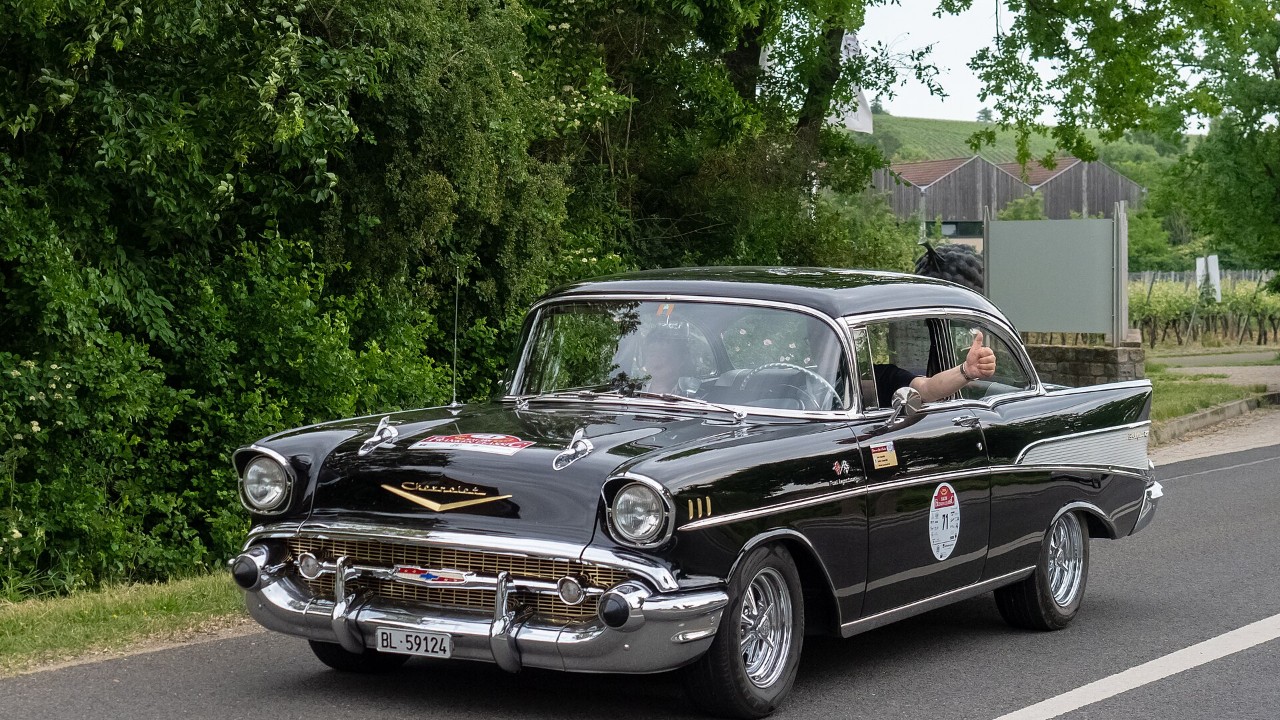
The top 1957 Bel Air engine was the same one Chevrolet put in the Corvette. Chevrolet called it the Super Turbo Fire V8, a 283-cubic-inch engine with Rochester Ramjet mechanical fuel injection. It made 283 horsepower at 6,200 rpm and 290 lb-ft of torque at 4,400 rpm.
That made the Bel Air a full-size family car with a sports-car engine. Most Bel Airs left the factory with carburetors, so fuel-injected “fuelie” cars are quite rare. Because of that, any buyer should check the paperwork before trusting the badges.
Our take: this is the Tri-Five we’d want for a long highway drive. The injected small-block revs freely, while the Bel Air’s size makes it a comfortable place to enjoy it. Like the Black Widow, it shows how far Chevrolet pushed its new small-block in a single model year. Treat any claimed original fuelie with care, and have an expert inspect the injection unit before you buy.
5. 1956 Alfa Romeo Giulietta Sprint Veloce
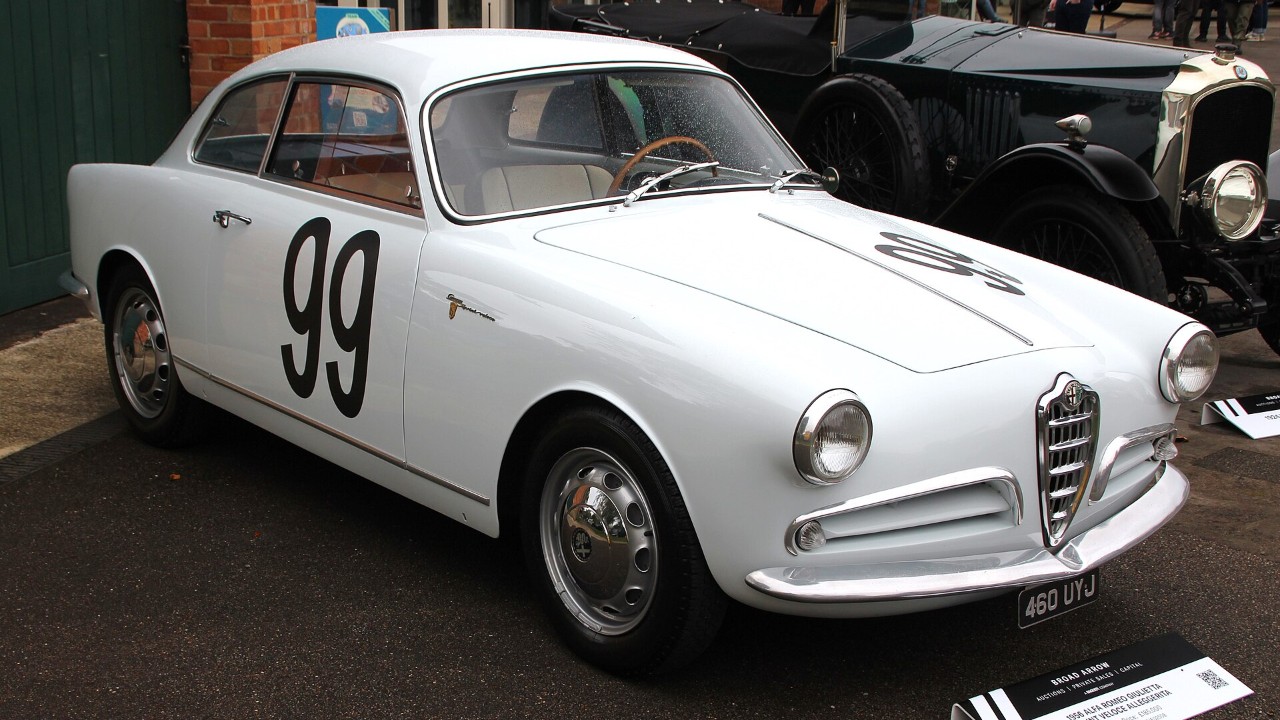
The Giulietta Sprint was already a pretty coupe, styled by Franco Scaglione at Bertone. Then, for 1956, Alfa Romeo built a competition version called the Sprint Veloce. First, it cut the weight from 852 kg to 780 kg, or from about 1,878 pounds to 1,720.
Part of the savings came from sliding plexiglass side windows in place of roll-down glass. The 1,290 cc twin-cam four breathed through two Weber 40 DCOE3 carburetors and made 90 PS in Veloce tune, with a 9.5:1 compression ratio.
Frankly, we’d pick the Sprint Veloce over many cars with twice the power. A light coupe with a high-revving twin-cam rewards a driver who carries speed through corners, and that is the whole point of this list. Before you commit, confirm that the engine and body numbers match a genuine Veloce.
6. 1958 Plymouth Fury Golden Commando
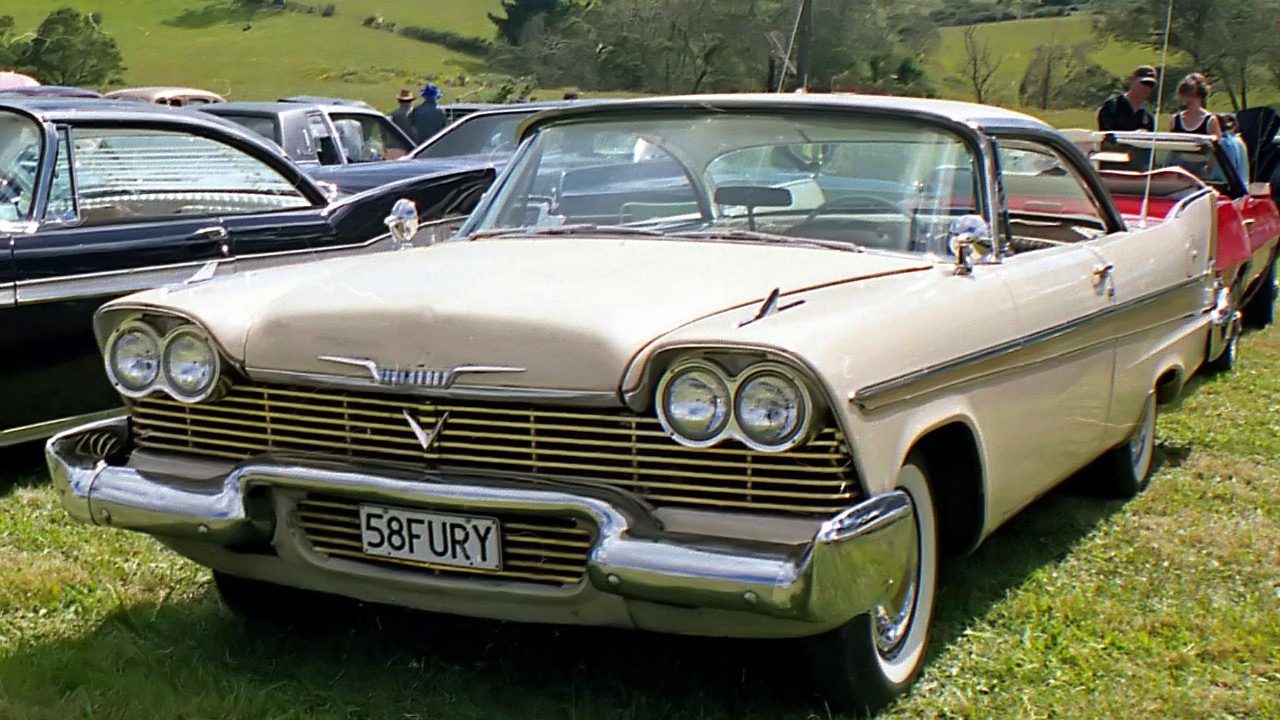
Stephen King made the 1958 Fury famous in his 1983 novel Christine, but the real car never came in red. For 1958, Plymouth sold the Fury in buckskin beige with gold anodized aluminum trim only. As a result, the filmmakers used several 1958 Belvederes instead.
The best engine was the optional Golden Commando, a 350-cubic-inch V8 with two four-barrel carburetors rated at 305 horsepower. Plymouth also listed a 315-horsepower fuel-injected version. However, the factory recalled its Bendix injection and fitted those cars with dual four-barrels instead.
Our take: a Golden Commando Fury is a lot of engine wrapped in some of the era’s sharpest fins. For the model’s first year, see our story on the 1956 Plymouth Fury and its eggshell white paint. If you shop for a 1958, insist on proof of the engine, since the Golden Commando is the version that makes this list.
7. 1957 Maserati 3500 GT
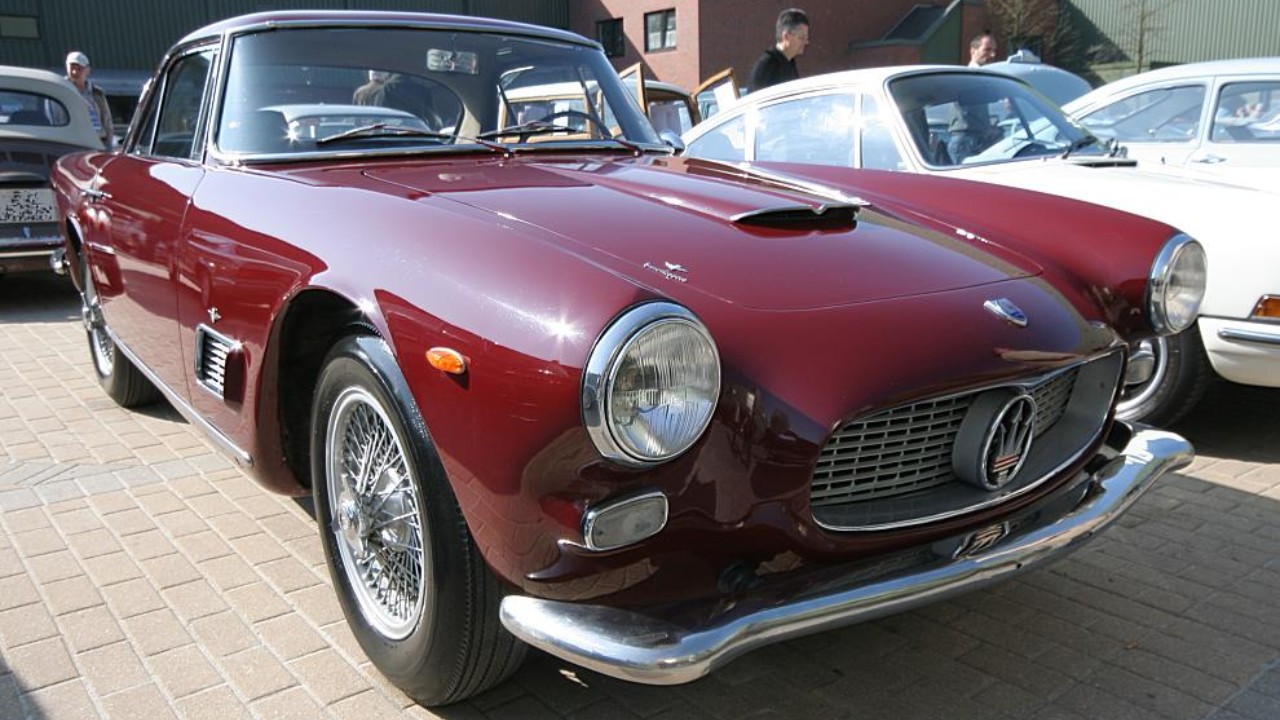
Maserati showed two 3500 GT prototypes at the Geneva show in March 1957. It became the company’s first successful series-production GT. That’s because its 3,485 cc twin-cam straight-six came from the 350S racing engine. With three twin-choke Weber carburetors, it made 220 PS, or about 217 horsepower.
Touring built the coupe with its Superleggera method, a light tube frame clothed in aluminum panels. Later, the 3500 GTi arrived with Lucas mechanical fuel injection, and by 1961 it was the first fuel-injected Italian production car. In all, Maserati built 2,226 coupes and convertibles from 1957 to 1964.
We’d call the 3500 GT the most grown-up driving machine here. It could cross a continent at speed, then make a mountain road feel short. Look for a car with its Weber or Lucas setup intact, because a properly tuned six is the reason to own one.
8. 1955 Mercedes-Benz 190SL
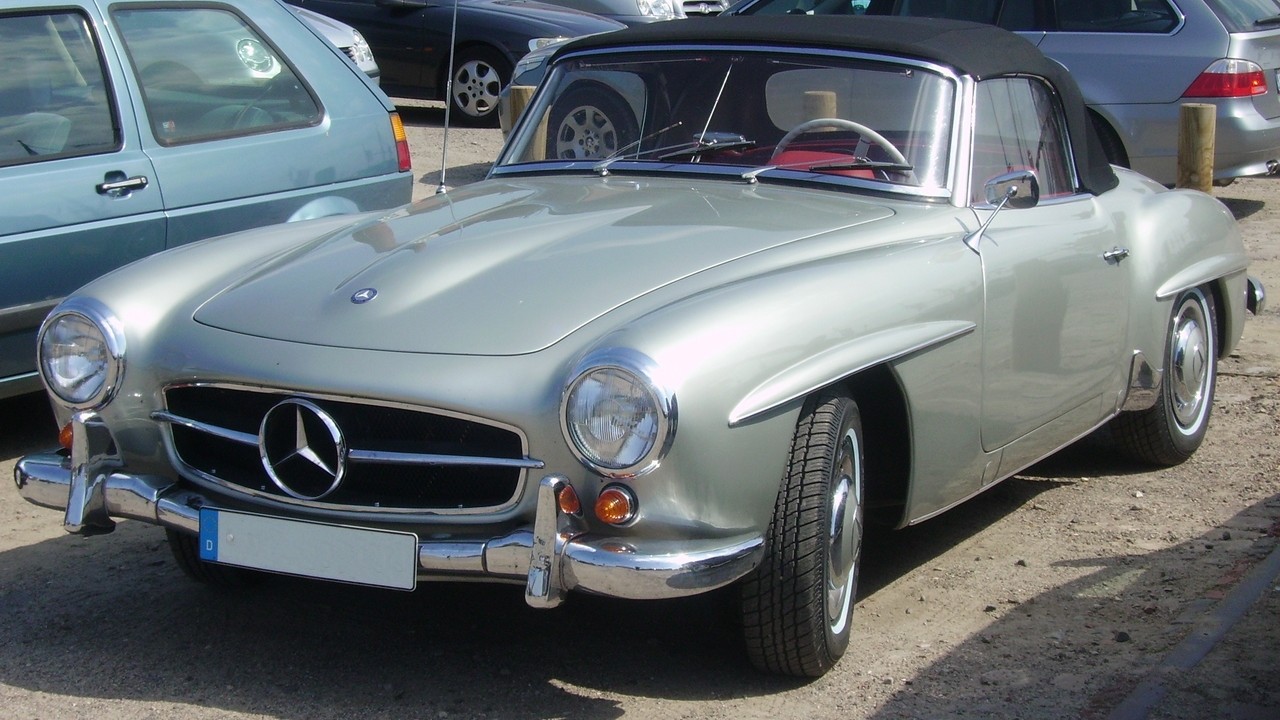
Mercedes-Benz first showed the 190SL as a prototype at the 1954 New York auto show. Production began in May 1955 and ran until February 1963. Over that time, Mercedes built 25,881 of the roadsters.
The 190SL used a 1,897 cc overhead-cam four on a shortened floorpan from the W121 sedan. At launch, the soft-top car cost $3,998, and the removable hardtop version was $4,295.
In our view, the 190SL is a driving machine of a gentler kind. It is no drag racer, but a nimble, open two-seater with a smooth four makes every back road better. Its long production run also means more survivors to choose from, so buy the most complete car rather than the cheapest one.
9. 1954 Hudson Hornet Twin H-Power
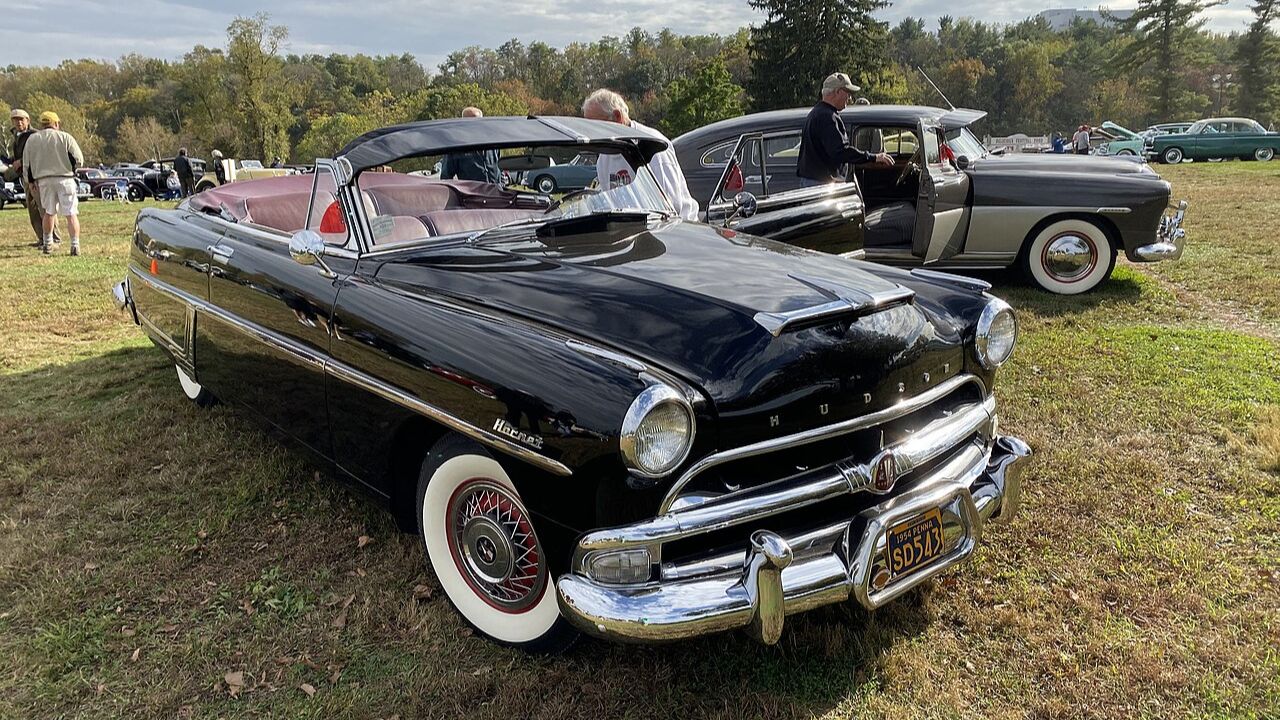
Hudson won stock-car races with a six-cylinder engine. The Hornet’s 308-cubic-inch inline-six was the largest six in a mass-production car of its day. In 1954, Twin H-Power, with two one-barrel carburetors, raised output to 170 horsepower.
As a result, the record books backed it up. Hudson won 27 of 34 NASCAR Grand National races in 1952, then 22 of 37 in 1953 and 17 of 37 in 1954. For 1954, Hudson also offered the 7-X package with a high-compression head and special camshaft, good for more than 210 horsepower. We explain the carburetor setup in our piece on how Hudson’s Twin H-Power fed the Hornet’s 308 six.
Our take: the Hornet handled because of its step-down design, which lowered the center of gravity. That makes a 1954 car our pick, since it was the last year of the true Detroit Hudson. The final Detroit-built car was completed on October 30, 1954.
10. 1955 Lancia Aurelia B24 Spider America
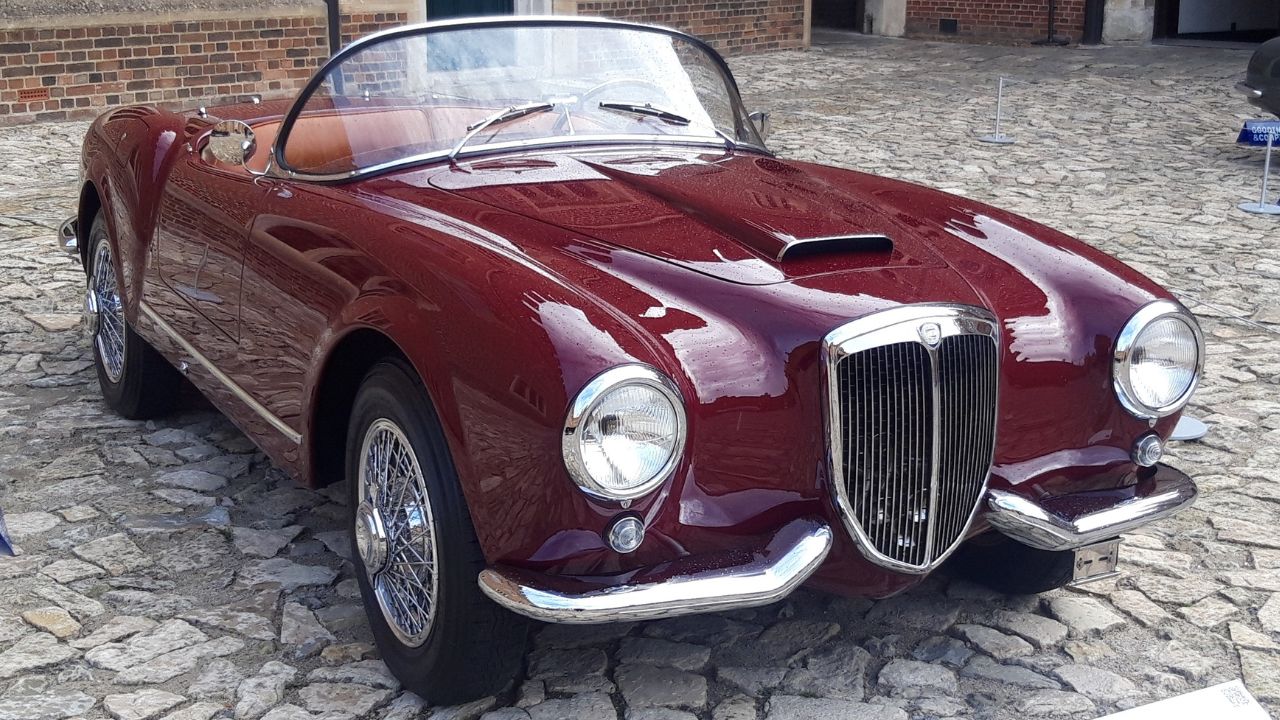
Lancia’s Aurelia used one of the first series-production V6 engines. For the B24 Spider America, Pinin Farina drew a low open body with a panoramic windscreen. The 2,451 cc V6 sat up front, and the car was mechanically similar to the fourth-series B20 coupe, the one that brought a de Dion rear suspension.
Lancia built only 240 of the Spiders, plus a pre-production prototype from 1954. For that reason, every surviving Spider America is a significant car.
Even so, we’d rather drive one than look at one. A balanced V6 roadster with a sophisticated rear end is exactly what a pure driving machine should be. With so few built, buy only with strong documentation, and expect to share the hunt with serious collectors.
11. 1957 Studebaker Silver Hawk
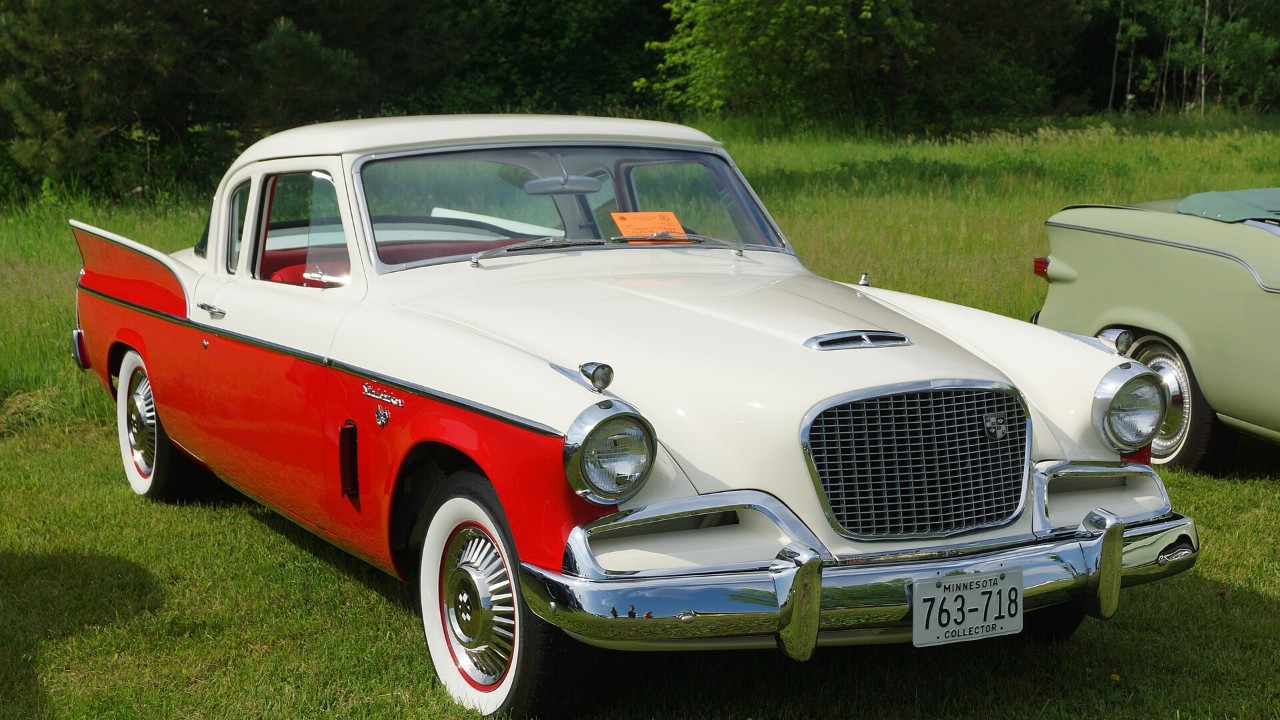
Studebaker gave the 1957 Silver Hawk the job of replacing three 1956 Hawks: the Sky Hawk, Power Hawk and Flight Hawk. The pillared coupe could be had with a 289-cubic-inch V8 rated at 225 horsepower. A Junkyard Gem feature on Yahoo Autos puts the V8 coupe’s list price at $2,263.
Instead, the Golden Hawk got the attention that year with its supercharged V8. By comparison, the Silver Hawk was plainer, with less chrome and a naturally aspirated engine. That same feature notes a Mercury Monterey two-door with a V8 cost $2,576.
Our take: the Silver Hawk is the bargain driver’s car of this list. It had the long-hood Hawk shape and a healthy V8 for less money than many plainer rivals. If you find one, check the frame and body carefully for rust, as you would with any car of this age.
12. 1958 Chevrolet Impala 348 Tri-Power
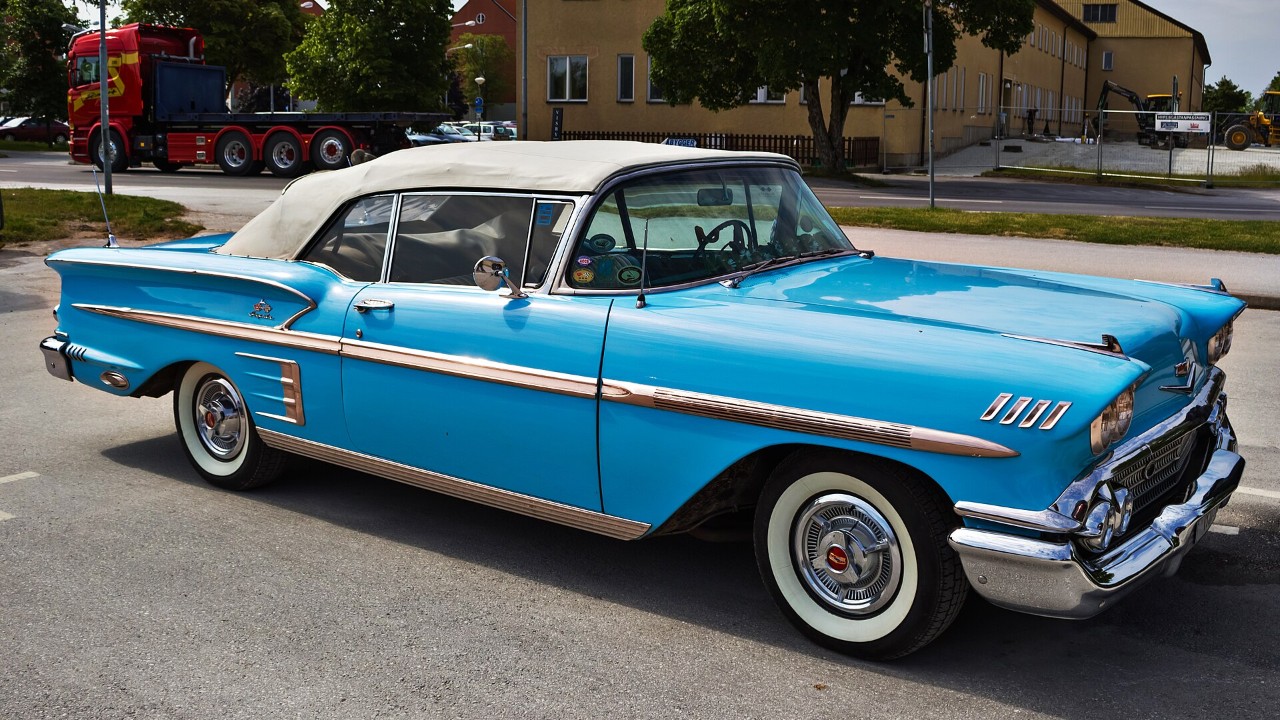
The Impala arrived for 1958 as the top Bel Air, sold as a Sport Coupe hardtop and a convertible. It rode on a new X-frame, and coil springs replaced the leaf springs at the rear. In the end, Chevrolet built 181,469 of them, about 15% of its output that year.
The new 348-cubic-inch W-series V8 was Chevrolet’s first big-block. For example, with one four-barrel, it made 250 horsepower. Then, with three two-barrel carburetors, it climbed to 280 horsepower, the setup that gives this item its name.
We think the Tri-Power 348 turns a glamorous cruiser into a real driver’s car. Its six taillights and long body say boulevard, but the triple carbs say otherwise. Buyers should confirm that the three-carb setup is original, because it is the detail that makes this Impala special.
More from Fast Lane Only