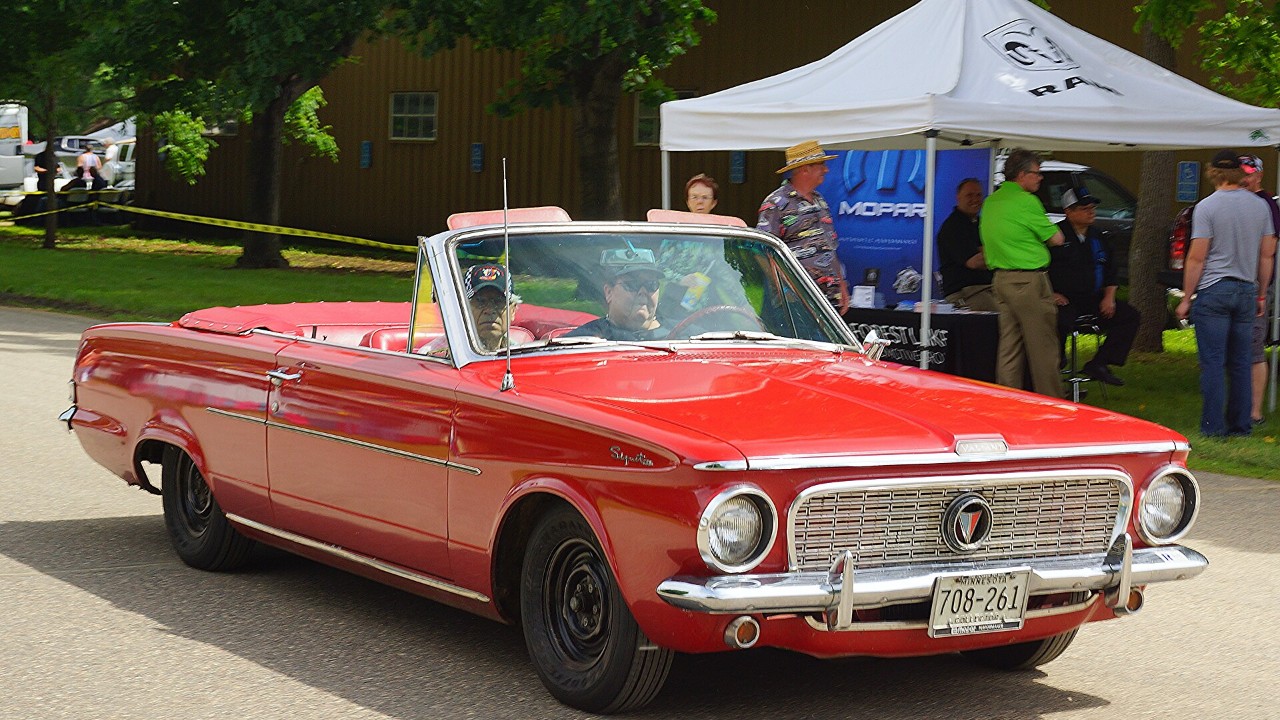
Few cars wore one name in so many forms as the Valiant. A 1963 Valiant Signet convertible gave American buyers a dressy compact with the top down. Meanwhile, Australian buyers got their own Valiants, from a coupe utility to a six-cylinder Charger with three Weber carburetors.
The Valiant arrived as Chrysler’s new compact for 1960. In the U.S., the car built a reputation for durability and simple, honest engineering. In Australia, by contrast, it grew into a full family of cars that ran into the early 1980s. Some are fast, but most are simply good cars.
These 10 are our picks, the Valiants we think are worth remembering. The selection is our opinion. However, the years, engines and figures in each entry come from the sources linked below.
1. 1960 Valiant V-200
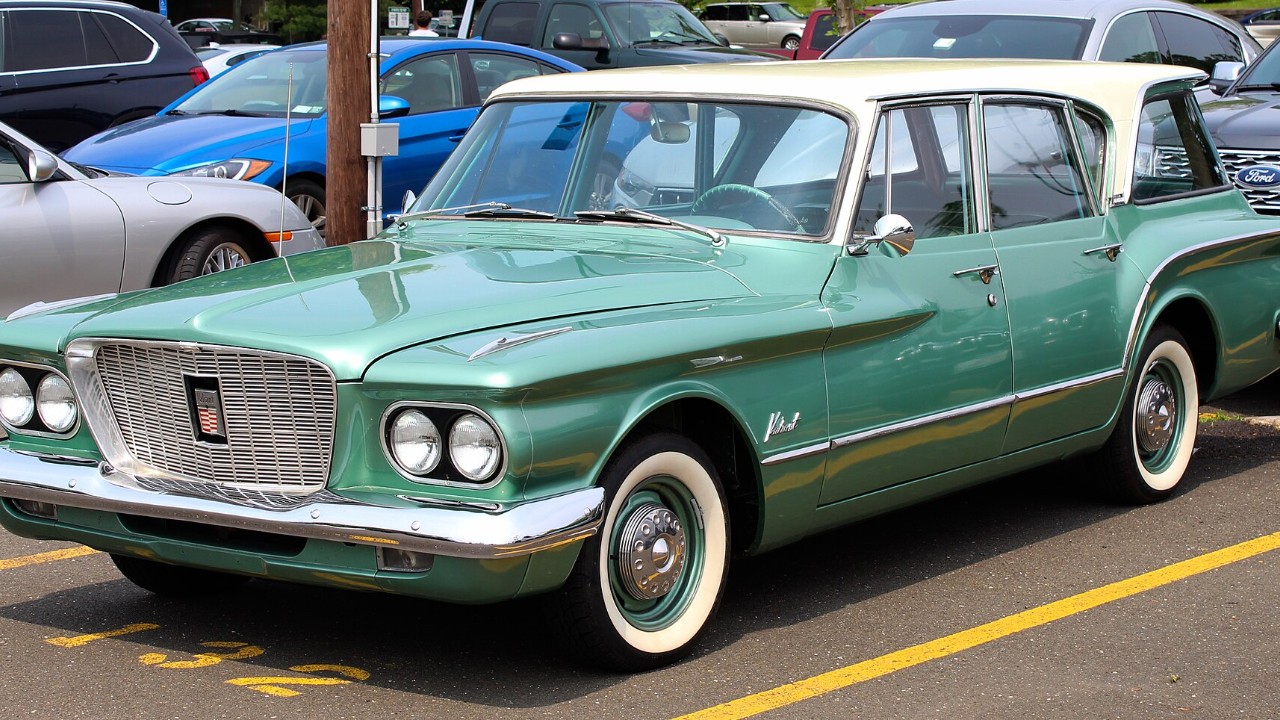
The first Valiant wasn’t officially a Plymouth. According to Curbside Classic’s look at a 1960 V-200, the Valiant stood alone as its own make in 1960 and became an official Plymouth for 1961. The V-200 was the upscale trim above the V-100, with vinyl bolsters, nylon seat inserts and bright side moldings.
It was also the car that introduced Chrysler’s Slant Six. Under the skin, it used unit construction and a torsion bar front suspension. A V-200 sedan started at $2,110, just $77 more than a V-100 sedan. Chrysler built 106,515 Valiants for the 1960 model year. A floor-mounted three-speed manual was standard, and a push-button automatic was optional.
Our take: Virgil Exner’s styling still divides people, and that’s part of the fun. The grille looks like a race car’s, and the Valiant badge doubles as the hood release. Its front end even nodded to the 1959 Studebaker Lark, and its large glass area makes the cabin feel airy. In our view, a V-200 with the optional Hyper-Pak setup is the most interesting early compact Chrysler ever sold.
2. 1963 Plymouth Valiant Signet convertible
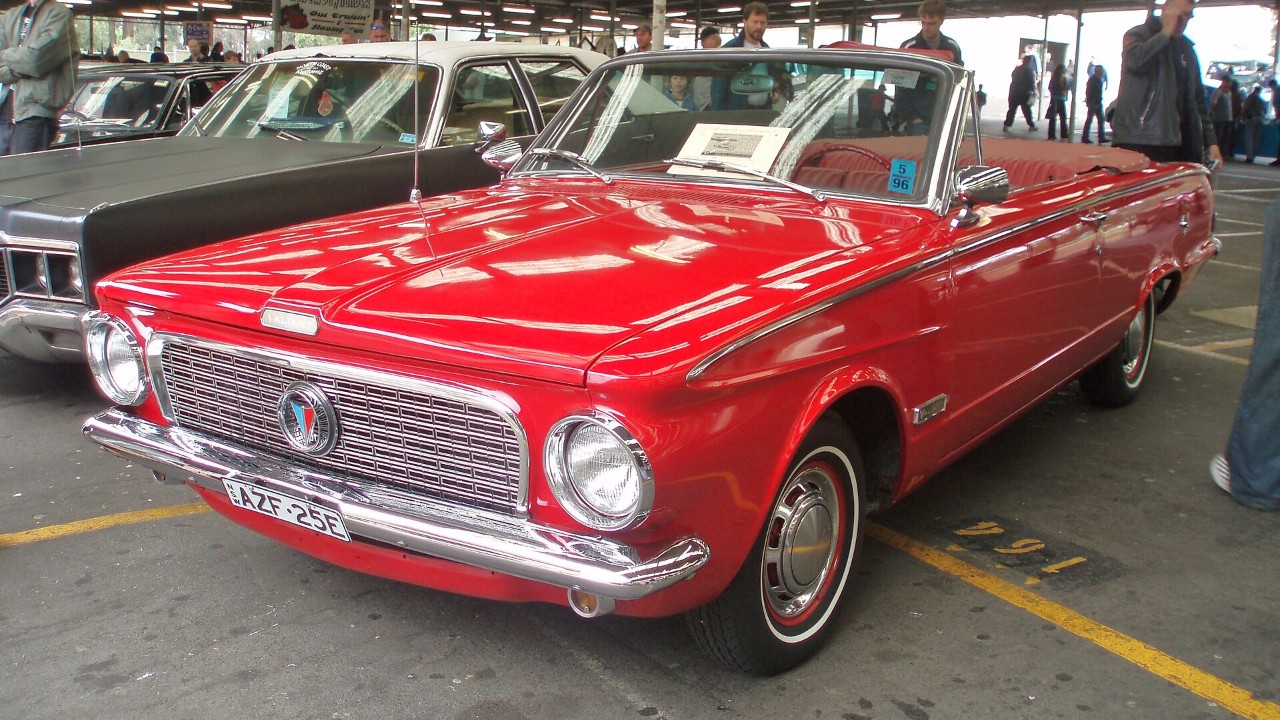
For 1963, Chrysler reskinned the Valiant completely. It got a wide, flat hood, a square rear deck and a sharper roofline on a wheelbase half an inch shorter than before. Two-door hardtops and convertibles came only in V200 and Signet trim, so the Valiant Signet convertible sat at the very top of the line.
The convertible top came in manual form, with a power top as an option. Also, from December 1962, the Signet offered a vinyl-covered roof as an option. The redesign worked. Valiant sales reached 225,056 for 1963. Early in 1963, Chrysler also dropped the aluminum-block 225 slant six, so later cars used iron blocks for both the 170 and the 225.
In our view, this is the prettiest American Valiant. The crisp 1963 lines suit an open car, and a Valiant Signet convertible makes a fine first classic. It’s simple, cheap to run and easy to fix with a slant six under the hood. If you find one, check that the top mechanism and its frame work freely before you buy.
3. 1964 Plymouth Valiant Barracuda
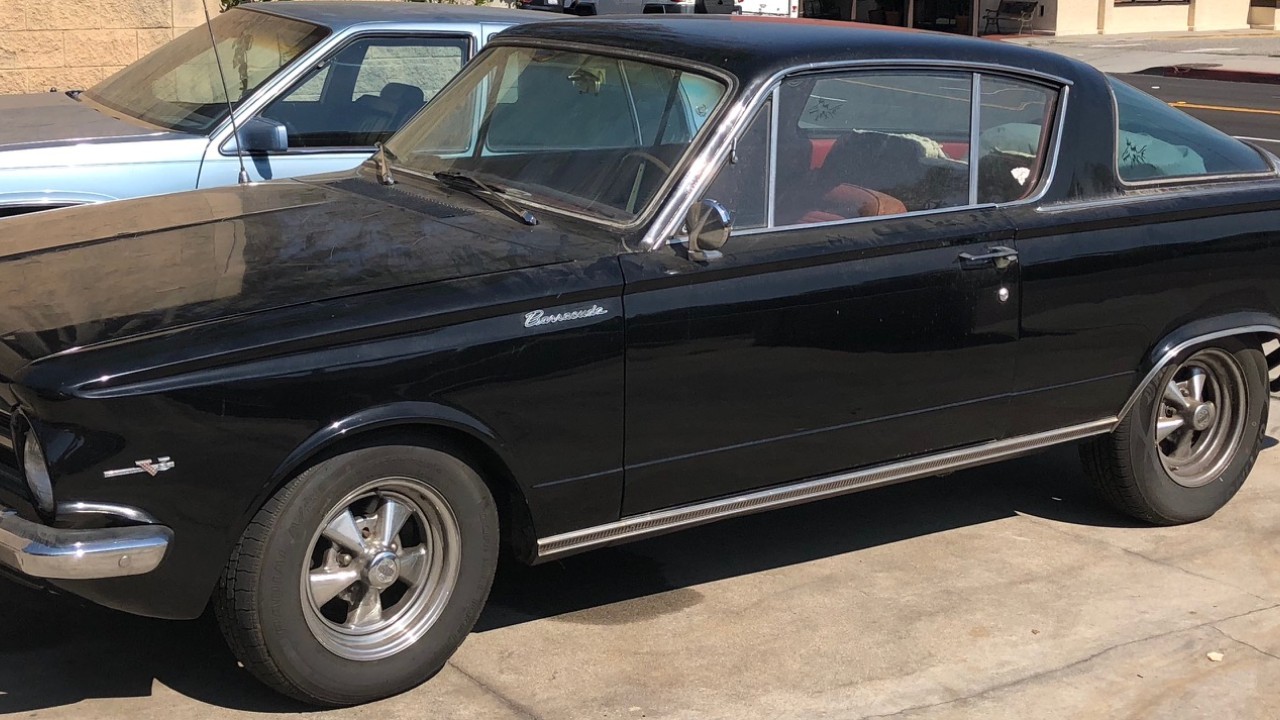
Chrysler released the Barracuda on April 1, 1964, and it was very much a Valiant underneath. The fastback shared Valiant underpinnings, but it added a huge wraparound rear window of about 14.4 square feet. That glass gave it a look all its own. From the side, it makes a modest compact look sleek. From the driver’s seat, it lets light pour into the cabin.
The timing also mattered. In mid-1964, Chrysler made its new 273 V8 an option across the Valiant line. As a result, the first Barracudas could be ordered with a light V8 instead of a six. Then, for 1965, a hotter Commando 273 arrived with 235 bhp. In our view, that V8 turned a clever body into a real driver’s car.
Our take: the Valiant Barracuda is the car that started a famous Plymouth nameplate, so it belongs on any Valiant list. For the later chapters, see nine Barracudas that made Mopar fans for life. We’d look for an early 1964 car with the V8.
4. 1969 Chrysler Valiant VF Pacer
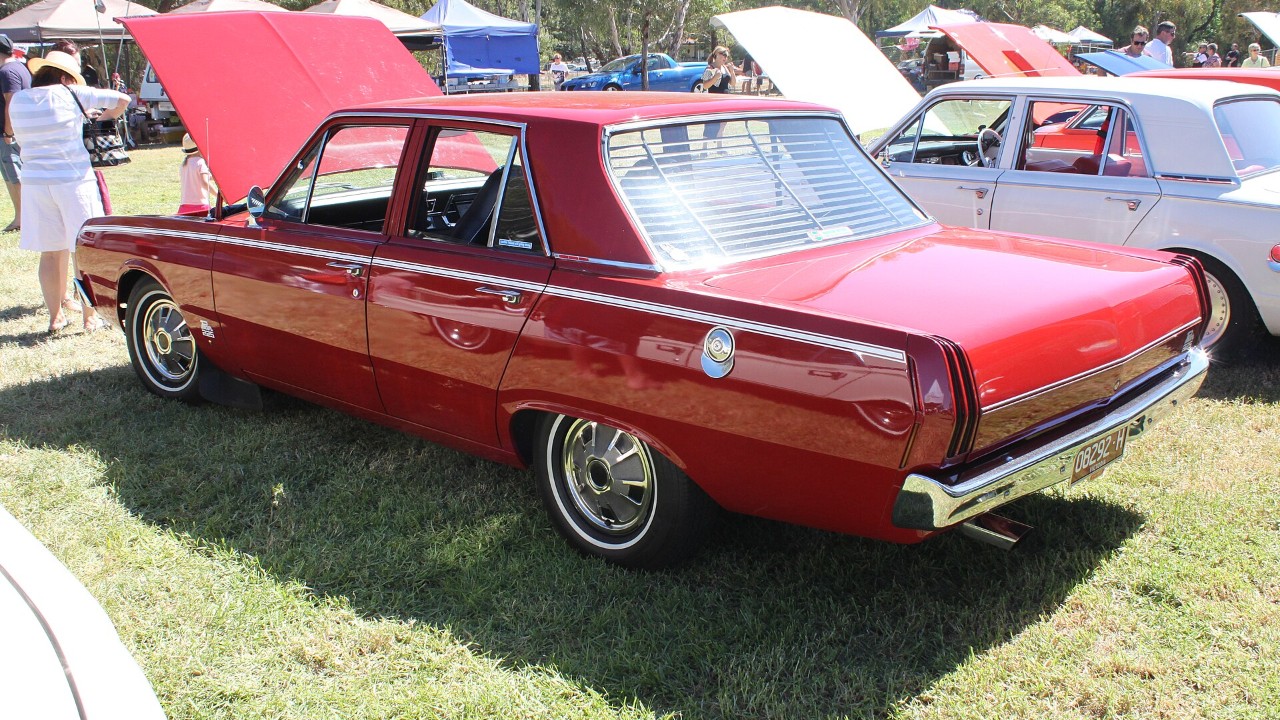
Australia’s Valiant took its own path, and the Pacer is proof. Chrysler Australia introduced the VF Pacer in mid-1969 as a fast four-door version of the Valiant sedan. It used a special 225 Slant Six with a two-barrel carburetor and 9.3:1 compression, rated at 175 bhp, with a three-speed manual.
It was a bargain, too. The Pacer cost $2,798, which was $400 less than a base Holden GTS Monaro. When Modern Motor tested one, it recorded 0-60 mph in 10.5 seconds, a 17.5-second quarter-mile and a top speed of 111 mph.
Our take: the Pacer is the sort of car we love, a family sedan with a sporting heart and a price that made sense. It also set the stage for the Chargers that followed. Its quarter-mile time won’t scare a V8, but it was quick for a family six of its day, and Chrysler clearly priced it against Holden’s GTS Monaro. If you find one for sale, take a close look at its papers and its original parts, since a sporty sedan often lives a hard life.
5. 1972 Chrysler Valiant Charger R/T E49
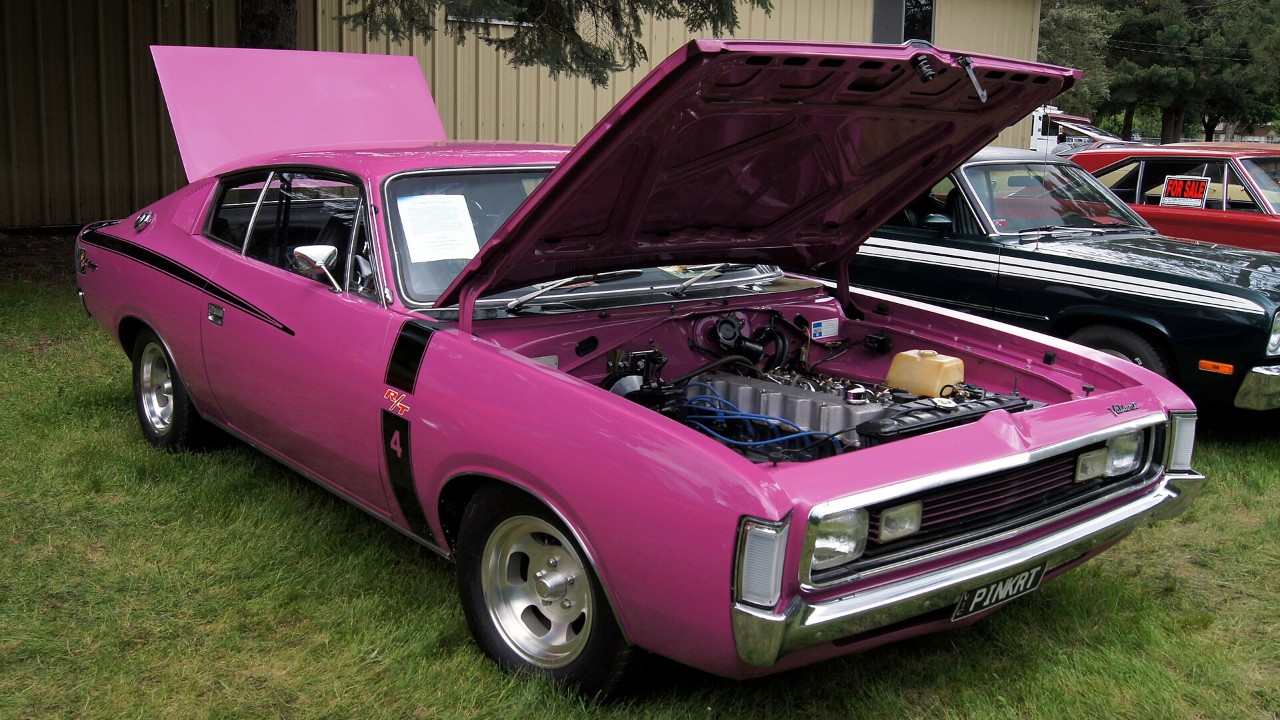
The Charger was a short-wheelbase, two-door version of the Valiant sedan. In mid-1972, the E49 option became its top performance package. According to Silodrome’s E49 profile, its 265-cubic-inch Hemi six breathed through triple Weber dual-throat carburetors and made 302 bhp at 5,600 rpm with 320 lb-ft of torque.
A four-speed manual and a 3.50:1 Sure Grip rear axle sent that power back. Production was tiny, with only 149 built. In addition, Silodrome notes that Chargers won their first race, the Toby Lee 100 at Oran Park in 1971, and earned podiums against V8 rivals like the Falcon GTHO and Torana GTR XU-1. Silodrome also says racers liked the Charger because its straight six put less weight over the front wheels. In New Zealand, it was almost unbeatable in the 500-mile race at Pukekohe.
In our view, the E49 is the high point of the Valiant name anywhere in the world. It’s a six-cylinder car that ran with V8s, and it looks the part. Before buying, confirm the car’s E49 identity through its build plate and records, because badges and parts are easy to copy.
6. 1973 Plymouth Valiant Scamp
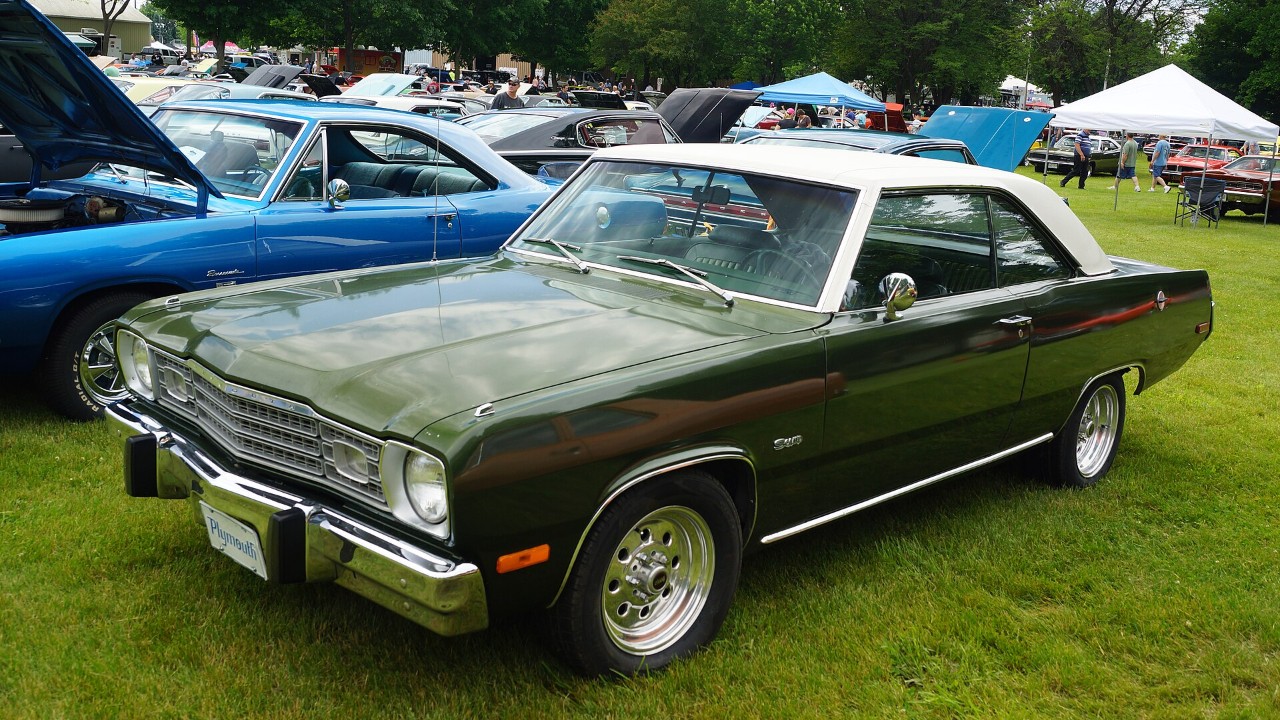
The Scamp joined the American Valiant line for 1971. It used the Dodge Dart Swinger’s two-door hardtop body with Valiant front sheet metal. It rode on a 111-inch wheelbase, and it gave Plymouth a two-door hardtop in the compact range.
For 1973, Plymouth deleted the vent wing windows, which cleaned up the side glass. The Valiant line was selling strongly at the time. For example, Valiant deliveries hit a record 330,373 in 1972, the year before this car. Then, for 1974, a separate Scamp package on the Valiant sedan added a 318 V8 and a three-speed automatic, and buyers ordered it as needed.
Our take: the Scamp is the overlooked hardtop of the 1970s Mopar world. It has the clean Swinger roofline but a gentler, more formal face. We like how it hides Swinger proportions behind a Plymouth face. For a buyer, that means Dart Swinger parts help keep one on the road. In our view, a 1973 car with a V8 is a sweet, simple cruiser. As with any Mopar compact, check the VIN if a seller claims a factory V8.
7. 1975 Plymouth Valiant Brougham
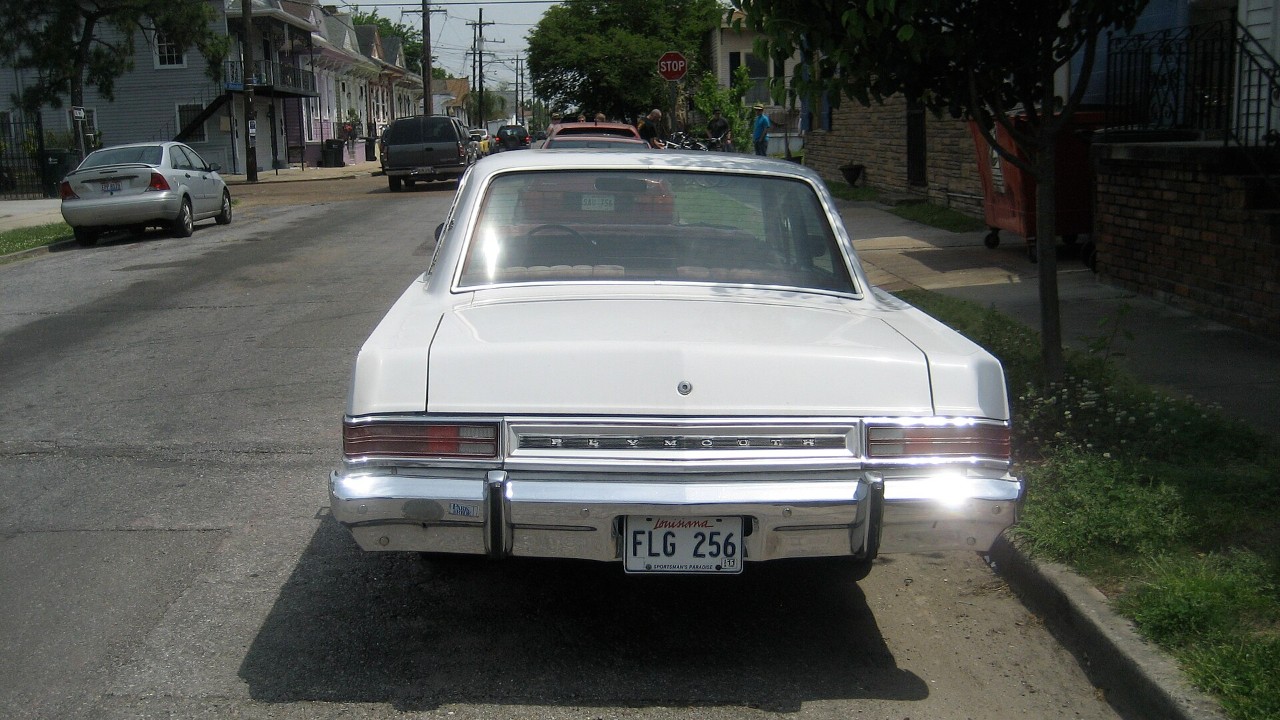
The Brougham arrived for 1974 as a compact luxury car. It came along after the 1973 oil crisis, when many buyers wanted luxury in a smaller package. The Brougham wore generous chrome, a vinyl top, deep cut-pile carpeting and velour cloth upholstery.
Better yet, much of the optional equipment on a regular Valiant became standard on the Brougham. That list included power steering, power disc brakes, air conditioning, cruise control, a rear defroster and an AM/FM radio. The 1975 car was mostly a carryover from 1974. Its Dodge twin was the Dart Special Edition, and the Brougham came as a two-door or a four-door. Padded door panels, wheel covers and special paint and trim combinations rounded it out.
In our view, the Brougham shows Chrysler reading the market well. It was a small car that felt like a big one inside. Today, a clean example makes a comfortable, honest classic. Look for a car with its original velour seats intact. By mid-1976, the Volaré had replaced the Valiant, built at Chrysler’s Hamtramck plant.
8. 1965 Chrysler Valiant AP6 Wayfarer

The Wayfarer was Chrysler Australia’s Valiant-based coupe utility, a car-based pickup. It arrived with the AP6 series, which replaced the AP5 in March 1965. AP6 prices ranged from $2,500 to $3,650. The AP5 it replaced was also the series that launched the Valiant Regal name.
The AP6 also brought a big change under the hood. In August 1965, Chrysler Australia released a V8 for the range, the 273-cubic-inch LA engine rated at 180 bhp. As a result, the Valiant gained a new kind of muscle at home.
Our take: the Wayfarer is a working car with the looks of a passenger car, and we think that’s the best kind of ute. It’s practical and full of character. With a cab up front and a tray behind, it does a pickup’s job with a sedan’s manners. A V8 Wayfarer would be our choice, since it pairs a useful tray with the new 273. If you shop for one, check the tray and bed floor, because a working life usually leaves its mark there first.
9. 1977 Chrysler Valiant CL Regal
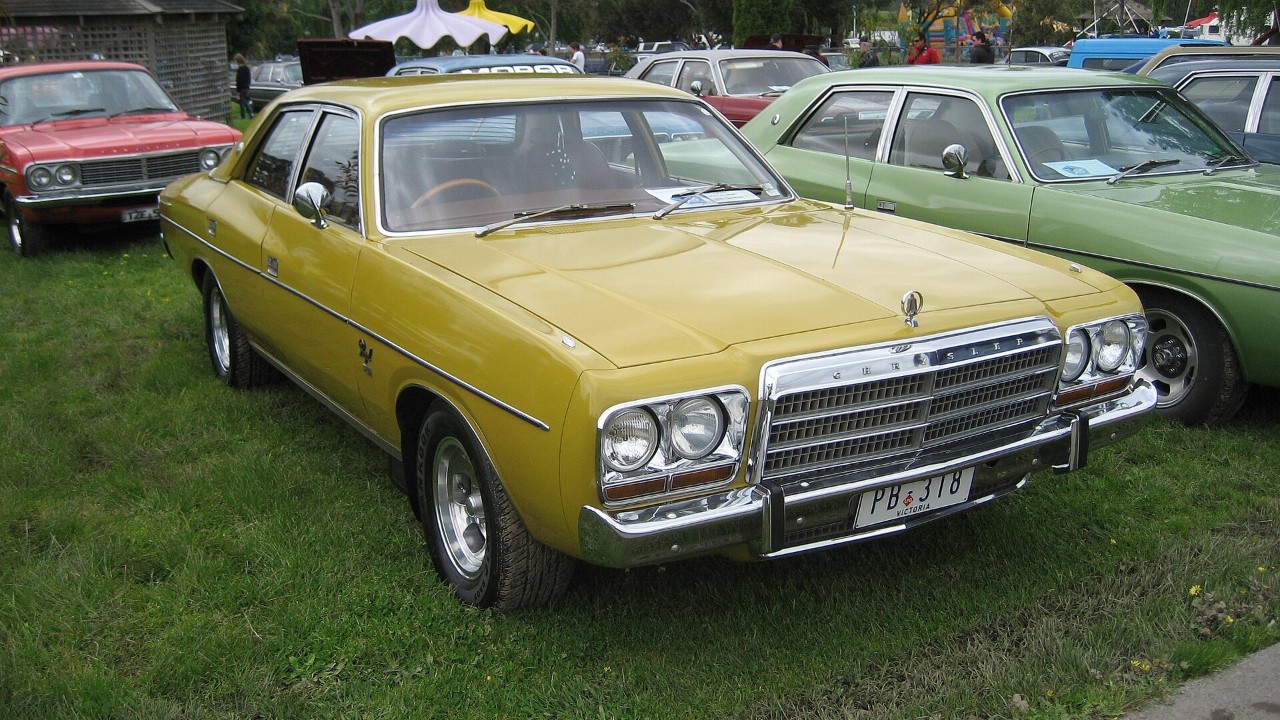
The CL series arrived in November 1976 with restyled front and rear ends, including quad round headlamps. Chrysler marketed the luxury model as the Chrysler Regal, replacing the Valiant Regal name used from the AP5 through the VK series. Even so, it remained part of the Valiant family.
Buyers could pick a 4.0-liter Hemi six or a 318-cubic-inch V8, and the 318 used Electronic Lean Burn. Meanwhile, a prestige Regal SE offered buttoned-leather seating as an option. Then, in 1978, Chrysler built a limited run of 400 Regal Le Baron models. Australian Valiant production ended in August 1981, after Mitsubishi took over Chrysler’s operations there. Later, the Mitsubishi Magna was developed to replace both the Sigma and the Valiant.
In our view, the CL Regal is the last great Australian Valiant. It has a proper luxury cabin and a choice of six or V8. When you shop, remember that the Lean Burn electronics are now about 50 years old, so find a car with records or an owner who knows it.
10. 1966 Plymouth Valiant V200 wagon

The 1966 model year was the last for Valiant wagons. For 1967, Plymouth dropped the wagons, hardtops and convertibles when it redesigned the car. As a result, the 1966 wagon closed out the first era of Valiant wagons.
The wagon offered 72.3 cubic feet of cargo space, and it came in V100 and V200 trim with two or three seats. In three-seat versions, the third row faced the rear. Two-seat wagons had a locking luggage compartment that could hold a spare tire, while three-seat versions rode on run-flat Captive-Aire tires. An aluminum tailgate window screen was optional. For 1966, the Valiant also got a split grille with a fine-patterned insert and new front fenders.
Our take: compact wagons deserve more attention than they get, and that’s exactly why we’d save one. It’s a useful car that shows what everyday families drove. For more of Plymouth’s forgotten side, see seven forgotten Plymouths that outran everything in their class. From 1963 through 1966, the wagon rode on a 106-inch wheelbase.
More from Fast Lane Only