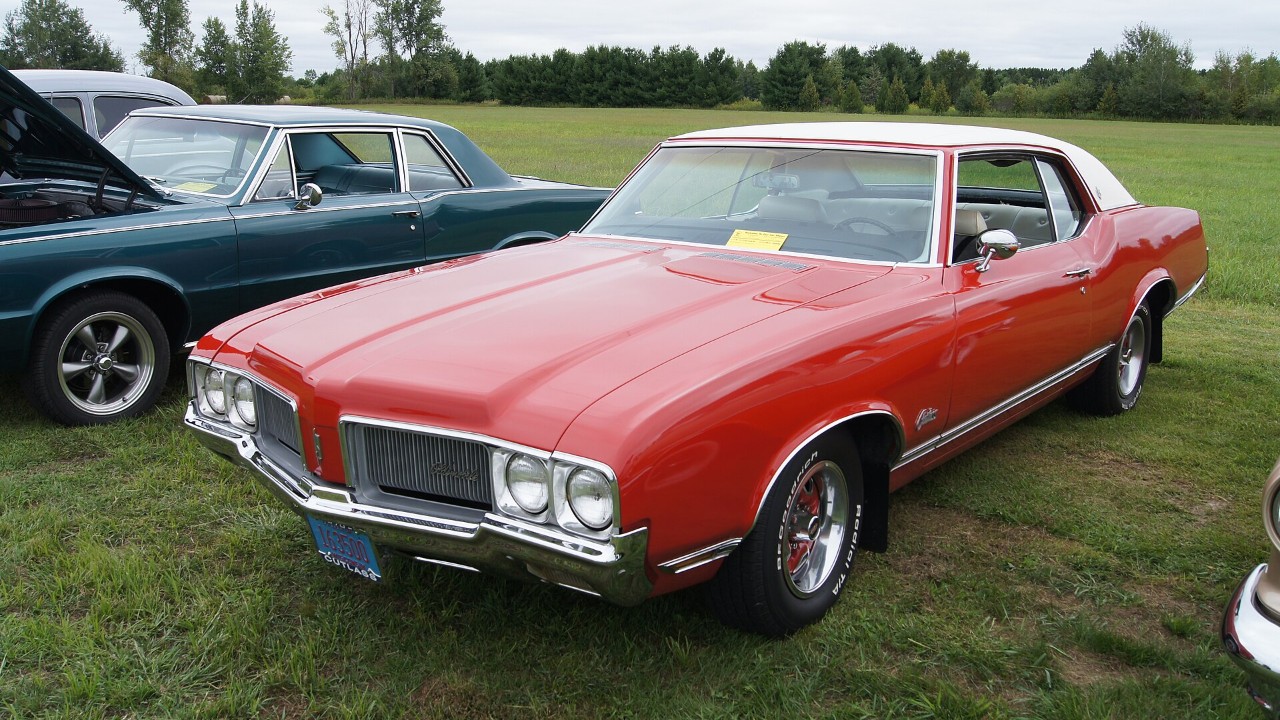
In 1976, the Oldsmobile Cutlass line was America’s best-selling car. Then, a year later, Oldsmobile built 632,742 Cutlasses, the highest total the name ever reached. For a while, it seemed every driveway in the country had one.
Popularity, however, is a tricky thing for a collector car. When a name sells by the hundreds of thousands, the crowd tends to swallow the special versions. For example, some Cutlasses were plain family transport. Others hid serious engineering, rare option codes or ideas that were years ahead of the showroom.
These are our picks: seven Cutlasses that, in our view, remain relevant today. Some are muscle cars, some are personal-luxury coupes and one has only four cylinders. Still, each earns its spot for a reason you can check.
1. 1966 Oldsmobile Cutlass 4-4-2 W-30

The 4-4-2 began life as an option, not a model. It arrived late in the 1964 model year for the F-85 and Cutlass, and the name stood for a four-barrel carburetor, a four-speed manual and dual exhaust. At first, it used a 330-cubic-inch V8 rated at 310 bhp. By 1965 it had a 400-cubic-inch V8, and sales passed 25,000.
Then 1966 brought the wildest version. According to Silodrome’s history of the Oldsmobile 442, that year’s top engine breathed through three Rochester two-barrel carburetors. The W-30 package was exclusive to that tri-carb setup. It also added an air induction system and internal engine changes. In the end, only 54 W-30 packages shipped.
The window closed fast. For 1967, a corporate edict banned multi-carburetor setups on everything but the Corvette, so the tri-carb engine disappeared. Our take: a car built in a single season, in a run of 54, is about as relevant as a Cutlass can get. It marks the point where Oldsmobile’s mid-size car stopped being polite.
2. 1967 Oldsmobile Cutlass Supreme Holiday Coupe
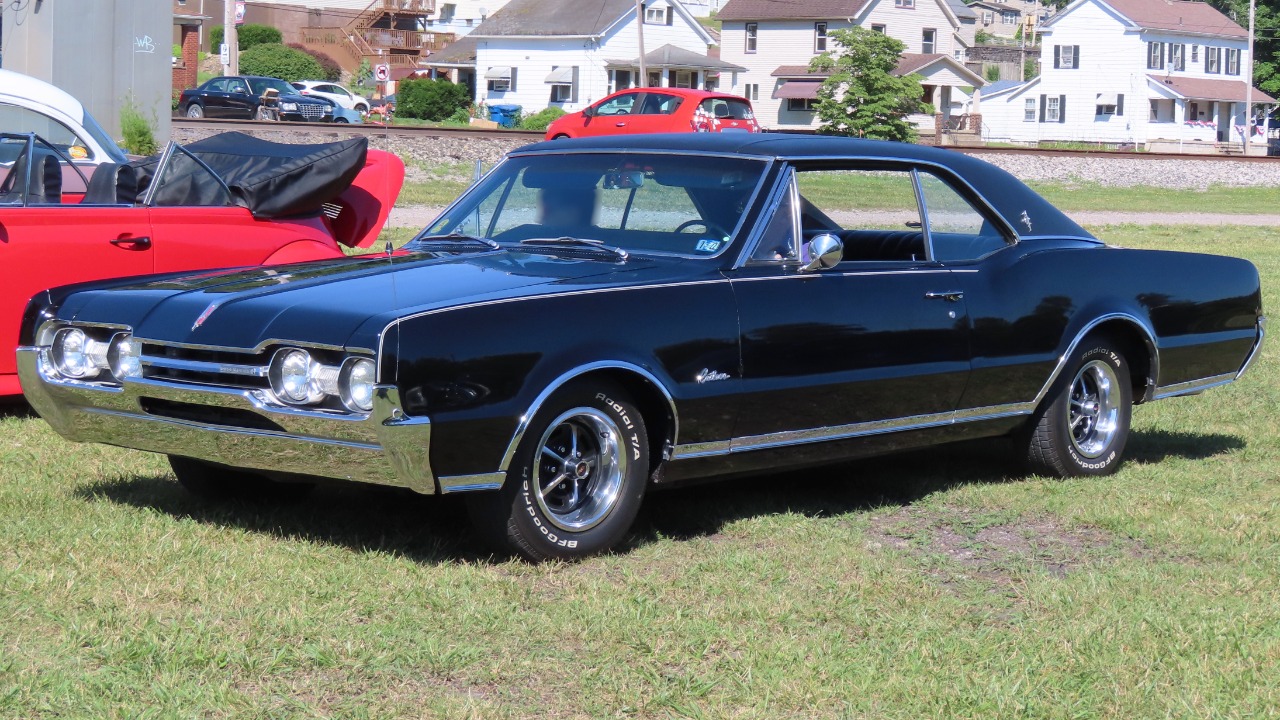
The Supreme name started small. For 1966, it appeared on a single four-door hardtop that Oldsmobile called the Holiday Sedan. Then, for 1967, the Supreme became a full series, with a Holiday Coupe two-door hardtop, a pillared Sport Coupe, a Town Sedan and a convertible.
The 1967 Holiday Coupe came standard with a 330-cubic-inch Rocket V8, rated at 320 hp with a four-barrel carburetor. Buyers who wanted more could add the 4-4-2 package and its 400-cubic-inch V8, rated at 350 hp. Also, disc brakes joined the Cutlass options list that year. As a result, a well-optioned Holiday Coupe could stop as confidently as it accelerated.
Why does it matter? Because this is where the Supreme formula began. The pillarless hardtop roof, a strong standard V8 and a slightly upscale cabin set the template for the Cutlass Supremes that ruled the 1970s. We’ve written about the strange story behind the 1967 Oldsmobile 442, and the Holiday Coupe is its better-dressed sibling. In our view, a 1967 Holiday Coupe is the smart way into Cutlass ownership, with real history and real power.
3. 1969 Oldsmobile Cutlass S W-31
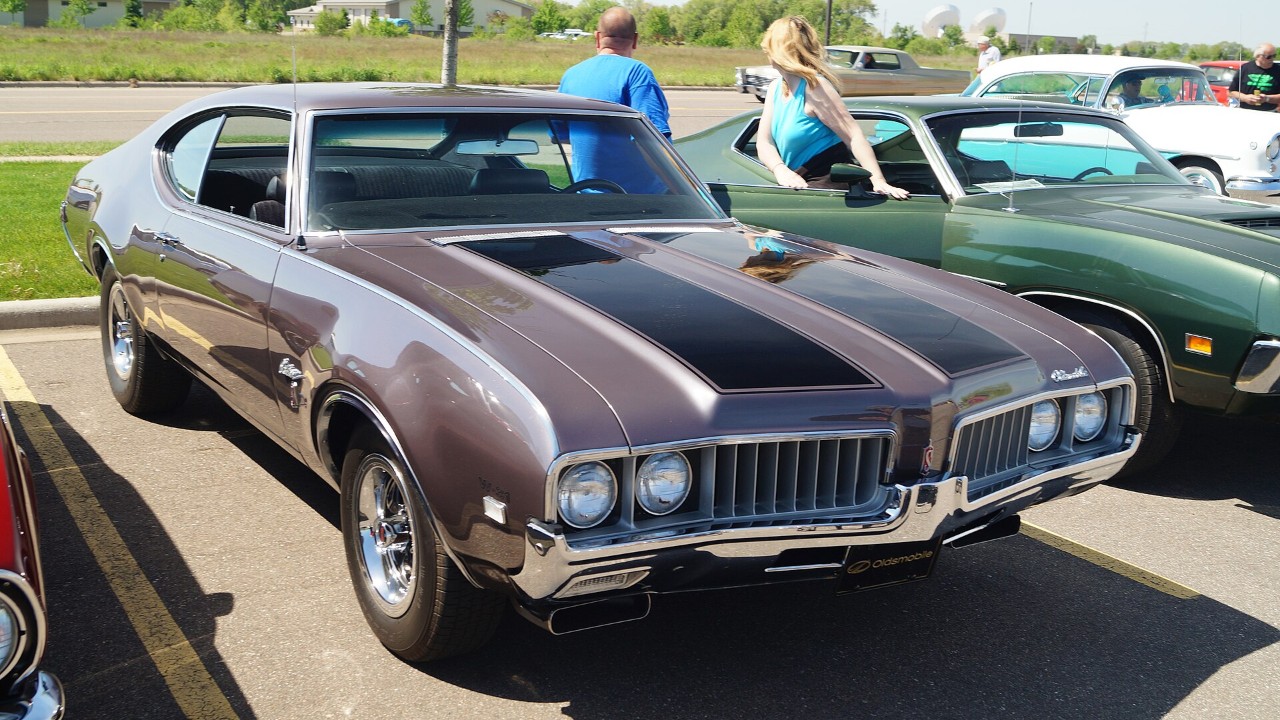
By 1969, the 4-4-2 had moved on. Oldsmobile turned it into a standalone model for 1968, which left room for a hot Cutlass below it. The W-31 option filled that gap. It used the 350-cubic-inch Rocket V8, conservatively rated at 325 hp.
That small-block choice is the whole point. The 4-4-2 of the same era relied on its 400-cubic-inch engine, and for 1970 Oldsmobile made the 455 standard in that car. By comparison, the W-31 went the other way. It squeezed its power from a smaller V8 in the lighter, simpler Cutlass S body.
In our view, that makes it a different kind of muscle car. Instead of the biggest engine Oldsmobile could fit, it offered a balanced package with a modest badge. That kind of sleeper has always had a special appeal for people who like to surprise the car next to them at a light.
Our take: the W-31 deserves a place in any serious Oldsmobile collection. It shows that Oldsmobile engineers understood balance, not only cubic inches. If you want a muscle-era Cutlass that feels different from the big-block crowd, this is the one to find.
4. 1970 Oldsmobile Cutlass Supreme SX

The SX was Oldsmobile’s answer to buyers who wanted 4-4-2 power with Supreme comfort. Oldsmobile sold it as option code Y-79 on Cutlass Supreme coupes and convertibles for 1970 and 1971. In addition, every SX carried a 455-cubic-inch Rocket V8 borrowed from the 4-4-2.
Meanwhile, the other half of the package was the gearbox. All SX cars came with the TH-400 automatic, so this was a car for long, fast highway runs rather than drag strips. For context, the 455 became the standard 4-4-2 engine for 1970, rated at 365 hp in that car.
We’ve covered how the 1970 Oldsmobile Cutlass became one of America’s favorite cars. The SX shows the luxury side of that story. In our view, it predicted where the whole market was heading. Later in the decade, big torque, an automatic and a plush cabin would define the American personal coupe. The 1970 SX had that recipe first, and it ran a 455 while doing it.
5. 1971 Oldsmobile Cutlass Supreme convertible

Open-top Cutlass Supremes had a short first life. The convertible was available with the SX package for 1971, so a buyer could pair the soft top with the big 455. After the 1972 model year, Oldsmobile dropped the Supreme convertible, and it stayed gone until 1990.
In fact, that last year proves the demand was there. The 1972 Supreme convertible sold 11,571 units, about 16% of its market, and was the best-selling convertible in the U.S. Few cars leave the lineup while sitting at the top of their class.
That’s why we’d single out the 1971 car. It sits right at the end of the first convertible era, yet buyers could also order the SX option and its 455. That combination of open roof and big-block torque disappeared from the Supreme for nearly two decades.
Our take: if you want one Cutlass for summer cruising, this is the year we’d pick. It offers the classic Supreme shape, the option of real power and a body style Oldsmobile walked away from at the peak of its popularity.
6. 1988 Oldsmobile Cutlass Supreme International Series

The 1988 Cutlass Supreme was a new car under an old name. Oldsmobile introduced it mid-year as a front-drive two-door notchback coupe on GM’s W-body, with a 107.5-inch wheelbase. The base engine for 1988 and 1989 was a 2.8-liter V6 rated at 130 hp.
However, the International Series is where it got interesting. It brought four bucket seats with dual center consoles, a driver information system and a heads-up display. In 1988, a heads-up display in a mid-size Oldsmobile was a bold piece of equipment. The International Series stayed in the lineup through 1993, a run of six model years counting the 1988 launch.
Why is it relevant now? First, it shows Oldsmobile trying to sell technology, not only nostalgia. Second, it proves the Cutlass Supreme name could survive a total change of layout, from rear drive to front drive, and keep its personal-coupe character.
In our view, the International Series is the most interesting front-drive Cutlass Supreme. It’s an affordable way to own a piece of 1980s GM design thinking, and we’d take one with its digital gadgets intact.
7. 1991 Oldsmobile Cutlass Calais 442 W41

Eventually, the 442 name came back in a form nobody expected. For the Cutlass Calais, the digits meant four cylinders, four valves per cylinder and two camshafts. Power came from a high-output 2.3-liter Quad 4 engine, and the car drove its front wheels. Because of that, it had almost nothing in common with the big-block 442s of 1970.
According to Hagerty’s look at Jay Leno’s drive in a 1991 442 W-41, the Quad 4 made 180 hp in 1990. The W-41 package raised that to 190 hp. Besides the power bump, the package brought an improved suspension and revised transmission gearing. Hagerty says only 204 cars got the W-41 package, and the car was the smallest in Oldsmobile’s lineup at the time.
Our take: purists may scoff at a four-cylinder 442. However, 190 hp from 2.3 liters was serious work in 1991. We’ve also written about why the Oldsmobile 442 disappeared for decades, and the W41 is a key part of that story. With only 204 built, it is also one of the hardest Cutlasses to find. In our view, it deserves far more respect than its cylinder count suggests.
More from Fast Lane Only